
Knowing how to make brown paint is an essential skill for artists, crafters, and DIY enthusiasts. Brown is one of the most versatile colors in painting because it appears naturally in wood, soil, animals, landscapes, portraits, and countless decorative projects. Instead of purchasing multiple shades of brown paint, you can easily mix your own using colors you already have.
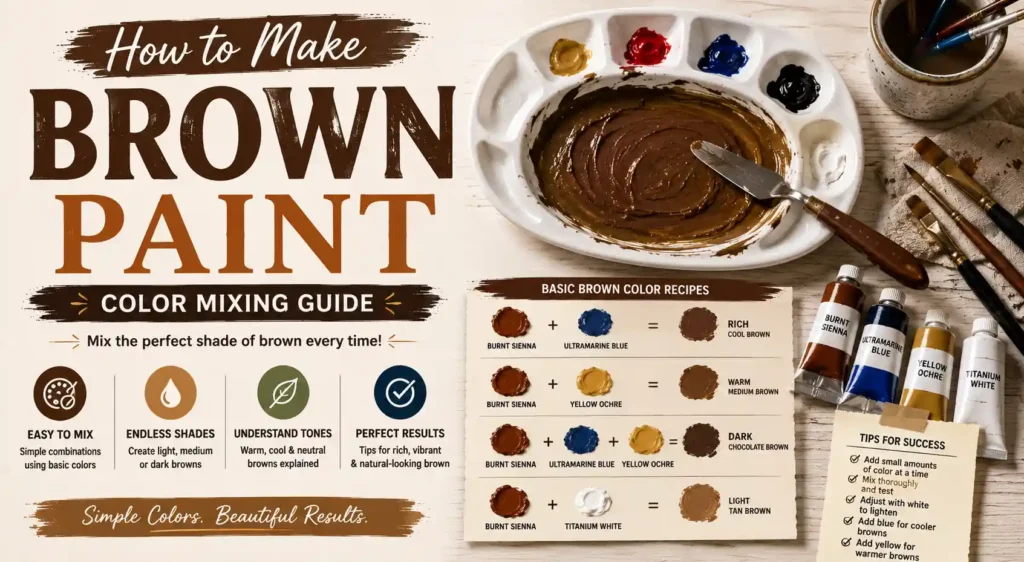
The beauty of mixing brown paint is that there isn’t just one formula. Different color combinations can produce warm browns, cool browns, dark browns, reddish browns, and even golden brown shades. This guide explains several methods for creating brown paint and shows you how to customize the color for any project.
Items to Buy
- Red paint
- Blue paint
- Yellow paint
- Acrylic paint set
- Oil paint set
- Watercolor paints
- Mixing palette
- Palette knife
- Paint brushes
- Color wheel
- White paint
- Black paint
- Orange paint
- Green paint
- Purple paint
- Mixing cups
- Water container
- Sketchbook
- Canvas paper
- Storage containers
What Is Brown Paint?
Brown is a tertiary color typically created by combining complementary colors or mixing all three primary colors together.
Unlike primary and secondary colors, brown exists in many variations. Some browns appear warm and earthy, while others have cooler gray or blue undertones.
Because brown occurs frequently in nature, it is one of the most useful colors for artists and designers.
Learning how to mix custom browns gives you greater creative control.
Understanding Brown Color Theory
To understand how brown paint is made, it’s helpful to know a little color theory.
Brown generally results when colors from opposite sides of the color wheel are mixed together. These combinations neutralize each other and produce earthy tones.
Common ways to make brown include:
- Mixing red, blue, and yellow
- Mixing orange and blue
- Mixing green and red
- Mixing purple and yellow
Each combination creates a slightly different brown.
Method 1: How to Make Brown Paint With Primary Colors
This is the most common method.
By combining red, blue, and yellow, you can create a basic brown that serves as a foundation for many other shades.
Step 1
Place equal amounts of:
- Red paint
- Blue paint
- Yellow paint
onto your palette.
Step 2
Mix the colors thoroughly using a palette knife or brush.
Step 3
Evaluate the color and adjust if necessary.
The resulting mixture should produce a medium brown tone.
Method 2: Make Brown Paint Using Orange and Blue
Orange and blue are complementary colors.
When mixed together, they naturally create brown.
Basic Formula
- 50% orange paint
- 50% blue paint
Adjust the proportions to create different shades.
More orange creates a warmer brown, while more blue creates a cooler brown.
Method 3: Make Brown Paint Using Red and Green
Red and green also sit opposite each other on the color wheel.
Mixing them produces rich, earthy browns.
Basic Formula
- Equal parts red
- Equal parts green
Experiment with ratios to customize the shade.
This method is particularly useful for landscape painting.
Method 4: Make Brown Paint Using Purple and Yellow
Purple and yellow create another excellent brown mixture.
Basic Formula
- Equal parts purple
- Equal parts yellow
This combination often creates slightly warmer and softer brown tones.
It works well for decorative and artistic projects.
How to Make Light Brown Paint
To create lighter brown shades, add:
- White paint
- Light yellow paint
- Beige paint
Add small amounts gradually.
Too much white can make the color appear dull or muddy.
Light browns are useful for wood tones, sand, and highlights.
How to Make Dark Brown Paint
Dark brown is ideal for shadows, tree bark, and dramatic effects.
To darken brown paint, add:
- Blue paint
- Black paint
- Dark purple paint
Use these colors sparingly.
A little dark pigment can significantly change the mixture.
How to Make Warm Brown Paint
Warm browns contain red, orange, or yellow undertones.
To create warm brown:
- Add red
- Add orange
- Add yellow
These additions create richer, more inviting shades often seen in wood and autumn landscapes.
How to Make Cool Brown Paint
Cool browns contain blue or gray undertones.
To achieve cooler brown tones:
- Add blue
- Add a small amount of gray
- Add cool purple
Cool browns are commonly used in shadows and realistic portrait work.
How to Make Chocolate Brown Paint
Chocolate brown is deep and rich.
Start with a standard brown mixture and add:
- Extra red
- Small amounts of black
- Touches of blue
Blend carefully until the desired richness is achieved.
This color is popular for decorative projects and realistic painting.
How to Make Tan Paint
Tan is a lighter variation of brown.
To create tan:
- Mix brown paint.
- Add white paint gradually.
- Add a small amount of yellow if needed.
Tan works well for sand, skin tones, and neutral backgrounds.
How to Make Brown Paint With Acrylics
Acrylic paint is one of the easiest mediums for color mixing.
Steps
- Place the chosen colors on a palette.
- Mix thoroughly.
- Test on paper.
- Adjust the color as needed.
Remember that acrylic paint often dries slightly darker.
Testing swatches beforehand can improve accuracy.
How to Make Brown Paint With Oil Paint
Oil paints blend smoothly and provide excellent color depth.
Steps
- Select your mixing method.
- Combine colors gradually.
- Mix thoroughly using a palette knife.
- Test on canvas.
- Refine the shade.
Oil paints are ideal for creating complex brown tones.
How to Make Brown Paint With Watercolors
Watercolors require less pigment and more water control.
Steps
- Activate the paints with water.
- Mix complementary colors.
- Test on watercolor paper.
- Adjust as needed.
Watercolors often dry lighter than expected, so testing is important.
Common Uses for Brown Paint
Brown is incredibly versatile.
Popular uses include:
- Landscape painting
- Portraits
- Tree bark
- Wooden furniture
- Animal fur
- Soil and rocks
- Decorative crafts
- Home décor projects
Its natural appearance makes it useful across many artistic styles.
Common Color Mixing Mistakes
One common mistake is adding too much black.
This can make the brown appear muddy and lifeless. Another issue is failing to mix colors thoroughly.
Many beginners also add too much of one color too quickly.
Working slowly helps maintain control over the final shade.
Tips for Consistent Brown Paint
For reliable results:
- Measure color ratios
- Keep notes on mixtures
- Test colors before use
- Use the same paint brands
- Mix larger batches when needed
These practices help maintain consistency throughout a project.
Storing Mixed Brown Paint
If you create more paint than necessary, proper storage can prevent waste.
Store mixed paint in:
- Airtight jars
- Sealed containers
- Paint cups with lids
Label the mixture with the formula used.
This makes future color matching much easier.
FAQs
What colors make brown paint?
Brown can be made by mixing red, blue, and yellow or by combining complementary colors.
What is the easiest way to make brown paint?
Mixing all three primary colors is often the simplest method.
Can orange and blue make brown?
Yes. Orange and blue are complementary colors that create brown when mixed.
How do I make dark brown?
Add black, blue, or dark purple to an existing brown mixture.
How do I make light brown?
Add white or light yellow to brown paint.
Why does my brown look muddy?
Too many colors or excessive black may create muddy results.
Can I make brown with acrylic paint?
Yes. Acrylic paints are excellent for creating custom brown shades.
What complementary colors make brown?
Orange and blue, red and green, and yellow and purple can all create brown.
Final Words
Learning how to make brown paint opens the door to endless creative possibilities. Whether you’re painting landscapes, portraits, furniture, crafts, or decorative artwork, the ability to mix custom brown shades gives you greater flexibility and control.
By understanding color theory and experimenting with different combinations, you can create everything from warm golden browns to deep chocolate tones. With practice, you’ll quickly discover how simple adjustments can produce the perfect brown for any artistic project.