
Painting the exterior of a house can dramatically improve curb appeal, protect siding from the elements, and increase property value. While scaffolding is commonly used for large painting projects, it isn’t always necessary. Many homeowners successfully paint the outside of their homes using ladders, extension tools, and proper safety practices.
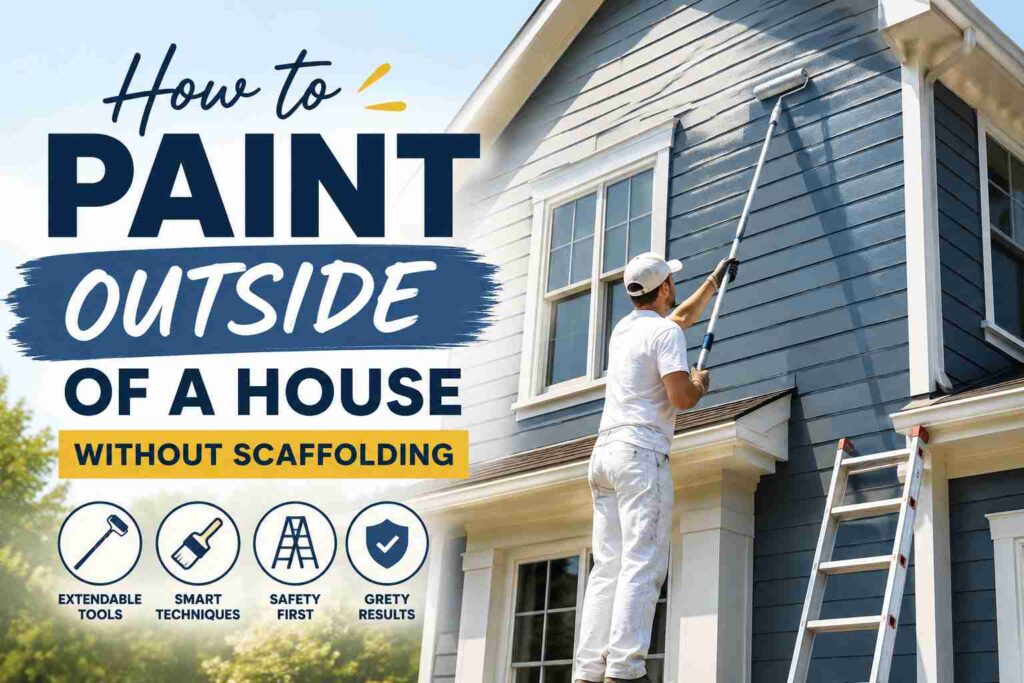
If you’re wondering how to paint outside of a house without scaffolding, the key is choosing the right equipment, working strategically, and prioritizing safety throughout the project. This guide covers everything you need to know to complete the job efficiently and safely.
Contents
- Things You’ll Need
- Different Ways to Paint Outside of a House Without Scaffolding
- Why Paint a House Exterior?
- How to Paint Outside of a House Without Scaffolding
- Step 1: Inspect the Exterior
- Step 2: Clean the Surface
- Step 3: Scrape Loose Paint
- Step 4: Sand Rough Areas
- Step 5: Repair Cracks and Gaps
- Step 6: Prime Bare Surfaces
- Step 7: Set Up Your Ladder Safely
- Step 8: Use Extension Poles for High Areas
- Step 9: Paint From Top to Bottom
- Step 10: Apply Additional Coats
- Step 11: Paint Trim and Details
- Step 12: Inspect and Touch Up
- Best Tools for Painting a House Without Scaffolding
- Common Mistakes to Avoid
- Safety Tips for Exterior House Painting
- Can You Paint a Two-Story House Without Scaffolding?
- Final Thoughts
- Frequently Asked Questions
Things You’ll Need
Before starting your exterior painting project, gather the necessary supplies.
Painting Supplies
- Exterior paint
- Exterior primer
- Paint brushes
- Paint rollers
- Roller covers
- Paint tray
- Painter’s tape
- Drop cloths
Access Equipment
- Extension ladder
- Step ladder
- Ladder stabilizer
- Extension pole
- Multi-position ladder (optional)
Preparation Supplies
- Pressure washer or garden hose
- Scrub brush
- Exterior cleaner
- Caulk and caulk gun
- Putty knife
- Sandpaper
Safety Equipment
- Safety glasses
- Work gloves
- Non-slip shoes
- Dust mask
- Ladder safety accessories
Different Ways to Paint Outside of a House Without Scaffolding
There are several alternatives to traditional scaffolding.
Using an Extension Ladder
An extension ladder allows you to reach high walls and upper-story sections safely when positioned correctly.
Using an Extension Pole
Attach rollers or brushes to extension poles to paint areas that are difficult to reach from the ground.
Using a Multi-Position Ladder
These versatile ladders can adapt to different angles and surfaces around the house.
Using a Paint Sprayer
A paint sprayer combined with extension tools can cover large exterior surfaces quickly.
Hiring a Boom Lift
For very tall homes, renting a lift may be safer and more efficient than scaffolding.
Why Paint a House Exterior?
Exterior painting provides several benefits.
- Improves curb appeal
- Protects siding from weather damage
- Prevents moisture penetration
- Extends the life of exterior materials
- Increases property value
- Refreshes the home’s appearance
Regular maintenance helps keep your house looking its best for years.
How to Paint Outside of a House Without Scaffolding
Step 1: Inspect the Exterior
Walk around the house and inspect the siding, trim, and other surfaces.
Look for:
- Cracks
- Peeling paint
- Mold or mildew
- Damaged caulk
- Rotten wood
Address any repairs before painting.
Step 2: Clean the Surface
Dirt and debris can prevent paint from adhering properly.
Use:
- A pressure washer
- A garden hose with a scrub brush
- Exterior cleaning solutions
Allow the surface to dry completely before proceeding.
Step 3: Scrape Loose Paint
Use a paint scraper or putty knife to remove peeling paint.
Focus on areas where the existing finish is failing.
This creates a smoother surface for new paint.
Step 4: Sand Rough Areas
Lightly sand repaired and scraped sections.
Sanding helps blend transitions between old and new surfaces.
Wipe away dust afterward.
Step 5: Repair Cracks and Gaps
Apply exterior caulk around:
- Windows
- Doors
- Trim joints
- Siding gaps
Allow the caulk to cure according to the manufacturer’s instructions.
Step 6: Prime Bare Surfaces
Apply primer to exposed wood, repaired areas, and surfaces with significant paint removal.
Primer improves adhesion and durability.
Step 7: Set Up Your Ladder Safely
Always place ladders on firm, level ground.
Important ladder safety tips:
- Follow the manufacturer’s instructions
- Use a ladder stabilizer when possible
- Maintain three points of contact
- Never overreach
- Move the ladder frequently instead of leaning
Safety should always come first.
Step 8: Use Extension Poles for High Areas
Attach a roller to an extension pole to reach upper walls.
Extension poles reduce the need for frequent ladder repositioning and help cover large areas efficiently.
Step 9: Paint From Top to Bottom
Start at the highest section of the house and work downward.
This method helps prevent drips from affecting freshly painted lower areas.
Paint in manageable sections for consistent coverage.
Step 10: Apply Additional Coats
Most exterior paint jobs require two coats.
Allow the first coat to dry fully before applying the second.
Follow the paint manufacturer’s drying recommendations.
Step 11: Paint Trim and Details
After the main surfaces are complete, paint:
- Window trim
- Door trim
- Fascia boards
- Decorative accents
Use smaller brushes for precision work.
Step 12: Inspect and Touch Up
Once everything has dried, inspect the exterior for missed spots or uneven coverage.
Perform any necessary touch-ups before cleaning up the work area.
Best Tools for Painting a House Without Scaffolding
Certain tools make the job much easier.
Extension Poles
Allow you to paint high areas while keeping your feet on the ground.
Ladder Stabilizers
Improve ladder safety and reduce movement.
Paint Sprayers
Cover large surfaces quickly and evenly.
Multi-Position Ladders
Provide flexibility around obstacles and uneven terrain.
Angled Paint Brushes
Ideal for cutting in around trim and corners.
Common Mistakes to Avoid
Overreaching From a Ladder
Always move the ladder instead of stretching too far.
Painting Dirty Surfaces
Paint adheres poorly to dirt, mildew, and dust.
Ignoring Weather Conditions
Avoid painting during rain, high humidity, or extreme temperatures.
Skipping Primer
Primer is essential on bare or repaired surfaces.
Using Worn Equipment
Damaged ladders and tools can create safety hazards.
Safety Tips for Exterior House Painting
Work With a Partner
Having someone nearby increases safety and provides assistance when needed.
Check Ladder Stability Frequently
Inspect ladder placement before climbing.
Avoid Windy Conditions
Strong winds can make ladder work dangerous.
Wear Proper Footwear
Choose non-slip shoes with good traction.
Take Breaks
Exterior painting can be physically demanding, especially in warm weather.
Can You Paint a Two-Story House Without Scaffolding?
Yes, many homeowners paint two-story homes using extension ladders, stabilizers, extension poles, and paint sprayers.
However, if certain areas are difficult to reach safely, consider hiring a professional or renting specialized access equipment.
Safety should always take priority over convenience.
Final Thoughts
Learning how to paint outside of a house without scaffolding can save money while still producing excellent results. With proper preparation, quality equipment, and safe ladder practices, you can successfully paint most exterior surfaces without the need for expensive scaffolding.
Take your time, work methodically, and focus on safety throughout the project. The result will be a refreshed, protected home exterior that looks great and stands up to the elements.
Frequently Asked Questions
Can I paint my house exterior using only a ladder?
Yes, many exterior painting projects can be completed with extension ladders and proper safety precautions.
What is the safest alternative to scaffolding?
Extension ladders with stabilizers and extension poles are among the most common alternatives.
Are paint sprayers useful for exterior painting?
Yes. Paint sprayers can speed up the process and provide even coverage on large surfaces.
How high can I safely paint without scaffolding?
The answer depends on your equipment, experience, and comfort level. Always follow ladder safety guidelines.
Should I paint from top to bottom?
Yes. Starting at the top helps prevent drips from affecting finished areas.
When should I hire a professional?
Consider hiring a professional if the home is very tall, difficult to access, or if you are uncomfortable working at heights.