
Choosing the best automotive spray paints can make a big difference when refreshing a vehicle’s appearance, touching up scratches, or protecting exposed metal parts. The right aerosol coating can provide an even finish, improve the look of worn components, and help protect compatible surfaces from weather and corrosion. However, automotive paints are designed for different applications, so a product intended for wheels may not be suitable for an engine, chassis, or exterior body panel.
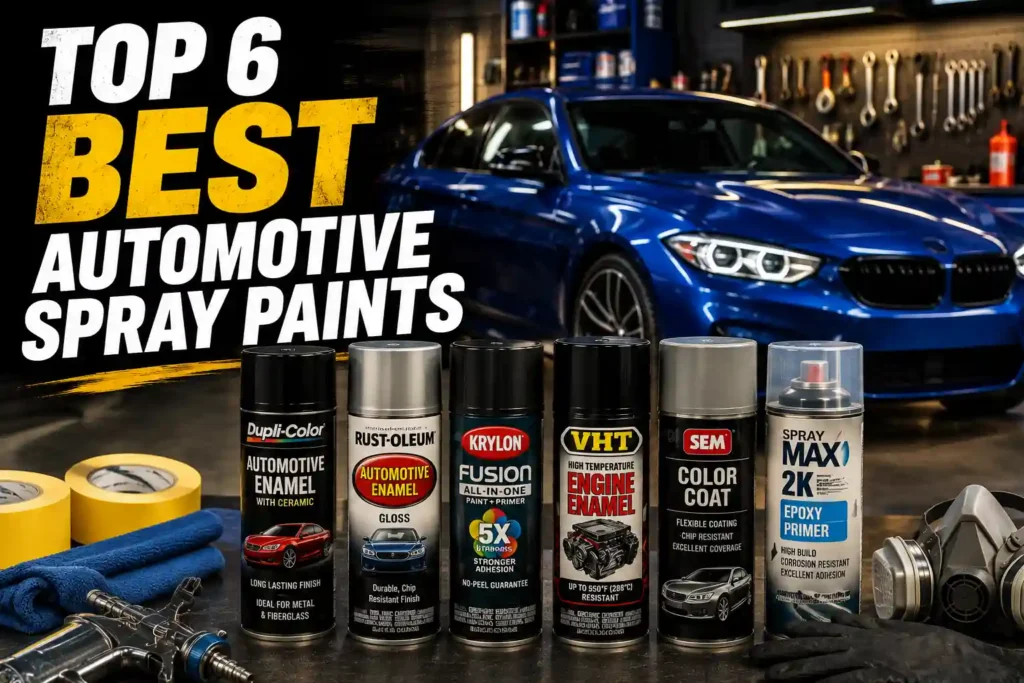
Whether you’re searching for car paint for small repairs, chrome spray paint for decorative accents, or automotive frame paint for a restoration project, it’s important to match the formula to the surface. Dedicated wheel coatings and brake caliper paints also have different performance requirements from ordinary automotive touch-up products.
Below, we’ll compare six automotive spray paint options and explain where each one makes the most sense.
Top 6 Best Automotive Spray Paints at a Glance
| Product Name | Best For | Check Price |
|---|---|---|
| Rust-Oleum Automotive Universal Touch-Up Spray | Best Overall for Minor Repairs | Check on Amazon |
| Dupli-Color Perfect Match Automotive Spray Paint | Factory-Color Touch-Ups | Check on Amazon |
| VHT Roll Bar and Chassis Paint | Automotive Frame and Chassis Projects | Check on Amazon |
| Krylon Automotive Wheel Paint | Wheels and Rims | Check on Amazon |
| Dupli-Color Brake Caliper Paint | Brake Calipers | Check on Amazon |
| Rust-Oleum Custom Automotive Chrome Spray Paint | Chrome-Effect Accents | Check on Amazon |
Affiliate disclosure: As an Amazon Associate I earn from qualifying purchases.
Top Picks: 6 Best Automotive Spray Paints Reviews
1. Rust-Oleum Automotive Universal Touch-Up Spray – Best Overall
Check Rust-Oleum Automotive Universal Touch-Up Spray on Amazon
Rust-Oleum Automotive Universal Touch-Up Spray is our best overall choice for minor automotive repairs and refreshing worn areas. It is a convenient aerosol option for vehicle owners who want to cover small scratches and improve the appearance of compatible surfaces without investing in a complete professional refinishing setup.
One of its main advantages is its paint-and-primer formulation. Rust-Oleum describes the product as suitable for metal, fiberglass, aluminum, and plastic. Its weather- and UV-resistant formula is designed to help protect the coated area against moisture, rust, and corrosion.
The any-angle spray system is another useful feature, particularly when working around vehicle contours or difficult-to-reach areas. A comfort spray tip also helps make application more manageable during small repair projects.
This product is worth considering for selected automotive touch-ups, but it should not automatically replace a vehicle-specific color-matched paint system. If you’re repairing a visible body panel, choose a color that matches your vehicle’s paint code and follow the recommended primer and clear-coat system.
Pros:
- Paint-and-primer formulation.
- Suitable for several compatible automotive surfaces.
- Weather- and UV-resistant formula.
- Helps seal minor scratches against moisture.
- Any-angle spray application.
- Useful for small vehicle touch-ups.
Cons:
- Universal colors may not match every vehicle.
- Not a substitute for professional bodywork on extensive damage.
- Surface preparation is essential.
- Large panels can be difficult to finish evenly with an aerosol.
Our Verdict: Rust-Oleum Automotive Universal Touch-Up Spray is a practical all-around choice for small automotive repairs. Its versatility makes it useful for compatible metal, fiberglass, aluminum, and plastic surfaces, especially when the project involves minor cosmetic improvements.
2. Dupli-Color Perfect Match Automotive Spray Paint – Best for Factory-Color Touch-Ups
Check Dupli-Color Perfect Match Automotive Spray Paint on Amazon
Dupli-Color Perfect Match Automotive Spray Paint is a good option when matching your vehicle’s original color is more important than simply applying a generic automotive finish. It is designed for automotive touch-up projects and offers color options intended to correspond with specific factory vehicle colors.
The most important step is identifying the correct paint code. Vehicle manufacturers use different color codes, and even similar-looking shades can have noticeably different undertones. You can often find the code on a label inside the driver’s door area, under the hood, or in another manufacturer-designated location.
Once you identify the code, compare it with the available Dupli-Color color selection before ordering. This helps reduce the risk of choosing a shade that looks close in the can but different on the vehicle.
The aerosol format is useful for small scratches, chips, and localized repairs. Its spray nozzle is designed to provide a controlled application, making it easier to cover smaller areas than using a conventional paint gun.
For a more complete repair, the paint may need to be combined with compatible primer and clear coat, depending on the vehicle’s original finish and the product instructions. Always check the recommended application system for the exact color and formulation.
Pros:
- Designed for automotive color-matched touch-ups.
- Useful for small scratches and localized repairs.
- Available in numerous vehicle color options.
- Convenient aerosol application.
- Helps refresh worn or damaged painted areas.
- Suitable for DIY repair projects.
Cons:
- Correct vehicle paint code is essential.
- Color appearance can vary with age and sun exposure.
- Extensive body damage requires more than spray paint.
- Additional primer or clear coat may be necessary.
Our Verdict: Dupli-Color Perfect Match is a strong choice for vehicle owners who want a closer match to their original factory finish. Confirm the paint code and product compatibility before purchasing, particularly when repairing highly visible panels.
3. VHT Roll Bar and Chassis Paint – Best for Automotive Frame and Chassis Projects
Check VHT Roll Bar and Chassis Paint on Amazon
VHT Roll Bar and Chassis Paint is designed for automotive components that need a durable-looking protective finish. It is worth considering for restoration projects involving roll bars, chassis parts, and other compatible metal components.
Unlike ordinary decorative car paint, a dedicated chassis coating is intended for components that may experience exposure to road dirt, moisture, and everyday environmental conditions. This makes it a more appropriate category to explore when choosing automotive frame paint.
Surface preparation is especially important for frame and chassis work. Rust, loose coatings, grease, and dirt can prevent proper adhesion. Remove loose corrosion, clean the metal thoroughly, and follow the manufacturer’s instructions regarding primer and surface preparation.
It is also important to distinguish between a cosmetic coating and structural rust repair. Spray paint cannot restore weakened metal or make a severely corroded frame safe. If the frame has deep rust, holes, cracking, or structural damage, have it inspected and repaired appropriately before refinishing.
Choose the exact VHT formulation according to the component and application requirements. Do not assume that every chassis paint is suitable for exhaust parts, engine components, or surfaces exposed to extreme temperatures.
Pros:
- Designed for automotive chassis-related applications.
- Useful for selected restoration projects.
- Provides a finished appearance to compatible metal components.
- Convenient aerosol format.
- More application-specific than ordinary decorative paint.
- Suitable for DIY automotive refinishing when used as directed.
Cons:
- Not intended to repair structural corrosion.
- Surface preparation can take considerable time.
- Compatibility varies by component and existing coating.
- Not automatically suitable for high-temperature engine or exhaust parts.
Our Verdict: VHT Roll Bar and Chassis Paint is worth considering when refreshing compatible frame and chassis components. It is a more suitable starting point than ordinary body paint for projects where the coating needs to match the demands of automotive underbody parts.
4. Krylon Automotive Wheel Paint – Best for Wheels and Rims
Check Krylon Automotive Wheel Paint on Amazon
Krylon Automotive Wheel Paint is our pick for refreshing worn wheels and improving the appearance of compatible rims. Wheels experience demanding conditions, including brake dust, road debris, weather exposure, and frequent cleaning. A dedicated wheel coating is therefore a better choice than ordinary decorative spray paint.
Krylon describes its automotive wheel paint as a durable coating designed to resist fading, chipping, chemicals, heat, weather, and corrosion. The manufacturer identifies steel, aluminum, plastic hubcaps, and center caps among its intended applications.
That surface compatibility makes it worth considering for different wheel-refreshing projects. Whether you are changing the appearance of steel wheels or restoring faded aluminum rims, select the correct preparation and finish for the material.
Before applying paint, remove the wheel from the vehicle when practical and clean away brake dust, grease, and road contamination. Repair surface imperfections as appropriate, and use a compatible primer if the product instructions require one.
Mask the tire, valve stem, and other areas that should not receive paint. Apply several controlled coats rather than one heavy layer, following the recommended distance and recoat times.
Pros:
- Specifically designed for automotive wheel applications.
- Suitable for listed steel and aluminum wheel surfaces.
- Can be used on compatible plastic hubcaps and center caps.
- Designed to resist brake dust and environmental exposure.
- Helps improve the appearance of worn wheels.
- Controlled fan-spray application.
Cons:
- Wheel preparation takes time.
- Deep curb damage needs repair before painting.
- Correct primer and clear-coat requirements depend on the product system.
- Not intended for brake discs or friction surfaces.
Our Verdict: Krylon Automotive Wheel Paint is a practical option for people who want dedicated paint for rims rather than a general-purpose metallic coating. Its wheel-specific formulation makes it a suitable product to compare for cosmetic wheel restoration.
5. Dupli-Color Brake Caliper Paint – Best for Brake Calipers
Check Dupli-Color Brake Caliper Paint on Amazon
Dupli-Color Brake Caliper Paint is a suitable category-specific choice for vehicle owners who want to refresh the appearance of their brake calipers. Calipers are exposed to heat, brake dust, road grime, and moisture, so ordinary body paint is not the right product for this job.
A dedicated brake caliper coating is formulated for the conditions associated with this automotive component. It is available in different color options, allowing you to choose a finish that complements your wheels and vehicle styling.
This is also the product category to look for if you’re searching for brake clipper paint. The correct automotive term is brake caliper paint, and choosing a product specifically intended for calipers is more important than selecting a color alone.
Preparation is particularly important because brake components collect grease, brake dust, and other contaminants. Clean the caliper thoroughly using an appropriate method, protect nearby components, and apply the paint according to the manufacturer’s instructions.
Never spray paint onto brake pads, rotors, friction surfaces, rubber seals, or other components that must remain free of coating. If you’re not comfortable working around braking components, consider having the work handled by a qualified technician.
Pros:
- Designed specifically for brake caliper applications.
- Available in different decorative colors.
- More appropriate for calipers than ordinary automotive paint.
- Useful for vehicle customization and restoration.
- Aerosol application is convenient for suitable projects.
- Helps refresh the appearance of older calipers.
Cons:
- Careful masking and cleaning are essential.
- Must not contact brake friction surfaces.
- Application and curing instructions must be followed.
- Not intended for every brake component.
Our Verdict: Dupli-Color Brake Caliper Paint is worth considering when appearance and application suitability are the priorities. Choose a dedicated caliper coating and take care to keep paint away from all braking friction surfaces.
6. Rust-Oleum Custom Automotive Chrome Spray Paint – Best for Chrome-Effect Accents
Check Rust-Oleum Custom Automotive Chrome Spray Paint on Amazon
Rust-Oleum Custom Automotive Chrome Spray Paint is a good option for adding a bright, metallic appearance to selected automotive accents. Chrome-style finishes can help refresh decorative trim, interior details, and other compatible smooth surfaces.
The appeal of chrome spray paint is its reflective appearance. It can create a more polished look than ordinary silver paint, making it useful for customization projects where appearance matters.
Rust-Oleum describes its Custom Automotive Chrome range as an automotive lacquer designed to provide a chrome-style finish. The manufacturer identifies automotive accent projects such as interiors, wheels, and striping as potential uses.
However, it is important to understand that chrome-effect aerosol paint does not produce the same result as professionally plated chrome. The finish can vary depending on surface smoothness, application technique, and the product formulation.
Prepare the surface carefully, remove dirt and grease, and apply light, even coats according to the label. If you want a highly reflective appearance, avoid rough or uneven surfaces because imperfections can become more noticeable under a metallic finish.
Also check whether the selected product is suitable for the specific wheel or trim application. Decorative chrome-effect paint should not automatically be treated as a durable replacement for a dedicated wheel coating.
Pros:
- Designed for automotive chrome-effect projects.
- Provides a bright metallic appearance.
- Useful for selected decorative accents.
- Convenient aerosol application.
- Suitable for compatible smooth surfaces.
- Helps refresh the appearance of trim and customization pieces.
Cons:
- Not equivalent to professional chrome plating.
- Surface imperfections can affect the final appearance.
- Durability depends on the application and surface.
- Not a substitute for dedicated protective wheel or chassis coatings.
Our Verdict: Rust-Oleum Custom Automotive Chrome Spray Paint is a useful choice for decorative automotive accents. If your main goal is a mirror-like finish, prepare the surface carefully and keep expectations realistic about the difference between chrome-effect paint and plated chrome.
Buying Guide: How to Choose the Best Automotive Spray Paints
The best automotive spray paint depends on the component you’re refinishing. Before buying, identify the surface material, expected exposure, finish requirements, and preparation needed.
1. Match the Paint to the Automotive Surface
Automotive spray paints are not all interchangeable. A product designed for a body panel may not offer the properties needed for a wheel, chassis, or brake caliper.
Consider these basic differences:
- Vehicle body panels: Use compatible automotive touch-up or refinishing paint.
- Frame and chassis: Choose a dedicated chassis or underbody coating.
- Wheels and rims: Use a wheel-specific coating designed for road exposure and brake dust.
- Brake calipers: Choose a dedicated brake caliper paint.
- Decorative trim: Use a compatible chrome-effect or automotive trim coating.
- Engine components: Select a product specifically rated for the component’s temperature exposure.
Matching the coating to the application is one of the most important steps in achieving a satisfactory result.
2. Choose the Correct Car Paint Color
When repairing a visible body panel, color matching matters. A generic black, white, silver, or red may look noticeably different from your vehicle’s original finish.
Check the manufacturer’s paint code before purchasing. This is especially important for metallic, pearl, and other specialty finishes.
For a more complete repair, you may need a compatible primer, basecoat, and clear coat. Follow the recommended system for the exact product rather than mixing unrelated coatings.
3. Consider Chrome Spray Paint Carefully
Chrome-effect coatings are popular for trim, decorative accessories, and selected customization projects. Their reflective appearance can make a small component stand out.
Before buying, consider:
- How reflective the finish needs to be.
- Whether the surface is smooth enough.
- Whether the product is approved for the intended material.
- Whether it will be exposed to frequent handling.
- Whether a clear coat is recommended or would reduce the chrome effect.
A highly reflective decorative coating may not be the best choice for a part exposed to heavy abrasion or road chemicals. If durability is more important than appearance, compare a dedicated automotive coating instead.
4. Choose the Right Automotive Frame Paint
Automotive frame paint should be selected according to the frame material, existing finish, and exposure conditions.
For frame and chassis projects, look for a product specifically intended for compatible automotive metal components. Consider corrosion protection, adhesion, and the manufacturer’s preparation requirements.
Before painting:
- Remove loose rust and flaking paint.
- Clean away grease, dirt, and road residue.
- Inspect the metal for structural damage.
- Use the recommended primer if required.
- Allow the coating to dry and cure as directed.
Do not use paint to cover serious corrosion. A frame with deep rust, cracks, or weakened metal needs proper inspection and repair.
5. Select Dedicated Wheel Paint
Wheels face brake dust, road salt, water, heat, and repeated cleaning. Dedicated wheel coatings are designed with these conditions in mind.
When choosing paint for rims, consider:
- Compatibility with steel or aluminum.
- Adhesion to the existing wheel finish.
- Resistance to chipping and weather exposure.
- Available colors and sheen.
- Primer and clear-coat requirements.
- Recommended drying and curing times.
If a wheel has deep curb damage, corrosion, or structural defects, repair those problems before applying a decorative finish.
6. Use the Correct Brake Caliper Paint
Brake calipers experience elevated temperatures and exposure to brake dust. Ordinary spray paint may not be suitable.
Look for a product specifically intended for brake calipers and follow its temperature rating and curing requirements.
Protect brake pads, rotors, seals, hoses, and other components from overspray. Paint must never be applied to braking friction surfaces.
7. Check Temperature Resistance
Temperature resistance is especially important for coatings used near brakes, engines, and other heat-producing components.
A paint that works well on a body panel may fail when exposed to higher temperatures. Check the exact product’s stated temperature rating and intended application.
Do not assume that a coating described as heat-resistant is automatically suitable for every engine or exhaust component.
8. Consider Primer Compatibility
Primer can improve adhesion and help create a more consistent finish, particularly on bare metal or repaired surfaces.
Depending on the project, you may need:
- Automotive metal primer.
- Self-etching primer for approved bare-metal applications.
- Plastic adhesion promoter.
- Rust-inhibiting primer.
- Compatible chassis primer.
- Primer recommended for a particular body-paint system.
Not every automotive spray paint requires a separate primer. Follow the manufacturer’s directions for the specific formulation and surface.
9. Compare Spray Nozzles and Application Control
Aerosol nozzle design can affect how evenly paint is applied.
Look for a spray pattern that suits the project:
- Fan spray: Useful for covering broader surfaces.
- Narrow spray: Helpful for smaller areas and detailed work.
- Adjustable spray pattern: Can provide more flexibility on different components.
- Any-angle nozzle: Helpful when working around contours and difficult-to-reach areas.
Even a good nozzle cannot compensate for poor technique. Keep a consistent distance, use controlled passes, and avoid applying heavy coats.
10. Check Drying and Curing Times
Drying time and curing time are not the same. A surface may feel dry to the touch while the coating still needs additional time to reach its intended hardness and performance.
Check the product label for:
- Dry-to-touch time.
- Recoat window.
- Handling time.
- Full cure time.
- Temperature and humidity requirements.
Do not rush assembly or expose freshly painted components to road use, chemicals, or heat before the product is ready.
How to Apply Automotive Spray Paint Properly
A good finish depends on preparation as much as the paint itself. Follow these general steps while also checking the instructions for your selected product.
Step 1: Choose a Suitable Work Area
Work outdoors or in a properly ventilated area approved for spray-paint use. Avoid spraying near flames, sparks, heaters, or other ignition sources.
Wear suitable protective equipment, including eye protection and respiratory protection appropriate for the product’s safety instructions.
Step 2: Clean the Surface
Remove dirt, grease, oil, wax, brake dust, and other contaminants. Use a cleaner suitable for the material and allow the surface to dry completely.
A dirty surface can cause poor adhesion, uneven coverage, and peeling.
Step 3: Remove Loose Paint and Rust
Remove loose coatings and surface corrosion using a suitable preparation method. Smooth the area as needed and remove sanding dust.
If you find deep corrosion or structural damage, stop and arrange proper repair before painting.
Step 4: Mask Areas That Should Not Be Painted
Use masking tape and protective coverings to protect nearby surfaces.
For wheel projects, protect the tires, valve stems, and brake components. For caliper projects, keep paint away from brake pads, rotors, seals, and friction surfaces.
Step 5: Apply Compatible Primer if Required
Apply the primer recommended for the surface and finish paint. Follow the stated drying time before applying the topcoat.
Some products have built-in primer features, while others require a separate primer for proper adhesion.
Step 6: Shake the Can Thoroughly
Follow the label instructions for shaking. This helps distribute pigments and other ingredients evenly.
Test the spray pattern on cardboard or another suitable test surface before applying paint to the vehicle component.
Step 7: Apply Light, Even Coats
Hold the can at the recommended distance and move it steadily across the surface. Overlap passes slightly to help achieve even coverage.
Avoid spraying too much paint in one area because heavy coats can cause runs, drips, and uneven drying.
Step 8: Follow the Recoat Instructions
Some coatings allow relatively quick recoating, while others require a specific waiting period. Follow the instructions for the exact formulation.
Do not assume every automotive aerosol uses the same recoat window.
Step 9: Apply Clear Coat if Recommended
Some automotive paint systems require a compatible clear coat for gloss, protection, or durability. Other decorative products are designed to be used without one.
Check compatibility before applying a clear coat. An unsuitable topcoat can damage the finish or change its appearance.
Step 10: Allow Proper Curing
Allow the coating to cure according to the manufacturer’s instructions before handling or reinstalling the component.
For brake calipers, wheels, and other vehicle parts, follow the product-specific curing and return-to-service guidance.
Common Automotive Spray Painting Mistakes to Avoid
- Using ordinary paint on every component: Body paint, wheel paint, chassis paint, and caliper paint have different purposes.
- Ignoring the vehicle paint code: A close-looking color may not match the original finish.
- Skipping cleaning: Oil, grease, and brake dust can interfere with adhesion.
- Painting over loose rust: Remove corrosion and inspect the metal before refinishing.
- Applying heavy coats: Thick layers can run, sag, and dry unevenly.
- Ignoring temperature ratings: Use a coating suitable for the component’s operating conditions.
- Spraying brake friction surfaces: Keep paint away from pads and rotors.
- Assuming chrome paint is real chrome: Chrome-effect paint provides a decorative finish, not professional plating.
- Skipping masking: Overspray can damage nearby vehicle surfaces.
- Rushing the cure: Fresh paint may need additional time before handling or exposure.
- Ignoring safety instructions: Automotive aerosols can contain hazardous solvents and propellants.
Frequently Asked Questions
1. What is the best automotive spray paint overall?
Rust-Oleum Automotive Universal Touch-Up Spray is our best overall choice for minor repairs because it offers a paint-and-primer formulation and is designed for several compatible automotive surfaces. For factory-color repairs, Dupli-Color Perfect Match is worth considering.
2. Can I use regular spray paint on my car?
Some general-purpose paints may adhere to certain automotive surfaces, but they are not necessarily designed for vehicle exposure. For visible body panels, wheels, frames, and calipers, choose a coating specifically intended for that application.
3. What is the best spray paint for car rims?
Krylon Automotive Wheel Paint is a dedicated option to consider for compatible steel and aluminum wheels. Choose the correct preparation and finish according to the wheel material and product instructions.
4. Is chrome spray paint the same as real chrome?
No. Chrome-effect spray paint creates a reflective metallic appearance, but it does not reproduce the same finish or performance as professional chrome plating. The final appearance depends on the surface, product, and application method.
5. Can I use chrome spray paint on wheels?
Some chrome-effect products list selected wheel applications, but suitability varies. If the wheels will experience regular road use, brake dust, and cleaning, compare a dedicated wheel coating and check the manufacturer’s approved applications.
6. What is the best automotive frame paint?
A dedicated automotive chassis or frame coating is generally a better choice than ordinary body paint for compatible frame components. VHT Roll Bar and Chassis Paint is one option worth comparing for suitable restoration projects.
7. Is brake caliper paint different from regular automotive paint?
Yes. Brake caliper paint is designed for components that experience higher temperatures and exposure to brake dust. Use a product specifically approved for calipers rather than ordinary decorative spray paint.
8. How many coats of automotive spray paint should I apply?
The number of coats depends on the product, color, surface, and desired coverage. Several light coats are generally preferable to one heavy coat, but follow the exact manufacturer’s instructions.
9. Do I need primer before automotive spray paint?
Not always. Some products include primer, while others require a separate compatible primer. Bare metal, plastic, repaired areas, and certain existing finishes may need additional preparation.
10. How long does automotive spray paint take to dry?
Drying times vary considerably between products. Some become touch-dry relatively quickly, but full curing can take much longer. Follow the label’s drying, handling, and curing instructions.
11. Can I spray automotive paint over rust?
Do not simply cover loose or heavy rust with finish paint. Remove loose corrosion, inspect the metal, and use an appropriate rust-treatment or primer system when permitted. Structural corrosion requires proper repair.
12. Can automotive spray paint be used on plastic?
Some automotive aerosols are approved for specific plastic surfaces, while others require a plastic adhesion promoter or primer. Check the product’s surface compatibility before applying it.
Final Words
The best automotive spray paints are those designed for the exact vehicle component you’re refinishing. Rust-Oleum Automotive Universal Touch-Up Spray is our overall choice for minor repairs, while Dupli-Color Perfect Match is useful when factory-color matching matters. VHT Roll Bar and Chassis Paint is worth considering for compatible frame projects, and Krylon Automotive Wheel Paint is a dedicated option for refreshing rims.
For specialized projects, choose Dupli-Color Brake Caliper Paint for suitable calipers and Rust-Oleum Custom Automotive Chrome Spray Paint for decorative chrome-effect accents. Remember that preparation, primer compatibility, application technique, and curing time all influence the final result.
Before buying, check the product label and manufacturer instructions to confirm that the coating is suitable for your vehicle’s surface and operating conditions. Choosing the right formula will help you achieve a cleaner finish and avoid using a decorative paint where a specialized automotive coating is needed.
Helpful Resources
- Rust-Oleum – Automotive Universal Touch-Up Aerosols – Review the manufacturer’s surface compatibility, preparation, and application information for automotive touch-up paint.
- Krylon – Automotive Wheel Paint – Check the manufacturer’s wheel applications, finish details, drying information, and product specifications.