
Choosing the best exhaust paint is important if you want to protect your exhaust system from rust, discoloration, and extreme heat. Ordinary spray paint and standard engine enamel are not designed to withstand the temperatures experienced by exhaust manifolds, headers, and pipes. Using the wrong coating can lead to bubbling, peeling, smoke, and a finish that quickly deteriorates.
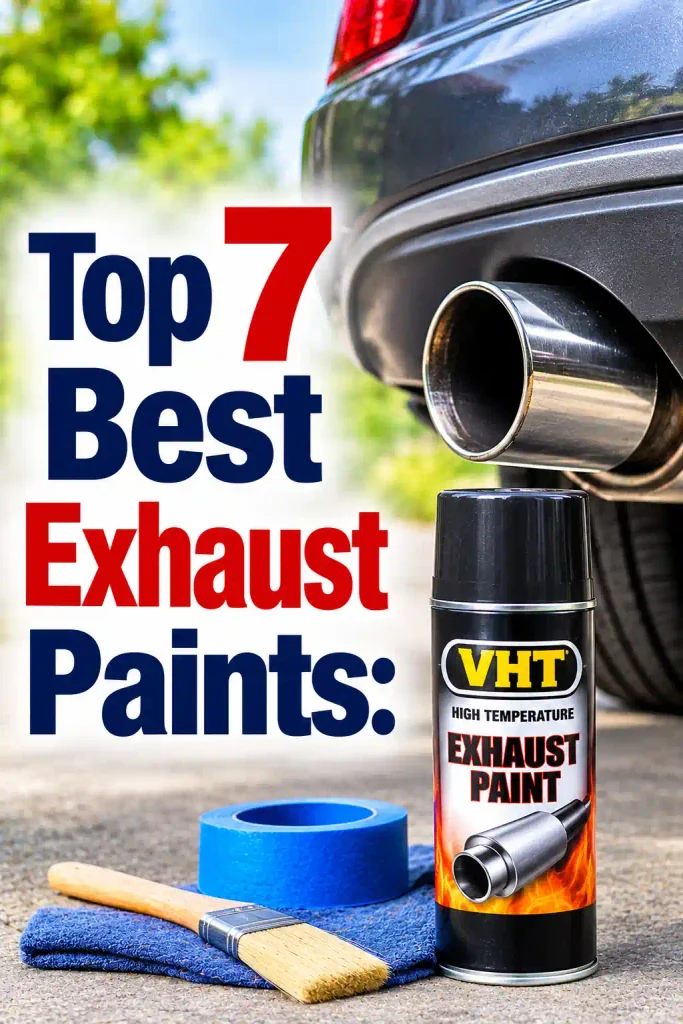
The right high-temperature exhaust paint should match the part you’re coating, its operating temperature, and the metal it’s made from. Some formulas are designed for extremely hot headers and manifolds, while others are better suited to exhaust pipes, mufflers, and tailpipes. Below, we’ll compare seven options and explain what to consider before buying.
Our Top Picks
- Best Overall: VHT FlameProof High Temperature Coating
- Best Automotive Spray Option: Rust-Oleum Automotive High Heat Spray Paint
- Best for Factory-Style Manifold Finish: Eastwood Factory Gray Hi-Temp Coating
- Best for Continuous High Heat: KBS XTC Xtreme Temperature Coating
- Best Brush-On Option: POR-15 High Temp Heat-Resistant Paint
- Best for Aluminum Finish: Seymour Hot Spot High-Temperature Paint
- Best for Stainless Steel Compatibility: U-POL RAPTOR Flameproof Coating
7 Exhaust Paints Comparison Table
| Product Name | Best For | Check Price |
|---|---|---|
| VHT FlameProof High Temperature Coating | Headers and exhaust manifolds | Check on Amazon |
| Rust-Oleum Automotive High Heat Spray Paint | Automotive exhaust refinishing | Check on Amazon |
| Eastwood Factory Gray Hi-Temp Coating | Factory-style manifold restoration | Check on Amazon |
| KBS XTC Xtreme Temperature Coating | Continuous high-temperature applications | Check on Amazon |
| POR-15 High Temp Heat-Resistant Paint | Brush-on exhaust protection | Check on Amazon |
| Seymour Hot Spot High-Temperature Paint | Aluminum-colored high-heat finish | Check on Amazon |
| U-POL RAPTOR Flameproof Coating | Compatible stainless steel exhaust components | Check on Amazon |
Affiliate disclosure: As an Amazon Associate I earn from qualifying purchases.
Shopping note: These are Amazon search links for the named products, not confirmed individual listings. Check the exact product, temperature rating, metal compatibility, seller, and current availability before purchasing. Heat ratings are not directly interchangeable: some describe intermittent peak temperatures, while others specify continuous operating temperatures. Follow the product’s own technical data and curing instructions.
Top 7 Best Exhaust Paints Reviews
1. VHT FlameProof High Temperature Coating – Best Overall
VHT FlameProof is one of the most recognizable choices for painting automotive exhaust components. It is designed for extremely high-temperature applications, including headers, exhaust manifolds, downpipes, mufflers, and turbo housings. If you need a coating for a part that experiences intense heat, this product deserves a close look.
Its silicone-ceramic formulation is rated for intermittent temperatures between 1,300°F and 2,000°F, depending on the product and conditions. That makes it a more appropriate category of coating for hot exhaust components than ordinary engine enamel.
The aerosol format is useful for reaching around exhaust bends, joints, and narrow sections. It is available in several finishes and colors, including flat black, silver, gray, and other specialty options. This gives you some flexibility when restoring an older exhaust system or changing its appearance.
One important detail is that VHT FlameProof requires a proper heat-curing process. The manufacturer provides staged curing instructions for both on-vehicle and off-vehicle applications. Skipping that process can compromise the coating’s performance.
VHT also warns that its FlameProof coating does not bond well to stainless steel pipes. Aluminized and galvanized pipes require special preparation. Check the substrate guidance before purchasing.
Pros
- Rated for intermittent temperatures up to 2,000°F
- Designed for headers, manifolds, and exhaust systems
- Silicone-ceramic coating technology
- Several colors and finishes available
- Convenient aerosol application
Cons
- Requires a specific heat-curing process
- Not recommended by the manufacturer for stainless steel pipes
- Surface preparation is essential
- Temperature rating is intermittent, not continuous
Best for: Automotive headers, exhaust manifolds, and other compatible components exposed to very high intermittent temperatures.
Our verdict: VHT FlameProof is our best overall choice for serious exhaust-painting projects. Its high heat rating and exhaust-specific purpose make it a strong candidate for headers and manifolds, provided you follow the preparation, substrate, and curing instructions.
2. Rust-Oleum Automotive High Heat Spray Paint – Best Automotive Spray Option
Rust-Oleum Automotive High Heat Spray Paint is worth considering if you want a familiar automotive coating for a compatible high-temperature metal component. Rust-Oleum offers products designed for automotive refinishing and protection, making this range a convenient option to investigate for exhaust-related projects.
Its high-heat automotive formulation is commonly listed with an intermittent temperature rating of up to 2,000°F. However, confirm the rating and intended applications on the exact can you plan to purchase. Product versions and labeling can differ.
The spray format makes application convenient for exhaust parts with curves and detailed shapes. It can also help when you want an even finish without brush marks. Use light, overlapping passes rather than trying to cover the entire component with one heavy coat.
Rust-Oleum’s automotive high-heat products are also associated with corrosion protection. This can be useful when refinishing compatible metal components that face moisture and road exposure.
Before buying, distinguish this product from other Rust-Oleum high-heat paints intended for grills, stoves, or general metal surfaces. Similar product names do not mean identical exhaust compatibility or heat performance.
Pros
- Automotive-focused high-heat coating option
- Convenient aerosol application
- Useful for compatible metal refinishing
- Available in popular automotive finishes
- Worth comparing for DIY projects
Cons
- Exact temperature rating depends on the product version
- Proper curing may be required
- Not every Rust-Oleum high-heat product is suitable for exhaust parts
- Substrate compatibility must be checked
Best for: DIY automotive refinishing where the exact Rust-Oleum formula is approved for the exhaust component and its temperature exposure.
Our verdict: Rust-Oleum Automotive High Heat is a practical alternative to compare if you want an automotive spray coating from a widely recognized brand. Verify the specific product’s exhaust application and curing instructions before using it on a manifold or header.
3. Eastwood Factory Gray Hi-Temp Coating – Best for Factory-Style Manifold Finish
Eastwood Factory Gray Hi-Temp Coating is an appealing choice for restoring exhaust manifolds and headers while maintaining a traditional factory-style appearance. Many automotive restoration projects look better with a natural gray manifold finish than with a glossy black coating.
Eastwood rates this product for temperatures up to 1,400°F. Its manufacturer describes it as suitable for exhaust manifolds and headers, making it more relevant to these components than a general-purpose high-heat paint.
The factory gray color is particularly useful for classic car restorations and engine-bay projects where you want a relatively original appearance. It is available in aerosol and other application formats, depending on the product listing.
Another useful feature is its application flexibility. You can choose a spray or brush-on format according to the specific version. Eastwood also describes a curing process that uses heat from the engine’s exhaust gases to develop the coating.
As with other high-temperature products, preparation is important. Remove rust, loose scale, grease, and old coating before application. Follow the manufacturer’s instructions for the exact surface and curing procedure.
Pros
- Designed for exhaust manifolds and headers
- Temperature resistance up to 1,400°F
- Factory-style gray appearance
- Aerosol and other formats may be available
- Suitable for automotive restoration projects
Cons
- Limited color choice compared with some coatings
- Requires proper preparation and curing
- Not intended for every exhaust material
- Availability can vary by format
Best for: Restoring exhaust manifolds and headers when you want a traditional factory gray finish.
Our verdict: Eastwood Factory Gray is a strong option for restoration work. Its exhaust-focused formulation and distinctive finish make it especially useful when appearance matters alongside heat resistance.
4. KBS XTC Xtreme Temperature Coating – Best for Continuous High Heat
KBS XTC Xtreme Temperature Coating is a versatile high-temperature coating for metal components that experience substantial and repeated heat exposure. It is worth considering when you want more than a conventional aerosol paint.
The manufacturer rates its liquid XTC coating for continuous temperatures up to 1,500°F. Its aerosol versions have a different rating, so make sure you check which format you are buying. This distinction is important because the temperature rating of the liquid product should not automatically be applied to every aerosol version.
KBS XTC is available in multiple colors, including black, gray, silver, and other specialty finishes. Depending on the version, it can be applied with a brush, roller, or spray equipment. This flexibility can be useful when working on exhaust parts with different shapes and sizes.
The coating is designed for high-temperature metal applications such as headers and exhaust components. The manufacturer also describes resistance to thermal shock and weathering.
For corrosion protection, KBS offers a compatible zinc-rich primer system. However, the coating can also be applied directly to properly prepared metal for adhesion when the manufacturer’s instructions allow it.
Pros
- Liquid formula rated for continuous temperatures up to 1,500°F
- Aerosol and liquid options
- Multiple colors available
- Brush, roller, or spray application depending on version
- Designed for exhaust and other high-temperature metal surfaces
Cons
- Liquid and aerosol temperature ratings differ
- Preparation and application need care
- Some projects may benefit from the compatible primer system
- May require additional application equipment
Best for: Exhaust components requiring a high-temperature coating with a continuous-temperature rating and flexible application options.
Our verdict: KBS XTC is a compelling choice if you want a coating designed for sustained heat exposure. Pay close attention to the format you select, because the liquid and aerosol versions do not share the same published temperature limit.
5. POR-15 High Temp Heat-Resistant Paint – Best Brush-On Option
POR-15 High Temp Heat-Resistant Paint is a good alternative if you prefer a liquid coating rather than an aerosol spray. It is designed for metal surfaces exposed to high temperatures, including exhaust pipes, manifolds, and headers.
The manufacturer rates it for temperatures up to 1,200°F. It is a direct-to-prepared-metal coating, which means it does not require a separate primer or topcoat when used according to its instructions.
One advantage of a brush-on product is the ability to control application around smaller components and detailed areas. You can also avoid the overspray associated with aerosol products. Some versions may be suitable for spray application when used with the manufacturer’s recommended reducer and equipment instructions.
POR-15 offers different colors and finishes, including options intended to resemble traditional exhaust and manifold finishes. This makes it useful for both protective refinishing and restoration projects.
The most important point is that POR-15 High Temp has specific compatibility requirements. The manufacturer states that it is not compatible with other primers. Do not apply it over an unrelated coating system or assume a standard metal primer can be used underneath.
Pros
- Rated for temperatures up to 1,200°F
- Suitable for compatible manifolds, headers, and exhaust pipes
- Direct-to-prepared-metal application
- Brush-on application avoids aerosol overspray
- Weather, salt, and moisture resistance described by the manufacturer
Cons
- Lower temperature rating than some header-specific coatings
- Primer compatibility is restrictive
- Requires careful surface preparation
- Application may take longer than aerosol spraying
Best for: Exhaust pipes and compatible metal components where you prefer a brush-on high-temperature coating.
Our verdict: POR-15 High Temp is a worthwhile choice for people who want a liquid coating and do not need the highest available intermittent heat rating. Its direct-to-metal application is convenient, but follow its primer restrictions carefully.
6. Seymour Hot Spot High-Temperature Paint – Best for Aluminum Finish
Seymour Hot Spot is an option to investigate if you want a high-temperature coating with an aluminum-colored finish. Silver and aluminum finishes can be useful for exhaust components where you want a metallic appearance rather than traditional flat black.
The Hot Spot product range is associated with high-temperature industrial and metal applications. Some versions are listed with heat resistance around 1,200°F, but check the exact product label and technical information before purchasing. Do not assume every color or version has identical performance.
Its aerosol format can make it convenient for smaller metal components, exhaust sections, and areas where a brush would be difficult to use. Spray application also helps create a more consistent-looking finish when applied in thin, even coats.
As with any exhaust coating, the temperature rating must match the actual component. A product suitable for a cooler exhaust section may not be appropriate for a manifold or header that experiences much higher temperatures.
Make sure the specific Seymour product is approved for the metal and application you have in mind. Prepare the surface carefully and follow the stated curing process.
Pros
- Aluminum-style finish option
- Convenient spray application
- High-temperature product range
- Useful for compatible metal refinishing
- Worth comparing for silver-colored exhaust components
Cons
- Exact temperature rating varies by product
- Not every version is intended for exhaust manifolds
- Requires proper curing
- Confirm the current technical information before buying
Best for: Compatible exhaust components where an aluminum-colored finish is preferred.
Our verdict: Seymour Hot Spot is worth considering if you want a metallic-looking high-temperature finish. Match the exact formula to the heat exposure rather than relying on the product family name alone.
7. U-POL RAPTOR Flameproof Coating – Best for Stainless Steel Compatibility
U-POL RAPTOR Flameproof Coating is an interesting alternative for exhaust systems made from materials that can be challenging for certain high-temperature paints. It is particularly worth investigating if your project involves stainless steel.
The manufacturer’s technical information lists a temperature rating of up to 1,000°C and identifies stainless steel, titanium, galvanized steel, and aluminum among the compatible substrates. This makes it a useful product to compare when a conventional exhaust coating has substrate limitations.
The product is supplied as an aerosol coating and is designed for high-temperature applications. Its flat finish can work well on exhaust components where you want a subdued appearance.
Application instructions are important. U-POL specifies multiple coats, an air-drying period, and a heat-curing procedure. The manufacturer also recommends its compatible Flameproof primer for maximum performance, so check the full coating system before beginning.
Availability may vary by seller and marketplace. Confirm that the Amazon listing is the genuine RAPTOR Flameproof product rather than a different RAPTOR coating intended for ordinary automotive or protective applications.
Pros
- Rated up to 1,000°C
- Manufacturer lists stainless steel among compatible substrates
- Also lists several other metal types
- Convenient aerosol application
- Designed for high-temperature coating applications
Cons
- Availability may be limited
- Requires the specified drying and heat-curing process
- Compatible primer may be recommended
- Must be distinguished from other RAPTOR products
Best for: Compatible stainless steel and other listed metal exhaust components where the coating’s substrate approvals match the project.
Our verdict: U-POL RAPTOR Flameproof is a useful option when stainless steel compatibility is a priority. Check the current technical data sheet and use the complete recommended system to achieve the intended performance.
Buying Guide: How to Choose the Best Paints for Exhaust
Choosing exhaust paint is different from selecting paint for ordinary automotive bodywork. The coating must tolerate heat, adhere to the exhaust material, and survive repeated temperature changes.
1. Match the Temperature Rating to the Exhaust Part
This is the most important factor when choosing an exhaust coating. Different sections of an exhaust system experience different temperatures.
- Exhaust manifolds and headers: These usually experience the highest temperatures and often require specialized very-high-temperature coatings.
- Downpipes: These can become extremely hot, so check the actual operating temperature and product rating.
- Mid-pipes: Their temperature exposure varies with engine design and distance from the engine.
- Mufflers: These may run cooler than headers, but still need an appropriate exhaust-rated coating.
- Tailpipes and exhaust tips: These are often cooler than manifolds, but should still be coated with a product approved for their operating conditions.
Do not choose paint based only on the highest number printed on the can. Check whether the rating is intermittent or continuous and whether it applies to the exact product version.
2. Choose a Product Specifically Designed for Exhaust Components
Not all high-heat paints are exhaust paints. Some are intended for wood stoves, grills, barbecue equipment, or industrial machinery.
Look for clear manufacturer guidance mentioning headers, manifolds, exhaust pipes, mufflers, or the particular component you intend to paint.
A product rated for a grill may not be suitable for an exhaust manifold. Similarly, ordinary engine enamel may not withstand the heat generated by headers.
3. Check the Metal Compatibility
Exhaust systems can use different materials, and each may require a different coating approach.
- Mild steel: Often suitable for compatible exhaust paints after rust removal and proper preparation.
- Cast iron: Common in exhaust manifolds and requires a coating approved for cast-iron exhaust applications.
- Stainless steel: Needs a product that specifically lists stainless steel as an approved substrate.
- Aluminized steel: May require special surface preparation or a compatible coating system.
- Galvanized metal: Requires careful attention to the manufacturer’s surface-preparation and safety instructions.
Never assume that a coating suitable for steel will automatically bond to stainless steel or galvanized metal.
4. Decide Between Spray and Brush-On Paint
Both application methods have advantages.
Spray paint: Aerosol coatings are convenient for exhaust pipes, bends, manifolds, and difficult-to-reach sections. They can provide a uniform finish, but masking and overspray control are important.
Brush-on paint: Liquid coatings are useful for smaller parts and detailed work. They provide more control and avoid aerosol overspray, although application may take longer.
Choose the format that suits the component and the manufacturer’s approved application method.
5. Consider the Finish and Color
Exhaust paints are available in several finishes.
- Flat black: A popular choice for headers, manifolds, and dark exhaust components.
- Satin black: Provides a slightly softer sheen than flat black.
- Aluminum or silver: Useful for a metallic appearance on compatible exhaust parts.
- Factory gray: Often chosen for classic car and original-equipment restoration projects.
- Clear: Can be useful in specialized coating systems when the manufacturer recommends it.
Choose a finish based on appearance, but never sacrifice temperature compatibility for color.
6. Look for Corrosion Protection
Heat is not the only challenge exhaust components face. They can also encounter moisture, road salt, dirt, and corrosive deposits.
If rust prevention is important, look for a coating that provides suitable corrosion resistance for the component. Some products require a compatible high-temperature primer or zinc-rich primer for additional protection.
Do not add an ordinary rust-preventive primer unless the exhaust-paint manufacturer specifically approves it. Some high-temperature coatings are designed to bond directly to prepared metal and may be incompatible with other primers.
7. Check the Curing Requirements
Many exhaust coatings need heat curing to develop their intended performance. Air drying alone may not complete the process.
Before purchasing, check:
- Initial drying time
- Recommended waiting period before heating
- Required heat stages
- Cooling periods between stages
- Whether curing takes place on or off the vehicle
- Any temperature limits for nearby components
Different brands use different curing procedures. Follow the exact instructions for your chosen paint rather than combining steps from different products.
8. Consider Coverage and Project Size
Aerosol cans are convenient for small parts, but they may not be economical for a complete exhaust system.
Check the manufacturer’s coverage estimate and consider the shape of the component. A complex manifold with many bends and branches may use more coating than a straight pipe of similar length.
For larger projects, compare aerosol options with brush-on or liquid coatings. Also account for any primer or compatible finishing product required by the manufacturer.
9. Consider Your Budget
The cheapest exhaust paint is not necessarily the best value. A coating that cannot withstand the temperature may need to be stripped and reapplied.
Compare the temperature rating, substrate compatibility, coverage, finish, and curing requirements. Buying a product that matches the component can save time and money over repeated repainting.
How to Paint an Exhaust Pipe or Manifold
Proper preparation is essential for a durable exhaust finish. Follow these general steps, adjusting them to the exact instructions supplied with your coating.
Step 1: Remove the Exhaust Component When Appropriate
If practical, remove the exhaust pipe, manifold, or other component before painting. This makes it easier to reach hidden areas and control overspray.
If you are working on an installed component, make sure the vehicle is completely cool, safely supported, and protected against accidental paint contact with surrounding parts.
Step 2: Remove Rust and Old Coating
Remove loose rust, flaking paint, carbon deposits, and scale using suitable mechanical preparation methods.
A high-temperature coating is not designed to hide loose corrosion or create a stable surface over deteriorating material. Work toward the clean metal condition required by the paint manufacturer.
Step 3: Clean and Degrease the Surface
Remove grease, oil, dirt, and sanding residue with a cleaner approved for the metal and coating system.
Allow the component to dry completely. Oil or moisture left on the surface can interfere with adhesion.
Step 4: Mask Areas That Should Not Be Painted
Protect mounting faces, threads, sensor openings, gasket surfaces, and other areas that should remain free of paint.
If you are spraying an installed exhaust component, protect nearby wiring, rubber parts, bodywork, and other surfaces from overspray.
Step 5: Apply the Recommended Primer, If Required
Some coating systems require a compatible high-temperature primer, while others are designed for direct application to prepared metal.
VHT FlameProof, for example, offers a matched primer system. POR-15 High Temp, on the other hand, is specified as a direct-to-prepared-metal coating and is not compatible with other primers.
Follow the instructions for the exact product you purchased.
Step 6: Apply Thin, Even Coats
Shake or mix the paint according to the label. Apply thin, even coats using the recommended distance and application method.
For aerosol products, keep the can moving and overlap each pass slightly. Avoid applying a heavy coat that may run or cure unevenly.
For brush-on coatings, spread the paint evenly and avoid leaving thick accumulations around corners and joints.
Step 7: Allow the Coating to Dry
Wait for the period specified by the manufacturer before handling or heat curing the component.
Do not rush this stage. The coating may feel dry on the surface without being ready for its required curing process.
Step 8: Complete the Required Heat Cure
Follow the exact heat-curing instructions printed on the product or supplied in its technical data sheet.
Some products require several stages of heating and cooling. Others use a specified operating-temperature cycle. Do not assume that simply starting the engine and driving away will cure every exhaust paint correctly.
Perform any on-vehicle curing outdoors in a suitable, well-ventilated area, following the manufacturer’s safety precautions.
Step 9: Inspect the Finished Surface
After the coating has cooled, inspect it for missed areas, runs, peeling, or other problems.
If the coating does not look or behave as expected, check the preparation and curing instructions before applying additional material.
Common Mistakes to Avoid When Using Exhaust Paint
Using Ordinary Spray Paint
Standard spray paint is not designed for exhaust temperatures. It can burn, discolor, blister, or peel. Use a coating specifically approved for the component’s heat exposure.
Choosing Paint Only by Its Maximum Temperature
A rating of 2,000°F does not automatically mean the product is suitable for every exhaust component. Check whether the rating is intermittent or continuous and whether the exact metal is approved.
Skipping Surface Preparation
Paint applied over loose rust, grease, or scale may fail prematurely. Prepare the surface as directed before coating it.
Ignoring Stainless Steel Compatibility
Some exhaust paints specifically warn against stainless steel. Check the manufacturer’s approved substrates before applying the coating.
Applying Too Much Paint
Heavy coats can produce runs, uneven drying, and poor curing. Apply the recommended number of thin coats instead.
Skipping the Heat-Curing Process
Some coatings need a staged heat cycle to reach their intended performance. Follow the manufacturer’s curing instructions rather than treating air drying as the complete process.
Mixing Different Coating Systems
Primers, topcoats, and exhaust paints are not automatically compatible. Use the manufacturer’s recommended system and avoid adding unrelated products.
Painting a Hot Exhaust
Never apply paint to a hot exhaust component. Allow it to cool completely and follow all product safety instructions.
Exhaust Paint vs. Engine Enamel: What’s the Difference?
Exhaust paint and engine enamel are both used for automotive metal surfaces, but they are designed for different temperature conditions.
| Feature | Exhaust Paint | Engine Enamel |
|---|---|---|
| Main purpose | Exhaust components exposed to intense heat | Engine blocks and other engine surfaces |
| Heat resistance | Often much higher, depending on formula | Generally lower than specialist exhaust coatings |
| Typical application | Headers, manifolds, pipes, and mufflers | Engine blocks, brackets, and compatible engine parts |
| Formulation | Often silicone-based or ceramic-enhanced | Varies by product |
| Curing | May require a specific heat-curing cycle | Depends on the product |
| Best use | Exhaust parts within the product’s rating | Engine components within the enamel’s rating |
For exhaust manifolds and headers, choose a dedicated exhaust coating with a suitable temperature rating. Do not assume that a product labeled engine enamel can handle exhaust heat.
Frequently Asked Questions
1. What is the best paint for exhaust pipes?
VHT FlameProof is our best overall option to compare for compatible exhaust components. It is designed for exhaust systems and rated for intermittent temperatures up to 2,000°F. Check the exact metal compatibility and curing instructions before applying it.
2. What paint should I use on exhaust manifolds?
Choose a specialized high-temperature coating specifically approved for exhaust manifolds. VHT FlameProof and Eastwood Factory Gray Hi-Temp Coating are two options worth comparing. Match the product’s temperature rating to the manifold’s actual heat exposure.
3. Can I use regular spray paint on an exhaust pipe?
No. Ordinary spray paint is not designed for the extreme temperatures of an exhaust system. It may burn, blister, discolor, or peel. Use a dedicated exhaust coating instead.
4. How much heat can exhaust paint withstand?
It depends on the product. Some specialist coatings are rated for intermittent temperatures up to 2,000°F, while others have lower continuous-temperature ratings. Always distinguish between intermittent and continuous ratings.
5. Is VHT FlameProof good for exhaust manifolds?
Yes. VHT identifies headers and exhaust manifolds as intended applications and rates FlameProof for intermittent temperatures up to 2,000°F. It requires proper preparation and staged heat curing, and the manufacturer warns that it does not bond well to stainless steel pipes.
6. Can I paint a stainless steel exhaust pipe?
Yes, but only with a coating that specifically approves stainless steel. Some exhaust paints have substrate restrictions. U-POL RAPTOR Flameproof is one option whose manufacturer lists stainless steel as a compatible surface.
7. Do I need primer before applying exhaust paint?
It depends on the coating system. Some products require a matched high-temperature primer, while others are designed for direct application to prepared metal. Follow the manufacturer’s instructions rather than using an ordinary automotive primer.
8. Does exhaust paint need to be heat cured?
Many high-temperature exhaust coatings require heat curing to develop their intended properties. The process varies by product and may involve several heating and cooling stages. Follow the instructions supplied with the exact paint.
9. Can I paint an exhaust without removing it from the vehicle?
Some products allow on-vehicle application and curing. However, removing the component can make surface preparation and application easier. If you paint it while installed, protect nearby parts and follow the manufacturer’s safety instructions.
10. How many coats of exhaust paint should I apply?
The number of coats depends on the product. Many aerosol coatings recommend multiple thin coats rather than one thick layer. Check the label for the recommended coat count, flash time, and total drying period.
11. Why is my exhaust paint peeling?
Common causes include inadequate surface preparation, incompatible metal, incorrect application thickness, skipped curing, or using a coating with an insufficient temperature rating. Check the manufacturer’s instructions and identify the cause before repainting.
12. Can exhaust paint prevent rust?
A compatible exhaust coating can help protect prepared metal from moisture and corrosion. However, it cannot repair badly corroded metal or compensate for poor preparation. Some projects may require a specific high-temperature primer or corrosion-protection system.
13. Is black or silver exhaust paint better?
Neither color is automatically more durable. Choose a finish that is available in a formula rated for your exhaust component. Black is popular for headers and manifolds, while silver or aluminum finishes are often chosen for a metallic appearance.
14. Can I use exhaust paint on a muffler?
Yes, if the product specifically allows muffler applications and its temperature rating matches the component. Check the manufacturer’s instructions because mufflers and headers experience different heat conditions.
Final Words
The best exhaust paint should match the temperature, metal type, and location of the component you’re refinishing. VHT FlameProof is our overall pick for compatible headers and manifolds, while Rust-Oleum Automotive High Heat is worth comparing for automotive refinishing. Eastwood Factory Gray is a strong choice for restoration projects, and KBS XTC is appealing when you need a coating with a published continuous-temperature rating.
Before buying, check the exact product specifications, prepare the metal carefully, and follow the recommended curing process. Choosing the right coating and applying it correctly can help protect your exhaust components and maintain a cleaner finish.
Helpful Resources
- VHT – FlameProof High Temperature Coating – Manufacturer information about temperature ratings, approved exhaust applications, substrate limitations, and curing instructions.
- KBS Coatings – XTC Xtreme Temperature Coating – Official product information covering continuous heat resistance, application methods, and compatible high-temperature coating options.