
Leather boots bend, crease, and rub against other surfaces with regular wear, so choosing the right paint is essential for a finish that lasts. The best flexible leather paint for boots should adhere to properly prepared leather, move with the material, and resist cracking or peeling as the boots flex. Ordinary craft paint may look good at first, but it isn’t necessarily formulated for footwear.
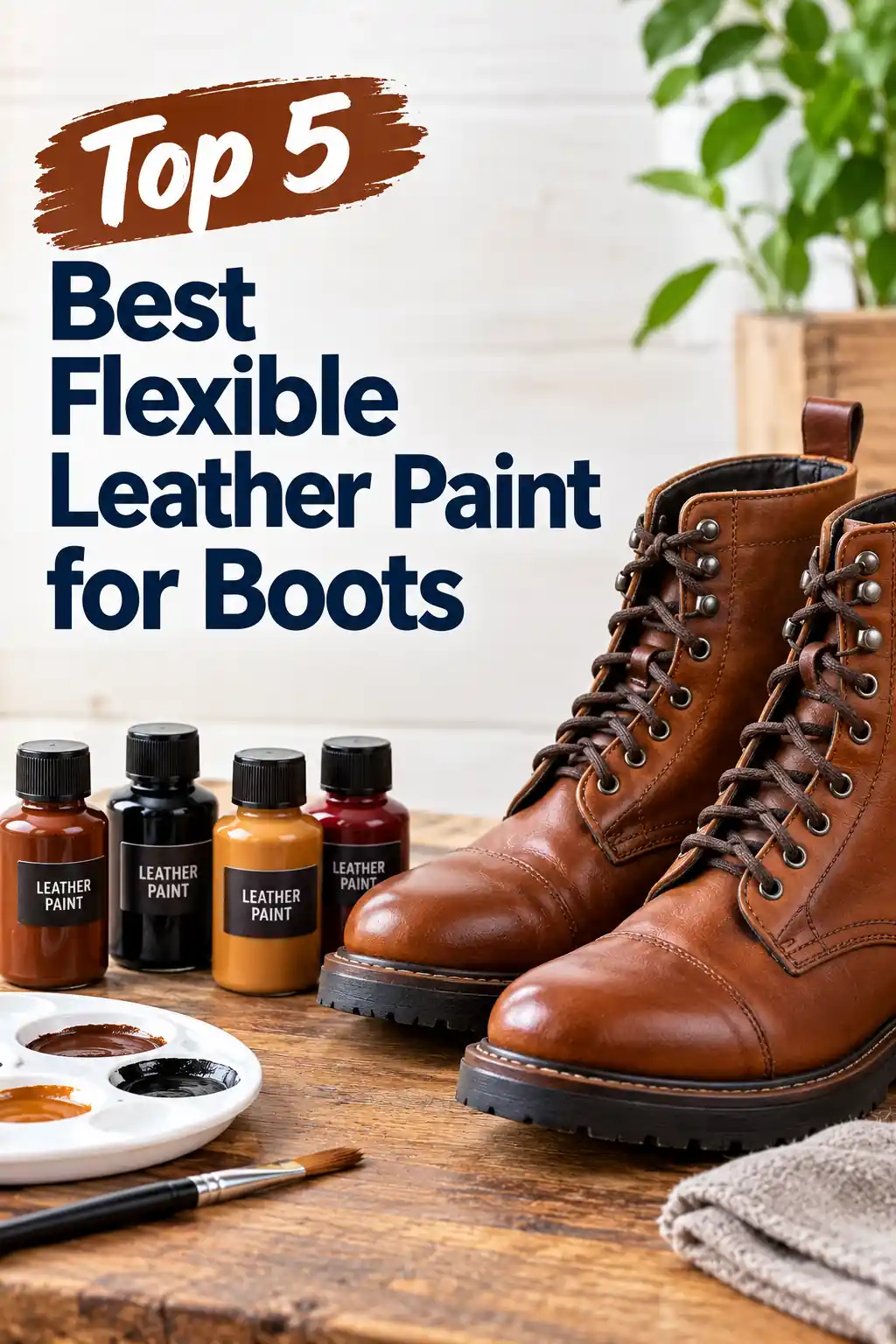
Whether you’re restoring faded leather, covering scuffs, or giving an old pair of boots a fresh color, this guide compares five paint options and finishes worth considering. Before buying, make sure the product matches your boot material and intended use.
Affiliate disclosure: As an Amazon Associate I earn from qualifying purchases.
Top 5 Best Flexible Leather Paint for Boots at a Glance
| Product Name | Best For | Check Price |
|---|---|---|
| Angelus Acrylic Leather Paint | Best overall for flexible leather boot surfaces | Check on Amazon |
| Tarrago Sneakers Paint | Smooth leather boot color restoration | Check on Amazon |
| Angelus Acrylic Leather Paint Best Sellers Kit | Custom colors and multiple projects | Check on Amazon |
| Jacquard Lumiere Acrylic Paint | Metallic accents and decorative details | Check on Amazon |
| Fiebing’s Acrylic Resolene | Protective finishing coat for compatible leather projects | Check on Amazon |
Important: These products serve different purposes. Angelus and Tarrago are options to investigate for coloring suitable leather footwear, while Jacquard Lumiere is intended for decorative effects and Fiebing’s Acrylic Resolene is a finish—not a substitute for leather paint. Check each label for compatibility with your particular boot material and intended application.
1. Angelus Acrylic Leather Paint
Best for: Flexible color changes and restoring smooth leather boots
Angelus Acrylic Leather Paint is a strong starting point for people who want to recolor or customize smooth leather footwear. It is formulated for leather-related projects, including shoes, and is available in a broad range of colors. That makes it useful for refreshing worn-looking panels, covering scuffs, or creating a completely different look.
Its biggest advantage is that it is designed for flexible leather surfaces rather than as a general-purpose craft paint. Proper surface preparation and thin coats remain important, particularly around the toe box, ankle, and other areas that repeatedly bend during walking.
Pros
- Formulated for leather and footwear projects.
- Available in many colors.
- Suitable for touch-ups and creative customization.
- Water-based formula makes brush cleanup easier before the paint dries.
Cons
- Requires proper preparation for reliable adhesion.
- Thick coats may produce an uneven finish or crack more readily.
- May not be appropriate for suede, nubuck, or heavily textured leather without specific product guidance.
Our recommendation: Start with Angelus if you want an all-purpose paint for suitable smooth leather boots. Clean the surface, use a compatible leather preparer when required, and apply several thin coats rather than one thick layer.
2. Tarrago Sneakers Paint
Best for: Recoloring and refreshing smooth leather footwear
Tarrago Sneakers Paint is another option to consider when your goal is to restore or change the appearance of leather footwear. It is marketed for sneaker customization, so check the product instructions carefully before using it on boots. For smooth leather boots, it may be worth considering if the manufacturer confirms compatibility with your material and finish.
This type of footwear paint can be useful for localized repairs, such as faded panels or scuffed areas, where you want the refreshed section to blend with the surrounding surface. Color matching is especially important for boots with a factory finish, since a shade that looks right in the bottle may appear different after drying.
Pros
- Designed for footwear customization.
- Worth considering for targeted color restoration.
- Useful for matching or refreshing selected leather panels.
- Available in different colors and finishes, depending on the product.
Cons
- Confirm boot compatibility before use.
- A small bottle may not be sufficient for a large color change.
- Surface preparation and careful application are still necessary.
Our recommendation: Consider Tarrago for smooth leather footwear when its instructions cover your boot material. Test the color on a hidden area first, and avoid assuming that every sneaker product is suitable for every boot.
3. Angelus Acrylic Leather Paint Best Sellers Kit
Best for: Custom colors and several pairs of boots
If one paint color isn’t enough, the Angelus Best Sellers Kit is worth considering. A multi-color set gives you more room to mix shades, add decorative details, or work on several footwear projects without buying each color separately.
A kit can be particularly useful for artistic designs, contrasting panels, stripes, and small accents. However, buying more colors doesn’t automatically make a finish more durable. Every color still needs suitable surface preparation, thin application, and sufficient drying and curing time.
Before purchasing, check the current kit contents, bottle sizes, and instructions. Sets can vary, and you should confirm that the included paints are appropriate for your intended leather surface.
Pros
- Offers multiple colors in one purchase.
- Useful for custom designs and color mixing.
- Convenient for people working on more than one project.
- Reduces the need to buy individual colors one at a time.
Cons
- May cost more upfront than a single bottle.
- Some colors may go unused.
- Does not replace a suitable preparer or protective finish when needed.
Our recommendation: Choose the kit if you plan to customize several pairs of boots or need a range of colors. If you’re only covering a small black scuff or refreshing one solid-color boot, a single bottle may be the more economical choice.
4. Jacquard Lumiere Acrylic Paint
Best for: Metallic details and decorative accents
Jacquard Lumiere is an option for adding metallic or pearlescent effects to compatible surfaces. It may suit decorative boot projects where you want a distinctive accent rather than a complete, conventional leather recoloring job.
Think metallic panels, small patterns, or artistic highlights rather than an entire boot that will experience constant flexing and abrasion. Before using it on footwear, confirm that the exact product and application method are appropriate for your leather type and expected wear.
Pros
- Offers metallic and pearlescent effects.
- Useful for decorative designs and accents.
- Provides an alternative to standard solid-color finishes.
- Can help create a distinctive custom look.
Cons
- Not the first choice for a basic full-boot color restoration.
- Footwear compatibility should be verified before use.
- A protective finish may be needed, depending on the application.
Our recommendation: Choose Jacquard Lumiere for artistic details when its instructions support the surface you’re painting. For high-flex areas such as the toe crease, test the complete paint-and-finish system on a discreet spot before committing to the whole boot.
5. Fiebing’s Acrylic Resolene
Best for: Finishing compatible leather projects
Fiebing’s Acrylic Resolene is a protective leather finish rather than a color paint. It is included here because the durability of a boot project depends not only on the color layer but also on whether the final finish is compatible with the leather and paint beneath it.
A finish can alter the appearance, sheen, and feel of a surface. Applying an incompatible product over paint may cause adhesion problems or an unwanted appearance, so don’t assume that any leather sealer will work with any paint.
Pros
- Designed as a leather finishing product.
- Can provide a protective finish on compatible projects.
- Available for people seeking a finished surface after leather treatment.
- Useful to consider when planning a complete recoloring system.
Cons
- Does not replace the paint itself.
- Compatibility with the chosen paint must be confirmed.
- May change the final sheen or appearance.
- Not every finish is appropriate for every type of boot leather.
Our recommendation: Consider Resolene only if the manufacturer confirms it is suitable for your leather and the paint you’ve chosen. Follow the label’s application instructions, and test the entire system on a hidden area first.
What to Look for in Flexible Leather Paint for Boots
1. Confirm the boot material
Not all boots are made from the same material. Smooth finished leather, suede, nubuck, synthetic leather, and rubber may require different treatments. A paint suitable for smooth leather should not automatically be used on suede or nubuck, where it can change the texture.
Read the manufacturer’s surface-compatibility instructions before buying. If your boots are waterproofed, heavily coated, or made from a synthetic material, check whether the product is designed to adhere to that finish.
2. Prioritize flexibility
Boots move with every step. The toe area bends, the ankle flexes, and the sides may rub against each other. A paint intended for flexible leather surfaces is generally a better starting point than ordinary acrylic craft paint.
Even flexible paint can fail if it is applied too thickly, put over dirt or wax, or used on a surface it cannot bond to. Preparation and application matter just as much as the product choice.
3. Choose a suitable finish
A matte finish can look natural on some boots, while satin or gloss may suit a more polished design. Consider how the finish will look beside the boot’s original material and whether you need a color match or a creative transformation.
4. Check the expected wear
Work boots and outdoor boots may experience more abrasion, moisture, mud, and repeated flexing than fashion boots worn occasionally. Paint alone may not make footwear waterproof or suitable for heavy-duty work. If the boots are safety footwear, avoid altering areas or materials in ways that could compromise their performance.
5. Plan for preparation and curing
Look for instructions explaining how to clean and prepare the leather, how many coats to apply, how long to wait between coats, and how long the paint needs to cure before use. Don’t rely only on the surface feeling dry; curing may take longer.
How to Paint Leather Boots Without Cracking
- Clean the boots. Remove dirt, dust, oils, and shoe-care residue using a cleaner suitable for the material.
- Prepare the surface. Use a compatible leather preparer or deglazer only if the paint manufacturer recommends it. Test first in a hidden spot.
- Mask areas you don’t want painted. Protect soles, eyelets, stitching, and hardware as needed.
- Apply thin coats. Use a suitable brush or sponge and avoid leaving thick pools of paint in creases.
- Allow each coat to dry. Follow the product’s directions rather than rushing to add the next layer.
- Check the coverage. Add another thin coat if necessary instead of trying to cover everything at once.
- Use a compatible finisher if required. Confirm that it works with both the paint and the boot material.
- Allow full curing. Wait for the recommended time before wearing the boots, especially outdoors or in wet conditions.
Common Mistakes to Avoid
Painting over dirt, polish, or wax
Contaminants can prevent paint from bonding properly. Clean and prepare the surface as directed before you start.
Applying one thick coat
Thick paint can dry unevenly, look unnatural, and be more prone to cracking in flex zones. Several thin coats are usually a better approach.
Using the wrong paint on suede or nubuck
These materials have a nap that can be flattened or covered by conventional leather paint. Use a product specifically intended for suede or nubuck, or choose a suitable dye or restoration treatment instead.
Skipping the test patch
Always test the color, adhesion, flexibility, and finish in a discreet area. A product may look different after drying, and the original coating can affect how it performs.
Wearing the boots before the paint cures
Paint that feels dry to the touch may not be fully cured. Wearing the boots too soon can lead to scuffs, tackiness, or damage to the new finish.
Frequently Asked Questions
What is the best flexible leather paint for boots?
Angelus Acrylic Leather Paint is a strong starting option for suitable smooth leather boots because it is formulated for leather and footwear projects. Tarrago may also be worth considering when its instructions confirm compatibility with your boots. The best choice depends on the material, finish, and intended use.
Will flexible leather paint crack on boots?
It can crack if the surface isn’t prepared correctly, the paint is incompatible, coats are too thick, or the boots are worn before curing. Choosing a paint designed for flexible leather and following its application instructions can reduce the risk, but no product can guarantee that cracking will never occur.
Can I use acrylic craft paint on leather boots?
Ordinary acrylic craft paint isn’t the best default for boots because it may not adhere or flex well enough for repeated walking. Choose a product formulated for leather footwear, and follow the manufacturer’s preparation and finishing instructions.
Do leather boots need a sealer after painting?
Not always. Whether you need a finisher depends on the paint, leather type, and intended use. If you apply one, confirm compatibility with the paint and follow the manufacturer’s instructions. A sealer does not automatically make boots waterproof.
Can I paint suede boots?
Don’t assume that smooth-leather paint is suitable for suede. Conventional paint can change the nap and texture. Look for a product specifically intended for suede or nubuck and test it in an inconspicuous area before proceeding.
How long should leather boot paint dry before wearing?
Drying and full curing are different. Follow the product label for the time between coats and the recommended curing period before wearing the boots. Temperature, humidity, coat thickness, and ventilation can affect the process.
Final Words
The best flexible leather paint for boots should match the boot material, adhere to the prepared surface, and tolerate the movement that comes with walking. Angelus Acrylic Leather Paint is a practical first option for suitable smooth leather, while Tarrago may suit compatible footwear restoration. Angelus’s multi-color kit is useful for custom designs, and Jacquard Lumiere is worth considering for decorative metallic details. Fiebing’s Acrylic Resolene is a finishing product, not a replacement for paint.
For the best chance of a durable result, prepare the leather properly, apply thin coats, test any finishing product for compatibility, and allow the paint to cure fully before wearing your boots.