
Choosing the best paint for metal doors means finding a coating that adheres well, resists rust, and creates a durable finish. Whether you are refreshing a steel front door, repainting a garage entry door, or updating an interior metal door, the right paint can improve its appearance and help protect the surface from everyday wear and weather.
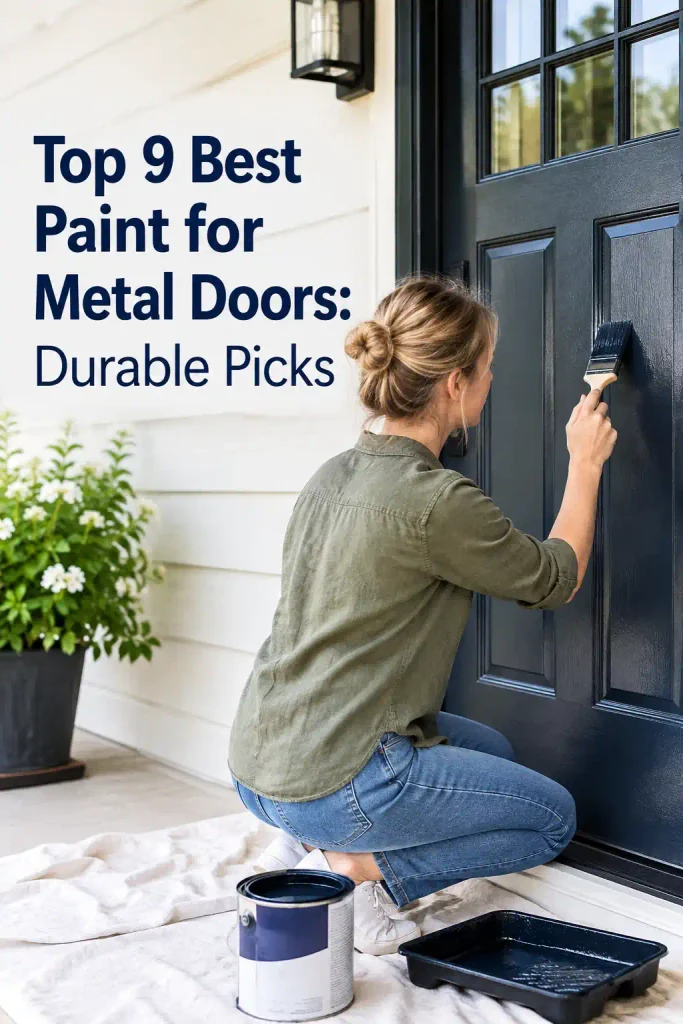
In this guide, we compare nine paint options for metal doors, explain which projects each suits best, and cover the preparation steps that help paint last. Always check the product label for compatibility with your specific metal door, existing coating, and indoor or outdoor exposure.
Top 9 Best Paint for Metal Doors: Quick Comparison
| Product Name | Best For | Check Price |
|---|---|---|
| 1. Rust-Oleum Protective Enamel | General metal doors and protective finishes | Check on Amazon |
| 2. Rust-Oleum Stops Rust Door Paint | Exterior doors where the exact product is available and approved | Check on Amazon |
| 3. Rust-Oleum Universal All Surface Spray Paint | Suitable metal doors and small projects needing spray application | Check on Amazon |
| 4. Krylon COLORmaxx Spray Paint | Small metal doors and projects suited to aerosol application | Check on Amazon |
| 5. Benjamin Moore DTM Acrylic Paint | Metal doors needing a direct-to-metal coating | Check on Amazon |
| 6. Sherwin-Williams Pro Industrial DTM Acrylic | Metal doors requiring a professional-style DTM coating | Check on Amazon |
| 7. Behr Premium Direct-to-Metal Paint | Suitable metal doors needing a DTM finish | Check on Amazon |
| 8. Rust-Oleum Stops Rust Brush-On Paint | Metal doors needing brush-applied rust protection | Check on Amazon |
| 9. POR-15 Rust Preventive Coating | Selected rust-prone metal surfaces requiring specialized preparation | Check on Amazon |
Affiliate disclosure: As an Amazon Associate I earn from qualifying purchases.
1. Rust-Oleum Protective Enamel
Best for: General-purpose metal doors and protective finishes
Rust-Oleum Protective Enamel is a useful option to consider for a metal door that needs a fresh color and a protective finish. Metal doors are exposed to fingerprints, bumps, changing temperatures, and, outdoors, rain and sunlight. A coating designed for metal can help the surface stand up to ordinary wear when it is properly prepared and the product is suitable for the conditions.
This product family includes different formulations and finishes, so choose the exact version carefully. Some are designed for rust prevention and general metal protection, but the label still determines whether a specific product is suitable for your door’s location and existing finish.
For a steel side door, utility-room door, or another compatible metal surface, a brush-on protective enamel may offer a practical way to refresh the appearance. A smooth, clean, sound surface is essential for good adhesion. Remove loose paint and rust, clean away grease, and use a compatible primer if the product instructions call for one.
Why consider it:
- Designed for protective coating applications on eligible surfaces.
- Available in a variety of colors and finishes, depending on the product.
- Useful for selected indoor and outdoor metal projects.
- Can be applied with a brush or other method specified by the formulation.
- Worth comparing for general metal-door repainting.
Potential drawback: Drying time, application method, and weather resistance differ between formulations. Do not assume every product in the range can be used on every exterior door.
Buying tip: Check the exact label for metal compatibility, rust protection, exterior suitability, and required primer. For a front door exposed to strong sunlight and rain, prioritize a formulation specifically approved for exterior use.
2. Rust-Oleum Stops Rust Door Paint
Best for: Exterior doors when an appropriate door-specific formulation is available
When shopping for exterior metal-door paint, you may come across listings using terms such as “door paint” and “Stops Rust.” These terms are not enough on their own to establish that a particular product is an official, currently available door-specific formulation. Check the exact product name and label before purchasing.
A rust-inhibiting coating can be valuable for an exterior steel door, particularly when the surface has been exposed to moisture. However, rust protection depends on proper preparation and the coating system—not simply on the product name. Loose corrosion must be addressed, and severely rusted or damaged metal may require additional treatment or repair.
If a suitable Rust-Oleum door coating is available for your project, compare its finish, application method, exterior rating, and compatibility with the existing paint. If you cannot verify the exact door-specific product, a clearly labeled Rust-Oleum Protective Enamel or Stops Rust product approved for the intended metal surface may be a more reliable alternative.
Why consider this category:
- Rust-inhibiting coatings can be useful for suitable exterior metal surfaces.
- Door-focused formulations, where verified, may simplify finish selection.
- Different finishes can help match the style of the property.
- A suitable coating can protect properly prepared metal from routine exposure.
- Useful to compare with other exterior-rated metal paints.
Potential drawback: The exact product name in online listings may be unclear, and not every rust-preventive paint is intended for doors or all exterior conditions.
Buying tip: Verify the manufacturer’s product name, label, and approved surfaces. If the listing cannot be confirmed, choose a product with explicit metal-door suitability rather than relying on a generic title.
3. Rust-Oleum Universal All Surface Spray Paint
Best for: Suitable metal doors and small projects requiring spray application
Rust-Oleum Universal All Surface Spray Paint is worth considering when you want a spray-applied finish for a metal door or a smaller metal door project. Spray paint can be useful on narrow trim, decorative panels, and areas where a brush may leave visible marks, provided the exact product is approved for the surface and exposure.
For a full-size door, aerosol application requires careful planning. Overspray can travel beyond the door, and an uneven spraying distance can create runs or patchy coverage. Protect nearby glass, walls, floors, hardware, and outdoor surfaces. Apply thin, even coats and follow the can’s recommended distance, recoat window, and drying instructions.
Spray application can work well on doors with relatively simple shapes, but raised panels and recessed areas require attention to avoid heavy buildup. The door should be clean, dry, and properly prepared before spraying.
Why consider it:
- Convenient aerosol application for compatible projects.
- Can help cover details that are awkward to reach with a brush.
- Available in different colors and finishes depending on the current range.
- Useful for smaller doors and decorative metal components.
- Can provide a uniform appearance when applied correctly.
Potential drawback: Aerosol cans may be expensive for large doors, and overspray, wind, and ventilation can complicate the job. A brush-on or roller-applied product may be more economical for a large, flat surface.
Buying tip: Confirm exterior suitability and the correct surface preparation requirements. For outdoor spraying, choose a suitable calm-weather location and follow all label precautions.
4. Krylon COLORmaxx Spray Paint
Best for: Small metal doors and projects suited to aerosol application
Krylon COLORmaxx Spray Paint is another spray-paint option to compare for suitable metal surfaces. It may be useful for a small metal door, a utility cabinet door, or a decorative metal panel where spray application is practical.
Aerosol paint can provide an even-looking finish when the surface is well prepared and the paint is applied in controlled, overlapping passes. The quality of the result depends on technique as well as the paint. Spraying too close to the surface can cause drips, while spraying too far away can create a rough, dry finish.
For a full exterior entry door, verify the exact product’s suitability for the exposure conditions. Not all general-purpose spray paints are interchangeable with a coating specifically designed for an exterior door. High-use doors may also benefit from a more durable coating system recommended for the substrate.
Why consider it:
- Convenient spray application for suitable metal projects.
- Useful for decorative details and smaller surfaces.
- Can reduce brush marks when applied correctly.
- Available in a variety of colors and finishes, depending on the range.
- Worth comparing for small-scale repainting tasks.
Potential drawback: Large doors can require multiple cans, and overspray can waste paint. Durability and weather resistance depend on the exact formulation and application.
Buying tip: Check the current label for metal compatibility and interior or exterior use. For a large, frequently handled front door, compare the overall cost and durability with a brush-on exterior enamel.
5. Benjamin Moore DTM Acrylic Paint
Best for: Metal doors requiring a direct-to-metal coating
Direct-to-metal, or DTM, coatings are designed for use on specified metal substrates and may reduce the need for a separate primer when the product’s instructions allow it. Benjamin Moore offers professional coating products, so verify the exact DTM formulation available through the manufacturer or an authorized dealer.
A DTM acrylic product may be worth comparing for a steel door, metal service entrance, or other approved metal surface. These coatings are particularly relevant when you want a system designed around metal adhesion rather than adapting an ordinary wall paint to a metal substrate.
However, DTM does not mean “apply over anything.” The surface still needs appropriate cleaning and preparation. Rust, loose coatings, oil, and contaminants can interfere with performance, and certain metals or existing finishes may require special preparation or a separate primer.
Why consider it:
- A DTM coating is intended for approved metal applications.
- Professional product ranges may offer several finish and performance options.
- Can simplify the coating system when direct application is permitted.
- Worth investigating for metal doors with specific performance requirements.
- May suit projects where the recommended system comes from a paint professional.
Potential drawback: Professional coatings may be easier to obtain through paint stores than general online retailers. Price, color availability, and application instructions vary by product.
Buying tip: Confirm the exact Benjamin Moore product name and technical data sheet. Ask the paint supplier whether it is suitable for your metal type, door location, and desired finish.
6. Sherwin-Williams Pro Industrial DTM Acrylic
Best for: Metal doors needing a professional-style DTM coating
Sherwin-Williams Pro Industrial DTM Acrylic is a product family worth investigating for metal doors where a coating designed for metal is required. DTM products are often considered for commercial or utility applications, but the correct choice depends on the exact product and the manufacturer’s performance specifications.
For example, a steel door in a workshop, shared building entrance, or service area may require a finish that adheres to the substrate and handles regular use. A DTM coating may be suitable if its technical information lists the door’s material and exposure conditions.
As with other DTM coatings, preparation remains important. Remove loose paint, address rust, and clean the surface according to the product instructions. If the door has a factory-applied coating, check whether the new paint can be applied over it after cleaning and scuff-sanding, or whether an adhesion test is recommended.
Why consider it:
- Professional coating family designed for specified industrial applications.
- Worth investigating for suitable metal doors and utility areas.
- May offer a streamlined coating system where direct application is approved.
- Useful when product specifications matter more than a general-purpose paint label.
- Can be selected with guidance from a paint supplier.
Potential drawback: Product availability and application requirements can differ from retail paints. It may be excessive for a simple residential door repainting project.
Buying tip: Consult the current technical data sheet and a Sherwin-Williams representative. Confirm the exact product, substrate preparation, primer requirements, and whether the coating is suitable for the door’s exterior exposure.
7. BEHR Premium Direct-to-Metal Paint
Best for: Suitable metal doors needing a DTM finish
A direct-to-metal paint is worth considering when you want a coating specifically intended for compatible metal surfaces. BEHR sells several paint and protective coating products, but the exact name “Premium Direct-to-Metal Paint” should be verified before you purchase. Retail listings and product names can vary, and not every BEHR paint is a DTM coating.
For this reason, treat this option as a product to verify rather than assuming that any BEHR premium paint is suitable for direct application to metal. Check the current product catalogue, the technical data sheet, and the label for the precise substrate and exposure conditions.
If a compatible BEHR DTM product is available, it may be appropriate for a properly prepared metal door when its instructions support that use. If the exact product cannot be verified, choose a clearly identified DTM paint or an exterior metal enamel with explicit metal-door compatibility.
Why consider this category:
- DTM coatings are formulated for specified metal substrates.
- A compatible product may simplify the primer-and-paint process.
- Useful to compare when shopping for an approved metal coating.
- The manufacturer’s specifications can help guide surface preparation.
- May be an option for eligible interior or exterior projects, depending on the exact product.
Potential drawback: The product name and availability must be confirmed. A general-purpose BEHR wall paint should not be substituted simply because it belongs to the same brand.
Buying tip: Verify the current product directly with BEHR or an authorized retailer. Do not purchase based only on a search result that loosely describes the paint as “metal paint.”
8. Rust-Oleum Stops Rust Brush-On Paint
Best for: Metal doors needing brush-applied rust protection
Rust-Oleum Stops Rust Brush-On Paint is worth considering for suitable metal doors where rust protection and brush application are priorities. Brush-on paint is particularly practical when you want to avoid aerosol overspray or need better control around edges and door panels.
A brush-on coating can be useful for metal doors with details, corners, or smaller areas that need careful coverage. For a broad, flat door, a suitable roller may help produce a smoother finish, with a brush used for edges and recessed sections if the product allows that application method.
The key is to prepare the door correctly. Remove loose rust and peeling paint, clean off contaminants, and apply any required primer or rust treatment according to the label. If the door has significant corrosion, investigate whether the metal is still structurally sound before painting.
Why consider it:
- Brush-on application offers control around edges and details.
- Rust-inhibiting formulations may be suitable for approved metal surfaces.
- Can be practical for small repairs and door repainting.
- Avoids some of the overspray associated with aerosol products.
- Available in different product variations and finishes.
Potential drawback: Brush marks may be visible if the paint is applied too thickly or worked after it begins to set. Exact exterior performance depends on the formulation.
Buying tip: Confirm that the chosen Stops Rust product is suitable for your door’s location and finish. Follow the specified coverage, drying time, and recoat window.
9. POR-15 Rust Preventive Coating
Best for: Selected rust-prone metal surfaces requiring specialized preparation
POR-15 Rust Preventive Coating is a specialized coating to consider for certain rust-prone metal surfaces. It is not a universal first choice for every household metal door, but it may be relevant when corrosion is the primary concern and the surface meets the product’s requirements.
Rust prevention depends heavily on preparation. Corroded metal must be treated according to the manufacturer’s specified process, and the coating may require a particular surface condition to perform as intended. The process may be more involved than cleaning and repainting a lightly weathered door.
Before using a specialized rust-preventive coating on an exterior entry door, verify its suitability for the door material, exposure, appearance, and any subsequent topcoat. Some coatings also have specific requirements for sunlight exposure, surface preparation, and recoating.
Why consider it:
- Specialized option for selected rust-prone metal surfaces.
- Worth investigating when corrosion protection is the main goal.
- Can be part of a more involved metal-restoration project.
- May be suitable for specific substrates and conditions when the label approves them.
- Offers a different approach from general-purpose decorative enamel.
Potential drawback: It may require more preparation and a different application process than a typical door paint. It is not necessarily the simplest choice for a lightly rusted residential door.
Buying tip: Read the current technical instructions before buying. Confirm whether the coating is appropriate for your door and whether it needs a compatible UV-resistant topcoat or other finishing steps.
How to Choose the Best Paint for Metal Doors
1. Decide whether the door is indoors or outdoors
An interior metal door may not need the same weather resistance as an exterior entry door. Outdoor doors experience rain, sunlight, temperature changes, and moisture, so choose a product explicitly approved for the conditions.
For a front or side door, prioritize a coating system that is suitable for exterior metal and the expected exposure.
2. Identify the metal and existing finish
Steel, galvanized metal, aluminum, and factory-coated doors can require different preparation methods. A primer suitable for bare steel may not be suitable for every other metal.
Check the door manufacturer’s recommendations if the door has a factory finish. If the existing coating is sound, cleaning and scuff-sanding may be sufficient for some paint systems, while others may require a compatible primer.
3. Check the level of rust
If the door is clean and rust-free, a suitable metal primer and finish paint—or an approved DTM system—may be enough.
If rust is present, remove loose corrosion and use a rust treatment or primer where the coating instructions require it. Severe corrosion, holes, or weakened metal may need repair or replacement.
4. Choose between brush-on, roller, and spray paint
Brush-on paint offers control around edges and decorative details. A small roller can help produce an even finish on broad, flat sections. Spray paint can work well on suitable projects but requires careful masking, ventilation, and control of overspray.
For a full-size door, compare the total amount of paint required and the effort involved with each application method.
5. Select the right finish
Satin and semi-gloss finishes are popular for doors because they can provide a clean appearance and are generally easier to wipe than flat finishes. Gloss finishes create a shinier appearance but may make surface imperfections more noticeable.
The best sheen depends on your style preference, the condition of the door, and the manufacturer’s available finishes.
6. Check the primer requirements
Some DTM products can be applied directly to approved metal surfaces, while other paints require a separate primer. Rusted metal may require a specific rust-inhibiting preparation system.
Do not assume that a paint labeled “metal paint” can always be applied directly to bare metal. Read the full preparation instructions.
7. Compare durability and maintenance
Consider how frequently the door is used and how exposed it is to the elements. A front door that gets strong sunlight and rain may need a different coating from an indoor utility door.
Review the product’s stated uses, recoat times, expected coverage, and maintenance recommendations before deciding.
How to Paint a Metal Door Step by Step
Step 1: Remove or protect the hardware
If practical, remove the handle, lock trim, kick plate, and other hardware. Otherwise, mask them carefully with painter’s tape. Protect glass panels and nearby surfaces.
Step 2: Clean the door
Wash away dirt, grease, fingerprints, and other residue with a cleaner suitable for the surface. Follow the cleaner’s directions and allow the door to dry completely.
Paint applied over grease or dust may fail to adhere properly.
Step 3: Remove loose paint and rust
Use an appropriate scraper, wire brush, or sanding tool to remove loose coating and corrosion. Avoid damaging the door or creating unnecessary dust.
If the existing paint may contain lead, follow applicable lead-safe procedures rather than dry-sanding or disturbing it casually.
Step 4: Sand the surface
Lightly scuff-sand sound glossy paint when the coating system requires it. Feather the edges of any remaining paint around repaired areas to reduce visible transitions.
Remove all sanding dust before moving to the next step.
Step 5: Treat rust and prime if needed
Use the rust treatment or metal primer specified for the substrate and paint system. If using a DTM product, confirm that direct application is permitted for the prepared surface.
Allow the primer or treatment to dry for the required time.
Step 6: Prepare the paint
Stir the paint thoroughly according to the manufacturer’s instructions. Do not thin it unless the label explicitly permits it and specifies how to do so.
Use a compatible brush, roller, or spray method.
Step 7: Apply the first coat
Apply a thin, even coat. On a paneled door, work carefully around the recessed areas and raised details, then paint the broad sections without leaving heavy buildup.
Avoid repeatedly brushing or rolling an area once the paint begins to set.
Step 8: Allow the paint to dry
Follow the product’s recoat instructions. Temperature, humidity, and airflow can affect drying, so do not rely only on touch.
Apply the next coat only when the label says it is appropriate.
Step 9: Apply the final coat
Apply another thin, even coat if required for coverage and durability. Inspect the edges and panels for drips, missed areas, and uneven coverage while following the product’s recommended application method.
Step 10: Allow the finish to cure
Drying is not the same as full curing. Avoid heavy use, harsh cleaning, and unnecessary contact until the coating has cured as directed.
If you removed the door from its hinges, make sure it is sufficiently cured before reinstalling it or allowing weather seals to press against the new paint.
Common Mistakes to Avoid When Painting Metal Doors
Skipping cleaning
Even a small amount of grease or residue can affect adhesion. Clean the surface thoroughly before sanding, priming, or painting.
Painting over loose rust
Loose rust can undermine the coating and cause premature peeling. Remove it and follow the product’s corrosion-preparation instructions.
Using ordinary wall paint
Interior wall paint is not automatically suitable for metal. Choose a product specifically approved for the metal substrate and intended exposure.
Forgetting primer requirements
Some products need a metal primer, while certain DTM products may allow direct application. Follow the exact coating system instead of assuming all metal paints work the same way.
Applying thick coats
Thick coats can sag, wrinkle, or dry unevenly. Apply the recommended film thickness and allow adequate drying time between coats.
Painting in unsuitable weather
Cold temperatures, high humidity, rain, and direct hot sunlight can interfere with application and drying. Follow the product’s specified temperature and weather limits.
Ignoring the door’s existing finish
Factory coatings and glossy paint may need special preparation. Check compatibility before applying a new coating over an unknown finish.
Closing the door too soon
Fresh paint can stick to weather stripping or the frame. Allow sufficient drying and curing time before closing the door tightly, following the manufacturer’s guidance.
Frequently Asked Questions
What is the best paint for metal doors?
For many suitable metal doors, a metal-rated protective enamel or a compatible direct-to-metal coating is a good starting point. Rust-Oleum Protective Enamel and verified DTM products are options to compare. The best choice depends on whether the door is indoors or outdoors, its metal type, and its condition.
Do I need primer before painting a metal door?
Not always. Some DTM paints allow direct application to approved, properly prepared metal surfaces. Other paints require a compatible primer, especially on bare metal or where rust protection is needed. Follow the product’s label.
What is the best paint for an exterior metal front door?
Choose an exterior-rated paint specifically approved for the door’s metal substrate and exposure. Consider sunlight, rain, temperature changes, and the existing finish. Proper cleaning, rust removal, and compatible priming are essential.
Can I paint a metal door without removing it?
Yes, in many cases. You can leave the door on its hinges if you can protect the surrounding area and access all the surfaces you need to paint. Removing the door may make preparation and painting easier, but it is not always necessary.
Should I use a brush or roller on a metal door?
A combination often works well: use a brush for edges, corners, and recessed panels, and a small roller for broad, flat areas. Spray application is another option when the product allows it and you can control overspray.
Can I paint over rust on a metal door?
Do not simply cover loose rust with ordinary paint. Remove loose corrosion and use a suitable rust-preventive primer or coating system as directed. If the metal is deeply corroded or weakened, repair or replacement may be necessary.
Is spray paint good for metal doors?
Spray paint can work on suitable metal doors and smaller projects, but it requires careful masking and application. For a full-size door, brush-on or roller-applied paint may be more economical. Confirm exterior suitability and follow the can’s directions.
What finish is best for a metal front door?
Satin and semi-gloss are popular choices because they provide a defined finish and are generally easier to clean than flat paint. The best finish depends on the door’s condition, the desired appearance, and the available product options.
How many coats of paint does a metal door need?
Many projects require more than one finish coat, but the exact number depends on the product, color change, surface condition, and coverage. Follow the manufacturer’s directions and allow the recommended drying time between coats.
How long does metal door paint take to dry?
Drying and recoat times vary by formulation and environmental conditions. Cool weather, high humidity, and poor airflow may slow drying. Follow the label and distinguish between dry-to-touch time and full cure time.
Can I paint a galvanized metal door?
Possibly, but galvanized metal may require specific cleaning and preparation, and not every primer or paint is compatible with it. Check the product’s technical instructions for galvanized surfaces before starting.
How do I stop a metal door from rusting again?
Remove existing loose rust, correct any source of persistent moisture, and use a compatible rust-inhibiting primer or coating system. Maintain the finish and repair chips promptly so exposed metal does not remain unprotected.
Final Words
The best paint for metal doors is one that matches the door’s material, condition, and exposure. Rust-Oleum Protective Enamel and Stops Rust products are worth comparing for suitable metal surfaces, while aerosol paints can be convenient for smaller projects. For specific adhesion or professional coating needs, investigate a verified DTM product from a paint supplier.
Before buying, verify the exact product name, approved substrate, exterior rating, primer requirements, and recoat instructions. Good cleaning, careful rust removal, appropriate priming, and thin, even coats will help you achieve a cleaner, more durable result.