
Finding the Best Waterproof Spray Paint for Outdoor Sports Gear is absolutely essential if you want to protect your expensive equipment from severe moisture, constant flexing, and harsh UV exposure. Whether it is a kayak hull meeting saltwater, a skateboard flying off a rain-soaked curb, or a mountain bike frame splattered with wet mud, a standard hardware-store spray paint will quickly crack and peel off. To achieve long-lasting results, your paint must be 100% waterproof on its own, offering standalone chemical barrier sealing, high impact resistance, and dynamic molecular elasticity without relying on a separate clear topcoat.
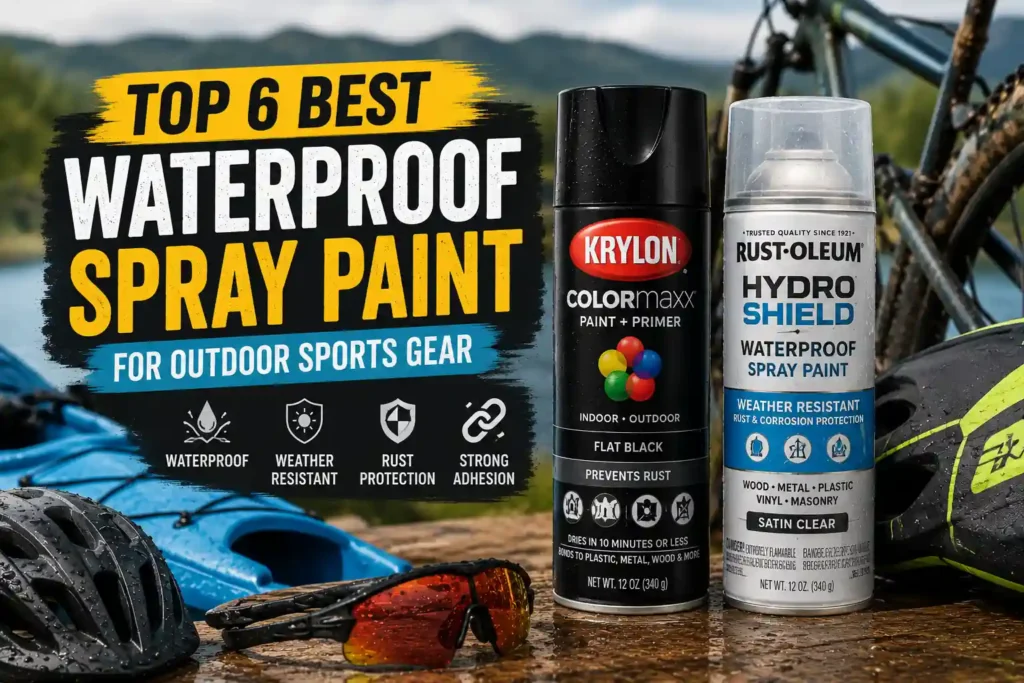
This comprehensive guide reviews the absolute top six standalone waterproof spray paints available in 2026. We break down the chemical engineering of these marine and high-adhesion coatings, analyze real-world performance benchmarks, and deliver a step-by-step masterclass to help you apply an indestructible finish to your gear.
Our Top Picks: Quick Recommendations
- Best Overall: Rust-Oleum Marine Topside — Outstanding performance for gear facing constant water contact or high humidity. It delivers a hard, commercial-grade enamel finish that completely resists peeling without needing a clear sealer.
- Best for Plastics & Composites: Krylon Fusion All-In-One — The go-to choice for dynamic sports equipment like helmets, protective pads, and snowboard topsheets. It fuses directly with plastic surfaces at a molecular level to handle bending and flexing.
- Best for Heavy Impact & Metals: Seymour Industrial MRO Epoxy — Built for high-abuse environments like steel bike frames, gear racks, and skate trucks. This heavy-solids epoxy cross-links to form a virtually chip-proof, rust-stopping protective shield.
Standalone Waterproof Spray Paint Comparison Matrix
Every product in this guide is 100% waterproof out of the can and engineered to function without a mandatory final clear coat sealer. They form impermeable, non-porous shields that stand up to the elements:
| Product Name | Target Application & Key Advantage | Check Latest Price |
| Rust-Oleum Marine Topside | Watercraft, Paddles & Extreme Wet Gear (Ultimate water immersion resistance) | Check Latest Price |
| Krylon Fusion All-In-One | Plastic Topsheets, Helmets & Composites (Molecular bonding with zero sanding) | Check Latest Price |
| Moeller Marine Professional | Outboard Motors, Alloys & Metal Decks (Extreme salt spray and corrosion shield) | Check Latest Price |
| Seymour Industrial MRO | Steel Frames, Skate Trucks & Heavy Impact (Maximum chip resistance under stress) | Check Latest Price |
| TotalBoat Wet Edge (Aerosol) | Marine Gear, Fiberglass & High-Gloss Decks (Advanced UV defense and water sheeting) | Check Latest Price |
| PlastiKote Marine Spray Paint | Boat Trailers, Heavy Gear & Wet Metal (Exceptional rust prevention in salt) | Check Latest Price |
The Chemical Engineering of True Waterproof Aerosols
To be classified as a true standalone waterproof coating for active outdoor gear, an aerosol paint formulation must possess three distinct chemical traits:
1. Cross-Linked Hydrophobic Density
Standard spray paints cure by solvent evaporation, leaving behind a slightly microscopic, porous paint matrix. Water molecules easily infiltrate these microscopic pores, breaking the paint bond over time. True waterproof paints utilize modified alkyd, polyurethane, or epoxy resins. As these resins dry, their polymer chains align tightly to create a non-porous plastic film that completely blocks water molecules from passing through.
2. Viscoelastic Elasticity
Outdoor sports gear is dynamic. When a longboard flexes or a bike frame encounters high-frequency trail vibrations, the coating faces intense shear stress. Premium waterproof formulas integrate plasticized rubber or acrylic segments into their resin bases. This keeps the cured paint film flexible enough to stretch and contract along with the equipment’s movements, eliminating the micro-fractures that trigger peeling.
3. Cathodic and Polar Adhesion
Waterproof paints designed for sports gear are engineered with strong polar attraction molecules. Instead of simply sitting on top of the wood, plastic, or metal, the paint chemicals actively bond with the microscopic pores of the material. This dense mechanical grip prevents moisture from creeping underneath the paint layer, even when the outer coating suffers deep scratches or surface abrasions.
Deep Product Reviews: The Top 6 Standalone Waterproof Paints
1. Rust-Oleum Marine Coating Topside Paint (Aerosol) — Best for Constant Wet Immersion
For sports gear that faces constant water contact, heavy humidity, or direct marine exposure, Rust-Oleum Marine Coating Topside Paint sets the industry benchmark for standalone protection.
- Chemical Design & Material Science: Originally developed for the punishing maintenance demands of boat hulls, decks, and marine components above the waterline, this paint is built around a heavy-duty, oil-modified alkyd polyurethane resin blend. It is highly optimized to resist structural UV degradation, preventing the paint from fading or chalking under prolonged sunlight.
- Standalone Waterproof Performance: Once applied, this formula cures into a dense, smooth enamel shield that actively repels fresh water, salt water, and heavy rain. It functions perfectly as a single-product solution, completely removing the need to apply a separate clear sealer or topcoat. Its slick, non-porous surface reduces fluid drag, making it perfect for watercraft and paddles.
- Pros: Outstanding marine-grade waterproofing; excellent gloss retention under high UV exposure; highly resistant to salt cracking; no topcoat required.
- Cons: Requires a longer full cure time (up to 72 hours) before it can be subjected to heavy impact or water friction.
2. Krylon Fusion All-In-One — Best for Plastics, Helmets, and Dynamic Composites
Plastics, carbon composites, and fiberglass laminates are notoriously difficult surfaces to paint without the coating peeling off. Krylon Fusion All-In-One features a specialized chemical formula designed to bond with these slick surfaces while maintaining a completely waterproof seal.
- Chemical Design & Material Science: Krylon Fusion uses a specialized acrylic-alkyd copolymer resin loaded with built-in chemical adhesion promoters. It alters the polar surface energy of slick plastics upon contact, allowing the paint to bond at a molecular level without requiring intensive sanding or acid etching.
- Standalone Waterproof Performance: Because the paint integrates directly into the plastic or composite substrate, it creates a unified, waterproof surface layer. Water cannot slip between the paint film and the plastic core. The cured film remains highly flexible, making it ideal for flexible sports gear like snowboard topsheets, protective knee pads, and helmet shells.
- Pros: Exceptional direct-to-plastic molecular adhesion; high structural flexibility that prevents cracking; rapid dry time; wide array of matte and satin finishes.
- Cons: Must be applied in multiple thin passes; spraying a single heavy coat can disrupt the self-leveling chemistry.
3. Moeller Marine Professional Spray Paint — Best for Metal Alloys and Aluminum Gear
Non-ferrous alloys, aluminum components, and marine metal hardware face severe oxidation risks when exposed to moisture and salt spray. Moeller Marine Professional Spray Paint provides an industrial-tier barrier specifically optimized for metal sports gear.
- Chemical Design & Material Science: This pro-grade aerosol utilizes an advanced, high-solids polyurethane enamel matrix combined with active chemical anti-corrosion inhibitors. It is engineered to withstand extreme high-speed water friction, thermal shocks, and continuous chemical exposure without lifting or blistering.
- Standalone Waterproof Performance: Moeller Marine dries into a hard, non-porous shield that isolates the underlying metal from moisture and air, blocking oxidation before it can start. Its high-solids formula means it lays down a thicker protective barrier per pass than standard consumer paints, providing excellent resistance against chips caused by flying gravel or sand.
- Pros: Unmatched corrosion and salt-spray resistance; high paint solids offer thick protective layers; exceptional durability against rock and gravel impacts.
- Cons: Emits strong solvent odors during application; requires a highly ventilated workspace or a proper outdoor setup.
4. Seymour Industrial MRO High-Solids Epoxy — Best for Heavy Impact and Steel Frames
If your outdoor gear is subjected to constant physical impacts, heavy abrasion, and rough handling—such as steel bike frames, skateboard trucks, or iron weight equipment—Seymour Industrial MRO High-Solids Epoxy is the ultimate heavy-duty solution.
- Chemical Design & Material Science: This industrial-grade aerosol is formulated with an oil-modified epoxy resin system. Epoxy is globally recognized for its exceptional mechanical hardness, chemical resistance, and tenacious adhesion to structural metals.
- Standalone Waterproof Performance: Seymour MRO creates a dense, impact-resistant armor plate over your sports gear. It is completely impermeable to water, mud, oils, and grease. Because the epoxy resin cures into an incredibly tough matrix, it will not scratch or chip away when your gear encounters rough trail surfaces, ensuring your equipment remains protected from moisture.
- Pros: Highest mechanical impact and chip resistance; industrial-grade epoxy barrier layer; complete protection against rust and water intrusion.
- Cons: The fan pattern is wide and powerful, requiring careful distance control to prevent pooling on intricate corners.
5. TotalBoat Wet Edge Marine Spray Paint — Best for Extreme UV and Sheeting Action
When your outdoor activities involve blistering sun combined with high water contact, TotalBoat Wet Edge offers premium linear polyurethane chemistry packed directly into a convenient aerosol container.
- Chemical Design & Material Science: This formula uses a high-grade linear polyurethane resin that excels at chemical cross-linking. It is specifically formulated with high-potency UV stabilizers to block the solar rays that typically break down lower-quality resins.
- Standalone Waterproof Performance: Wet Edge creates a hard, mirror-like finish that causes water to immediately bead and sheet off the surface. This prevents standing water from leaving mineral deposits or penetrating down to the structural substrate.
- Pros: Incredible high-gloss finish; elite UV stability that prevents yellowing or chalking; superb water-sheeting action.
- Cons: Very sensitive to high humidity during the spraying phase; must be applied on clear, dry days for best results.
6. PlastiKote Marine Spray Paint — Best for Wet Metal Hardware and Custom Trailers
For rugged outdoor gear subframes, metal brackets, and matching sports equipment trailers, PlastiKote Marine Spray Paint offers an elite moisture shield that blocks rust under extreme workloads.
- Chemical Design & Material Science: This specialized formulation features a heavy-duty, moisture-resistant acrylic enamel base combined with targeted anti-corrosive chemical agents that specifically halt rust creep on exposed metal.
- Standalone Waterproof Performance: It leaves behind a tough, non-porous enamel shell that effectively seals out rain, morning dew, and splash water. It handles road grit and mud impacts cleanly without stripping away from bare metal edges.
- Pros: Excellent filling properties on rough or rusted surfaces; strong chemical defense against salt-water corrosion; hard, long-lasting enamel finish.
- Cons: Limited color choices compared to general fashion or art aerosol lines.
Step-by-Step Standalone Application Masterclass
To ensure your single-component waterproof paint achieves maximum adhesion and durability, follow this precise professional application workflow:
1. Deep Contamination Clean
Before doing any sanding, you must completely remove all hidden grease, surface oils, and dirt from your gear. Scrub the entire surface using a high-quality wax-and-grease remover or dish soap. If you skip this step, your sandpaper will physically push the surface grease deep into the material’s pores, permanently weakening the paint’s bond.
2. Mechanical Scuffing & Sanding
To achieve a durable finish without using a separate primer, you must create a microscopic texture (“tooth”) for the paint to grip onto.
- For Wood & Soft Plastics: Sand uniformly with 220-grit sandpaper until the entire surface looks dull, cloudy, and completely matte.
- For Aluminum & Hard Steel Alloys: Use 320-grit sandpaper or a heavy-duty abrasive pad to scuff away any factory clear coats or smooth surfaces.
3. Pure Alcohol Flash Wipe
Wipe away 100% of the fine sanding dust using a clean microfiber cloth. Follow up by scrubbing the entire piece down with 99% Isopropyl Alcohol. This removes any remaining dust particles, fingerprint oils, or chemical residues, leaving behind a perfectly clean canvas. Allow the alcohol to dry completely before painting.
4. The Tack-Coat Mist Application
Shake your chosen waterproof spray paint can vigorously for two full minutes. Hold the aerosol can exactly 10 to 12 inches away from the surface. Apply an ultra-thin “tack coat” using swift, sweeping horizontal motions. This first layer should look slightly transparent and speckled; it serves as a high-grip foundation for the subsequent coats. Let it dry for 5 minutes.
5. The Full Wet Coat Pass
Apply two more full, overlapping coats. Move the can at a slow, steady pace to allow the paint to self-level into a smooth, solid sheet. Ensure you spray completely around all vertical edges, side rails, and sharp corners, as moisture typically attacks a paint job from these exposed perimeters. Allow 10 minutes of drying time between these full coats.
6. The 72-Hour Structural Curing Phase
While these advanced waterproof formulas dry to the touch within 15 to 30 minutes, they require an extended window to complete their internal chemical hardening. Leave your painted sports gear undisturbed in a dry, dust-free room for a full 72 hours before reassembling any hardware or subjecting the gear to water, snow, or rough trail conditions.
Frequently Asked Questions (FAQs)
Can I use a standard single-component (1K) clear spray from a local craft store?
No. Standard clear sprays sold at craft or hobby stores are single-component (1K) acrylic lacquers or enamels. They dry simply through air evaporation and remain highly sensitive to solvents, moisture, and impact shock. When exposed to continuous wet snow or salt water, they quickly turn cloudy, absorb moisture, soften, and peel off. You must use a true waterproof marine enamel or a chemically cross-linked two-component (2K) polyurethane.
How much extra weight will this multi-layered paint system add to my sports equipment?
If you follow our professional guidelines and apply thin, atomized layers, the entire paint system—including color coats and overlapping layers—will add less than 1.5 to 2 ounces (approximately 40 to 55 grams) to your equipment. This weight change is completely imperceptible and will have zero impact on your balance or flex performance.
Can I paint the bottom glide base of my snowboard, skis, or surfboard?
Absolutely not! Never apply any paint, primer, or clear coat to the functional bottom base of your winter or water sports equipment. The base of a snowboard or ski is constructed from a specialized, porous polyethylene plastic called Ptex, which is explicitly engineered to absorb hot wax to facilitate high-speed gliding over snow. Applying paint to this surface will permanently destroy the material’s structural porosity and completely ruin your speed.
What should I do if my clear coat develops an uneven “orange peel” texture during application?
Orange peel texture occurs when the paint droplets dry mid-air before they can link up and level out on the surface. This is caused by holding the can too far away from the gear or spraying in hot, dry air. If this happens, allow the coating to cure completely for a full 48 hours. Then, block-sand the rough clear coat using 1000-grit wet-or-dry sandpaper dipped in soapy water until the surface is completely flat and matte gray. Wipe clean, dry it thoroughly, and spray one final, slow, wet pass to achieve a glass-like finish.
Final Thoughts
Your sports gear is an extension of your lifestyle, passion, and personal identity. There is no reason to settle for boring, mass-produced factory graphics that blend into the crowd. By bypassing cheap craft supplies and investing in a professional, standalone system—anchored by specialized formulas like Rust-Oleum Marine Topside, Krylon Fusion, TotalBoat Wet Edge, and Seymour Epoxy—you guarantee that your custom design remains a stunning, showroom-quality work of art for years to come.
Commit to the tedious sanding prep work, keep your application coats thin and uniform, respect the chemical curing windows, and enjoy hitting the trails, slopes, or waves on a truly indestructible custom masterpiece!