
Choosing the best ceiling paints can make a noticeable difference in how bright, clean, and finished a room looks. A good ceiling coating should provide even coverage, minimize glare, hide minor surface imperfections, and apply smoothly without excessive splattering. Whether you’re repainting a bedroom, updating a living room, or refreshing an older ceiling, the right product can make the job easier.
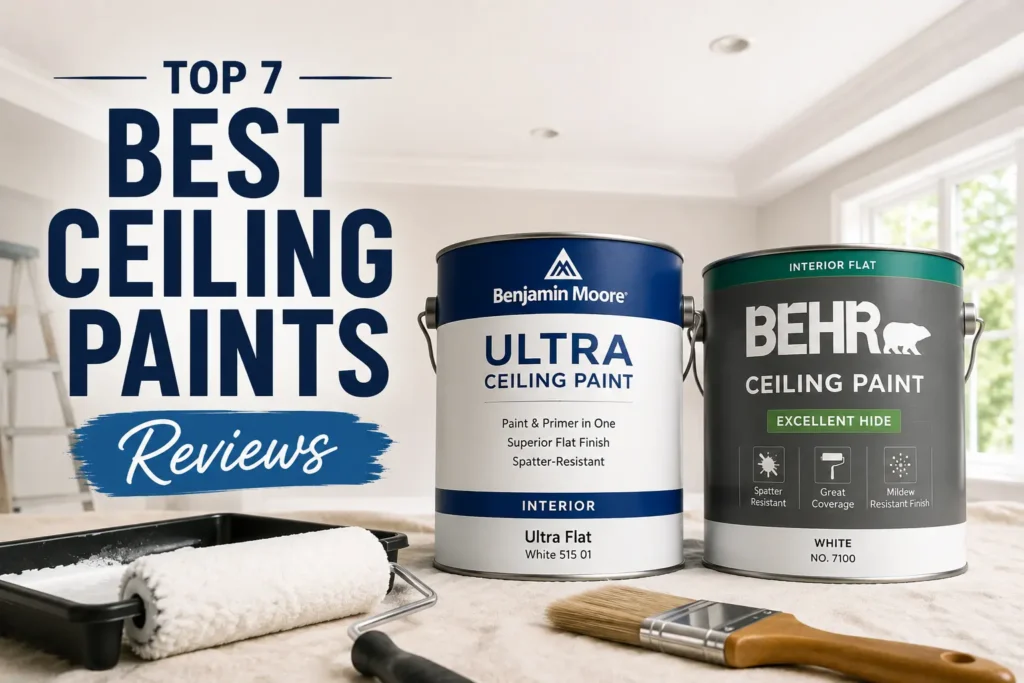
Different rooms also have different requirements. A bathroom ceiling needs paint suitable for humid conditions, while a large ceiling may be easier to cover with a compatible ceiling paint sprayer. Stained surfaces need special preparation, too, because ordinary white paint may not hide persistent discoloration. Below, we’ll compare seven options to help you find the right paint for your project.
Top 7 Best Ceiling Paints at a Glance
| Product Name | Best For | Check Price |
|---|---|---|
| Sherwin-Williams Premium Ceiling Paint | Best Overall | Check on Amazon |
| BEHR ULTRA Ceiling Paint & Primer | Stain Hiding | Check on Amazon |
| HGTV Home by Sherwin-Williams Ceiling Paint | DIY Projects | Check on Amazon |
| Zinsser Ceiling Paint | Stained Ceilings | Check on Amazon |
| Valspar 4000 Ceiling Paint | Spraying and Rolling | Check on Amazon |
| BEHR PREMIUM PLUS Ceiling Flat Paint | Budget-Friendly Projects | Check on Amazon |
| Benjamin Moore Waterborne Ceiling Paint 508 | Premium Ultra-Flat Finish | Check on Amazon |
Affiliate disclosure: As an Amazon Associate I earn from qualifying purchases.
Top Picks: 7 Best Ceiling Paints Reviews
1. Sherwin-Williams Premium Ceiling Paint – Best Overall
Check Sherwin-Williams Premium Ceiling Paint on Amazon
Sherwin-Williams Premium Ceiling Paint is our top overall choice for homeowners who want a bright, uniform ceiling with minimal glare. Its ultra-flat finish helps conceal minor surface imperfections, making it suitable for bedrooms, living rooms, hallways, and other common interior spaces.
Ceilings often reveal small flaws that are less noticeable on walls. Light from windows and fixtures can highlight drywall seams, patches, and uneven areas. An ultra-flat finish reduces reflection, helping the surface look softer and more consistent.
The manufacturer describes this paint as self-priming, spatter-resistant, and designed for excellent coverage. It also includes mold- and mildew-resistant technology intended to inhibit growth on the paint film. These features make it an appealing option for routine interior ceiling projects, although they do not make the coating waterproof or eliminate the need for proper ventilation.
For the best results, clean the surface, repair damaged areas, and follow the label’s preparation instructions. If the ceiling has heavy water stains or smoke discoloration, use an appropriate stain-blocking primer rather than relying on ordinary finish paint alone.
Pros:
- Bright white, ultra-flat finish.
- Helps reduce glare and hide minor imperfections.
- Self-priming formulation.
- Spatter-resistant application.
- Mold- and mildew-resistant paint-film technology.
- Suitable for many standard interior ceilings.
Cons:
- Premium pricing may not suit every budget.
- Difficult stains may need separate primer.
- Textured surfaces can require additional paint.
- Not a solution for active moisture problems.
Our Verdict: Sherwin-Williams Premium Ceiling Paint is an excellent all-around option for a clean, bright ceiling. It is particularly appealing when appearance, low reflection, and application convenience are important.
2. BEHR ULTRA Ceiling Paint & Primer – Best for Stain Hiding
Check BEHR ULTRA Ceiling Paint & Primer on Amazon
BEHR ULTRA Ceiling Paint & Primer is a strong choice for homeowners who want a dedicated ceiling coating with stain-hiding features. Its flat finish helps minimize reflection, while its paint-and-primer formulation is designed to provide good coverage on properly prepared interior ceilings.
One of its biggest advantages is its stain-blocking performance. This can be helpful when repainting ceilings with minor household discoloration or refreshing a surface that has lost its original appearance. Its durable finish is another useful feature for frequently used rooms.
BEHR lists coverage of approximately 250 to 400 square feet per gallon, with a one-hour drying time and a two-hour recoat time under the manufacturer’s stated conditions. Actual coverage and drying can vary with surface porosity, temperature, humidity, and application thickness.
Before applying it, remove loose paint and clean dirt or grease from the ceiling. Existing mildew stains should be treated appropriately, and the source of moisture must be addressed. Persistent water or smoke stains may still require specialized preparation.
Pros:
- Stain-blocking paint-and-primer formulation.
- Flat finish helps reduce glare.
- Designed for properly prepared interior ceilings.
- Manufacturer provides coverage and drying information.
- Durable finish.
- Useful for routine repainting and refreshing older ceilings.
Cons:
- Severe stains may need additional primer.
- Textured ceilings may require more material.
- Multiple coats may be necessary.
- Product specifications should be checked on the exact container.
Our Verdict: BEHR ULTRA is a good option when stain hiding and dependable coverage are priorities. It is worth considering for homeowners who want a dedicated ceiling product with additional hiding features.
3. HGTV Home by Sherwin-Williams Ceiling Paint – Best for DIY Projects
Check HGTV Home by Sherwin-Williams Ceiling Paint on Amazon
HGTV Home by Sherwin-Williams Ceiling Paint is designed for homeowners who want a straightforward product for refreshing smooth or textured ceilings. Its flat finish and spatter-resistant formulation make it a practical choice for DIY projects where clean application and coverage matter.
The paint is designed to hide old stains and provide a bright white appearance. Its manufacturer also describes it as a paint-and-primer product with one-coat coverage under suitable conditions. However, difficult stains may still need a separate primer or sealer.
Another advantage is application flexibility. The manufacturer lists brush, roller, and airless sprayer application. It provides specific guidance for airless spraying, including a recommended pressure and tip range, so homeowners using a compatible ceiling paint sprayer can consult the product instructions before beginning.
For roller application, work in manageable sections and maintain a wet edge. Avoid repeatedly rolling over areas that have started to dry, as this can create an uneven appearance.
Pros:
- Flat finish reduces unwanted reflection.
- Spatter-resistant formulation.
- Designed for smooth and textured ceilings.
- Can be applied with a brush, roller, or compatible airless sprayer.
- Good hiding features.
- Suitable for many DIY ceiling projects.
Cons:
- Severe stains may need separate stain sealer.
- Spray application requires careful masking.
- Coverage varies with surface texture.
- Availability can depend on the retailer.
Our Verdict: This is a useful option for DIY painters who want application flexibility. Its compatibility with brush, roller, and airless spray methods makes it particularly convenient for different ceiling projects.
4. Zinsser Ceiling Paint – Best for Stained Ceilings
Check Zinsser Ceiling Paint on Amazon
Zinsser Ceiling Paint from Rust-Oleum is designed for homeowners who need to refresh ceilings affected by old household stains. Its paint-and-primer formulation combines stain-blocking features with a flat finish, making it a useful option for certain repainting projects.
Ceiling discoloration can come from previous roof leaks, plumbing problems, smoke, or everyday household residue. Ordinary white paint may not permanently cover these marks. A product designed to seal stains can be more suitable when the underlying source has already been corrected.
One distinctive feature of the gallon version is its color-changing technology. It applies pink and dries bright white, helping painters see which sections have already been covered. The product also comes in smaller spray packaging for quick touch-ups.
Keep in mind that the color-change feature is not a substitute for careful preparation. If the ceiling has an active leak, repair it first and allow the surface to dry completely. Damaged drywall may need repair or replacement before repainting.
Pros:
- Designed to hide and seal certain household stains.
- Flat finish.
- Paint-and-primer formulation.
- Pink-to-white color-changing feature in the gallon size.
- Available in different package sizes.
- Mold- and mildew-resistant finish.
Cons:
- Active leaks must be repaired first.
- Extensive damage may require surface repair.
- Difficult stains can need additional preparation.
- Product features differ by package size.
Our Verdict: Zinsser Ceiling Paint is a worthwhile choice for ceilings with old household stains. Its color-changing feature is also helpful for DIY painters who want to see where they have applied the paint.
5. Valspar 4000 Ceiling Paint – Best for Spraying and Rolling
Check Valspar 4000 Ceiling Paint on Amazon
Valspar 4000 Ceiling Paint is a practical option for larger ceiling projects where application flexibility matters. It is formulated specifically for ceilings and can be applied using a compatible airless sprayer, roller, or brush.
Its matte finish helps reduce reflection and glare, which is useful in rooms with strong natural or overhead lighting. The manufacturer also highlights its hiding power, coverage, quick recoat performance, and minimal splattering.
Valspar lists coverage of approximately 300 to 400 square feet per gallon. Its product instructions identify properly prepared interior ceilings made from materials such as drywall, plaster, and acoustical tile as suitable applications. New or bare surfaces should be primed with an appropriate Valspar primer.
If you plan to use a ceiling paint sprayer, this product is worth comparing because spray application is specifically listed by the manufacturer. Check the equipment manual and paint instructions for compatibility before starting. Do not thin the product unless the manufacturer directs you to do so.
Spraying can be efficient in a large, empty room, but it requires careful masking. Protect walls, windows, floors, fixtures, and furniture from overspray. For smaller rooms, rolling may be easier and require less preparation.
Pros:
- Designed specifically for interior ceilings.
- Suitable for compatible spray, brush, and roller application.
- Matte finish reduces glare.
- Minimal-splatter formulation.
- Manufacturer provides coverage information.
- Useful for large ceiling projects.
Cons:
- Sprayer compatibility must be checked.
- Spraying requires extensive masking.
- Bare surfaces need suitable primer.
- Availability may vary by location.
Our Verdict: Valspar 4000 is a strong option for homeowners who want flexibility in application. It is especially worth considering for larger projects where a compatible airless sprayer can make painting more efficient.
6. BEHR PREMIUM PLUS Ceiling Flat Paint – Best Budget-Friendly Option
Check BEHR PREMIUM PLUS Ceiling Flat Paint on Amazon
BEHR PREMIUM PLUS Ceiling Flat Paint is a practical choice for homeowners who want to refresh an ordinary interior ceiling without spending extra on a premium product. Its flat, non-reflective appearance helps reduce glare and conceal minor surface imperfections.
This type of finish works well in bedrooms, living rooms, hallways, and other spaces where a smooth, understated ceiling appearance is preferred. The product is also designed with spatter resistance, mildew resistance, and tinting options for light colors.
BEHR lists coverage of approximately 250 to 400 square feet per gallon for this ceiling paint, although the actual amount depends on the surface. Textured ceilings, porous materials, and significant color changes may require additional coats.
Preparation is important even when using a budget-friendly coating. Remove loose paint, clean the ceiling, repair imperfections, and follow the manufacturer’s instructions for priming. This product is intended for primed or previously painted interior ceilings, so check the label before using it on a bare surface.
Pros:
- Budget-conscious ceiling paint option.
- Flat, non-reflective appearance.
- Helps minimize minor surface imperfections.
- Spatter-resistant formulation.
- Mildew-resistant paint finish.
- Suitable for many previously painted interior ceilings.
Cons:
- May need additional coats on some surfaces.
- Severe stains require separate treatment.
- Not intended to solve moisture problems.
- Check surface preparation requirements before application.
Our Verdict: BEHR PREMIUM PLUS Ceiling Flat Paint is a sensible choice for routine ceiling repainting when the surface is already in reasonable condition. It offers useful everyday features without requiring a premium-level purchase.
7. Benjamin Moore Waterborne Ceiling Paint 508 – Best Premium Ultra-Flat Finish
Check Benjamin Moore Waterborne Ceiling Paint 508 on Amazon
Benjamin Moore Waterborne Ceiling Paint 508 is a premium option for homeowners who place a high priority on the final appearance. Its ultra-flat finish is designed to create a soft, low-reflection look that works particularly well in formal living rooms, bedrooms, dining rooms, and other high-visibility spaces.
An ultra-flat ceiling coating can make a noticeable difference in rooms with large windows or strong overhead lighting. By reducing reflection, it helps draw attention away from minor surface irregularities and creates a more understated appearance.
This paint is also worth considering if you want a ceiling color beyond standard white. Depending on the available base and tinting options, you may be able to coordinate the ceiling with your walls, trim, and overall decorating scheme.
For the best result, prepare the surface carefully and apply the paint in manageable sections. Maintain a wet edge and avoid repeatedly rolling over areas that have started to dry.
The main drawback is price. A premium ceiling paint may not be necessary for a basic repaint where the existing surface is already clean and even. Its value is more apparent when finish appearance is a major consideration.
Pros:
- Premium ultra-flat finish.
- Helps minimize reflection and glare.
- Suitable for decorative ceiling projects.
- Useful for high-visibility rooms.
- Offers options for coordinated interior colors.
- Designed specifically for ceiling applications.
Cons:
- Premium pricing.
- May be unnecessary for simple repainting.
- Requires careful application for an even finish.
- Availability can vary between retailers.
Our Verdict: Benjamin Moore Waterborne Ceiling Paint 508 is a good premium option when a refined, low-reflection finish is your main priority. Compare its price with other dedicated ceiling paints before making your final decision.
Buying Guide: How to Choose the Best Ceiling Paint
Before buying ceiling paint, consider the room, surface condition, desired finish, and application method. A product that works well in a bedroom may not be the right choice for a bathroom or a heavily stained ceiling.
1. Choose the Right Finish
Flat and ultra-flat finishes are popular for residential ceilings because they reflect less light than glossy coatings. They can also make small patches and minor surface imperfections less noticeable.
- Flat: A matte, non-reflective appearance for most standard ceilings.
- Ultra-flat: Very low reflection, particularly useful when you want to minimize visible imperfections.
- Matte: A soft appearance that can suit decorative interior ceilings.
- Eggshell: Slightly more sheen, sometimes chosen when easier cleaning is a priority.
- Satin: More reflective and generally less common for ordinary ceilings.
For most bedrooms and living rooms, flat or ultra-flat paint is a good starting point. A higher sheen can make uneven patches and roller marks more noticeable.
2. Choose Suitable Paint for a Bathroom Ceiling
A bathroom ceiling experiences repeated humidity changes and condensation. Ordinary ceiling paint may not be the best choice in a bathroom with poor ventilation or frequent moisture exposure.
When choosing paint for a bathroom ceiling, look for:
- A coating approved for humid interior conditions.
- A suitable mildew-resistant finish.
- Good adhesion to the existing ceiling surface.
- Appropriate cleanability for the room.
- Compatibility with the ceiling material and primer.
Some homeowners prefer a washable matte finish, while others choose a slightly higher sheen for easier cleaning. Follow the manufacturer’s recommendations instead of assuming every flat ceiling paint is suitable for a humid environment.
Paint is not a substitute for ventilation or waterproofing. Use an effective exhaust fan, repair leaks, and allow damp surfaces to dry. If mold is present, address the underlying moisture problem and clean or remediate the affected area before repainting.
3. Check Coverage and Hiding Power
Coverage tells you approximately how much surface area a gallon can cover under specified conditions. Many ceiling paints list coverage in the range of 250 to 400 square feet per gallon, but textured and porous ceilings may require more.
Before purchasing, consider:
- Total ceiling area.
- Existing paint color.
- Surface texture.
- Porosity and repairs.
- Number of coats recommended.
- Whether primer is required.
Coverage estimates are planning guides, not guarantees. Spraying may also result in some material loss from overspray.
4. Consider Splatter Resistance
Overhead painting can be messy because gravity pulls excess paint away from the roller. A splatter-resistant formula can help keep more paint on the roller and reduce cleanup.
This feature is particularly useful for DIY painters, furnished rooms, and projects where spraying equipment is unavailable.
Even with a low-splatter product, protect floors and furniture and wear suitable eye protection.
5. Decide Whether You Need Stain-Blocking Paint
A clean ceiling in good condition may only need ordinary ceiling paint. However, persistent discoloration can require additional preparation.
Common ceiling stains include:
- Brown water rings.
- Smoke marks.
- Nicotine discoloration.
- Cooking residue.
- Yellowing from older coatings.
- Tannin stains from wood surfaces.
For difficult stains, use a primer designed to block the type of discoloration present. Follow the product instructions and test a small area before applying the finish coat.
Do not paint over active leaks, damp drywall, or unresolved mold problems. Correct the cause first.
6. Check Compatibility With a Ceiling Paint Sprayer
A ceiling paint sprayer can make large projects faster, especially in empty rooms or on suitable textured surfaces. However, not all paints are compatible with every sprayer.
Before using one, check:
- Whether the paint label permits spray application.
- Whether the sprayer supports the paint’s viscosity.
- Recommended tip size and filter.
- Required pressure for airless equipment.
- Whether thinning is allowed.
- Whether back-rolling is recommended.
Valspar 4000 and HGTV Home by Sherwin-Williams Ceiling Paint are examples of products whose manufacturers list airless spray application. Always follow the exact paint instructions and equipment manual.
Never thin paint simply because it seems thick. Excessive thinning can affect hiding, application, and the final finish.
7. Match the Paint to the Ceiling Material
Different ceiling surfaces require different preparation and sometimes different coatings.
- Drywall: New drywall often needs an appropriate primer before finish paint.
- Plaster: Fresh plaster should cure and dry properly before painting.
- Previously painted ceilings: Remove loose material and clean the surface.
- Popcorn ceilings: Use a compatible application method and check whether the texture is stable.
- Wood ceilings: Select a primer and finish compatible with the wood and existing coating.
- Concrete ceilings: Choose a product approved for concrete or masonry and address moisture problems.
Older textured ceilings may contain asbestos. Do not scrape, sand, or disturb suspicious material until it has been appropriately assessed.
8. Compare Drying and Recoat Times
A ceiling project may require more than one coat. Check the product label for touch-dry time and the recommended interval before recoating.
Touch-dry does not mean fully cured. Humidity, temperature, ventilation, and coat thickness can all affect drying.
In a bathroom, allow sufficient drying time and maintain ventilation. Avoid exposing freshly painted surfaces to heavy moisture before the coating is ready.
9. Consider Color Options
White remains the most popular ceiling color because it helps rooms feel bright and open. However, subtle color can make a room feel more coordinated.
Popular choices include:
- Warm white.
- Soft cream.
- Pale gray.
- Light beige.
- Muted blue.
- Very light pastel shades.
Check whether the product can be tinted before purchasing if you want something other than standard ceiling white.
10. Compare Price With Project Requirements
A premium paint may offer useful application features or a refined finish, but an expensive product is not automatically the best choice for every project.
For a basic white-on-white repaint, a budget ceiling paint may be sufficient. For a large project, compare coverage, application method, and the cost of additional coats. If the ceiling is stained, invest in the correct primer and preparation rather than expecting a more expensive finish paint to solve everything.
How to Paint a Ceiling for a Smooth Finish
Good preparation and steady application are essential for a professional-looking ceiling.
Step 1: Protect the Room
Move furniture away from the work area where possible. Cover floors, furniture, windows, fixtures, and anything else that could be affected by drips or overspray.
If using a sprayer, mask the room carefully. Spray mist can travel farther than expected.
Step 2: Inspect the Ceiling
Look for cracks, loose paint, water stains, mold, and damaged drywall. Identify the cause of discoloration before painting.
Repair leaks and allow the affected area to dry completely. Replace damaged material when necessary.
Step 3: Clean the Surface
Remove dust, cobwebs, grease, and loose dirt. Use a suitable cleaning method for the ceiling material and allow the surface to dry.
If mildew is present, address the growth and underlying moisture problem rather than simply covering it with paint.
Step 4: Repair Small Imperfections
Fill small holes and cracks with a suitable repair compound. Allow it to dry, sand it smooth when appropriate, and remove sanding dust.
Extensive damage may require professional repair.
Step 5: Apply Primer When Necessary
Prime new drywall, repaired areas, stains, or difficult surfaces when required. Choose a primer compatible with the ceiling material and finish paint.
For stubborn water or smoke stains, use a suitable stain-blocking primer and allow it to dry according to the label.
Step 6: Cut In Around the Edges
Use a quality angled brush to paint around the ceiling perimeter, corners, and fixtures. Work in manageable sections so you can maintain a wet edge when rolling.
Step 7: Roll or Spray the Ceiling
For roller application, choose a roller cover that matches the ceiling texture. Load it evenly and work in manageable sections.
If using a ceiling paint sprayer, follow the paint manufacturer’s spray specifications and the sprayer manual. Maintain a consistent distance and speed, overlap passes evenly, and avoid holding the spray in one spot.
Some surfaces may benefit from back-rolling after spraying. Follow the coating manufacturer’s instructions.
Step 8: Apply Another Coat if Needed
Allow the first coat to dry for the recommended period. Inspect the ceiling under normal lighting and apply another coat if the color or coverage is uneven.
Step 9: Allow the Paint to Cure
Keep the room ventilated and avoid touching or cleaning the ceiling until the coating has cured sufficiently. In bathrooms, avoid heavy steam and condensation during the manufacturer’s recommended drying period.
Common Ceiling Painting Mistakes to Avoid
- Choosing glossy paint for an imperfect ceiling: Higher sheen can reveal drywall seams and patches.
- Skipping surface preparation: Dust and loose paint can interfere with adhesion.
- Painting over water damage: Repair the leak and dry the surface first.
- Ignoring bathroom humidity: Ventilation and moisture control are essential.
- Skipping stain-blocking primer: Persistent discoloration may bleed through ordinary paint.
- Overloading the roller: Too much paint can cause drips and splatter.
- Using the wrong roller nap: Match the roller to the ceiling texture.
- Spraying without masking: Overspray can coat nearby surfaces.
- Thinning paint without checking instructions: Incorrect thinning can affect performance.
- Applying coats too quickly: Follow the recommended recoat time.
- Disturbing old textured ceilings: Check suspicious materials for asbestos before scraping or sanding.
- Assuming one coat always works: Coverage depends on the surface and existing color.
Frequently Asked Questions
1. What is the best ceiling paint overall?
Sherwin-Williams Premium Ceiling Paint is our best overall choice for a smooth, ultra-flat appearance. BEHR ULTRA is another strong option, particularly when stain-hiding performance is important.
2. What type of paint is best for ceilings?
Flat or ultra-flat interior ceiling paint is generally the best choice for residential ceilings. These finishes reduce glare and help conceal minor imperfections better than glossy coatings.
3. Is ceiling paint different from regular wall paint?
Yes. Dedicated ceiling paints are generally formulated for overhead application, with features such as low sheen, reduced splatter, and coverage suited to ceilings. Some interior wall paints can also be used on ceilings if the manufacturer approves the application.
4. What is the best paint for a bathroom ceiling?
Choose a product approved for humid interior spaces and check its mildew-resistance and cleanability information. Proper ventilation is essential because paint alone cannot prevent condensation or fix moisture problems.
5. Can I use flat paint on a bathroom ceiling?
Yes, some flat paints are suitable for bathroom ceilings, but check the product label carefully. Choose a formula intended for the room’s humidity conditions and maintain proper ventilation.
6. Can I use a ceiling paint sprayer?
Yes, if the paint manufacturer permits spray application and the sprayer is compatible with the product. Check the recommended tip size, filter, pressure, and thinning instructions before starting.
7. Is spraying ceiling paint better than rolling?
Spraying can be faster for large, empty rooms and suitable textured surfaces. Rolling is often more convenient for smaller rooms and occupied homes because it requires less masking. The best method depends on the project and the paint manufacturer’s recommendations.
8. How many coats of ceiling paint do I need?
Two coats are common for an even finish, although some products advertise one-coat coverage on suitable surfaces. Darker colors, repairs, porous surfaces, and stains may require additional preparation or coats.
9. Should I use primer before ceiling paint?
Not always. Previously painted ceilings in good condition may not need a separate primer if the finish paint is approved for the surface. New drywall, repairs, stains, and difficult substrates may require a suitable primer.
10. How do I cover old water stains on a ceiling?
First, repair the source of the leak and allow the ceiling to dry completely. Prepare the surface, apply a suitable stain-blocking primer, and then use ceiling paint according to the manufacturer’s instructions.
11. What roller nap is best for ceiling painting?
A shorter nap is generally suitable for smooth ceilings, while thicker roller covers may be needed for textured surfaces. Check the paint manufacturer’s recommendations and match the roller to the surface.
12. Can I paint a popcorn ceiling?
Some stable popcorn ceilings can be painted with a suitable coating and application method. However, older textured ceilings may contain asbestos. Do not scrape, sand, or disturb suspicious material before appropriate assessment.
Final Words
The best ceiling paints should provide dependable coverage, a low-reflection finish, and application characteristics that suit your room and project. Sherwin-Williams Premium Ceiling Paint is our overall choice for a clean, uniform appearance, while BEHR ULTRA is worth considering for stain hiding. HGTV Home by Sherwin-Williams is a practical DIY option, Zinsser is useful for certain stained ceilings, and Valspar 4000 offers flexibility for spraying and rolling.
If you are painting a bathroom ceiling, pay particular attention to humidity suitability and ventilation. For larger projects, compare spray-compatible products before choosing your equipment and application method.
Prepare the surface carefully, address moisture and stains before painting, and follow the manufacturer’s instructions for rolling or spraying. These steps will help you achieve a brighter, more consistent ceiling that complements the rest of your room.
Helpful Resources
- Sherwin-Williams – Premium Ceiling Paint – Review the manufacturer’s product features, finish, and application information.
- U.S. Environmental Protection Agency – A Brief Guide to Mold, Moisture and Your Home – Learn why moisture problems should be addressed before repainting a bathroom ceiling or another damp interior surface.