
Ceramic bowls are wonderful canvases for expressing creativity, whether you want to refresh plain dishes, make thoughtful handmade gifts, or create unique decorative accents for your home. With the right paints, simple tools, and a little imagination, even an ordinary ceramic bowl can become a beautiful piece of art.
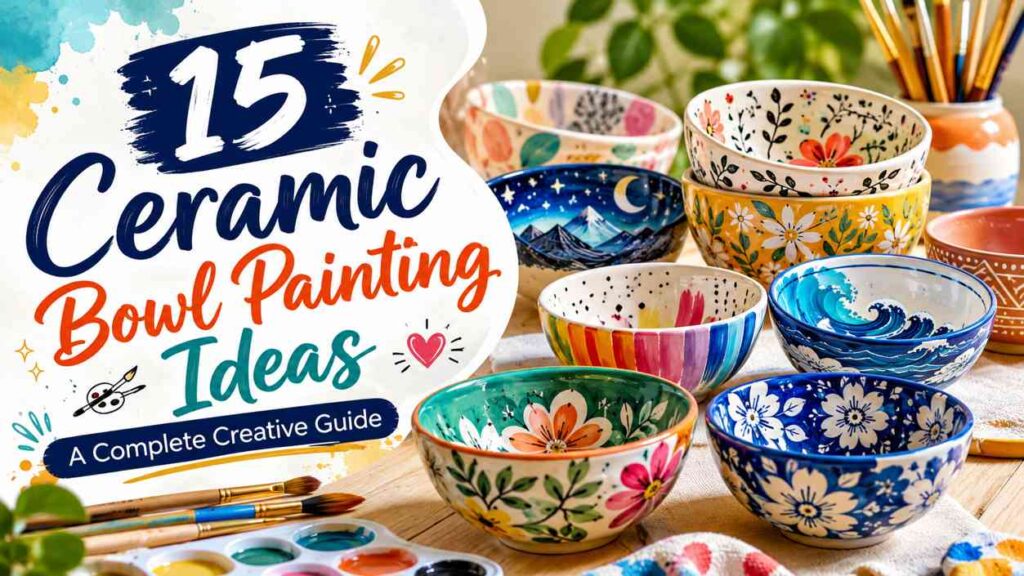
These ceramic bowl painting ideas include floral patterns, minimalist designs, colorful abstract art, and seasonal decorations. You can adapt each project to your skill level, preferred color palette, and the type of bowl you want to decorate.
Items to Buy
Gather your supplies before beginning your ceramic painting project. The right materials depend on whether your bowl will be decorative or intended for food use.
- Ceramic paint: Shop ceramic paints on Amazon
- Porcelain paint pens: Shop porcelain paint markers on Amazon
- Fine detail brushes: Shop fine-tip paintbrush sets on Amazon
- Plain ceramic bowls: Shop unpainted ceramic bowls on Amazon
- Ceramic painting stencils: Shop pottery painting stencils on Amazon
- Painter’s tape: Shop narrow painter’s tape on Amazon
- Paint palette: Shop artist paint palettes on Amazon
- Sponge brushes: Shop small sponge brushes on Amazon
Affiliate disclosure: As an Amazon Associate I earn from qualifying purchases.
Important: Choose paint specifically intended for your ceramic surface and follow its application and curing instructions. A bowl is not automatically food-safe, microwave-safe, or dishwasher-safe after painting. Keep ordinary craft paint away from food-contact surfaces unless the product manufacturer explicitly confirms the intended use.
How to Prepare a Ceramic Bowl for Painting
Good preparation helps your design look cleaner and more consistent. Before painting, decide whether the bowl will be displayed as decoration or used for serving food. This choice determines which materials and techniques are appropriate.
1. Clean the Bowl Thoroughly
Wash the bowl to remove dust, grease, and residue. Let it dry completely before applying paint. Oils or moisture on the surface may interfere with paint adhesion.
2. Choose the Right Paint
Ceramic and porcelain paints are designed for different surfaces and finishing methods. Some products are intended for glazed ceramics, while others work best on bisque or unglazed pottery. Check the label before purchasing.
3. Plan Your Design
Sketch your pattern on paper first. Consider the bowl’s shape, rim, interior, and exterior. A design that looks balanced on a flat sheet may need adjustments when wrapped around a curved surface.
4. Prepare Your Workspace
Cover the work surface, organize your brushes, and keep a paper towel and water container nearby if appropriate for your paint. Use good ventilation and follow the safety instructions on the product label.
5. Follow the Curing Instructions
Some ceramic paints air-dry, while others require a particular curing process. Never assume that ordinary household baking will make craft paint permanent or food-safe. Use only the method specified by the manufacturer.
15 Ceramic Bowl Painting Ideas
1. Delicate Blue and Pink Floral Bowl
A delicate floral pattern is a lovely way to turn a plain white ceramic bowl into something elegant and personal. Paint small blue flowers surrounded by soft pink blossoms, thin green stems, and tiny leaves. Leave generous white space between the flowers to keep the design light rather than crowded.
You can arrange the flowers around the outside of the bowl or create a loose wreath near the rim. Fine brushes help produce slender stems and small petals, while a toothpick or suitable detail tool can help create tiny dots. This design works beautifully as a decorative bowl or a handmade gift.
2. Minimalist Black Line-Art Bowl
For a modern look, decorate a white ceramic bowl with simple black line art. Draw abstract faces, continuous curves, tiny arches, or irregular botanical outlines. The contrast between black and white makes even a very simple design feel intentional.
Keep the lines thin and allow some areas to remain unpainted. You can repeat a single motif around the exterior or place one larger drawing on the outside of the bowl. This idea is ideal for contemporary interiors, minimalist shelves, and creative desk displays.
3. Colorful Geometric Pattern Bowl
Geometric patterns bring structure and energy to ceramic bowls. Use triangles, semicircles, diamonds, stripes, or overlapping blocks in a coordinated palette such as terracotta, mustard, navy, and cream.
Painter’s tape can help create straight edges, although it should be tested first to make sure it will not damage the surface or interfere with your chosen paint. For curved sections, sketch the design lightly before painting. Repeating the same shapes around the bowl creates a unified appearance, while alternating colors makes the finished piece more playful.
4. Tiny Daisy Pattern Bowl
Daisies are cheerful, beginner-friendly motifs because their basic shape is easy to repeat. Paint small white petals around yellow centers, then add delicate green leaves between the flowers. On a white bowl, try colored daisies in pale blue, pink, or lavender so that the pattern remains visible.
Arrange the flowers in a scattered pattern instead of perfectly aligned rows for a relaxed, garden-inspired effect. You can also place a border of daisies just below the rim. This design suits spring decorations, cottage-inspired interiors, and handmade gifts for flower lovers.
5. Terracotta-Inspired Earthy Bowl
Create a warm, natural appearance with earthy colors such as rust, clay red, sand, cream, and muted brown. Paint simple arches, wavy lines, small suns, or broad color bands around the outside of the bowl.
The key to this design is keeping the palette restrained. Instead of adding many unrelated colors, select three or four shades that work well together. Slight variations in line thickness can give the design a handcrafted character. An earthy bowl looks especially attractive beside wooden furniture, woven baskets, dried flowers, and other natural decorative materials.
6. Ocean Wave Bowl
An ocean-inspired design can give a ceramic bowl a fresh, calming appearance. Use layers of navy, turquoise, pale blue, and white to create curved waves that travel around the exterior. Vary the width of each wave to make the pattern feel more natural.
You can add small white foam accents along selected curves, leaving other areas simple. A plain background helps the blue shades stand out. This design is particularly suitable for coastal-themed rooms, summer decorations, and display bowls placed near light-colored wood or neutral textiles.
7. Abstract Rainbow Bowl
A rainbow design does not have to follow a traditional rainbow shape. Paint curved bands, overlapping arches, or partial semicircles in colors such as peach, yellow, coral, sage green, and sky blue.
For a modern result, use a muted palette rather than highly saturated primary colors. You can position one large rainbow on the front of the bowl or repeat smaller arches around the exterior. Make sure each layer has dried as directed before painting adjacent sections. This cheerful idea is well suited to creative workspaces, colorful shelves, and personalized decorative pieces.
8. Polka Dot Ceramic Bowl
Polka dots are one of the easiest patterns for beginners. Use a detail brush, suitable dotting tool, or paint pen to create circles of different sizes. Choose two complementary colors for a subtle design or several bright shades for a playful appearance.
For a tidy result, begin by planning the spacing on paper. You can make the dots evenly distributed, arrange them in diagonal rows, or cluster them near the base and leave the rim mostly plain. A simple dot pattern is a good choice when you want an attractive finish without drawing complicated shapes.
9. Botanical Leaf Bowl
A botanical bowl inspired by leaves and branches can look sophisticated without requiring advanced painting skills. Paint slender stems with small leaves branching in alternating directions. Olive green, sage, forest green, and muted brown create a natural palette.
Try placing one branch on each side of the bowl, or let a single vine curve around the exterior. Leave space between the branches to keep the pattern airy. You can also combine different leaf shapes, such as rounded eucalyptus-style leaves and narrow pointed leaves, to add variation while preserving a cohesive look.
10. Celestial Moon and Stars Bowl
Create a dreamy celestial design with crescent moons, tiny stars, dots, and simple orbital lines. Deep navy, muted purple, and metallic-effect paint can create a night-sky appearance, provided the products are suitable for the surface and intended use.
Scatter small stars around the exterior and make one crescent moon the main focal point. Alternatively, repeat moon phases around the bowl in a neat sequence. This design works well as a decorative piece for a bedroom, reading nook, or meditation corner. Check the paint label before using metallic finishes or specialty products.
11. Checkerboard Bowl
A checkerboard pattern gives a ceramic bowl a bold, graphic appearance. Traditional black and white is a classic option, but you can also try cream and brown, pink and red, or sage and pale yellow.
Sketch the grid before painting, taking the bowl’s curve into account. Smaller squares often work better around a curved surface because they are easier to position consistently. If you prefer a relaxed handmade look, allow slight variations in the squares rather than trying to make every edge perfectly uniform. Pair this bowl with simple accessories so the pattern remains the focal point.
12. Fruit-Inspired Bowl
Fruit motifs add a cheerful, colorful touch to ceramic decoration. Paint small strawberries, lemons, cherries, oranges, or pears around the outside of the bowl. Choose one fruit for a coordinated pattern or combine two or three varieties for a playful market-inspired look.
Begin with the basic silhouette of each fruit, then add leaves, stems, and small details after the main shapes have dried. Bright red strawberries and yellow lemons stand out on a light background, while green pears and orange slices create a softer natural palette. This is a fun idea for a kitchen display or a seasonal decorative project.
13. Speckled Neutral Bowl
A speckled design offers a subtle alternative to detailed illustrations. Start with a neutral base color if your chosen paint system supports it, then add small irregular dots in brown, charcoal, cream, or muted green. Keep the speckles varied in size and spacing to mimic the organic appearance of handmade pottery.
You can concentrate the speckles near the base or spread them across the exterior. A restrained palette helps the finished bowl feel sophisticated and versatile. This design complements Scandinavian, rustic, and minimalist decorating styles, especially when paired with natural wood and linen.
14. Personalized Initial or Monogram Bowl
A personalized bowl can make a thoughtful handmade gift for a birthday, wedding, housewarming, or holiday. Paint a large initial on the exterior and surround it with a simple wreath, tiny flowers, stars, or a geometric border.
Before painting, test the lettering on paper and consider how it will appear on the curved surface. Use a fine brush or an appropriate ceramic paint pen for cleaner edges. You can add a date or a short decorative detail if space allows. For food-use bowls, keep personalization and decoration away from food-contact surfaces unless the paint is explicitly certified for that purpose.
15. Seasonal Autumn Leaf Bowl
An autumn-inspired bowl can feature small leaves in burnt orange, golden yellow, rust, deep red, and brown. Arrange the leaves in a loose band around the exterior or create a scattered pattern that becomes denser near the base.
Vary the leaf shapes to make the design feel natural. A few fine veins can add detail without making the pattern too complicated. For a more understated version, use only two or three earthy colors against a cream background. This bowl works well in fall displays alongside pumpkins, dried foliage, wooden trays, and warm-toned decorations.
Tips for Making Your Ceramic Bowl Painting Look Professional
Keep the Design Balanced
Consider the bowl from several angles. A motif placed perfectly at the front may look crowded when viewed from the side. Repeat small elements around the exterior or position a larger motif where it will be visible when the bowl is displayed.
Use Thin Layers
Applying too much paint at once can create uneven coverage, raised edges, or smudges. Follow the product instructions and build up the color in thin layers when recommended. Allow sufficient drying time between layers.
Choose a Coordinated Color Palette
Select colors that work together before starting. A palette of three to five colors is often enough for a balanced design. You can use one main color, one or two supporting shades, and a small accent color.
Practice Difficult Details First
If your design includes lettering, fine stems, or repeating shapes, practice on paper before painting the bowl. This can help you decide on the scale and placement of each element.
Avoid Rushing the Finish
Paint that feels dry on the surface may need more time before it can be handled, layered, or cured. Follow the full drying and curing schedule on the product label. Do not wash or use the bowl until the manufacturer says it is ready.
How to Choose the Right Ceramic Paint
Not every paint works on every ceramic surface. Glazed bowls are smooth and nonporous, while bisque and unglazed pottery have different absorption characteristics. Read the manufacturer’s instructions carefully before buying.
- Ceramic or porcelain paint: Useful for decorative projects when the product specifies compatibility with your bowl’s surface.
- Ceramic paint pens: Convenient for lettering, dots, outlines, and small details.
- Acrylic craft paint: Suitable for some decorative projects, but it may not adhere well to every glazed surface and is not automatically durable or food-safe.
- Specialty pottery glazes: Intended for specific pottery processes and generally require compatible materials and firing conditions.
Do not assume that a clear craft sealer will make a painted bowl safe for food contact. For serving bowls, use only a complete, manufacturer-approved system specifically rated for the intended food-contact area and conditions. Otherwise, treat the painted bowl as decorative.
Common Mistakes to Avoid
- Painting a dirty bowl: Grease and dust can affect adhesion.
- Ignoring surface compatibility: A paint intended for porous pottery may not work on glazed ceramic.
- Making the pattern too crowded: Too many shapes and colors can make the design difficult to read.
- Handling paint too soon: Touching a surface before it has dried can leave fingerprints or smudges.
- Using an unapproved curing method: Follow the exact instructions supplied with the paint.
- Assuming painted bowls are food-safe: Keep decorations away from food-contact surfaces unless the complete product system is specifically approved for that use.
- Skipping a practice sketch: Planning the pattern first can help avoid awkward spacing and uneven placement.
Frequently Asked Questions
What paint is best for painting ceramic bowls?
The best paint depends on whether the bowl is glazed or unglazed and whether it will be decorative or used for food. Choose a ceramic or porcelain product whose label specifically identifies your surface and intended use.
Can I use acrylic paint on a ceramic bowl?
Acrylic craft paint can be used for some decorative ceramic projects, but adhesion and durability vary. It is not automatically waterproof, dishwasher-safe, or suitable for food-contact surfaces. Follow the product instructions and treat the bowl as decorative unless the manufacturer confirms otherwise.
Do ceramic bowls need to be baked after painting?
Some ceramic paints require baking or another curing process, while others air-dry. Always follow the instructions for the specific product. Never bake a painted bowl unless the manufacturer explicitly directs you to do so and provides the required procedure.
Can painted ceramic bowls be used for food?
Only when the materials and finished process are explicitly approved for the intended food-contact use. Many decorative paints are not suitable for the inside of bowls or areas that touch food. When in doubt, keep the painted bowl for display.
How can beginners paint a ceramic bowl easily?
Start with polka dots, simple leaves, daisies, stripes, or geometric shapes. These designs rely on basic forms and can be adapted to different skill levels. Sketch the layout first and use fine brushes or compatible paint pens for control.
How do I make a ceramic bowl design look neat?
Use a limited color palette, plan the spacing, apply thin layers, and allow the paint to dry as directed. Practicing the design on paper first can also help you achieve more consistent shapes and lines.
Can I paint a bowl that already has a glossy glaze?
Some products are designed for glazed ceramic, but not all paints adhere well to glossy surfaces. Check the product label for surface compatibility and preparation instructions before beginning.
What are the easiest ceramic bowl painting ideas for gifts?
Floral patterns, personalized initials, botanical leaves, polka dots, and simple geometric designs are good options. Choose colors and motifs that suit the recipient’s style, and clearly label the finished bowl as decorative if its paint system is not approved for food use.
Final Words
Ceramic bowl painting is a creative way to transform plain pottery into a piece that reflects your personal style. From delicate flowers and botanical leaves to bold checkerboards and colorful fruit, these 15 ideas offer options for beginners and experienced crafters alike.
Choose suitable materials, plan your design, and take your time with each layer. Most importantly, follow the paint manufacturer’s safety and curing instructions, especially if the bowl may come into contact with food. With a thoughtful design and careful preparation, you can create a distinctive ceramic bowl for your home or as a handmade gift.