
A sofa is one of the most recognizable pieces of furniture and a great subject for beginner artists. Learning how to draw a sofa helps improve your understanding of perspective, proportions, shapes, and shading. Whether you’re creating an interior design sketch, a room illustration, or simply practicing your drawing skills, a sofa is an excellent object to draw.
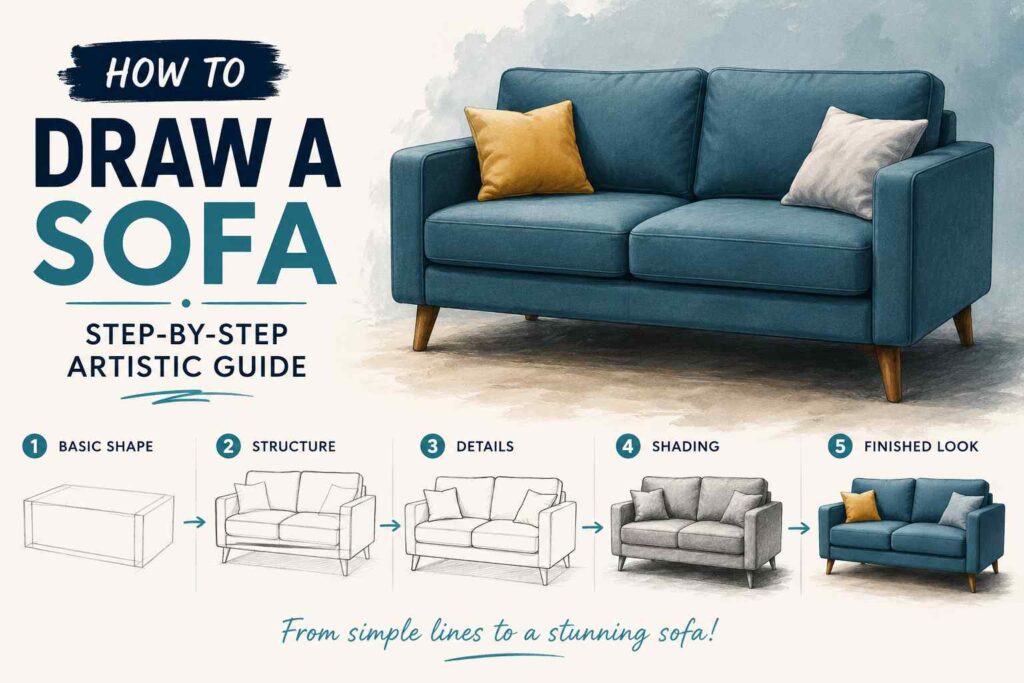
In this step-by-step artistic guide, you’ll learn how to draw a sofa from basic shapes to finished details, making the process easy and enjoyable for artists of all skill levels.
Why Learn to Draw a Sofa?
Drawing furniture helps build important artistic skills that can be applied to many other subjects.
Benefits of Drawing Furniture
- Improves perspective skills
- Teaches proportions and symmetry
- Builds confidence in sketching interiors
- Develops shading techniques
- Strengthens observation skills
A sofa combines simple geometric shapes with soft cushions, making it a perfect practice project.
Materials You’ll Need
Before you begin, gather your drawing supplies.
Basic Art Supplies
- Pencil (HB or 2B)
- Eraser
- Sketchbook or drawing paper
- Ruler (optional)
- Colored pencils or markers (optional)
You can create a great sofa drawing with just a pencil and paper.
Understanding Sofa Shapes
Most sofas can be simplified into basic geometric forms.
Main Sofa Components
- Seat cushions
- Backrest
- Armrests
- Base frame
- Legs
Breaking the sofa into simple shapes makes drawing much easier.
Step-by-Step Guide to Drawing a Sofa
Step 1: Draw the Basic Rectangle
Start by sketching a large horizontal rectangle.
This shape will form the main body of the sofa.
Tips
- Keep lines light
- Leave room for armrests
- Focus on overall proportions
Think of this rectangle as the sofa’s foundation.
Step 2: Add the Backrest
Draw another rectangle above the main body.
This rectangle should be slightly taller and narrower than the seat area.
Backrest Tips
- Keep edges parallel
- Maintain even proportions
- Use light guidelines
The backrest gives the sofa its recognizable structure.
Step 3: Sketch the Armrests
Add rectangular shapes on both sides of the sofa.
Armrests can be:
- Square
- Rounded
- Modern and slim
- Large and plush
For beginners, simple rectangular armrests are easiest to draw.
Step 4: Draw the Seat Cushions
Divide the seat into cushions using vertical lines.
Common Cushion Layouts
- Two cushions
- Three cushions
- One large cushion
Most standard sofas have two or three seat cushions.
Cushion Tips
- Round the corners slightly
- Add subtle curves
- Avoid perfectly straight lines
Cushions should look soft and comfortable.
Step 5: Add Back Cushions
Sketch cushion shapes against the backrest.
These cushions create depth and realism.
Details to Include
- Slight puffiness
- Rounded edges
- Small gaps between cushions
Soft curves help make the sofa look inviting.
Step 6: Refine the Shape
Now clean up your sketch by refining the outlines.
Areas to Improve
- Cushion shapes
- Armrest curves
- Backrest proportions
- Overall symmetry
Erase unnecessary construction lines as you work.
Step 7: Draw the Sofa Legs
Add small legs beneath the sofa frame.
Common Leg Styles
- Wooden block legs
- Metal legs
- Tapered legs
- Modern hidden legs
Keep the legs evenly spaced for a balanced appearance.
Step 8: Add Fabric Details
Fabric folds and seams make the sofa look more realistic.
Simple Details to Draw
- Stitching lines
- Cushion seams
- Wrinkles near edges
- Fabric folds
Don’t overdo the details—small touches go a long way.
Step 9: Shade the Sofa
Shading adds depth and dimension to your drawing.
Areas to Shade
- Under the cushions
- Beneath the armrests
- Along the base
- Behind the back cushions
Use soft pencil strokes and gradually build darker values.
Shading Tips
- Imagine a light source
- Keep shadows consistent
- Blend gently for smooth transitions
Proper shading helps the sofa appear three-dimensional.
Step 10: Add Final Touches
Review your drawing and add finishing details.
Optional Enhancements
- Decorative pillows
- Throw blankets
- Texture patterns
- Background furniture
- Living room setting
These elements can make your artwork feel more complete.
How to Draw a Modern Sofa
Modern sofas typically feature clean lines and minimal details.
Characteristics of Modern Sofas
- Straight edges
- Slim armrests
- Low-profile design
- Simple cushions
Focus on neat geometric shapes and clean proportions.
How to Draw a Cartoon Sofa
Cartoon sofas are fun and easy for beginners.
Cartoon Sofa Features
- Exaggerated cushions
- Rounded shapes
- Large proportions
- Simplified details
Use bold outlines and playful shapes for a cartoon style.
Common Mistakes to Avoid
Uneven Armrests
Make sure both armrests are similar in size and height.
Ignoring Perspective
If drawing at an angle, use consistent perspective lines.
Making Cushions Too Flat
Real cushions have volume and softness.
Skipping Shadows
Without shadows, the sofa may appear flat.
Practice Exercises
Improve your furniture drawing skills with these exercises.
Try Drawing
- A two-seat loveseat
- A sectional sofa
- A recliner sofa
- A vintage couch
- A sofa from different angles
Each variation helps develop your understanding of furniture design.
Tips for Better Furniture Drawings
Study Real Sofas
Observe furniture in your home or use reference photos.
Use Simple Shapes First
Start with rectangles and gradually add details.
Focus on Proportions
Accurate proportions make furniture drawings more realistic.
Practice Perspective
Perspective skills are essential for drawing interiors.
Frequently Asked Questions
Is a Sofa Easy to Draw?
Yes. A sofa is primarily made up of simple geometric shapes, making it a great beginner drawing subject.
How Do You Make a Sofa Look Realistic?
Add soft cushion curves, fabric folds, shading, and subtle texture details.
Should Beginners Use a Ruler?
A ruler can help with straight lines and symmetry, especially when learning perspective.
What Is the Hardest Part of Drawing a Sofa?
Many beginners find perspective and cushion proportions the most challenging aspects.
Final Thoughts
Learning how to draw a sofa is an excellent way to practice perspective, shapes, and shading while creating a recognizable piece of furniture.
Key Steps to Remember
- Start with simple rectangles
- Build the sofa structure gradually
- Add cushions and armrests
- Include fabric details
- Use shading to create depth
With regular practice, you’ll be able to draw sofas in various styles, from realistic living room furniture to fun cartoon designs.
Grab your sketchbook and start drawing—your perfect sofa sketch is only a few steps away.