
Whether you’re painting landscapes, decorating your home, or working on a craft project, learning how to make green paint gives you complete control over the shades and tones you create. From bright spring greens to deep forest hues, mixing your own green paint allows for endless creative possibilities.
Green is one of the most versatile colors in art and design. By understanding color theory and using the right paint combinations, you can create custom shades that perfectly suit your project. This guide will show you exactly how to make green paint and adjust it to achieve various tones.
Items to Buy
- Yellow paint
- Blue paint
- Acrylic paint set
- Oil paint set
- Watercolor paints
- Paint palette
- Palette knife
- Paintbrushes
- Mixing tray
- Color wheel
- Water container
- Paper towels
- White paint
- Black paint
- Red paint
- Measuring spoons
- Mixing cups
- Sketch paper
- Canvas
- Protective apron
Understanding the Color Green
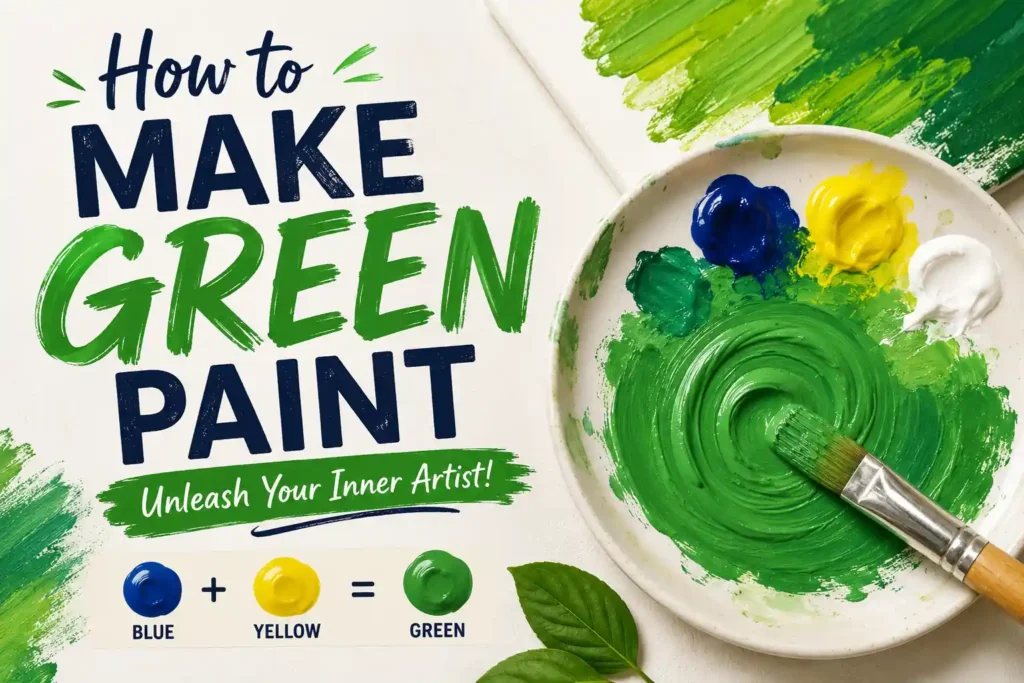
Green is a secondary color, meaning it is created by mixing two primary colors together. Specifically, green is made by combining blue and yellow.
The exact shade of green depends on the type and amount of blue and yellow used. A warm yellow paired with a cool blue produces a different green than a cool yellow combined with a warm blue.
Understanding these relationships helps artists create more accurate and appealing shades.
Why Mix Your Own Green Paint?
While premixed green paints are widely available, mixing your own offers greater flexibility.
You can customize the brightness, depth, and temperature of the color to match specific projects. Custom mixing also improves your understanding of color theory and helps create more natural-looking artwork.
Many professional artists prefer mixing greens because nature rarely contains a single standard green.
Common Green Shades and Their Uses
Different shades of green can create very different moods and effects.
Popular green variations include:
- Lime green
- Grass green
- Olive green
- Sage green
- Emerald green
- Forest green
- Mint green
- Moss green
- Hunter green
- Sea green
Each shade works well for different artistic, decorative, and design applications.
How to Make Green Paint Step by Step Guide
Step 1: Gather Your Materials
Collect all paints, brushes, and mixing tools before beginning.
Having everything ready makes the mixing process easier and helps maintain consistent color ratios.
Organized workspaces often lead to better results.
Step 2: Choose Your Yellow Paint
Place a small amount of yellow paint onto your palette.
Yellow serves as one of the primary ingredients in creating green. The type of yellow you choose will influence the final shade.
Warm yellows often produce brighter greens.
Step 3: Add Blue Paint
Place blue paint beside the yellow on your palette.
Blue is the second primary color needed to make green. Different blues create different results, so experiment with various shades when possible.
Start with small amounts.
Step 4: Mix Equal Parts
Use a palette knife or brush to combine equal parts blue and yellow.
Blend thoroughly until the color becomes uniform.
This creates a basic green suitable for many projects.
Step 5: Evaluate the Shade
Examine the green under good lighting.
Determine whether it appears too yellow, too blue, too bright, or too dull for your needs.
Making adjustments now helps achieve the perfect color.
Step 6: Create a Brighter Green
If you want a vibrant green, add more yellow.
Yellow lightens and brightens the mixture, producing fresh spring-like greens that work well for foliage and decorative projects.
Mix gradually for better control.
Step 7: Create a Darker Green
For deeper greens, add a little more blue.
This creates richer tones suitable for forests, shadows, and dramatic artwork.
Add blue slowly because it can quickly overpower the mixture.
Step 8: Make Olive Green
Add a tiny amount of red to your green mixture.
Red neutralizes some of the brightness and creates earthy olive tones.
Use very small amounts to avoid muddy results.
Step 9: Create Sage Green
Mix white paint into the green.
White softens the color and creates muted, calming sage shades that are popular in home décor and botanical art.
Blend thoroughly for consistency.
Step 10: Make Forest Green
Combine extra blue with a small amount of black.
This creates a rich, dark green often used for landscapes and nature scenes.
Add black carefully to maintain balance.
Step 11: Test the Color
Apply a sample to paper or canvas.
Allow it to dry if necessary because some paints change slightly as they cure.
Testing ensures the color meets your expectations.
Step 12: Store Leftover Paint
If you’ve mixed a large batch, transfer it to an airtight container.
Label the mixture if you may need to recreate it later.
Proper storage helps extend the paint’s usability.
Tips for Mixing Better Greens
Using high-quality paints often produces cleaner, more vibrant colors.
Mix gradually and make small adjustments rather than adding large amounts of color at once. Keeping a record of successful color formulas can also help recreate favorite shades in future projects.
Experimentation is often the best way to develop confidence with color mixing.
How Different Paint Types Affect Green
The type of paint you use can influence the final appearance of green.
Acrylic paints generally provide vibrant, opaque colors. Watercolors tend to create softer, more transparent greens. Oil paints often offer rich blending capabilities and extended working times.
Understanding your paint medium helps you achieve more predictable results.
Common Mistakes to Avoid
One common mistake is adding too much blue too quickly.
Because blue is often stronger than yellow, it can easily dominate the mixture. Another issue is adding too much black when attempting to darken green.
Many beginners also skip testing colors before applying them to their final project.
Working slowly and making incremental adjustments helps prevent these problems.
Using Green Paint in Art and Design
Green is one of the most frequently used colors in creative projects.
Artists use it for landscapes, plants, trees, and wildlife paintings. Interior designers often incorporate green into home décor because it promotes a sense of calm and connection to nature.
Craft enthusiasts also use green in seasonal decorations, holiday projects, and DIY artwork.
Its versatility makes it an essential color in almost every paint collection.
FAQs
What colors make green paint?
Blue and yellow are the two primary colors used to make green paint.
Can I make green without blue paint?
Traditional green requires blue and yellow. Without blue, achieving a true green is difficult.
How do I make lime green?
Add extra yellow and a small amount of white to your green mixture.
What makes olive green?
Adding a small amount of red to green paint typically creates olive green.
How do I make dark green?
Add more blue or a tiny amount of black to deepen the color.
Can I lighten green paint?
Yes. White or additional yellow can help create lighter shades of green.
Why does my green look muddy?
Too many colors or excessive complementary colors can create muddy mixtures.
What is the best blue for making green?
Many artists prefer phthalo blue, cerulean blue, or ultramarine blue depending on the desired shade.
Final Words
Learning how to make green paint is a valuable skill that allows artists and DIY enthusiasts to create countless custom shades. By combining blue and yellow and making simple adjustments with white, black, or red, you can produce everything from bright lime green to deep forest green.
The key to successful color mixing is experimentation. Take your time, test different ratios, and keep notes on your favorite combinations. With practice, you’ll gain confidence in creating the perfect green for any artistic or decorative project.