
How to make violet paint is one of the first color-mixing skills many artists learn. Violet is a beautiful secondary color created by combining blue and red, but achieving the perfect shade requires understanding color ratios, paint types, and mixing techniques. Whether you’re painting landscapes, flowers, abstract art, or home décor projects, mastering violet paint opens up countless creative possibilities.
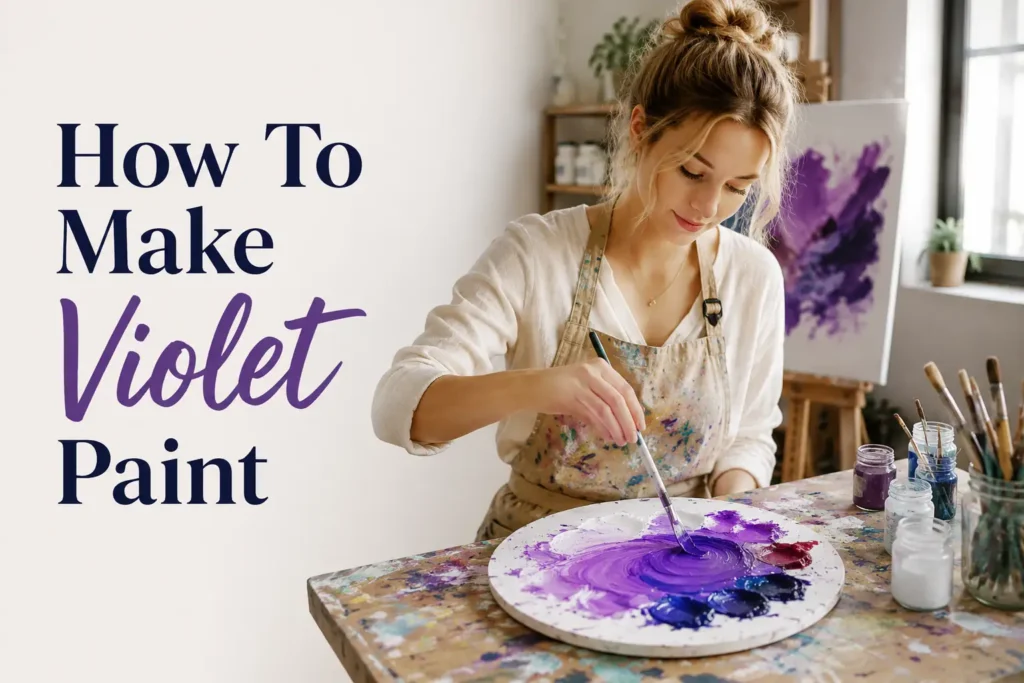
From deep royal violets to soft lavender tones, there are many variations you can create with just a few supplies. This guide covers everything you need to know about mixing violet paint, adjusting shades, and using your custom colors effectively in artwork.
Items to Buy
- Red paint
- Blue paint
- White paint
- Black paint
- Paint palette
- Palette knife
- Paintbrushes
- Acrylic paint set
- Water container
- Paper towels
- Mixing tray
- Color wheel
- Sketchbook
- Canvas or painting paper
Understanding the Color Violet
Violet is a secondary color on the traditional color wheel. It is created by mixing red and blue together in varying proportions. The exact shade you achieve depends on the type of red and blue paints you use.
Not all reds and blues produce the same violet. Some combinations create bright, vibrant violets, while others produce muted or grayish tones. Learning how different pigments interact is an important part of color mixing.
Artists often use violet to add depth, contrast, and visual interest to their work. It can evoke feelings of creativity, luxury, mystery, and elegance, making it a versatile color in many artistic styles.
Why Paint Choice Matters
The pigments in your paints significantly affect the final violet color. Warm reds that contain hints of orange may create a duller violet because orange is opposite blue on the color wheel.
Cool reds with pink or magenta undertones generally produce brighter violets. Similarly, cooler blues often mix into cleaner and more vibrant shades of violet compared to warmer blues that lean toward green.
Experimenting with different paint brands and pigment combinations helps you discover the violet shades that best suit your artistic goals.
Common Shades of Violet
Violet is not just one color. By adjusting your paint mixture, you can create a wide range of beautiful shades.
Light violet is achieved by adding white paint. Deep violet is created by increasing the amount of blue or adding a small amount of black. Lavender, lilac, plum, and royal purple are all popular variations that can be mixed from the same basic color family.
Understanding these variations gives artists greater control over their compositions and allows for more expressive color choices.
How To Make Violet Paint Step by Step Guide
Step 1: Prepare Your Workspace
Set up your painting area with a palette, paints, brushes, and water container.
Having all materials organized before you begin makes the mixing process easier and helps prevent accidental contamination of colors.
Step 2: Select Your Red and Blue Paints
Choose a red and blue paint that lean toward cool undertones whenever possible.
Magenta-based reds and ultramarine or cobalt blues often produce the most vibrant violet mixtures.
Step 3: Add Equal Amounts of Paint
Place equal amounts of red and blue paint onto your palette.
Starting with a balanced ratio allows you to see the basic violet color before making adjustments.
Step 4: Mix Thoroughly
Use a palette knife or brush to blend the paints together completely.
Continue mixing until no streaks remain and the color appears consistent throughout the mixture.
Step 5: Evaluate the Color
Observe the violet under good lighting.
If it appears too blue, add a small amount of red. If it appears too red, add a small amount of blue.
Step 6: Create Lighter Shades
Add small amounts of white paint to create lighter violets, lavender tones, or pastel purples.
Mix gradually because white paint can quickly alter the intensity of the color.
Step 7: Create Darker Shades
For deeper violets, add a little more blue or a tiny amount of black paint.
Use black sparingly to avoid muddying the color.
Step 8: Test the Mixture
Apply a small sample to paper or canvas before using it in your artwork.
Paint often appears slightly different when dry, so testing helps ensure you achieve the desired shade.
Step 9: Adjust as Needed
Continue modifying the mixture until you reach the exact violet tone you want.
Keep notes of your ratios if you may need to recreate the color later.
How to Make Different Violet Shades
Creating multiple violet variations expands your artistic possibilities. A small adjustment in color ratios can dramatically change the final appearance.
For a brighter violet, use more magenta-based red. For a cooler violet, increase the amount of blue. Adding white creates soft pastel shades, while tiny amounts of black or dark blue produce richer, deeper tones.
Artists often mix several violet shades for a single painting to create depth, shadows, and highlights.
Common Mistakes to Avoid
One common mistake is using warm red and warm blue paints that contain conflicting undertones. This often results in a muddy or grayish violet rather than a vibrant color.
Another mistake is adding too much black when trying to darken violet. Excessive black can overwhelm the mixture and reduce its richness. It is usually better to darken violet gradually with additional blue.
Many beginners also forget to test colors before applying them to their artwork. Taking a few moments to create sample swatches can prevent unwanted surprises later.
Tips for Better Color Mixing
Work with small amounts of paint initially. It’s easier to add more paint than to correct an overly large mixture.
Keep your palette clean and avoid introducing unwanted colors into the mixture. Even small amounts of another pigment can alter the final shade.
Using a color wheel can also help you understand color relationships and predict how different pigments will interact when mixed together.
Using Violet in Artwork
Violet is an excellent color for flowers, sunsets, fantasy art, landscapes, and abstract compositions. It can be used as a dominant color or as an accent to create contrast and visual interest.
Many artists use violet shadows instead of black because violet often creates a more natural and vibrant appearance. It also works beautifully when paired with yellows, greens, and blues.
Experimenting with different violet shades can add sophistication and depth to your paintings while helping you develop a stronger understanding of color theory.
FAQs
What colors make violet paint?
Violet paint is made by mixing red and blue together. The exact shade depends on the pigments and proportions used.
Why does my violet paint look muddy?
Muddy violet often occurs when warm reds and blues are mixed together or when too many additional colors are introduced into the mixture.
Can I make violet without blue paint?
Traditional violet requires blue and red. Without blue, it is difficult to create a true violet color.
How do I make light violet paint?
Add small amounts of white paint to your violet mixture until you reach the desired lightness.
What is the difference between violet and purple?
In art and color theory, violet is often considered closer to the blue end of the spectrum, while purple may contain more red. However, the terms are frequently used interchangeably.
What blue works best for making violet?
Ultramarine blue, cobalt blue, and other cooler blues often produce the brightest and cleanest violet shades.
Final Words
Learning how to make violet paint is an essential skill that helps artists gain confidence in color mixing and expand their creative possibilities. By understanding how different reds and blues interact, you can create everything from soft lavender hues to rich, dramatic violets.
Practice mixing a variety of shades and keep track of successful color combinations. With time and experimentation, you’ll develop a stronger understanding of color theory and be able to create custom violet tones perfectly suited to your artistic vision.