
Learning how to paint a door to look like wood is a budget-friendly way to transform an ordinary door into a beautiful focal point. Whether you have a metal, fiberglass, or previously painted door, a faux wood finish can add warmth, character, and curb appeal without the expense of replacing the door.
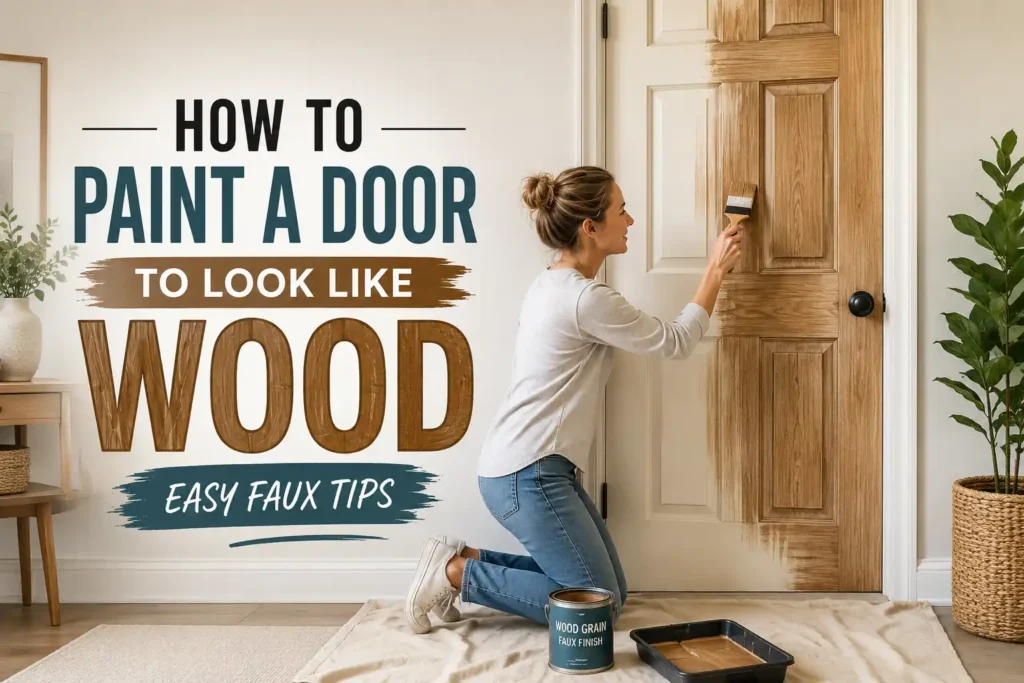
The process is easier than many homeowners expect. With the right paint colors, tools, and techniques, you can create realistic wood grain patterns that mimic the appearance of oak, walnut, mahogany, or other wood species. This guide will walk you through every step needed to achieve a convincing faux wood finish.
Items to Buy
- Exterior or interior primer
- Base coat paint
- Wood-tone paint
- Gel stain
- Faux wood grain tool
- Paint brushes
- Foam brushes
- Paint roller
- Paint tray
- Painter’s tape
- Drop cloths
- Fine-grit sandpaper
- Tack cloth
- Degreasing cleaner
- Wood graining rocker
- Glazing liquid
- Clear topcoat
- Protective gloves
- Mixing sticks
- Microfiber cloths
Why Paint a Door to Look Like Wood?
Replacing a door with a real wood version can be expensive.
A faux wood finish allows homeowners to achieve the appearance of natural wood while keeping existing metal, fiberglass, or composite doors. The technique can dramatically improve curb appeal and complement a home’s architectural style.
Many faux wood finishes are also easier to maintain than real wood, making them a practical choice for busy households.
Best Doors for Faux Wood Painting
Several door materials work well for this project.
Common options include:
- Steel doors
- Fiberglass doors
- Composite doors
- Previously painted wood doors
- Interior hollow-core doors
- MDF doors
Smooth surfaces are often the easiest to work with because they provide a clean canvas for creating realistic wood grain effects.
Choosing the Right Wood Color
Before beginning, decide which wood species you want to imitate.
Popular choices include:
- Oak
- Walnut
- Mahogany
- Cherry
- Cedar
- Teak
- Maple
- Pine
Lighter wood tones typically start with tan or beige base coats, while darker woods often require deeper brown undertones.
Selecting colors beforehand helps create a more realistic result.
How to Paint a Door to Look Like Wood Step by Step Guide
Step 1: Remove Hardware
Take off handles, locks, kick plates, and other hardware whenever possible.
Removing these items makes painting easier and helps create a cleaner finish.
Store all hardware safely for reinstallation later.
Step 2: Clean the Door
Wash the entire door using a degreasing cleaner.
Remove dirt, grease, dust, and other contaminants that may interfere with paint adhesion.
Allow the surface to dry completely before moving forward.
Step 3: Protect Surrounding Areas
Apply painter’s tape around trim, hinges, glass inserts, and adjacent surfaces.
Lay down drop cloths to protect floors and nearby areas from paint splatters.
Proper preparation simplifies cleanup.
Step 4: Sand the Surface
Lightly sand the door using fine-grit sandpaper.
The goal is to dull glossy finishes and improve primer adhesion rather than remove all existing paint.
Wipe away dust with a tack cloth afterward.
Step 5: Apply Primer
Apply a high-quality primer suitable for the door material.
Use a brush or roller to achieve even coverage.
Allow the primer to dry completely according to the manufacturer’s instructions.
Step 6: Paint the Base Coat
Choose a base color that complements the wood finish you want to create.
For oak, use a light tan. For walnut, select a medium brown. For mahogany, use a warm reddish-brown.
Apply an even coat and allow it to dry thoroughly.
Step 7: Prepare the Faux Wood Mixture
Mix glazing liquid with a darker paint color or use a premixed gel stain.
The glaze creates the translucent effect necessary for realistic wood grain patterns.
Work in small batches to maintain consistency.
Step 8: Apply the Glaze
Brush a thin layer of glaze over a manageable section of the door.
Avoid covering the entire door at once because the glaze may begin drying before you can create the grain pattern.
Work methodically in sections.
Step 9: Create the Wood Grain
Use a wood graining tool or rocker to create realistic grain patterns.
Pull the tool through the wet glaze while gently rocking it to mimic natural wood growth lines.
Vary the movement slightly to avoid repetitive patterns.
Step 10: Add Detail and Knots
Use a small brush to add subtle knots, swirls, and grain variations.
Natural wood contains imperfections, so these details help improve realism.
Keep them understated for the most convincing appearance.
Step 11: Allow the Finish to Dry
Let the faux wood finish dry completely.
Drying times vary depending on temperature, humidity, and the products used.
Avoid touching the surface during this stage.
Step 12: Apply a Protective Topcoat
Once the finish is fully dry, apply a clear protective topcoat.
Choose a satin, semi-gloss, or matte finish depending on your desired appearance.
The topcoat protects the faux wood finish from scratches, moisture, and everyday wear.
Common Faux Wood Grain Techniques
Several methods can produce realistic wood effects.
Wood Graining Rocker
A wood graining rocker is one of the most popular tools for creating authentic grain patterns. It produces curved lines that resemble natural wood growth rings.
Dry Brush Technique
A dry brush loaded with minimal paint can create subtle grain textures and highlights.
Feather Technique
Dragging a feather through wet glaze creates delicate, organic grain effects.
Rag Rolling
A crumpled rag can produce unique texture variations and add depth to the finish.
Experimenting with different methods can help you achieve the look you prefer.
Best Paint Colors for Faux Wood Doors
Color selection greatly influences the final appearance.
Popular combinations include:
| Wood Type | Base Coat | Glaze Color |
|---|---|---|
| Oak | Light Tan | Medium Brown |
| Walnut | Warm Brown | Dark Brown |
| Cherry | Beige | Red-Brown |
| Mahogany | Reddish Brown | Dark Mahogany |
| Maple | Cream | Golden Brown |
| Pine | Pale Yellow | Light Brown |
Testing colors on a sample board before painting the entire door is highly recommended.
Common Mistakes to Avoid
One common mistake is skipping surface preparation.
Poor cleaning and sanding can reduce paint adhesion and lead to premature failure. Another issue is creating overly uniform grain patterns.
Real wood contains natural variation, so repetitive designs can appear artificial.
Applying too much glaze at once may also make the grain difficult to control.
Working in smaller sections helps prevent this problem.
Tips for a More Realistic Wood Finish
Study photographs of real wood before beginning.
Notice how grain patterns vary in thickness, direction, and spacing. Use multiple shades of brown to create depth and visual interest.
Less is often more when adding knots and texture.
Taking your time with the graining process typically produces the most convincing results.
Maintaining a Faux Wood Door
A properly sealed faux wood finish is relatively easy to maintain.
Clean the surface periodically using a soft cloth and mild cleaner. Avoid abrasive scrubbing pads that could damage the finish.
Inspect exterior doors annually for signs of wear and reapply a protective topcoat if necessary.
Routine maintenance helps preserve the appearance for years.
FAQs
Can you paint a metal door to look like wood?
Yes. Metal doors are among the most popular surfaces for faux wood finishes.
What paint works best for faux wood doors?
High-quality acrylic latex paint combined with glaze or gel stain often produces excellent results.
Do I need a wood graining tool?
No, but a wood graining tool makes creating realistic grain patterns much easier.
Can fiberglass doors be painted to look like wood?
Absolutely. Fiberglass doors are excellent candidates for faux wood finishes.
How long does the project take?
Most projects require one to three days, depending on drying times.
What is the best topcoat for a faux wood door?
A clear exterior-grade polyurethane or protective clear coat works well for exterior doors.
Can beginners create a realistic wood finish?
Yes. With practice and patience, beginners can achieve impressive results.
How long does a faux wood finish last?
A properly prepared and sealed finish can last for many years with routine maintenance.
Final Words
Learning how to paint a door to look like wood is an affordable way to upgrade your home’s appearance without replacing existing doors. By combining the right base colors, glazing techniques, and wood-graining tools, you can create a realistic finish that closely resembles natural wood.
Whether you’re transforming a front entry door, updating an interior door, or refreshing a garage entry, a faux wood finish can add warmth, elegance, and character to your space. With careful preparation and attention to detail, you’ll achieve professional-looking results that enhance your home’s style and value.