
Learning how to paint a nutcracker is a fun way to transform a plain wooden figure, refresh an old holiday decoration, or create a completely personalized Christmas centerpiece. Nutcrackers are especially enjoyable to paint because their uniforms, hats, boots, beards, and tiny details give you plenty of opportunities to experiment with color and creativity. You can follow a traditional red-and-green palette or create something completely unexpected.
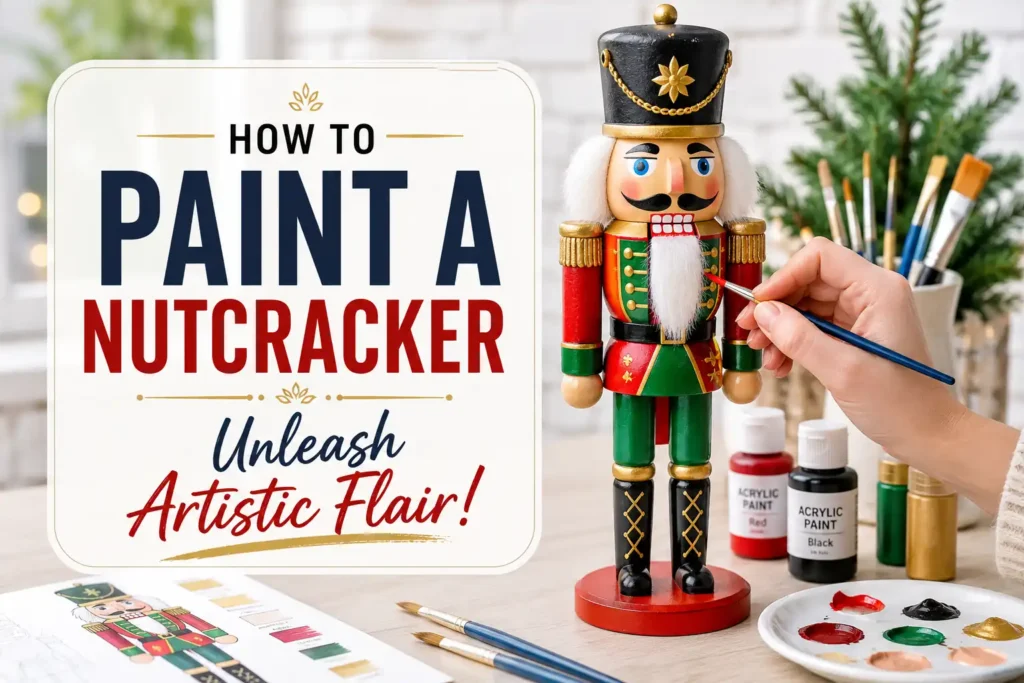
The secret to a polished nutcracker is patience. Because these figures contain many small areas, rushing through the painting process can lead to messy edges and uneven colors. With proper cleaning, preparation, thin paint layers, and detail brushes, you can create a beautifully finished nutcracker that looks festive and carefully crafted.
Items to Buy
- Wooden or ceramic nutcracker
- Acrylic craft paint
- Primer
- Fine-detail paintbrushes
- Small round brushes
- Flat paintbrushes
- Foam brushes
- Paint palette
- Water container
- Paper towels
- Fine-grit sandpaper
- Mild soap
- Microfiber cloth
- Painter’s tape
- Pencil
- Cotton swabs
- Clear acrylic sealer
- Gold paint
- Silver paint
- White paint
- Black paint
- Red paint
- Blue paint
- Green paint
Can You Paint a Nutcracker?
Yes, nutcrackers are excellent surfaces for decorative painting.
Most decorative nutcrackers are made from wood or wood-based materials, although you may also find ceramic, resin, and plastic versions.
Before choosing your paint, identify the material and check whether the existing finish is glossy, painted, varnished, or unfinished.
Acrylic craft paint is a convenient option for many decorative nutcracker projects because it dries relatively quickly and comes in a huge variety of colors.
What Paint Is Best for a Nutcracker?
Acrylic craft paint is one of the easiest choices for decorative nutcrackers.
You can use:
- Matte acrylic
- Satin acrylic
- Metallic acrylic
- Acrylic enamel
- Specialty decorative paint
For the best results, choose paint appropriate for the material of your particular nutcracker.
Acrylics also make it easy to layer colors and add tiny details such as buttons, facial features, medals, belts, and decorative patterns.
How to Paint a Nutcracker Step by Step
Step 1: Choose Your Nutcracker
Start with an unfinished figure or an old nutcracker that needs a makeover.
Inspect it carefully for:
- Cracks
- Chips
- Peeling paint
- Loose parts
- Rough areas
- Dust
- Scratches
If the figure is mechanically functional, make sure the mouth mechanism still works before beginning.
Step 2: Clean the Nutcracker
Wipe the entire figure with a soft, slightly damp cloth.
If the nutcracker is dirty, use a small amount of mild soap and water where appropriate for the material.
Remove all dust, grease, and residue before painting.
Step 3: Allow It to Dry
Let the figure dry completely.
Pay particular attention to seams and detailed areas where moisture may remain.
Step 4: Repair Small Imperfections
Fill or repair minor surface imperfections if necessary.
Allow any repair material to dry completely before continuing.
If the nutcracker has significant structural damage, repair it before applying paint.
Step 5: Lightly Sand the Surface
If the figure has a glossy finish or rough patches, lightly sand it using fine-grit sandpaper.
Don’t aggressively sand decorative details.
The goal is to create a more suitable surface for the primer and paint.
Step 6: Remove Sanding Dust
Wipe the figure thoroughly with a clean microfiber cloth.
Any leftover dust can become trapped beneath the paint.
Step 7: Apply Primer
Apply a thin coat of suitable primer.
Primer can help:
- Improve adhesion
- Create an even base
- Cover previous colors
- Reduce the amount of paint needed
Allow it to dry according to the product instructions.
Step 8: Plan Your Color Palette
Before painting, decide on your main colors.
A traditional nutcracker might use:
- Red
- Green
- White
- Black
- Gold
A modern design could use:
- Navy
- Cream
- Gold
- Burgundy
- Silver
Keeping your palette coordinated will make the finished figure look more intentional.
Step 9: Paint the Face
Start with the face because it is one of the most recognizable parts of the nutcracker.
Use a flesh-tone color or another shade that matches your design.
Apply thin coats and allow each layer to dry.
Step 10: Paint the Hair and Beard
Use white, gray, black, brown, or another color depending on your character.
A small round brush makes it easier to work around the face.
For a traditional nutcracker, white hair and a white beard create a classic appearance.
Step 11: Paint the Hat
The hat can become one of the most dramatic parts of your design.
Try:
- Red with gold trim
- Black with silver details
- Navy with gold accents
- Green with red decorations
- White with metallic trim
Use a small brush around the edges for cleaner lines.
Step 12: Paint the Jacket
Choose a dominant color for the uniform.
Red is traditional, but blue, green, burgundy, white, and black can all create beautiful results.
Apply thin coats instead of one heavy layer.
Step 13: Paint the Pants
Choose a color that complements the jacket.
Black, white, red, green, and navy are popular choices.
Keep the edges clean where the pants meet the jacket and boots.
Step 14: Paint the Boots
Black boots are classic, but brown, burgundy, navy, or metallic boots can create a more unusual design.
Add a small highlight along the top edge if you want them to look more dimensional.
Step 15: Paint the Belt
A belt can add strong visual contrast.
Use black, brown, red, or another dark shade as the base.
Then add a gold or silver buckle.
Step 16: Add Buttons
Tiny buttons can make a huge difference.
Use a small detail brush to add:
- Gold buttons
- Silver buttons
- Black buttons
- Red buttons
Keep them evenly spaced for a polished appearance.
Step 17: Add Shoulder Details
Nutcracker uniforms often feature decorative shoulder pieces.
Use gold or silver paint to create:
- Epaulettes
- Stripes
- Trim
- Decorative shapes
Step 18: Paint the Face Details
Use a very fine brush for:
- Eyes
- Eyebrows
- Nose
- Mouth
- Mustache
Don’t overload the brush with paint.
Tiny amounts give you much greater control.
Step 19: Add Metallic Accents
Gold and silver are excellent for making a nutcracker feel festive.
Add metallic paint to:
- Buttons
- Buckles
- Hat trim
- Medals
- Shoulder decorations
- Sword details
- Boots
Step 20: Add Shadows and Highlights
For a more professional appearance, add subtle darker and lighter tones.
Use darker paint around recessed areas and lighter paint on raised details.
This creates depth and makes the figure look less flat.
Step 21: Let Everything Dry
Allow the paint to dry completely before applying additional details or protective coating.
Trying to work over wet paint can cause unwanted smudges.
Step 22: Apply a Protective Sealer
Once the paint has fully dried and cured as recommended, apply a compatible clear sealer.
Choose:
- Matte
- Satin
- Gloss
depending on the appearance you want.
Step 23: Let the Nutcracker Cure
Allow the protective coating to cure according to the manufacturer’s instructions.
Avoid excessive handling during this period.
Traditional Red Nutcracker
A traditional red nutcracker is perfect for a classic Christmas display.
Use deep red for the jacket and hat, black for the boots and belt, white for the beard, and gold for the buttons and trim.
Add subtle green accents if you want a more colorful holiday appearance.
Blue and Gold Nutcracker
Blue and gold create an elegant alternative to traditional Christmas colors.
Try navy blue for the jacket and hat with bright gold buttons, trim, and accessories.
White hair and beard provide contrast and keep the design connected to the traditional nutcracker aesthetic.
Green Christmas Nutcracker
Green is another excellent choice for a holiday-themed figure.
Use forest green for the uniform and combine it with red, white, and gold accents.
A dark green base gives metallic gold details plenty of contrast.
Black and Gold Nutcracker
For a sophisticated modern design, use black as the dominant color.
Add gold buttons, trim, buckles, and decorative details.
This combination works particularly well with minimalist Christmas decorations.
White Nutcracker
A white nutcracker can create a soft winter-inspired appearance.
Use white for the uniform and beard, then introduce silver or pale blue details.
Add subtle gold accents if you want a warmer finish.
Pink Nutcracker
Pink can transform a traditional figure into a playful holiday decoration.
Try blush pink with white, gold, or champagne accents.
A soft pastel palette works especially well for feminine or whimsical Christmas displays.
How to Paint Nutcracker Details
The small details often determine whether the final piece looks amateur or polished.
Eyes
Use a very fine brush.
Start with the eye shape and then add tiny dark pupils.
Mustache
Paint the mustache with small controlled strokes rather than one thick line.
Buttons
Use the tip of a detail brush to create consistent circular shapes.
Gold Trim
Use a narrow brush and minimal paint.
If the trim is raised, lightly dragging a nearly dry brush across it can create a clean highlight.
How to Paint a Wooden Nutcracker
Wooden nutcrackers are among the easiest to customize.
Clean and lightly sand the surface before applying primer.
If the wood is unfinished, primer can create a smoother base and make colors appear more consistent.
Use acrylic paint in thin layers, allowing each layer to dry before adding the next.
How to Paint an Old Nutcracker
An old nutcracker can often be given a completely new appearance.
Start by cleaning it thoroughly.
Remove loose or peeling paint and lightly sand rough areas.
If the original paint is stable, you don’t necessarily need to remove every layer.
Prime where appropriate, then repaint the figure using your chosen palette.
How to Paint a Nutcracker With Metallic Paint
Metallic paint can add a luxurious appearance.
Gold is especially effective for:
- Buttons
- Belts
- Shoulder pieces
- Hat trim
- Medals
- Decorative patterns
Use metallic colors as accents rather than covering every surface unless you’re intentionally creating a fully metallic design.
How to Create a Vintage Nutcracker Look
For a vintage appearance, avoid extremely bright colors.
Instead, choose slightly muted shades such as:
- Burgundy
- Forest green
- Cream
- Antique gold
- Navy
- Warm white
Add subtle shading and lightly distressed edges if desired.
Common Mistakes to Avoid
Applying Thick Paint
Thick paint can obscure tiny details.
Use multiple thin layers instead.
Skipping Primer
Primer can be particularly helpful when painting over an existing glossy or dark finish.
Using a Large Brush for Details
Small brushes provide much better control around the face, buttons, and trim.
Rushing Between Coats
Allow each layer to dry before adding another.
Using Too Many Colors
A coordinated palette generally looks more professional than a random mixture of bright shades.
Forgetting the Base
The base should complement the rest of the figure.
Sealing Too Early
Make sure the paint has dried and cured sufficiently before applying the clear coat.
Tips for a Professional Finish
For a polished nutcracker:
- Prepare the surface carefully
- Use primer when appropriate
- Choose a limited color palette
- Apply thin coats
- Use detail brushes
- Keep edges clean
- Add metallic accents strategically
- Use highlights and shadows
- Allow adequate drying time
- Apply a compatible protective finish
Good lighting while painting can also make it easier to spot imperfections.
How to Add a Distressed Finish
A distressed finish can make a new nutcracker look vintage.
Paint the figure normally and allow it to dry.
Then lightly sand selected edges and raised areas to reveal small amounts of the underlying layer.
Concentrate on areas that would naturally receive wear, such as:
- Hat edges
- Boots
- Jacket edges
- Base
- Raised decorations
Keep the distressing subtle for a more believable effect.
How to Make a Nutcracker Look Expensive
You don’t need expensive materials to create a sophisticated appearance.
Focus on:
- Consistent color blocking
- Crisp edges
- Metallic accents
- Subtle shading
- Symmetrical details
- High-quality brushes
- A smooth protective finish
A limited palette of two or three primary colors plus metallic accents can look especially elegant.
FAQs
What kind of paint should I use on a nutcracker?
Acrylic craft paint is a popular option for decorative wooden nutcrackers. Choose a product compatible with your specific surface.
Do I need to prime a nutcracker before painting?
Primer is recommended when working over glossy surfaces, dark colors, or certain unfinished materials. Follow the paint and primer manufacturer’s instructions.
Can I repaint an old nutcracker?
Yes. Clean it, remove loose paint, lightly prepare the surface, prime where appropriate, and apply new paint.
How many coats of paint should I use?
Several thin coats are generally better than one thick coat. The exact number depends on the color and paint you’re using.
How do I paint tiny nutcracker details?
Use a small round or detail brush and work slowly. Keep only a small amount of paint on the brush.
Can I use spray paint on a nutcracker?
Spray paint can work on some materials when the product is compatible with the surface. Detail painting can then be added with acrylic paint.
How do I paint a nutcracker face?
Use a small brush and work in layers. Start with the base skin tone, then add the eyes, eyebrows, nose, mouth, and facial hair.
Should I seal my painted nutcracker?
A compatible clear sealer can help protect decorative paint from dust, handling, and minor scratches.
What finish should I use?
Matte provides a soft appearance, satin offers moderate sheen, and gloss creates a shiny finish. Choose according to your desired style.
Can I paint a nutcracker any color?
Absolutely. Traditional red and green are popular, but blue, black, pink, white, purple, and metallic palettes can all create unique designs.
Final Words
Learning how to paint a nutcracker gives you a creative way to refresh an old holiday decoration or make a completely personalized Christmas figure. Start with careful preparation, choose a coordinated color palette, and work from larger areas toward the tiny details. Thin layers and good-quality brushes will help you achieve cleaner results.
Whether you choose a traditional red-and-green soldier, an elegant blue-and-gold design, a modern black-and-gold figure, or a whimsical pastel creation, the possibilities are nearly endless. Take your time with the face, uniform details, buttons, trim, and accessories, then protect your finished work with a compatible sealer. Your DIY nutcracker can become a memorable part of your holiday décor for years to come.