
Learning how to paint a pergola is a practical way to refresh your outdoor space while protecting the structure from weather, moisture, and everyday wear. Whether your pergola is made from wood, pressure-treated lumber, or another paintable material, a fresh coat of exterior paint can completely change its appearance and help it blend beautifully with your patio, garden, or home’s exterior.
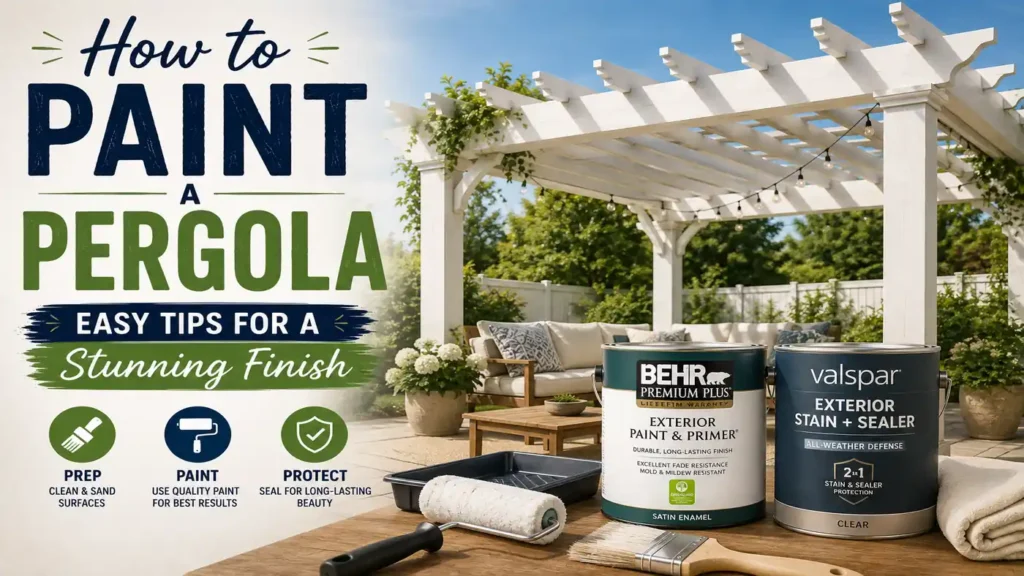
Painting a pergola does require more planning than painting an indoor wall because outdoor structures are exposed to sunlight, rain, humidity, dirt, and temperature changes. The key is choosing an appropriate exterior coating, preparing every surface carefully, and allowing enough drying and curing time. With the right approach, you can achieve a smooth, durable finish that makes your pergola look professionally finished.
Items to Buy
- Exterior wood cleaner
- Mild detergent
- Garden hose
- Scrub brush
- Bucket
- Microfiber cloths
- Exterior wood filler
- Caulk
- Putty knife
- Sandpaper
- Sanding sponge
- Sanding block
- Tack cloth
- Exterior bonding primer
- Exterior wood primer
- Exterior acrylic paint
- Exterior latex paint
- Paint brushes
- Paint rollers
- Roller extension pole
- Paint tray
- Paint sprayer
- Painter’s tape
- Drop cloths
- Plastic sheeting
- Ladder
- Safety goggles
- Dust mask
- Work gloves
Why Paint a Pergola?
Painting a pergola can provide both decorative and protective benefits.
A quality exterior coating can:
- Refresh an aging structure
- Change the color
- Protect exposed wood
- Improve curb appeal
- Coordinate with outdoor furniture
- Cover discoloration
- Create a finished appearance
- Help protect against weather exposure
A freshly painted pergola can become a focal point in a backyard or patio area.
Can You Paint a Pergola?
Yes, most wood pergolas can be painted successfully.
The most important consideration is the condition of the structure. The wood should be reasonably sound, dry, and free from extensive rot or structural damage before painting.
If the pergola has severe deterioration, repair the affected areas before applying primer or paint.
What Type of Paint Is Best for a Pergola?
Exterior acrylic or latex paint designed for outdoor wood is commonly used for painted wood structures.
Look for a coating that offers:
- Weather resistance
- UV resistance
- Flexibility
- Moisture resistance
- Good adhesion
For a pergola that experiences substantial weather exposure, choose a product specifically labeled for exterior use.
Paint or Stain: Which Is Better?
Both paint and stain can work, but they produce different appearances.
Paint
Paint creates a more opaque finish and offers a wide range of colors. It is particularly useful when you want a bold, solid-color appearance.
Stain
Stain allows more of the natural wood character to remain visible. It can be a better option if you prefer a natural outdoor appearance.
Your choice should depend on the condition of the wood and the appearance you want.
When Is the Best Time to Paint a Pergola?
Weather plays an important role.
Ideally, choose a period with:
- Dry weather
- Moderate temperatures
- Low to moderate humidity
- Minimal wind
- No rain in the immediate forecast
Avoid painting wet wood or working during extreme heat. Always follow the temperature and weather requirements listed on your paint and primer.
Preparing the Pergola for Painting
Preparation is the foundation of a durable finish.
Outdoor structures collect dirt, pollen, dust, cobwebs, mildew, and other contaminants. Painting directly over these materials can cause poor adhesion and an uneven appearance.
Before opening the paint can, spend time cleaning and inspecting the entire pergola.
How to Paint a Pergola Step by Step
Step 1: Inspect the Pergola
Examine every post, beam, rafter, and decorative element.
Look for:
- Rot
- Cracks
- Loose boards
- Splintered wood
- Peeling paint
- Mildew
- Insect damage
- Water damage
Repair serious problems before painting.
Step 2: Remove Outdoor Furniture
Move furniture, plants, decorations, grills, and other items away from the pergola.
This gives you more working space and protects your belongings from paint splatter.
Step 3: Cover the Ground
Place drop cloths or protective sheeting over patios, decks, landscaping, and other nearby surfaces.
Secure the covering so wind does not move it while you work.
Step 4: Clean the Pergola
Wash the entire structure using an exterior wood cleaner or mild detergent.
Scrub areas containing:
- Dirt
- Mud
- Algae
- Mildew
- Bird residue
- Cobwebs
Rinse thoroughly if the cleaning product requires it.
Step 5: Allow the Wood to Dry
Do not paint damp wood.
Allow the pergola to dry thoroughly before sanding, priming, or painting.
Drying time varies according to weather and the condition of the wood.
Step 6: Scrape Loose Paint
If the pergola was previously painted, remove loose and peeling paint with a scraper.
Do not leave unstable paint underneath the new coating.
Step 7: Sand Rough Areas
Sand rough, peeling, or uneven sections using appropriate sandpaper.
Focus on:
- Peeling edges
- Splinters
- Rough repairs
- Uneven old paint
- Glossy areas
You do not necessarily need to remove every bit of existing paint if the old coating is firmly attached.
Step 8: Repair Cracks and Holes
Use an exterior-rated wood filler for suitable repairs.
Fill holes, cracks, and small imperfections.
Allow the filler to cure before sanding it smooth.
Step 9: Check for Rot
Soft or deteriorated wood should not simply be covered with paint.
Replace severely damaged sections or complete the appropriate repair before proceeding.
Step 10: Remove Dust
Brush or wipe away sanding dust.
A tack cloth can help remove fine particles from smooth areas.
The surface should be clean before primer is applied.
Step 11: Mask Nearby Surfaces
Use painter’s tape around:
- House siding
- Doors
- Windows
- Posts near walls
- Decorative hardware
Careful masking produces cleaner edges.
Step 12: Apply Exterior Primer
Apply a quality exterior primer appropriate for the pergola’s material.
Primer helps:
- Improve adhesion
- Reduce uneven absorption
- Seal porous areas
- Improve color coverage
- Increase durability
Pay particular attention to exposed or repaired wood.
Step 13: Let the Primer Dry
Allow the primer to dry according to the manufacturer’s instructions.
Do not rush into painting if the primer remains tacky or soft.
Step 14: Inspect the Primed Surface
Look for:
- Missed areas
- Rough spots
- Visible repairs
- Uneven coverage
Touch up as necessary.
Step 15: Apply the First Paint Coat
Use an exterior-rated paint and begin with the upper areas of the pergola.
A brush works well for edges and detailed sections, while a roller or sprayer can speed up larger surfaces.
Apply a consistent, thin coat.
Step 16: Paint the Posts and Beams
Work systematically from one section to another.
Avoid applying excessive paint because thick layers can sag or develop uneven texture.
Step 17: Paint the Rafters
The overhead rafters may require additional attention because they contain multiple edges and angles.
Use a smaller brush for difficult-to-reach areas.
Step 18: Apply a Second Coat
After the first coat has dried according to the manufacturer’s instructions, apply a second coat.
A second coat generally provides:
- More consistent color
- Better coverage
- Improved protection
- More uniform sheen
Step 19: Check for Missed Areas
Inspect the pergola from several angles.
Pay attention to:
- Inside corners
- Undersides
- Beam ends
- Rafter edges
- Areas behind posts
Touch up any missed sections.
Step 20: Remove Painter’s Tape
Remove masking tape carefully after painting.
Pull it away slowly to avoid damaging fresh edges.
Step 21: Allow the Paint to Cure
Drying does not necessarily mean the coating is fully cured.
Give the paint adequate time to harden before placing furniture against freshly painted surfaces or exposing the pergola to unnecessary wear.
Painting a Pergola With a Brush
A brush provides excellent control and works especially well for:
- Edges
- Corners
- Decorative details
- Small pergolas
- Rough wood
Use an exterior-quality brush designed for the type of paint you’re using.
Work with the grain when possible for a smoother appearance.
Painting a Pergola With a Roller
A roller can make large surfaces much faster to paint.
Use it for:
- Large posts
- Broad beams
- Flat surfaces
Follow up with a brush where necessary to smooth edges and reach areas the roller cannot cover.
Painting a Pergola With a Sprayer
A paint sprayer can be efficient for large pergolas with many surfaces and angles.
Benefits include:
- Fast coverage
- Smooth application
- Easy access to difficult areas
- Consistent color
However, spraying requires extensive masking because overspray can travel onto nearby surfaces.
Back-brushing may also be useful on porous wood when recommended for your coating system.
Popular Pergola Paint Colors
Color can dramatically change the character of an outdoor space.
Popular choices include:
White
White creates a bright, clean, classic appearance.
Black
Black provides a dramatic, modern look and contrasts beautifully with green plants.
Gray
Gray works well with contemporary patios and neutral outdoor furniture.
Brown
Brown creates a natural appearance and complements wood-heavy landscapes.
Green
Green can help a pergola blend into a garden setting.
Navy offers a sophisticated alternative to traditional neutral colors.
How to Choose the Right Pergola Color
Consider the colors already present around your outdoor space.
Look at:
- House siding
- Roof
- Patio furniture
- Fence
- Deck
- Landscaping
- Exterior doors
A pergola does not necessarily need to match the house exactly. Coordinating colors can create a more interesting design.
Common Mistakes to Avoid
Painting Dirty Wood
Dirt and mildew can prevent paint from adhering properly.
Always clean the pergola before painting.
Painting Wet Wood
Moisture trapped beneath paint can contribute to adhesion and coating problems.
Allow the structure to dry thoroughly.
Skipping Primer
Primer is especially useful when painting bare or repaired wood.
It creates a more consistent foundation for the finish coat.
Applying Thick Coats
Thick paint can drip, sag, and dry unevenly.
Several properly applied coats usually perform better.
Ignoring the Weather
Rain shortly after painting can damage an uncured finish.
Check weather conditions and follow the coating manufacturer’s recommendations.
Painting Over Rot
Paint cannot repair structural deterioration.
Replace or properly repair damaged wood before coating it.
Tips for a Professional Finish
For the best results:
- Clean thoroughly
- Allow the wood to dry
- Repair damaged areas
- Sand rough surfaces
- Use exterior primer
- Choose quality exterior paint
- Apply thin, consistent coats
- Work systematically
- Inspect from different angles
- Allow adequate curing time
Preparation and patience are more important than rushing through the project.
How Long Does Pergola Paint Last?
The lifespan of a painted pergola depends on:
- Paint quality
- Surface preparation
- Sun exposure
- Rain and humidity
- Wood condition
- Application technique
- Maintenance
A well-prepared and properly painted pergola can maintain its appearance for several years, although heavily exposed structures may need maintenance sooner.
How to Maintain a Painted Pergola
Regular maintenance can extend the life of the finish.
Clean the structure periodically and remove dirt, leaves, cobwebs, and other debris.
Inspect for:
- Peeling paint
- Cracks
- Mildew
- Water damage
- Exposed wood
Touch up damaged areas before moisture can penetrate the coating.
Painting a New Wood Pergola
A new pergola should still be prepared before painting.
New wood can contain:
- Dust
- Manufacturing residue
- Surface oils
- Uneven areas
- Moisture
Follow the coating manufacturer’s recommendations for preparing new wood, especially if the lumber has been pressure-treated.
Do not assume new wood is automatically ready for paint.
Painting a Previously Painted Pergola
If the existing coating is in good condition, you may not need to strip everything.
Instead:
- Clean the structure.
- Scrape loose paint.
- Sand rough edges.
- Repair damaged areas.
- Prime exposed wood.
- Apply compatible exterior paint.
If the old finish is extensively peeling or failing, more extensive preparation may be necessary.
FAQs
Can you paint an outdoor pergola?
Yes. Wood pergolas can be painted using an exterior-rated coating system designed for outdoor conditions.
What is the best paint for a pergola?
A high-quality exterior acrylic or latex paint designed for outdoor wood is a popular choice.
Do I need to prime a pergola before painting?
Primer is strongly recommended for bare, repaired, or highly porous wood and can improve adhesion and coverage.
Can I paint a pressure-treated wood pergola?
Yes, but pressure-treated wood needs to be sufficiently dry before painting. Follow the paint manufacturer’s recommendations.
Should I sand my pergola before painting?
Sanding is useful for removing loose paint, smoothing rough areas, and improving the surface.
Can I use a paint sprayer?
Yes. A sprayer can provide fast and even coverage, but extensive masking is usually necessary.
How many coats should a pergola have?
Two finish coats are commonly used, although the exact number depends on the paint, surface, color, and manufacturer’s recommendations.
Can I paint a pergola in direct sunlight?
Direct sunlight can cause paint to dry too quickly and may affect application. Follow the coating manufacturer’s recommended application conditions.
How long should a painted pergola dry?
Drying and curing times vary by product and weather. Follow the manufacturer’s instructions rather than relying on a fixed timeframe.
How to Refresh an Old Pergola
If your pergola looks tired but remains structurally sound, a complete repaint can make a dramatic difference.
Start by cleaning away years of dirt and organic buildup. Remove loose paint and sand rough edges. Repair cracks and replace deteriorated wood where necessary.
After priming exposed surfaces, apply two consistent finish coats. Even a simple neutral color can make an older pergola look dramatically cleaner and more modern.
Creating a Two-Tone Pergola
For a more customized appearance, consider using two complementary colors.
For example, you could paint the posts and beams one color while using a contrasting shade on the rafters.
Two-tone combinations can emphasize the architectural structure of the pergola and create a more visually interesting outdoor space.
Use high-quality painter’s tape to create clean transitions between colors.
Final Words
Learning how to paint a pergola can completely transform an outdoor living area while helping protect the structure from everyday weather exposure. The most important steps are cleaning the surface, repairing damage, sanding where necessary, using an appropriate exterior primer, and applying quality paint in thin, even coats.
Whether you’re refreshing an older pergola or finishing a new one, don’t rush the preparation stage. Choose a suitable day, work systematically, and give each coating enough time to dry and cure. With patience and the right materials, you can create a smooth, durable finish that makes your pergola a beautiful feature of your outdoor space.