
Learning how to paint motorcycle brake calipers is an excellent way to add a custom touch to your bike while refreshing worn or faded brake components. Painted calipers can make a motorcycle look more aggressive, sporty, and well-maintained without requiring expensive upgrades.
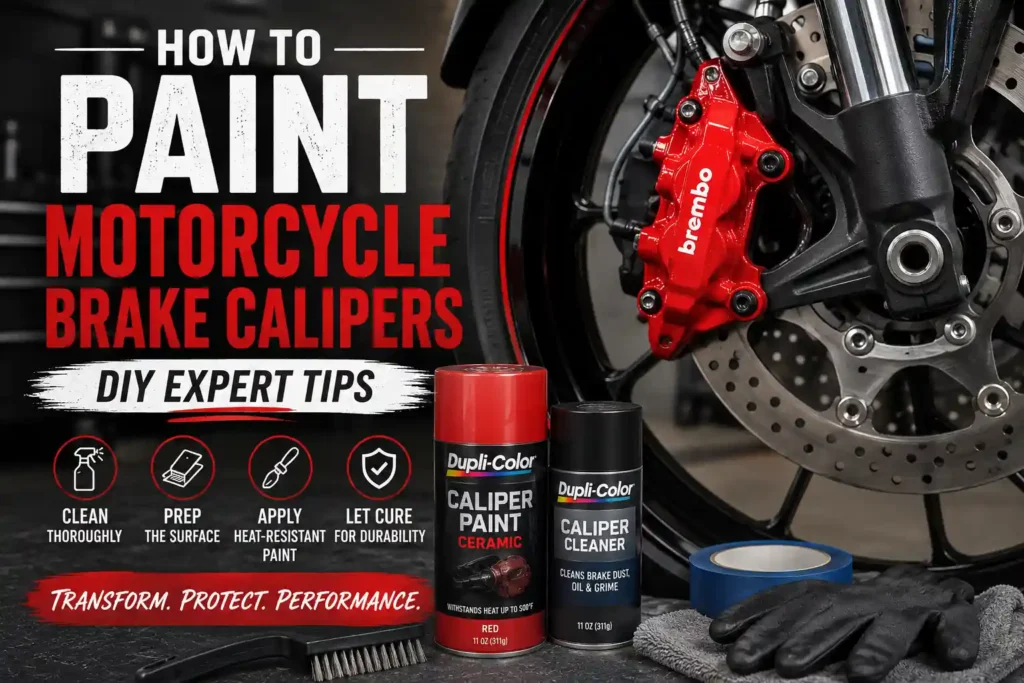
Because brake calipers are exposed to high temperatures, road grime, brake dust, and harsh weather conditions, proper preparation is essential for a durable finish. Using the correct cleaning methods, high-temperature paint, and application techniques will help ensure your painted calipers look great and last for years. This guide covers everything you need to know from preparation to final curing.
Items to Buy
- Brake caliper paint
- High-temperature paint
- Brake cleaner
- Degreaser
- Wire brush
- Fine-grit sandpaper
- Sanding sponge
- Microfiber cloths
- Tack cloth
- Painter’s tape
- Plastic sheeting
- Aluminum foil
- Small paint brushes
- Foam brushes
- Nitrile gloves
- Safety goggles
- Respirator mask
- Jack stand
- Socket set
- Clear high-temperature coat
Why Paint Motorcycle Brake Calipers?
Painting brake calipers offers several benefits.
Advantages include:
- Custom appearance
- Sportier look
- Covers discoloration
- Refreshes old components
- Protects against corrosion
- Complements wheel colors
- Increases visual appeal
- Affordable customization
A bright caliper color can become a striking accent that enhances the entire motorcycle.
Can Motorcycle Brake Calipers Be Painted?
Yes, brake calipers can be painted successfully.
However, because they operate in high-temperature environments, ordinary paint should never be used. Specialized brake caliper paint is designed to withstand heat, brake dust, and road conditions.
When applied properly, the finish can remain durable for years.
Best Paint for Motorcycle Brake Calipers
Choosing the right paint is crucial.
Popular options include:
- Brake caliper paint
- High-temperature enamel paint
- Ceramic brake paint
- Two-part caliper coatings
- Heat-resistant automotive paint
Caliper-specific products generally provide the best durability and heat resistance.
Popular Brake Caliper Colors
Motorcycle owners often choose colors that complement their bike’s design.
Popular options include:
- Red
- Yellow
- Black
- Silver
- Blue
- Gold
- Orange
- White
Black provides a subtle factory appearance, while red and yellow create a sportbike-inspired look.
Should You Remove the Calipers?
Brake calipers can be painted either on or off the motorcycle.
Painting With Calipers Installed
Benefits include:
- Faster project
- Less mechanical work
- Suitable for many DIYers
Painting With Calipers Removed
Benefits include:
- Better access
- More complete coverage
- Reduced overspray risk
- Cleaner finish
Many enthusiasts prefer removing the calipers for the most professional results.
Preparing Brake Calipers for Painting
Preparation determines the quality and durability of the finish.
Brake calipers collect brake dust, grease, road grime, and contaminants that can interfere with paint adhesion. Thorough cleaning is essential before applying any coating.
Rushing the preparation stage often leads to peeling or uneven results.
How to Paint Motorcycle Brake Calipers Step by Step Guide
Step 1: Secure the Motorcycle
Place the motorcycle on a stable stand.
Ensure it cannot move while you work.
Safety should always be the first priority.
Step 2: Remove the Wheels (Optional)
Removing the wheels provides easier access to the calipers.
While not mandatory, it often improves the quality of the final finish.
Follow your motorcycle manufacturer’s procedures if removing components.
Step 3: Clean the Calipers Thoroughly
Spray the calipers with brake cleaner.
Remove brake dust, oil, grease, and dirt completely.
Repeat as necessary until the surface is clean.
Step 4: Degrease the Surface
Use a degreaser to eliminate any remaining contaminants.
A perfectly clean surface promotes maximum paint adhesion.
Allow the calipers to dry completely.
Step 5: Sand the Calipers
Lightly sand the surface using fine-grit sandpaper.
The goal is to remove oxidation and create a surface that helps paint bond effectively.
Avoid aggressive sanding.
Step 6: Remove Dust
Wipe the calipers with a tack cloth or microfiber cloth.
Remove all sanding residue before painting.
Dust particles can affect the finish.
Step 7: Mask Surrounding Components
Use painter’s tape, foil, and plastic sheeting to protect nearby parts.
Carefully cover:
- Brake rotors
- Brake pads
- Brake lines
- Wheels
- Suspension components
Proper masking prevents contamination and overspray.
Step 8: Apply the First Coat
Apply a thin coat of brake caliper paint.
Use smooth, even strokes if brushing or steady passes if spraying.
Avoid heavy application.
Step 9: Allow the Paint to Dry
Follow the manufacturer’s recommended drying time.
Proper drying reduces the risk of runs and improves durability.
Patience is important here.
Step 10: Apply Additional Coats
Most brake calipers require two to three coats.
Build coverage gradually using thin layers.
Multiple coats create a richer and more durable finish.
Step 11: Apply a Clear Coat (Optional)
A high-temperature clear coat can provide additional protection.
This step may improve gloss, durability, and resistance to brake dust.
Ensure compatibility with the paint system.
Step 12: Allow the Paint to Cure
Let the paint cure according to the manufacturer’s instructions.
Some products cure naturally, while others require heat cycling through normal motorcycle operation.
Proper curing maximizes durability.
Common Mistakes to Avoid
One common mistake is failing to clean the calipers thoroughly.
Residual brake dust and grease can cause adhesion problems. Another issue is applying paint too heavily, which often leads to drips and uneven finishes.
Many DIYers also neglect proper masking, resulting in overspray on brake components.
Careful preparation prevents these issues.
Tips for a Professional Finish
For the best results:
- Use brake-specific paint
- Clean meticulously
- Apply multiple thin coats
- Work in a dust-free environment
- Follow curing instructions
- Avoid rushing the process
Attention to detail often determines the final appearance.
How Long Does Caliper Paint Last?
The lifespan of painted brake calipers depends on several factors.
These include:
- Surface preparation
- Paint quality
- Riding conditions
- Maintenance practices
- Exposure to weather
With proper preparation and quality products, painted calipers can maintain their appearance for several years.
Maintaining Painted Brake Calipers
Routine cleaning helps preserve the finish.
Wash the calipers periodically using mild soap and water. Remove accumulated brake dust before it becomes difficult to clean.
Avoid harsh chemicals that may damage the coating.
Regular maintenance helps keep painted calipers looking fresh.
Brake Caliper Painting Safety Tips
Safety is especially important when working around braking systems.
Always:
- Wear eye protection
- Use gloves
- Work in a ventilated area
- Protect brake rotors
- Avoid contaminating brake pads
- Follow manufacturer instructions
Never compromise brake performance for appearance.
FAQs
Can motorcycle brake calipers be painted?
Yes, they can be painted using heat-resistant brake caliper paint.
What paint should I use?
Brake caliper paint or high-temperature automotive paint is recommended.
Do I need to remove the calipers?
No, but removal often provides easier access and cleaner results.
How many coats are required?
Most projects require two to three thin coats.
Should I use a clear coat?
A compatible high-temperature clear coat can improve durability and appearance.
Why is my caliper paint peeling?
Poor cleaning, inadequate preparation, or improper paint selection may cause peeling.
How long does caliper paint last?
A properly applied finish can last for years with routine maintenance.
Is painting brake calipers safe?
Yes, provided no paint contaminates braking surfaces or moving components.
Final Words
Learning how to paint motorcycle brake calipers is a simple and affordable way to customize your motorcycle while refreshing an often-overlooked component. By cleaning thoroughly, masking carefully, using quality high-temperature paint, and applying multiple thin coats, you can achieve a professional-looking finish that enhances your bike’s overall appearance.
Whether you choose a subtle black finish or a bold performance-inspired color, patience and preparation are the keys to success. With the right techniques and materials, your painted brake calipers can become a standout feature that complements the rest of your motorcycle for years to come.