
Painting on delicate fabrics can transform ordinary garments and accessories into unique works of art. If you’re wondering how to paint on chiffon, you’ll be pleased to know that this lightweight, sheer fabric can be beautifully customized with the right materials and techniques. Whether you’re decorating scarves, dresses, shawls, curtains, or craft projects, fabric painting allows you to add personalized designs, vibrant colors, and artistic flair.
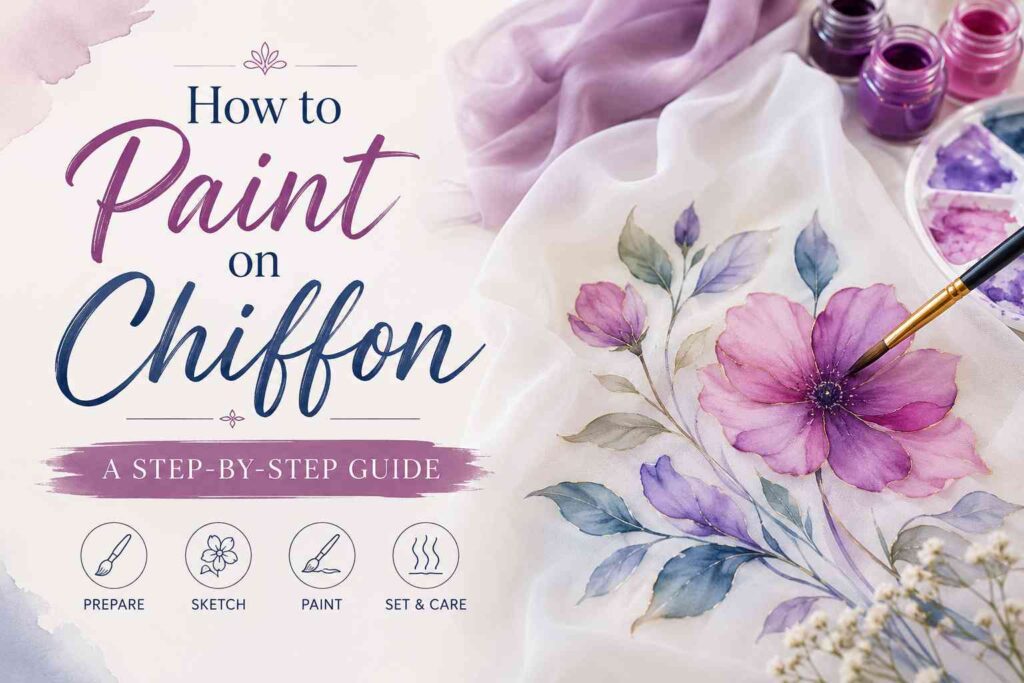
Because chiffon is thin, lightweight, and often made from polyester or silk, it requires a gentle approach. Proper preparation, suitable paints, and careful application are essential for achieving beautiful, long-lasting results. This guide covers everything you need to know, from selecting supplies to sealing your finished design.
Items to Buy
- Chiffon fabric
- Fabric paint
- Fabric medium
- Silk paint
- Acrylic paint
- Paintbrushes
- Foam brushes
- Fabric markers
- Embroidery hoop
- Painter’s tape
- Cardboard sheet
- Plastic table cover
- Water container
- Paper towels
- Pencil
- Fabric chalk
- Palette
- Spray bottle
- Iron
- Pressing cloth
- Protective gloves
Understanding Chiffon Fabric
Chiffon is a lightweight, sheer fabric known for its soft drape and elegant appearance. It is commonly used in dresses, scarves, blouses, evening wear, and decorative textiles.
The fabric can be made from silk, polyester, nylon, or rayon. Its delicate weave creates a translucent look but also makes it more challenging to paint than heavier fabrics.
Because chiffon absorbs moisture quickly and can shift during painting, proper preparation is especially important.
Understanding the characteristics of chiffon helps ensure better painting results.
Can You Paint on Chiffon?
Yes, chiffon can be painted successfully.
Many artists and fashion designers use fabric paints and silk paints to create custom patterns, floral motifs, abstract designs, and decorative accents on chiffon garments and accessories.
The key is selecting products that remain flexible after drying. Stiff paints can negatively affect the fabric’s natural flow and softness.
When applied correctly, painted chiffon can remain beautiful and wearable for years.
Choosing the Best Paint for Chiffon
The type of paint you choose plays a major role in the final outcome.
Fabric paint is one of the most popular options because it is specifically formulated for textiles. Silk paint is ideal for silk chiffon because it maintains the fabric’s softness and elegant drape.
Acrylic paint can also be used when mixed with fabric medium. The fabric medium helps improve flexibility and reduces stiffness after drying.
Always choose products designed for fabric whenever possible.
Why Preparation Matters
Chiffon’s delicate nature means preparation is critical.
Without proper support, the fabric can shift, wrinkle, or absorb paint unevenly. Preparing the fabric carefully helps create cleaner lines and more consistent results.
Preparation also helps prevent paint from bleeding through multiple layers.
Spending extra time on setup often leads to significantly better finished artwork.
Popular Chiffon Painting Ideas
Chiffon offers endless creative possibilities.
Many artists paint floral designs, watercolor effects, butterflies, leaves, abstract patterns, geometric shapes, and nature-inspired scenes. Scarves and shawls are especially popular because they provide a large canvas for artistic expression.
Custom wedding accessories, dance costumes, and fashion garments can also be enhanced with hand-painted details.
Choosing a design beforehand helps simplify the painting process.
How to Prepare Chiffon for Painting
Before painting, wash the chiffon according to the manufacturer’s instructions if appropriate.
Removing sizing agents, dirt, and oils can improve paint absorption and adhesion. Allow the fabric to dry completely before beginning.
Iron out wrinkles using the recommended heat setting for the fabric type.
Smooth fabric provides a much better painting surface.
How to Paint on Chiffon Step by Step Guide
Step 1: Protect Your Workspace
Cover your work area with plastic sheeting or a protective table cover.
Painting on fabric can be messy, especially when working with thin materials like chiffon. Protecting the surface makes cleanup easier and prevents accidental stains.
Gather all materials before starting.
Step 2: Prepare the Fabric
Wash and iron the chiffon if necessary.
Ensure the fabric is clean, dry, and wrinkle-free. Any folds or wrinkles may interfere with paint application and design accuracy.
A smooth surface creates better results.
Step 3: Insert a Protective Barrier
Place a piece of cardboard or plastic beneath the chiffon.
This prevents paint from bleeding through onto underlying layers or your workspace. The barrier should be larger than the design area whenever possible.
Secure the fabric if needed.
Step 4: Stretch the Fabric
Place the chiffon in an embroidery hoop or secure it with painter’s tape.
Keeping the fabric taut helps reduce shifting and allows for more precise painting.
Avoid stretching too tightly, which could distort the weave.
Step 5: Plan the Design
Lightly sketch the design using fabric chalk or a washable marking tool.
Simple guidelines help maintain proportions and improve accuracy during painting.
Avoid pressing too hard on delicate chiffon.
Step 6: Prepare the Paint
Mix your paint according to the manufacturer’s instructions.
If using acrylic paint, combine it with fabric medium to improve flexibility. Stir thoroughly to create a smooth consistency.
Test the paint on a fabric scrap first.
Step 7: Test the Color
Apply a small amount of paint to a scrap piece of chiffon.
Allow it to dry and evaluate the color, transparency, and softness. Testing helps prevent surprises on the final project.
Make adjustments if necessary.
Step 8: Begin Painting
Start with the largest elements of your design.
Use soft brushstrokes and apply paint gradually. Chiffon absorbs paint quickly, so avoid overloading the brush.
Work carefully and maintain control of the paint flow.
Step 9: Add Details
After the base layers dry, begin adding finer details.
Use smaller brushes for outlines, highlights, and intricate patterns. Build details gradually rather than attempting everything at once.
Patience produces cleaner results.
Step 10: Allow the Paint to Dry
Let the painted chiffon dry completely.
Drying times vary depending on the paint type, humidity, and thickness of application. Avoid moving or folding the fabric during this stage.
Proper drying helps preserve the design.
Step 11: Heat Set the Paint
Many fabric paints require heat setting for durability.
Place a pressing cloth over the painted area and use an iron according to the paint manufacturer’s recommendations. Heat setting helps bond the paint to the fabric fibers.
Follow all instructions carefully.
Step 12: Inspect and Finish
Examine the finished design for any areas that need touch-ups.
Allow the fabric to cure fully before wearing, washing, or using it. Once cured, your painted chiffon project is ready to enjoy.
Store or display it carefully to preserve the artwork.
Best Techniques for Painting Chiffon
Several techniques work especially well on chiffon.
Watercolor Effects
Diluted fabric paints can create soft, flowing transitions that complement chiffon’s lightweight appearance.
Floral Designs
Flowers remain one of the most popular subjects because they suit the fabric’s elegant movement.
Layering Colors
Applying multiple transparent layers can create depth and visual interest without making the fabric stiff.
Silk Painting Techniques
Traditional silk painting methods often work beautifully on silk chiffon, producing vibrant and sophisticated results.
Experimenting with different approaches can help you develop a unique artistic style.
Common Mistakes to Avoid
One common mistake is using too much paint.
Excessive paint can stiffen the fabric and cause unwanted bleeding. Another issue is skipping the test sample stage, which may lead to unexpected color or texture results.
Failing to secure the fabric properly can also result in distorted designs and uneven lines.
Finally, neglecting heat setting may reduce the durability of the finished artwork.
Tips for Professional Results
Use high-quality fabric paints designed specifically for textiles.
Work with light layers rather than heavy applications. Keep brushes clean and use separate water containers for different colors when necessary.
Allow adequate drying time between layers and avoid rushing the process.
Most importantly, embrace chiffon’s natural softness and transparency as part of the design.
Caring for Painted Chiffon
Proper care helps preserve your painted design.
Hand washing is often the safest cleaning method, especially for delicate fabrics. Use mild detergent and avoid aggressive scrubbing.
Allow the fabric to air dry and iron only when necessary using appropriate heat settings.
Following proper care instructions can significantly extend the life of your artwork.
FAQs
Can you paint directly on chiffon?
Yes. Chiffon can be painted successfully using fabric paint, silk paint, or acrylic paint mixed with fabric medium.
What paint works best on chiffon?
Fabric paint and silk paint are generally the best choices because they remain flexible after drying.
Do I need to heat set fabric paint?
Most fabric paints require heat setting to improve durability and wash resistance.
Can acrylic paint be used?
Yes, but it should be mixed with fabric medium to maintain flexibility.
Will painting make chiffon stiff?
Using excessive paint may cause stiffness. Thin, controlled applications help preserve softness.
Should I wash chiffon before painting?
In many cases, yes. Washing removes residues that could affect paint adhesion.
How do I prevent paint from bleeding through?
Place cardboard or a protective barrier underneath the fabric while painting.
Can painted chiffon be washed?
Yes, once properly heat set and cured, many painted chiffon projects can be gently hand washed.
Final Words
Learning how to paint on chiffon opens up exciting opportunities for creating personalized fashion pieces, elegant accessories, and unique textile art. While chiffon requires a gentle touch and careful preparation, the results can be truly stunning when the proper techniques are used.
By selecting suitable paints, securing the fabric correctly, applying thin layers, and heat setting the finished design, you can create beautiful artwork that enhances the natural beauty of chiffon. Whether you’re painting a scarf, dress, shawl, or decorative textile, patience and creativity will help you achieve professional-looking results that showcase your artistic vision.