
Learning how to paint plastic chrome is a great way to refresh worn-out trim pieces, customize automotive parts, update household décor, or transform inexpensive plastic accessories. Chrome-plated plastic can be challenging to paint because its smooth, reflective surface prevents paint from bonding properly. Without the right preparation, paint may peel, chip, or flake off quickly.
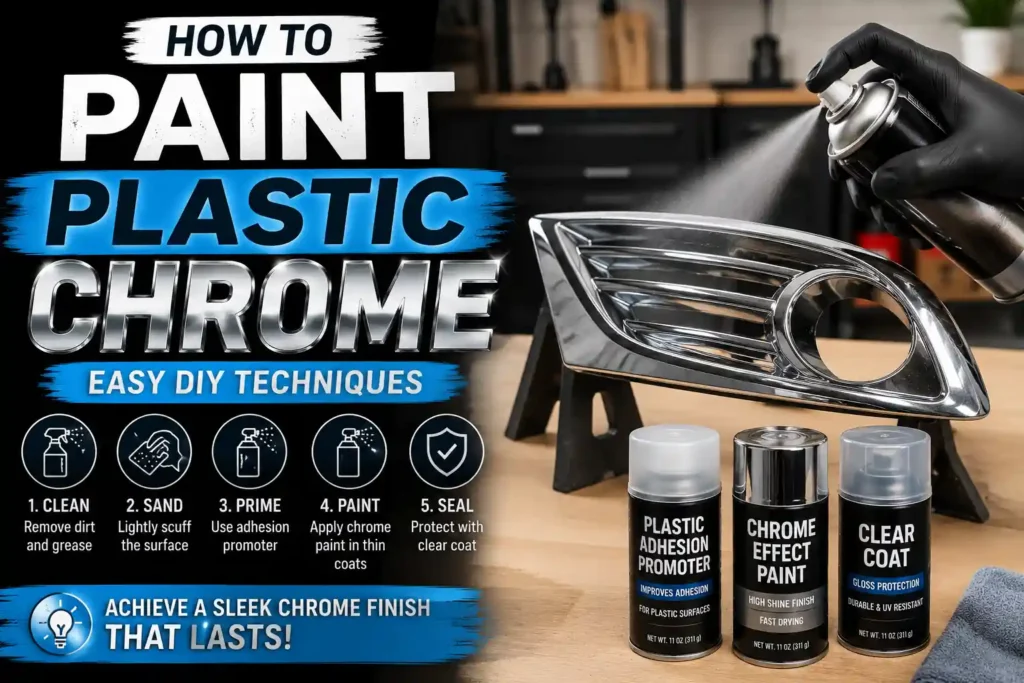
Fortunately, with proper cleaning, sanding, priming, and painting techniques, you can achieve a durable finish that looks professional and lasts for years. This guide walks you through everything you need to know, from selecting materials to applying the final protective coat.
Items to Buy
- Dish soap
- Degreaser
- Microfiber cloths
- Plastic scraper
- Fine-grit sandpaper
- Ultra-fine sandpaper
- Sanding sponge
- Plastic adhesion promoter
- Plastic primer
- Spray paint
- Acrylic paint
- Automotive paint
- Clear coat
- Tack cloth
- Painter’s tape
- Drop cloth
- Respirator mask
- Safety goggles
- Protective gloves
- Plastic polish
Can You Paint Plastic Chrome?
Yes, plastic chrome can be painted successfully.
However, the shiny chrome-like coating on plastic parts is designed to resist wear and moisture, which also makes it difficult for paint to adhere. Simply spraying paint directly onto chrome plastic usually leads to peeling and poor durability.
Proper surface preparation is the key to achieving a long-lasting finish.
When done correctly, painted plastic chrome can look nearly factory-made.
Why Paint Plastic Chrome?
There are many reasons people choose to paint chrome-plated plastic.
Common reasons include:
- Updating vehicle trim
- Matching custom color schemes
- Repairing worn chrome finishes
- Reducing glare
- Modernizing old accessories
- Creating matte finishes
- Customizing household décor
- Restoring faded parts
Painting often provides a more affordable solution than replacing parts entirely.
Understanding Plastic Chrome Finishes
Most plastic chrome parts are not made from actual chrome.
Instead, manufacturers apply a thin metallic coating over molded plastic. This creates the appearance of chrome while keeping production costs low.
Because the coating is smooth and non-porous, paint requires additional preparation steps to bond effectively.
Understanding this construction helps explain why sanding and priming are so important.
Best Paints for Plastic Chrome
Choosing the right paint significantly impacts the final result.
Popular options include:
- Automotive spray paint
- Acrylic enamel paint
- Plastic-specific spray paint
- Urethane paint
- Trim paint
Products designed for plastic surfaces generally provide the best adhesion and durability.
Always verify compatibility with your chosen primer and adhesion promoter.
How to Paint Plastic Chrome Step by Step Guide
Step 1: Remove the Part if Possible
Whenever practical, remove the chrome-plated plastic piece before painting.
This allows easier access and reduces the risk of overspray on surrounding surfaces.
Work on a stable, well-ventilated surface.
Step 2: Clean Thoroughly
Wash the part with warm water and dish soap.
Remove dirt, grease, wax, and contaminants that could interfere with paint adhesion.
Rinse thoroughly and allow the surface to dry.
Step 3: Degrease the Surface
Use a dedicated degreaser or surface prep cleaner.
Even small amounts of oil can prevent proper paint bonding.
Wipe the surface carefully with a clean microfiber cloth.
Step 4: Sand the Chrome Finish
Lightly sand the chrome coating using fine-grit sandpaper.
The goal is to remove the glossy appearance and create microscopic scratches for better adhesion.
Avoid sanding too aggressively.
Step 5: Smooth the Surface
Switch to ultra-fine sandpaper or a sanding sponge.
This helps create a uniform surface without deep scratches that may show through the paint.
Inspect the part carefully.
Step 6: Remove Sanding Dust
Wipe the part with a tack cloth or clean microfiber cloth.
Dust particles left behind can affect paint quality and create imperfections.
Take time to clean thoroughly.
Step 7: Apply an Adhesion Promoter
Spray a plastic adhesion promoter evenly across the surface.
This step helps paint bond to difficult plastic materials.
Allow it to flash and dry according to the manufacturer’s instructions.
Step 8: Apply Plastic Primer
Use a high-quality plastic primer.
Apply several light coats rather than one heavy coat.
Primer creates a stable foundation for the paint and improves durability.
Step 9: Lightly Sand the Primer
Once dry, lightly sand the primer if necessary.
This helps eliminate minor imperfections and creates a smoother final finish.
Remove all sanding dust afterward.
Step 10: Apply the Paint
Spray the paint using smooth, overlapping passes.
Maintain a consistent distance from the surface and avoid heavy application.
Several thin coats generally produce the best results.
Step 11: Add Additional Coats
Allow each coat to dry according to product recommendations.
Continue applying thin coats until full color coverage is achieved.
Patience helps create a professional-looking finish.
Step 12: Apply a Clear Coat
Protect the painted surface with a clear topcoat.
A clear coat improves durability, UV resistance, and scratch protection.
Allow the finish to cure completely before handling or reinstalling the part.
Best Finishes for Painted Plastic Chrome
Different finishes create different visual effects.
Gloss Finish
Provides a shiny appearance similar to factory paint.
Satin Finish
Offers a subtle sheen without excessive reflection.
Matte Finish
Creates a modern, understated look that is popular for automotive trim.
Semi-Gloss Finish
Balances shine and practicality while hiding imperfections effectively.
Choose the finish that best matches your project goals.
Common Projects That Use Painted Plastic Chrome
Painted plastic chrome is commonly found in:
- Automotive grilles
- Vehicle emblems
- Mirror covers
- Interior trim
- Motorcycle accessories
- Household fixtures
- Decorative signs
- Electronic accessories
The same preparation principles apply to most chrome-plated plastic surfaces.
Common Mistakes to Avoid
One common mistake is skipping sanding.
Paint rarely adheres well to a glossy chrome surface without abrasion. Another issue is neglecting the adhesion promoter, especially on flexible plastics.
Many beginners also apply paint too heavily, leading to runs and uneven drying.
Careful preparation and multiple light coats typically produce the best results.
Tips for a Professional Finish
Work in a clean, dust-free environment whenever possible.
Maintain consistent spray distance and overlap each pass slightly. Allow adequate drying time between coats and avoid touching the surface prematurely.
Testing products on a hidden area can help identify compatibility issues before starting the entire project.
Small details often make a significant difference in the final appearance.
How to Make Painted Plastic Chrome Last Longer
Durability depends largely on preparation and protection.
To extend the life of the finish:
- Clean surfaces thoroughly
- Use adhesion promoter
- Apply quality primer
- Use multiple thin paint coats
- Add a clear protective topcoat
- Avoid harsh cleaners
- Allow complete curing
Following these practices can significantly improve long-term performance.
When Should You Replace Instead of Paint?
Painting is not always the best solution.
Consider replacement if the part has:
- Severe cracks
- Structural damage
- Extensive peeling chrome
- Broken mounting points
- Significant warping
A damaged part may not provide satisfactory results even with proper painting techniques.
FAQs
Can plastic chrome be painted?
Yes, but proper sanding, priming, and preparation are required for good adhesion.
Do I need to remove the chrome finish completely?
Usually not. Light sanding is often sufficient to prepare the surface.
What primer should I use?
A plastic primer combined with an adhesion promoter generally works best.
Can I use regular spray paint?
You can, but paints designed for plastic or automotive applications typically provide better durability.
Why is my paint peeling off plastic chrome?
Peeling usually occurs when the surface wasn’t sanded or primed properly.
Is sanding necessary?
Yes. Sanding helps paint bond to the smooth chrome coating.
Should I use a clear coat?
A clear coat improves durability and protects the finish.
How long should painted plastic chrome cure?
Follow the paint manufacturer’s recommendations, but full curing often takes several days.
Final Words
Learning how to paint plastic chrome allows you to customize, restore, and modernize chrome-plated plastic parts without the cost of replacement. By cleaning thoroughly, sanding carefully, using an adhesion promoter, and applying multiple thin coats of paint, you can achieve a durable and attractive finish.
Whether you’re updating automotive trim, refreshing decorative pieces, or creating a custom project, the right preparation techniques are essential for success. With patience and attention to detail, painted plastic chrome can look professional and remain durable for years to come.