
Learning how to paint watercolors for beginners is one of the most rewarding ways to start your artistic journey. Watercolor painting is known for its soft blends, luminous colors, and expressive style, making it a favorite medium among artists of all skill levels. While it may seem intimidating at first, watercolor becomes much easier when you understand a few basic techniques and principles.
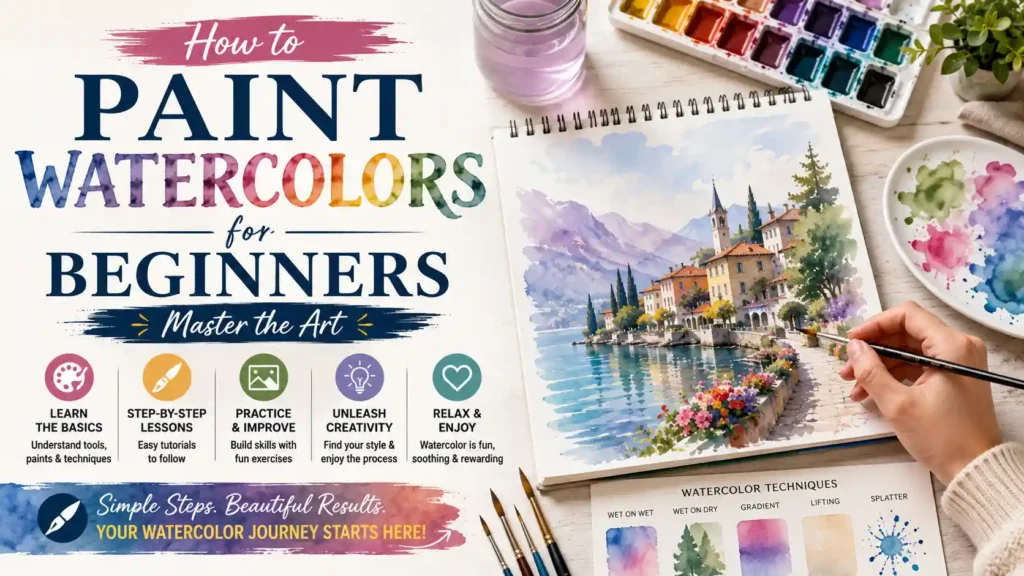
Unlike acrylics or oils, watercolors rely heavily on water control and layering. With the right supplies, practice, and patience, beginners can quickly learn how to create beautiful landscapes, flowers, abstract art, and more. This guide covers everything you need to know to confidently begin painting with watercolors.
Items to Buy
- Watercolor paint set
- Watercolor paper
- Round paint brushes
- Flat paint brush
- Water containers
- Mixing palette
- Pencil
- Eraser
- Paper towels
- Masking tape
- Sketchbook
- Watercolor pencils
- Spray bottle
- Drawing board
- Artist tape
- Brush holder
- White gouache
- Color wheel
- Apron
- Storage case
What Is Watercolor Painting?
Watercolor painting is a technique that uses water-soluble pigments mixed with water.
The transparency of watercolor allows light to reflect through the paint layers, creating a unique glow that is difficult to achieve with other mediums. Artists can build color gradually, create soft gradients, and capture delicate details with relatively simple materials.
Its versatility makes watercolor suitable for both realistic and expressive styles.
Why Watercolor Is Great for Beginners
Watercolors are accessible and relatively inexpensive compared to many other art mediums.
Benefits include:
- Easy setup
- Portable supplies
- Quick cleanup
- Versatile techniques
- Vibrant colors
- Minimal workspace requirements
- Suitable for many subjects
Although mastering watercolor takes time, beginners can achieve attractive results surprisingly quickly.
Understanding Basic Watercolor Supplies
Before you begin painting, it’s important to understand the essential materials.
Watercolor Paint
Available in tubes, pans, and liquid forms.
Student-grade paints are affordable for beginners, while professional-grade paints offer stronger pigmentation.
Watercolor Paper
Watercolor paper is specially designed to handle moisture without excessive buckling.
Using proper watercolor paper significantly improves results.
Brushes
Round brushes are the most versatile choice for beginners.
A few quality brushes are often better than a large collection of inexpensive ones.
Palette
A palette provides space for mixing and testing colors before applying them to paper.
Understanding Water-to-Paint Ratios
Water control is one of the most important watercolor skills.
More water creates:
- Lighter colors
- Softer edges
- Transparent washes
Less water creates:
- Richer colors
- Sharper details
- Stronger contrast
Learning how different ratios affect the paint is essential for watercolor success.
Basic Watercolor Techniques Every Beginner Should Learn
Several foundational techniques form the basis of most watercolor paintings.
Wet-on-Wet
Paint is applied to wet paper.
This creates soft edges and flowing color transitions.
Wet-on-Dry
Wet paint is applied to dry paper.
This produces sharper lines and more controlled details.
Dry Brush
A relatively dry brush is dragged across the paper.
This technique creates texture and interesting visual effects.
Glazing
Transparent layers are applied over dry paint.
Glazing adds depth and complexity to a painting.
How to Paint Watercolors for Beginners Step by Step Guide
Step 1: Prepare Your Workspace
Choose a comfortable, well-lit area.
Arrange your paints, brushes, water containers, and paper so everything is within easy reach.
A clean workspace helps maintain focus.
Step 2: Secure Your Paper
Use masking tape to secure watercolor paper to a drawing board or flat surface.
This helps minimize warping during painting.
It also creates clean borders around your artwork.
Step 3: Sketch a Simple Design
Lightly draw your subject with a pencil.
Beginners should start with simple subjects such as:
- Flowers
- Leaves
- Mountains
- Trees
- Fruits
- Abstract shapes
Keep the sketch minimal.
Step 4: Activate Your Paints
Add a small amount of water to the watercolor pans or squeeze paint onto your palette.
Allow the pigments to soften before mixing.
This makes color blending easier.
Step 5: Create Color Swatches
Test colors on scrap paper.
Observe how they appear when wet and how they change after drying.
This step helps avoid surprises later.
Step 6: Apply the First Wash
Begin with the lightest colors.
Use a diluted mixture and apply broad washes to establish the foundation of the painting.
Allow the wash to spread naturally.
Step 7: Build Additional Layers
Once the first layer dries, apply additional colors and details.
Working from light to dark helps maintain watercolor transparency.
Patience is important during this stage.
Step 8: Use Wet-on-Wet Techniques
Dampen selected areas and introduce new colors.
Watch how the pigments blend and flow across the paper.
This creates soft, organic transitions.
Step 9: Add Midtones
Begin strengthening shapes and adding dimension.
Use slightly more concentrated paint mixtures.
Gradually develop depth throughout the composition.
Step 10: Paint Shadows
Introduce darker tones where shadows naturally occur.
Shadows help create realism and visual interest.
Avoid using pure black whenever possible.
Step 11: Add Fine Details
Use a smaller brush for details.
Add lines, textures, highlights, and finishing touches that enhance the overall composition.
Less is often more.
Step 12: Evaluate and Refine
Step back and assess the painting.
Make small adjustments if necessary, but avoid overworking the watercolor.
Many successful watercolor paintings retain an element of spontaneity.
Easy Subjects for Beginners
Starting with simple subjects can help build confidence.
Popular beginner projects include:
- Simple flowers
- Leaves
- Fruit bowls
- Mountains
- Trees
- Clouds
- Beach scenes
- Abstract washes
These subjects provide opportunities to practice core techniques without overwhelming complexity.
Common Watercolor Mistakes
Every beginner makes mistakes while learning.
Common issues include:
- Using too much water
- Overworking the paper
- Skipping drying time
- Using poor-quality paper
- Adding excessive details
- Mixing muddy colors
Recognizing these mistakes helps accelerate improvement.
Tips for Better Watercolor Paintings
Small habits can greatly improve your results.
Helpful tips include:
- Practice regularly
- Use quality paper
- Work from light to dark
- Allow layers to dry
- Experiment with techniques
- Keep brushstrokes intentional
- Study color mixing
Consistent practice is the fastest path to improvement.
How to Mix Watercolor Colors
Color mixing is a valuable skill for every watercolor artist.
Common combinations include:
- Red + Yellow = Orange
- Yellow + Blue = Green
- Blue + Red = Purple
Experimenting with different ratios creates a wide range of unique shades and tones.
A color chart can serve as a useful reference.
Understanding Watercolor Layers
Unlike opaque paints, watercolor relies on transparent layers.
Each layer influences the colors beneath it.
Building layers gradually creates depth, richness, and visual complexity while preserving the paper’s natural brightness.
Patience is essential when layering watercolors successfully.
How to Practice Watercolors Daily
Daily practice helps develop confidence and brush control.
Try exercises such as:
- Painting circles
- Creating gradients
- Practicing washes
- Mixing colors
- Painting leaves
- Sketching simple objects
Even 15 to 20 minutes of daily practice can produce noticeable improvement.
FAQs
Is watercolor good for complete beginners?
Yes. Watercolor is beginner-friendly when basic techniques are learned gradually.
What paper should beginners use?
Watercolor paper specifically designed for wet media provides the best results.
How many brushes do I need?
A few quality round brushes are enough for most beginner projects.
Why do my colors look dull?
Using too much water or mixing too many colors can reduce vibrancy.
Should I sketch before painting?
Yes. A light pencil sketch can help guide your composition.
What is the easiest watercolor technique?
Wet-on-wet is often one of the simplest and most enjoyable techniques to learn.
How long does watercolor take to dry?
Drying time varies but is usually between a few minutes and an hour depending on moisture levels.
Can mistakes be fixed in watercolor?
Some mistakes can be lifted or adjusted, but prevention is often easier than correction.
Final Words
Learning how to paint watercolors for beginners is a rewarding creative skill that combines color, imagination, and technique. By understanding basic supplies, mastering water control, and practicing foundational techniques such as wet-on-wet and layering, beginners can quickly start creating beautiful watercolor artwork.
The key to success is patience and consistent practice. Every painting teaches something new, and each brushstroke helps build confidence. With time, experimentation, and a willingness to learn, watercolor painting can become a relaxing and enjoyable artistic hobby that offers endless creative possibilities.