
Removing paint from crochet can be tricky because the loops, fibers, and delicate stitches may trap paint deep inside the fabric. The safest method depends on the type of paint, the yarn material, and whether the stain is still wet or has already dried.
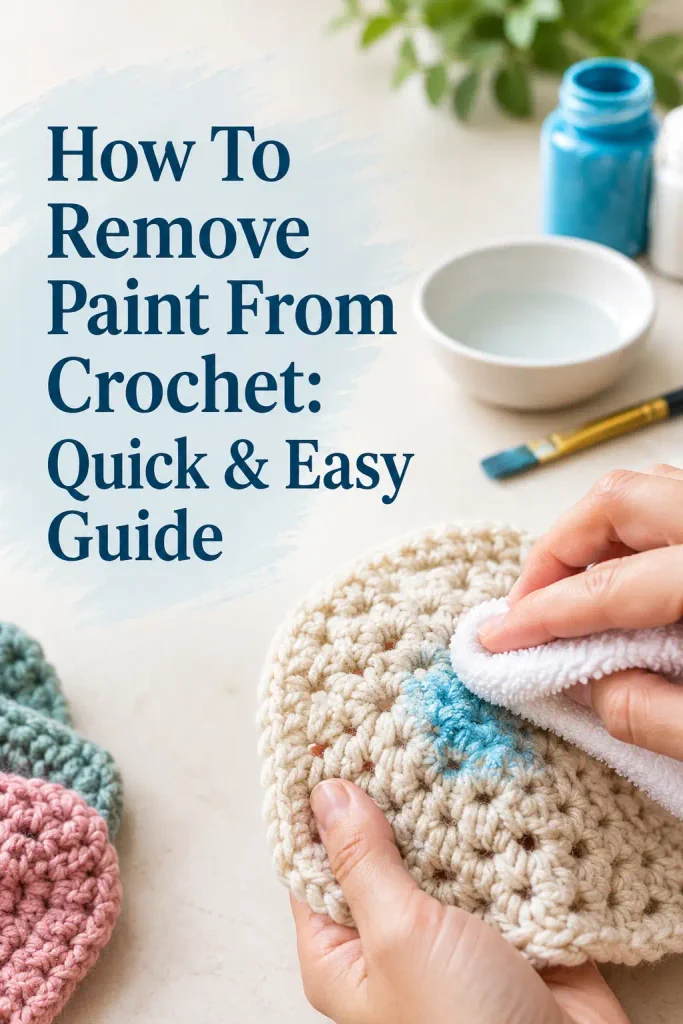
With the right supplies and a gentle approach, you can often reduce or remove paint stains without stretching, snagging, or damaging your crochet project. This guide covers practical removal methods for different paints, along with important precautions to help protect handmade blankets, clothing, bags, and decorative pieces.
Affiliate disclosure: As an Amazon Associate I earn from qualifying purchases.
Items to Buy
- Gentle Liquid Laundry Detergent
- Mild Dish Soap
- Soft Cleaning Brushes
- White Microfiber Cloths
- Cotton Swabs
- Fine-Tip Tweezers
- Mesh Laundry Bags
- Color-Safe Laundry Stain Remover
Can You Remove Paint From Crochet?
Yes, paint can sometimes be removed from crochet, but the results depend on the paint formula, how long it has been on the yarn, and the material used to make the item. Fresh water-based paint is generally easier to remove than dried acrylic paint, oil-based paint, or other coatings that harden as they cure.
Crochet projects also require extra care because their open stitches can catch on brushes and tools. Aggressive scrubbing may stretch the loops, cause fuzzing, or distort the shape of the finished piece.
Before using any cleaning product, identify the yarn if possible. Cotton, acrylic, wool, and other fibers respond differently to water, heat, and solvents. If the item is valuable, sentimental, or made from delicate yarn, test the method on an inconspicuous area or consult a professional textile cleaner.
What You Should Know Before Removing Paint
Identify the Type of Paint
Knowing what kind of paint caused the stain helps you choose an appropriate treatment.
- Water-based craft paint: Often easier to remove when fresh, especially if the paint has not dried completely.
- Acrylic paint: May become water-resistant after drying, making removal more difficult.
- Latex paint: Fresh stains may respond to water and mild detergent, but dried paint can cling to the fibers.
- Oil-based paint: Usually requires a different cleaning approach and may not respond to ordinary soap and water.
- Fabric paint: Some products are specifically designed to bond with fibers, so complete removal may not be possible.
- Spray paint: Can spread over a large area and may leave pigments or binders embedded in the yarn.
If you are unsure which paint was used, start with the gentlest method rather than applying a strong solvent immediately.
Check the Yarn Material
The yarn’s fiber content determines which cleaning methods are safest.
Cotton crochet: Cotton is generally more tolerant of gentle washing than some delicate fibers, but dyes can still bleed and the stitches can stretch when wet.
Acrylic crochet: Acrylic is a synthetic fiber that can be sensitive to high heat. Avoid hot water, ironing, and heat-drying unless the item’s care instructions explicitly allow them.
Wool crochet: Wool can felt, shrink, or lose its shape with excessive heat, agitation, or unsuitable detergents. Use a wool-safe cleaner and minimal movement.
Mixed-fiber crochet: When a project contains several fiber types, follow the care requirements of the most delicate material.
Check Whether the Paint Is Wet or Dry
Fresh paint usually offers the best chance of successful removal. If the paint is still wet, gently lift excess paint before it spreads into more stitches.
Dried paint is more difficult because its binder may have formed a firm coating around the yarn. Avoid immediately scraping or pulling at it. First determine whether the paint can be softened safely.
How to Remove Paint From Crochet: Step-by-Step Guide
Follow these steps before moving to stronger treatments. You may not need every step, particularly if the paint is fresh and water-soluble.
Step 1: Remove Excess Paint Carefully
If the paint is still wet, use the edge of a spoon or a clean, blunt tool to lift away excess paint. Work gently and avoid pressing it farther into the crochet loops.
For dried paint, remove only loose flakes that separate easily. Use your fingertips or fine-tip tweezers to lift them without pulling on the yarn. Do not cut, tug, or aggressively scrape the fibers.
Step 2: Protect the Rest of the Crochet Item
Place a clean, white cloth beneath the stained area. If the item has multiple layers, position the cloth between them so the paint does not transfer to the opposite side.
Keep the project supported on a flat surface. Avoid hanging it by one edge or holding the wet area in the air, as the weight of the water may stretch the stitches.
Step 3: Test a Small Area
Before applying soap, stain remover, or another cleaning product, test it on a hidden section of the crochet item.
Check for color transfer, changes in texture, fuzzing, or damage to the yarn. Let the test area dry if necessary before deciding whether to continue.
If the dye transfers to the white cloth or the yarn changes noticeably, stop and choose a safer approach.
Step 4: Treat Fresh Water-Based Paint With Cool Water
For fresh water-based paint, gently rinse the stained area with cool water if the yarn’s care instructions permit it. Direct the water through the affected stitches from the back of the stain toward the front when practical, helping move loosened paint away from the yarn rather than deeper into it.
Do not twist, wring, or stretch the crochet. Support the fabric with both hands and use only gentle water pressure.
Avoid rinsing oil-based paint or unidentified solvent-based paint directly into a sink. Check the paint label and local disposal guidance first.
Step 5: Apply Mild Soap
Mix a small amount of mild dish soap or suitable liquid laundry detergent with cool water. Dip a clean white cloth or cotton swab into the solution and gently dab the stained stitches.
Work from the outside of the stain toward the center to limit spreading. Use a fresh section of the cloth as paint transfers onto it.
For crochet with thick or textured yarn, you can lightly press the soapy solution into the affected loops with your fingertips. Do not scrub back and forth, because friction may damage the yarn or distort the stitches.
Step 6: Loosen Paint From Individual Stitches
If paint remains trapped between the loops, use a soft brush to work around the stained fibers. Make small, gentle movements instead of brushing forcefully across the surface.
A cotton swab can help treat small spots, while a soft brush may be more useful for larger areas. Avoid sharp tools and stiff-bristled brushes that could split or snag the yarn.
If the paint does not begin to loosen after a few gentle attempts, stop rather than repeatedly working the same area. Persistent scrubbing may cause more damage than the stain itself.
Step 7: Rinse Away the Cleaning Solution
Use cool water to remove the soap if the yarn permits washing. Gently press the area between clean white cloths to absorb excess moisture.
Inspect the stitches before proceeding. If the stain has faded, repeat the mild cleaning process once or twice as appropriate. If it remains unchanged, identify the paint more precisely before trying another method.
Step 8: Dry the Crochet Correctly
Lay the item flat on a clean, dry towel and reshape it gently. Press another towel over the surface to absorb moisture without twisting or wringing the crochet.
Allow it to air-dry away from direct heat. Avoid hanging a wet blanket, garment, or decorative piece if its weight could stretch the stitches.
Once dry, inspect the treated area in natural light. Some stains look lighter when wet and become more visible again after drying.
How to Remove Different Types of Paint From Crochet
Different paints require different treatments. Always start with a small test and follow the yarn’s care instructions.
How to Remove Wet Acrylic Paint
Fresh acrylic paint is usually easier to remove than dried acrylic because the binder has not fully formed a durable coating.
- Lift excess paint with a spoon or blunt tool.
- Rinse the affected area with cool water if the yarn is washable.
- Dab gently with mild soap and water.
- Rinse away the cleaning solution.
- Repeat gently if the stain continues to lift.
Avoid hot water and heat-drying. Heat may affect the yarn, and once acrylic paint has dried, removal becomes considerably harder.
How to Remove Dried Acrylic Paint
Dried acrylic paint can be particularly stubborn because it forms a film that grips the fibers. Start by gently lifting any loose flakes without pulling on the stitches.
If the paint remains firmly attached, do not soak the item repeatedly in the hope that the coating will dissolve. Dried acrylic paint is not reliably removed by plain water, and aggressive scraping can damage the yarn.
Some products marketed for removing acrylic paint may contain solvents that can affect synthetic fibers, dyes, or finishes. Check the product label and yarn compatibility carefully before using one. If the item is delicate or valuable, a professional textile cleaner is the safer choice.
How to Remove Latex Paint
Fresh latex paint may respond to cool water and mild detergent.
- Remove excess paint without spreading it.
- Rinse the area if the yarn is washable.
- Dab with a small amount of mild detergent.
- Rinse thoroughly and reshape the item.
Dried latex paint can be harder to remove, particularly when it has penetrated multiple loops. Avoid using a metal scraper or stiff brush on the yarn.
How to Remove Oil-Based Paint
Oil-based paint is more difficult because water and ordinary detergent may not dissolve the paint binder. The appropriate solvent depends on the specific paint formulation, and some solvents can damage yarn, dyes, coatings, or synthetic fibers.
Check the paint manufacturer’s cleanup instructions before proceeding. Do not pour paint thinner, mineral spirits, or other strong solvents onto a crochet project without confirming compatibility with the yarn and considering ventilation and fire safety.
For a small, valuable, or delicate crochet item, professional cleaning is preferable to experimenting with solvents at home. Never mix cleaning chemicals, and keep solvent-treated materials away from flames and heat.
How to Remove Fabric Paint
Fabric paint is designed to adhere to textile fibers, so it may be intentionally resistant to washing. Some formulas remain flexible, while others create a more durable coating.
If the paint is still wet, follow the manufacturer’s cleanup instructions promptly. If it has cured, check the product label to see whether removal is possible and which method is recommended.
Avoid assuming that a fabric paint stain can be removed with ordinary stain remover. Strong treatment may discolor the yarn without fully removing the paint.
Can You Use Rubbing Alcohol on Crochet?
Rubbing alcohol can soften some types of paint, including certain acrylic formulations, but it is not a universally safe solution for crochet. It may affect dyes, finishes, or some synthetic materials, and the result depends on the paint and yarn.
Before considering alcohol:
- Check the yarn’s fiber content and care instructions.
- Review the paint manufacturer’s removal guidance.
- Test the product on a hidden section.
- Work in a well-ventilated area and keep it away from flames.
- Stop immediately if the yarn changes color, texture, or strength.
Do not soak an entire crochet item in rubbing alcohol. If the paint does not respond to a small, controlled test, avoid increasing the concentration or exposure time without reliable product-specific guidance.
Common Mistakes to Avoid
Removing paint from crochet is as much about protecting the stitches as it is about treating the stain. Avoid these common mistakes.
Scrubbing Too Hard
Vigorous rubbing can cause yarn to fuzz, split, or stretch. Crochet stitches can also catch on brushes and tools. Use gentle dabbing and small movements instead.
Using Hot Water Immediately
Hot water is not necessary for most initial paint treatments and may affect delicate fibers, dyes, or synthetic yarn. Start with cool water when the paint and yarn instructions allow it.
Applying Strong Solvents Without Testing
Paint thinners and other solvents may damage yarn or create safety hazards. Always check compatibility and manufacturer guidance before use. Never mix solvents with other cleaning products.
Pulling Paint Out of the Loops
Trying to peel hardened paint from individual strands can break or distort the yarn. Remove only loose paint that separates easily, and leave firmly attached material alone until you know which treatment is safe.
Putting the Item in a Dryer
Heat may affect the yarn and make some stains more difficult to treat. Air-dry the item flat unless the care instructions for both the yarn and the cleaning treatment permit another method.
Washing Before Identifying the Paint
Water works for many fresh water-based paints, but it may be ineffective for oil-based paint and certain specialty coatings. Identify the paint first whenever possible.
How to Protect Crochet While Cleaning
A little preparation can help preserve the shape and texture of handmade projects.
- Support the item: Keep the stained area on a flat surface instead of pulling it taut.
- Use white cloths: They make paint transfer easier to see and reduce the risk of transferring dye from a colored cloth.
- Work in small sections: Treat one stained area at a time to prevent spreading paint or soaking the entire project unnecessarily.
- Keep tools gentle: Choose soft brushes and smooth tools that will not snag the loops.
- Avoid excessive soaking: Prolonged moisture may affect dyes, finishes, and the shape of some crochet items.
- Reshape after cleaning: Gently return the item to its original dimensions while it is damp, following the yarn’s care instructions.
- Stop when damage is possible: If the yarn begins to fray, lose color, or stretch, discontinue treatment.
For handmade garments, blankets, heirloom pieces, and intricate lace crochet, protecting the structure may be more important than removing every trace of paint.
How to Prevent Paint Stains on Crochet Projects
Prevention is easier than removing dried paint from delicate stitches. If you paint or craft near crochet, cover the work surface with a washable protective layer and keep the crochet item away from open paint containers.
Store unfinished crochet in a clean project bag while painting nearby. If you are decorating a crochet piece intentionally, test the paint on a matching yarn sample first to check how it affects the fiber, color, and flexibility.
When a spill occurs, act promptly. Lift excess paint and check the cleanup instructions before it dries. Avoid rubbing the stain, which may spread the paint through more loops.
Frequently Asked Questions
Can dried paint be removed from crochet?
Sometimes, but success depends on the paint type, yarn material, and how firmly the paint has bonded. Dried water-based paint may respond to gentle treatment, while cured acrylic, oil-based paint, and fabric paint can be much more difficult to remove.
Does vinegar remove paint from crochet?
Vinegar is not a reliable universal paint remover. It may have little effect on dried acrylic or oil-based paint, and it can affect certain dyes or finishes. Mild soap and cool water are a better starting point for fresh, water-based paint when the yarn is washable.
Can I use nail polish remover on crochet?
It is best to avoid nail polish remover unless the yarn and paint manufacturers specifically confirm that the product is suitable. Many nail polish removers contain acetone or other solvents that can damage some synthetic materials, affect dyes, or weaken finishes.
Will rubbing alcohol damage acrylic yarn?
It may or may not, depending on the yarn, dye, alcohol formulation, and exposure. Acrylic yarn should not automatically be considered safe for solvent treatment. Test a hidden area first and stop if the fibers or color change.
How do I remove paint from a crochet blanket?
Lay the blanket flat and support the stained area. Identify the paint and yarn, remove excess paint gently, and try a mild cleaning solution if appropriate. Avoid lifting a heavy wet blanket by one edge because the weight can stretch the stitches.
Can I machine-wash crochet after removing paint?
Only if the yarn and finished item are suitable for machine washing. Check the care instructions and remove as much of the stain as safely possible first. Use a mesh laundry bag and a gentle cycle only when the item permits it.
What if the paint will not come out?
Stop before the yarn becomes damaged. Consider a professional textile cleaner, particularly if the item is valuable or sentimental. For a less valuable piece, you may be able to conceal a small remaining mark with a carefully chosen decorative detail, provided doing so will not compromise the crochet.
Is it safe to use a brush on crochet?
A soft brush may help loosen paint from the loops, but use it gently. Stiff bristles and vigorous scrubbing can snag or fuzz the yarn. A clean cloth or cotton swab is often a safer starting point for small stains.
Final Words
Removing paint from crochet requires patience because the open stitches and delicate fibers can easily be damaged by aggressive cleaning. Start by identifying the paint and yarn, lift away excess material gently, and use cool water with mild soap when appropriate.
For dried acrylic, oil-based, or specialty fabric paint, complete removal may not be possible without risking the yarn. Avoid untested solvents, excessive scrubbing, and unnecessary heat. A careful, gradual approach gives you the best chance of preserving the texture, shape, and beauty of your crochet project.
Helpful Resources
- The Craft Yarn Council — Find information about yarn types, care symbols, and fiber-related guidance.
- The Woolmark Company — Learn about wool care and handling considerations for wool-based crochet items.