
To remove rust stains from paint, mix vinegar and baking soda into a paste. Apply and scrub the affected Rust stains can make freshly painted walls, fences, siding, and other surfaces look old and neglected. Learning how to remove rust stains from paint helps you restore the appearance of painted surfaces without unnecessarily damaging the finish. The best method depends on the surface, the severity of the stain, and whether rust is coming from a nearby metal object.
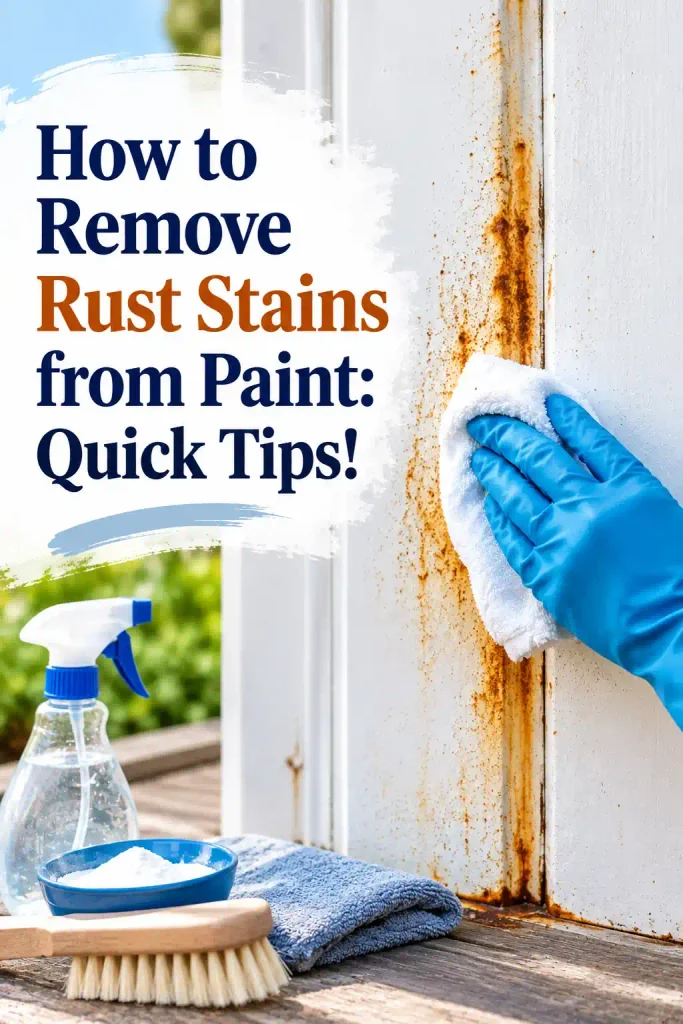
Fortunately, many rust stains can be reduced or removed with gentle cleaning methods and the right products. This guide explains how to tackle rust stains safely, protect the existing paint, and prevent discoloration from returning.
Affiliate disclosure: As an Amazon Associate, I earn from qualifying purchases.
Items to Buy
- Microfiber Cleaning Cloths
- Soft Cleaning Sponges
- Mild Dish Soap
- Spray Bottles
- Soft-Bristle Cleaning Brushes
- White Vinegar
- Rust Stain Remover for Painted Surfaces
- Protective Cleaning Gloves
- Safety Goggles
- Painter’s Tape
- Exterior Paint Touch-Up Kit
- Small Paint Brushes
Why Do Rust Stains Appear on Painted Surfaces?
Rust stains form when iron or steel reacts with moisture and oxygen. As the metal corrodes, reddish-brown particles and dissolved iron compounds can spread onto nearby painted surfaces, leaving noticeable orange, brown, or yellowish marks.
Several common situations can cause these stains:
- Rusty nails and screws: Corroding fasteners can leave brown streaks on painted wood, siding, and walls.
- Metal furniture: Rusty chairs, tables, railings, and planters can transfer discoloration to painted surfaces.
- Water runoff: Rainwater passing over rusty metal can carry iron residue down a wall or fence.
- Damaged metal fixtures: Rust around gutters, pipes, brackets, and window hardware can stain nearby paint.
- Iron-rich water: Sprinklers or other water sources may leave orange-brown deposits on exterior paint.
- Old paint damage: When a painted metal surface develops chips or cracks, corrosion underneath can eventually discolor the surrounding finish.
Understanding the source of the stain is important because cleaning alone will not solve a recurring problem. If rust continues to develop on a nearby metal fixture, the stain may return after every rainfall or cleaning.
Can You Remove Rust Stains Without Damaging Paint?
Yes, many surface rust stains can be removed without repainting. The safest approach is to begin with a mild cleaner and increase the strength of the treatment only when necessary.
However, some rust stains penetrate porous or weathered paint, while others indicate corrosion underneath the coating. If the paint is already blistering, cracking, or peeling, cleaning may improve the appearance without fixing the underlying problem.
Always test a cleaning method on a small, inconspicuous area before treating the entire stain. This is particularly important for delicate finishes, older paint, and colored exterior coatings.
Identify the Painted Surface Before Cleaning
Different painted surfaces respond differently to cleaning products. Before choosing a method, determine what material you are working with.
- Painted interior walls: Start with mild soap and water. Avoid excessive moisture, which can damage drywall or soften some paint finishes.
- Exterior house paint: Check that the cleaner is suitable for the paint and siding material. Rinse carefully without forcing water behind siding.
- Painted wood: Use minimal water and avoid soaking the surface, especially around joints and exposed wood.
- Painted metal: Inspect for chips, bubbling, or corrosion beneath the paint. A surface stain may be removable, but rust underneath needs repair.
- Painted concrete: Concrete can absorb iron deposits, so a stain may require a cleaner specifically labeled for masonry and compatible with the coating.
- Automotive paint: Use automotive-safe products and follow the vehicle paint manufacturer’s care recommendations. Household acids and abrasive scrubbing can damage the finish.
If you are unsure what type of paint you have, choose a mild, paint-compatible cleaner rather than experimenting with strong acids or abrasive products.
How to Remove Rust Stains from Paint: Step-by-Step Guide
Follow these steps to remove rust stains while minimizing the risk of damaging the existing finish.
Step 1: Find and Address the Rust Source
Before cleaning, look for the object or fixture responsible for the stain.
Check nearby screws, nails, brackets, metal furniture, gutters, railings, and pipes. If a rusty object is touching the painted surface, move it away if possible.
For exterior surfaces, inspect where rainwater flows. Rusty runoff may leave long vertical streaks below metal fixtures.
Repairing or replacing the source helps prevent the stain from returning. If the rust is coming from a structural component or a metal fastener embedded in a wall, address that problem before spending time on repeated cleaning.
Step 2: Remove Loose Dirt and Debris
Use a dry microfiber cloth or soft brush to remove loose dust, dirt, and particles around the stain.
Work gently. Grit trapped between the cloth and the paint can create scratches when rubbed across the surface.
For outdoor walls, a gentle rinse may help remove loose debris. Avoid high-pressure washing on fragile paint, wood, or siding because it can loosen the coating or force water into joints.
Allow the surface to settle and inspect the stain before proceeding.
Step 3: Prepare a Mild Soap Solution
Mix a small amount of mild dish soap with lukewarm water in a clean container.
Dip a soft sponge or microfiber cloth into the solution and wring it out so it is damp rather than dripping.
Gently wipe the stained area using small movements. Avoid aggressive circular scrubbing, especially on matte or flat paint, because friction can change the sheen and leave a visible patch.
Rinse with a clean, damp cloth and check whether the stain has faded.
Soap may remove surface grime that makes the rust appear worse, although it will not dissolve every iron deposit. If the stain remains, move to a more targeted treatment.
Step 4: Test a Suitable Rust Stain Remover
If mild cleaning does not work, choose a rust stain remover specifically labeled as compatible with your painted surface.
Read the label carefully. Some products are formulated for concrete, masonry, or bare metal and may be unsuitable for painted walls, automotive finishes, or delicate coatings.
Apply a small amount to an inconspicuous test area according to the manufacturer’s directions. Observe the surface for discoloration, softening, loss of gloss, or other changes.
If the test area remains unaffected, treat the stain as directed. Do not assume that a product safe for one type of paint is safe for every finish.
Step 5: Consider White Vinegar Only When Appropriate
White vinegar is acidic and may help loosen some mineral deposits, but it is not a universal rust remover and can damage certain paint finishes or nearby materials.
Use it only if the surface and paint manufacturer permit acidic cleaners. Test it in a hidden spot first, and avoid leaving it on the surface for an extended period.
Never mix vinegar with bleach or other cleaning chemicals. If you are uncertain about compatibility, skip this method and use a product specifically labeled for the surface.
Step 6: Use a Soft Brush for Stubborn Stains
For textured surfaces, a soft-bristle brush can help lift loosened residue from grooves and uneven areas.
Apply the approved cleaner, follow its recommended contact time, and brush lightly. Do not use steel wool, wire brushes, scouring pads, or coarse sandpaper on intact painted surfaces.
These abrasive tools can scratch the coating and expose the underlying material to moisture, potentially creating a larger problem than the original stain.
Step 7: Rinse Away Cleaner Residue
Once the stain has been treated, remove the cleaner according to its label instructions.
For many washable painted surfaces, a clean damp cloth is sufficient. Exterior surfaces may require a gentle water rinse, provided the material can safely tolerate it.
Remove all cleaning residue because leftover chemicals can affect the finish or interfere with later touch-up painting.
Do not flood interior walls or unsealed wood with water. Use a lightly damp cloth and dry the surface promptly.
Step 8: Dry and Inspect the Surface
Pat the area dry with a clean microfiber cloth, then allow it to air-dry completely.
Examine the stain in good lighting. Some discoloration becomes less noticeable as the surface dries, so avoid repeating the treatment too quickly.
If the stain has disappeared and the paint remains intact, no additional work may be necessary. If a faint mark remains, consider another treatment only if the product directions allow it.
Repeated aggressive cleaning can remove paint or create a noticeable difference in sheen.
Step 9: Repair Damaged Paint if Necessary
If rust has caused the paint to bubble, crack, or peel, cleaning alone will not restore the finish.
Allow the surface to dry, then assess the damage. On painted metal, loose coating and corrosion may need to be removed and the surface treated before applying a compatible primer and paint.
For painted wood or drywall, repair any damaged coating or substrate using products designed for that material.
If the rust appears to be coming from inside a wall, a leaking pipe, or a structural component, investigate the source before repainting. Covering the stain without fixing the cause usually leads to recurrence.
Step 10: Apply Touch-Up Paint if Needed
If cleaning removes the stain but leaves a visible patch, touch-up painting may be the best way to restore a uniform appearance.
Use paint compatible with the existing coating and match the color and sheen as closely as possible. Apply thin layers and follow the manufacturer’s drying instructions.
For larger or highly visible areas, repainting the entire section from edge to edge may look more consistent than touching up a small spot.
Allow the paint to cure before exposing the area to moisture or cleaning it again.
Common Mistakes to Avoid
Rust stains can be frustrating, but rushing the process may cause unnecessary paint damage.
Avoid these common mistakes:
- Scrubbing too hard: Abrasive cleaning can scratch the paint or create shiny patches on matte finishes.
- Using the wrong rust remover: A product designed for bare metal or concrete may damage painted surfaces.
- Leaving acidic cleaners on too long: Acids can affect some coatings and nearby materials.
- Mixing cleaning chemicals: Never combine products unless the labels explicitly permit it.
- Ignoring the source: Rust will often return if the corroding metal or water runoff remains.
- Repainting too soon: Paint applied over damp surfaces or active rust may fail prematurely.
- Using a pressure washer too aggressively: High pressure can lift paint and damage siding or wood.
A gentle, test-first approach usually provides the best balance between stain removal and protecting the finish.
How to Prevent Rust Stains from Returning
Once the stain is gone, take steps to prevent another one from appearing.
Protect Nearby Metal
Inspect nails, screws, brackets, railings, gutters, and outdoor furniture regularly. Replace badly corroded hardware with suitable corrosion-resistant alternatives where appropriate.
Improve Drainage
Make sure rainwater does not repeatedly run over rusty metal and onto painted surfaces. Correct leaking gutters or downspouts and redirect water away from walls when possible.
Maintain the Paint Finish
Check exterior paint periodically for chips, cracks, and peeling. Repair damaged areas before moisture reaches the underlying material.
Keep Surfaces Clean
Remove dirt and water deposits before they build up. Gentle periodic cleaning can help you identify new stains before they become difficult to remove.
Use Compatible Protective Coatings
Where suitable, use an appropriate primer and protective paint system on exposed metal components. Follow the product instructions and ensure the coating is intended for the material and environment.
Prevention is particularly important for outdoor surfaces exposed to rain, humidity, and frequent temperature changes.
When Should You Repaint Instead of Clean?
Sometimes the best solution is to repair the paint rather than keep trying to remove the stain.
Consider touch-up painting or repainting if:
- The paint has bubbled or peeled.
- Rust is visible beneath the coating.
- Cleaning has altered the color or sheen.
- The stain has penetrated a porous or deteriorated finish.
- The same stain returns despite cleaning and fixing the obvious source.
For extensive corrosion, especially on metal structures, address the underlying rust before applying a new coating. If you are dealing with significant structural corrosion or persistent moisture damage, consider professional assessment.
FAQs
Can rust stains be removed from painted walls?
Yes. Many surface stains can be reduced with mild soap and water or a compatible rust stain remover. Test the cleaner first to ensure it does not discolor the paint.
Does vinegar remove rust stains from paint?
Vinegar may help loosen some deposits, but its acidity can damage certain finishes. Use it only when appropriate for the surface and after testing an inconspicuous area.
Will baking soda remove rust stains from painted surfaces?
Baking soda is mildly abrasive and is not the best first choice for delicate paint. Rubbing it against the surface may affect the finish, so use a compatible cleaner instead.
Can I use a magic eraser on rust stains?
Melamine cleaning sponges can be abrasive and may dull or remove paint, particularly on flat or matte finishes. Test carefully or choose a soft cloth and paint-safe cleaner.
Why do rust stains keep coming back?
Recurring stains often indicate an ongoing source, such as rusty fasteners, corroding metal fixtures, or water running over rust. Identify and fix the source before cleaning again.
Can I paint over a rust stain?
You can repaint a stained area after addressing the source and preparing the surface properly. If rust is active beneath the paint, remove or treat the corrosion and use a compatible primer before applying the topcoat.
Is a commercial rust remover safe for painted surfaces?
Not every rust remover is safe for paint. Check the label for the exact surface type and follow all directions, including contact time and rinsing instructions.
How do I remove rust stains from exterior house paint?
Start by removing loose dirt and trying mild soap and water. If the stain persists, use an exterior-paint-compatible rust remover, test it first, and rinse as directed without forcing water behind the siding.
Can rust stains be removed from car paint?
Some surface iron deposits can be treated with automotive-specific products. Use a product designed for vehicle paint, follow its directions, and avoid household acids, abrasive scrubbing, or harsh cleaners that may damage the clear coat.
Do I need to repaint after removing a rust stain?
Not always. If the paint remains intact and the stain disappears, repainting may be unnecessary. Touch-up paint is useful when the coating has been damaged or cleaning leaves a visible patch.
Final Words
Learning how to remove rust stains from paint starts with identifying the source, choosing a cleaner compatible with the surface, and beginning with the gentlest method. Mild soap and water may be enough for light residue, while stubborn marks may require a carefully selected rust stain remover.
Avoid harsh scrubbing and untested chemicals, and repair any underlying corrosion before repainting. With a careful cleaning process and a little prevention, you can restore the appearance of painted surfaces and help keep rust stains from returning.