
A plain pair of jeans can become a wearable work of art with a little paint, creativity, and patience. Learning how to paint jeans gives you an easy way to personalize denim with floral patterns, bold graphics, abstract designs, or colorful details that reflect your style. Whether you’re updating old jeans or decorating a new pair, the right techniques can help you create a design that looks great and lasts.
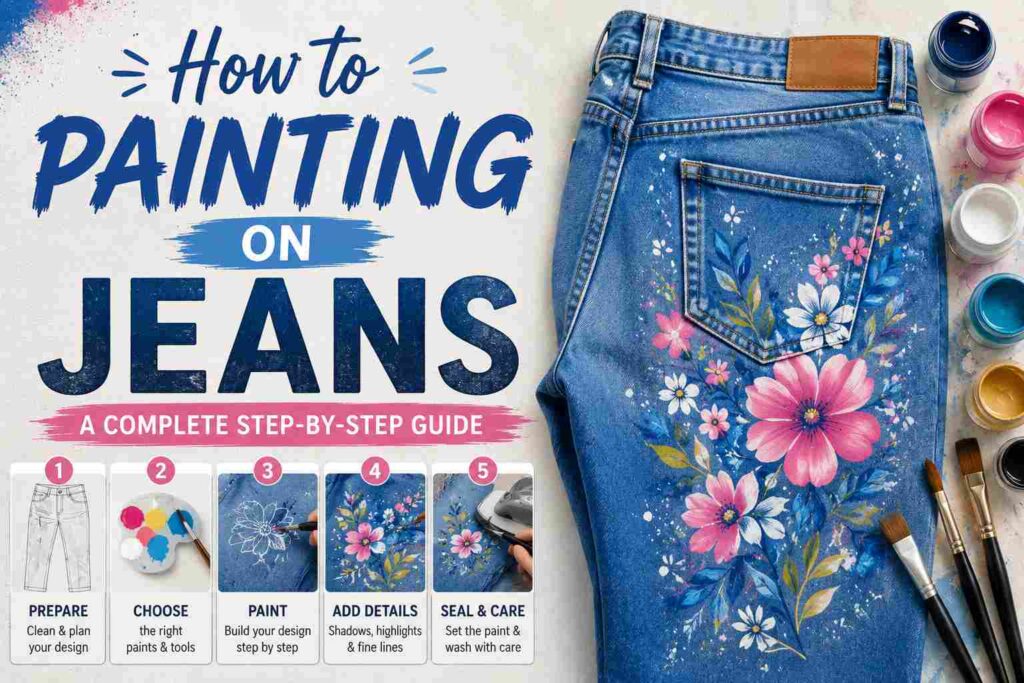
The key is choosing flexible fabric paint, preparing the denim properly, and allowing enough time for drying and curing. With a few basic supplies, you can turn ordinary jeans into a unique fashion statement.
Affiliate disclosure: As an Amazon Associate, I earn from qualifying purchases.
Items to Buy
- Denim Jeans
- Fabric Paint
- Acrylic Paint Set
- Fabric Medium for Acrylic Paint
- Fabric Paint Markers
- Detail Paintbrush Set
- Paint Palette
- Fabric Stencils
- Tailor’s Chalk
- Transfer Paper for Fabric
- Painter’s Tape
- Fine Sandpaper
- Ironing Board
- Protective Craft Mat
Why Paint Your Jeans?
Painting denim is a budget-friendly way to customize your wardrobe without buying expensive designer pieces. You can add a small illustration to a back pocket, create a colorful pattern down the legs, or cover a larger section with detailed artwork.
It’s also a useful upcycling project. Instead of throwing away jeans that look outdated, you can refresh them with a new design. Even a few painted flowers, stars, or simple geometric shapes can make an old pair feel completely different.
Because denim is flexible and often stretches during wear, your choice of paint and application method matters. Products made for fabric are generally a better option than ordinary acrylic paint used on its own.
Choosing the Best Paint for Denim
Before you begin, select paint that can adhere to fabric without making the jeans excessively stiff.
Fabric Paint
Fabric paint is usually the easiest choice for beginners. It is formulated for textiles and is available in a wide range of colors, including metallic and specialty finishes.
It works well for flowers, lettering, illustrations, decorative borders, and abstract patterns.
Acrylic Paint With Fabric Medium
Acrylic paint can also work on denim when mixed with a compatible fabric medium according to the manufacturer’s instructions. The medium helps improve flexibility, making the finished design more suitable for clothing.
Avoid applying thick layers of ordinary acrylic paint directly to denim, as they can become stiff and crack when the fabric bends.
Fabric Markers
Fabric markers are useful for thin outlines, lettering, small illustrations, and intricate details. They can also complement painted designs by adding precise lines after the base colors have dried.
Metallic and Specialty Paints
Metallic, glitter, and dimensional fabric paints can add extra personality to your jeans. Use them for stars, highlights, decorative lettering, or small accents.
Always check that the product is suitable for denim and follow its curing instructions.
Planning Your Painted Jean Design
A little planning can help your finished jeans look coordinated rather than overcrowded. Before painting, decide where the artwork will go and how much of the denim you want to cover.
Popular ideas include:
- Floral patterns
- Butterflies and dragonflies
- Stars and moons
- Abstract shapes
- Checkerboard patterns
- Hearts and smiley faces
- Geometric designs
- Nature-inspired illustrations
- Decorative lettering
- Colorful side stripes
- Painted pocket details
- Vintage-inspired artwork
Consider the denim color when choosing your palette. Light colors often stand out against dark blue or black jeans, while darker shades can look attractive on pale denim.
If you’re new to fabric painting, start with a simple design that uses two or three colors.
How to Paint Jeans Step by Step
Step 1: Wash the Jeans
Wash your jeans before painting to remove dirt, oils, and residues that could interfere with adhesion.
Use a mild detergent and avoid fabric softener, which can leave a coating on the fibers. Follow the garment’s care label and allow the jeans to dry completely.
Clean denim gives your paint a better foundation.
Step 2: Prepare Your Workspace
Choose a flat, well-lit work surface and protect it with a craft mat or drop cloth.
Gather your paints, brushes, palette, water, and design tools before beginning. Good lighting makes it easier to see the denim’s texture and apply color accurately.
If you’re using specialty coatings, follow their ventilation and safety instructions.
Step 3: Insert Cardboard Inside the Jeans
Slide a piece of cardboard or thick paper inside the jeans beneath the area you plan to paint.
This prevents paint from transferring to the opposite leg or pocket lining. It also creates a firmer surface that makes painting easier.
Make sure the cardboard extends beyond the entire design area. Reposition it when moving to another section.
Step 4: Smooth and Secure the Denim
Lay the jeans flat and smooth out wrinkles without stretching the fabric.
Use painter’s tape to secure the edges if necessary. Keep the denim relaxed in a position similar to how it naturally sits when worn.
Avoid painting across deep folds because the design may become distorted when the fabric returns to its normal shape.
Step 5: Sketch Your Design
Lightly sketch the design with tailor’s chalk or a washable fabric pencil.
For more complicated artwork, draw the design on paper first and transfer it using an appropriate method. Keep guidelines faint so they don’t show through the finished paint.
Test your marking tool on an inconspicuous area before using it on the jeans.
Step 6: Prepare the Paint
Place a small amount of fabric paint on your palette.
If you’re using acrylic paint, mix it with fabric medium according to the product instructions. Stir until the mixture is smooth and consistent.
Avoid adding excessive water, which can make the paint spread unpredictably or reduce coverage.
Test the mixture on a scrap of similar denim whenever possible.
Step 7: Apply the Base Colors
Begin with the largest areas of your design.
Use a flat brush for broad shapes and a smaller brush for narrow sections. Apply thin, even layers rather than trying to achieve full opacity in one pass.
Let each layer dry according to the manufacturer’s instructions before adding another.
Step 8: Paint the Main Design
Once the base colors are ready, add the main elements.
For flowers, paint the larger petals first and add the centers afterward. For geometric patterns, use stencils or carefully positioned tape. For illustrations, work from larger shapes toward smaller details.
Take your time and avoid moving the jeans while the paint is wet.
Step 9: Add Details and Outlines
After the main design has dried sufficiently, use detail brushes or fabric markers to add outlines, lettering, dots, and fine patterns.
Choose contrasting colors when you want details to stand out. For a softer effect, use shades that are slightly lighter or darker than the base colors.
Keep fine details relatively thin to avoid adding unnecessary stiffness.
Step 10: Add Highlights and Shadows
Highlights and shadows can make painted designs appear more dimensional.
Add lighter shades to suggest reflected light and darker colors to define edges or create depth. For example, a flower might have pale highlights along its petals and a deeper shade near its center.
Apply these details selectively to keep the design balanced.
Step 11: Allow the Paint to Dry
Leave the jeans flat until the paint has dried according to the manufacturer’s instructions.
Avoid folding, stretching, or handling the painted area unnecessarily. Wet paint can smudge or transfer to other parts of the garment.
Remember that touch-dry paint may not be fully cured.
Step 12: Heat-Set the Design if Required
Some fabric paints require heat-setting to improve wash resistance, while others cure without ironing.
Check the product label before applying heat. If heat-setting is recommended, use the specified temperature and method.
Place a protective cloth between the iron and painted design when instructed. Never assume that all fabric paints require the same treatment.
Step 13: Apply a Fabric-Safe Sealer if Appropriate
Some painted designs may benefit from a compatible fabric-safe sealer, but this step isn’t necessary for every paint system.
Check whether the manufacturer recommends one. An incompatible coating can make denim stiff or interfere with flexibility.
If you use a sealer, apply it as directed and allow it to cure fully.
Step 14: Inspect the Finished Jeans
Once the paint has dried and cured, examine your design carefully.
Look for uneven coverage, missed spots, or areas where paint has cracked or lifted. Touch up minor imperfections with compatible paint and follow the same drying and curing instructions.
Your custom jeans are ready to wear once all finishing steps are complete.
Creative Ways to Paint Jeans
Paint Flowers on Jeans
Flowers work well because they can be simple or highly detailed. Try small daisies along a pocket, large roses on one leg, or wildflowers near the hem.
Start with the main petal shapes, add the centers, and finish with leaves and fine details. A limited palette of two or three colors can create a coordinated look.
Create Abstract Painted Jeans
Abstract patterns are ideal for a modern, artistic style.
Use broad brushstrokes, irregular shapes, or overlapping blocks of color. Allow each color to dry before adding neighboring shapes when you want crisp boundaries.
Add Painted Stripes
Stripes can make jeans look sporty or contemporary.
Use painter’s tape to mark straight lines along the sides of the legs or around the hems. Apply thin coats and remove the tape carefully according to the paint’s instructions.
Test the tape on a hidden area first to ensure it doesn’t damage the denim.
Paint Stars and Celestial Designs
Stars, moons, and tiny planets work especially well on dark denim.
Sketch the shapes lightly, fill them with fabric paint, and add small dots to suggest stars. Metallic paint can create extra contrast, while pale blue and white offer a softer night-sky effect.
Use Stencils for Precise Patterns
Stencils are useful for repeated motifs, lettering, and geometric shapes.
Secure the stencil firmly against the denim and apply paint with a nearly dry stencil brush or sponge. Use small amounts of paint to reduce seepage beneath the stencil.
Lift the stencil carefully and clean it before reusing it.
Tips for Making Painted Jeans Last Longer
The durability of painted denim depends on the paint, preparation, application, and care.
For the best results:
- Choose fabric paint or a compatible paint-and-medium system.
- Wash the jeans before painting.
- Apply thin coats rather than thick layers.
- Allow each layer to dry properly.
- Follow heat-setting instructions when required.
- Let the paint fully cure before wearing or washing.
- Avoid stretching the painted fabric unnecessarily.
- Turn the jeans inside out before laundering.
- Use a gentle wash cycle and mild detergent.
- Air-dry when practical.
Painted denim will naturally experience wear in areas that bend frequently, such as knees, hips, and pocket edges. Designs placed on flatter areas may remain in better condition for longer.
Common Mistakes to Avoid
Using Ordinary Acrylic Paint Without Fabric Medium
Standard acrylic paint can become stiff and may crack as denim bends. Use fabric paint or add a compatible fabric medium according to the instructions.
Painting Dirty Jeans
Oil, dust, and fabric-softener residue can interfere with adhesion. Wash the jeans first and let them dry completely.
Applying Thick Layers
Thick paint can create a rigid patch that cracks when the fabric moves. Build color gradually with thin layers.
Skipping the Curing Process
Paint that feels dry may still be vulnerable to friction or washing. Follow the full curing instructions before wearing the jeans.
Forgetting to Protect the Other Side
Without cardboard inside the jeans, paint can bleed through to the opposite leg or pocket lining.
Washing Too Soon
Washing before the paint has fully cured can damage the design. Wait for the period specified by the paint manufacturer.
FAQs
What paint works best on jeans?
Fabric paint is usually the best option because it is designed for textiles and generally remains more flexible than ordinary craft paint.
Can I use acrylic paint on jeans?
Yes, but mixing acrylic paint with a compatible fabric medium is recommended to improve flexibility and wearability.
Do I need to wash jeans before painting?
Yes. Washing removes dirt, oils, and residues that may interfere with adhesion. Avoid fabric softener.
How do I keep paint from bleeding through denim?
Place cardboard or thick paper inside the jeans beneath the painting area.
Do I need to heat-set fabric paint?
Some fabric paints require heat-setting, while others do not. Follow the instructions for your specific product.
Will painted jeans crack?
They may crack if the paint is too thick, incompatible with fabric, or insufficiently cured. Thin layers of suitable fabric paint can help reduce this risk.
Can I paint black jeans?
Yes. Choose paint with enough opacity to show against dark denim, and test the color on a hidden area first.
How should I wash painted jeans?
Wait until the paint has fully cured, turn the jeans inside out, use a gentle cycle with mild detergent, and air-dry when practical.
Final Words
Learning how to paint jeans is a creative way to personalize your wardrobe, refresh old denim, and turn a simple pair of jeans into a wearable work of art. By preparing the fabric properly, choosing suitable paint, applying thin layers, and following the correct curing process, you can create a design that looks attractive and holds up better to everyday wear.
Start with a simple pattern, test your materials, and build your design gradually. Whether you choose colorful flowers, bold stripes, celestial details, or abstract artwork, the most important part is enjoying the process and creating jeans that feel uniquely yours.