
Removing old paint from a deck is an important step when the finish has started peeling, cracking, fading, or looking worn. A properly stripped deck provides a cleaner surface for repainting, staining, or applying a new protective coating.
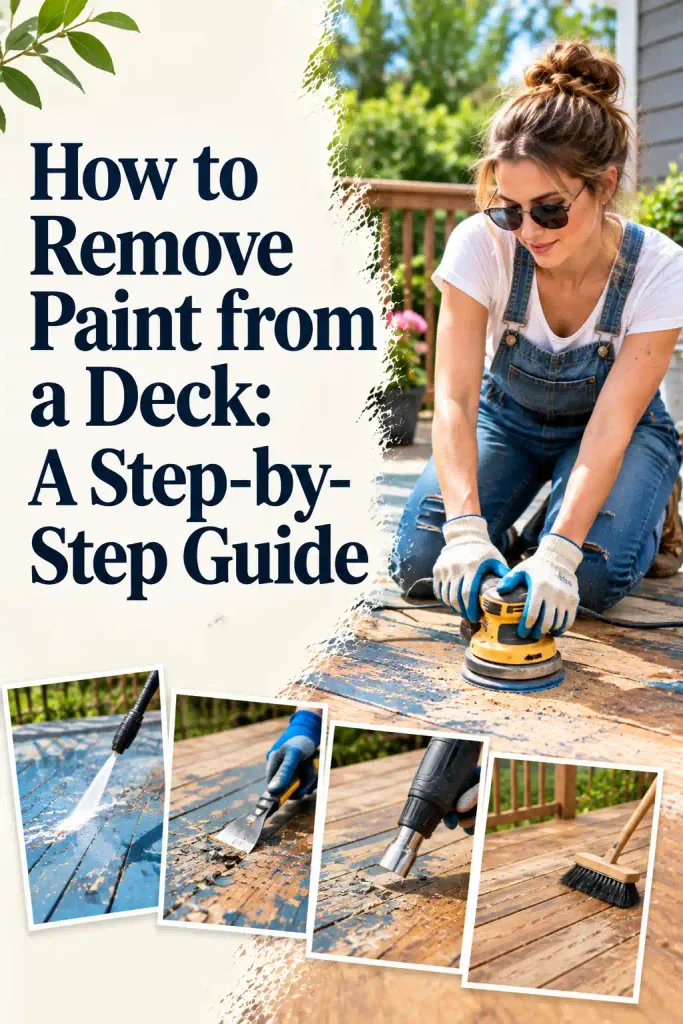
Learning how to remove paint from a deck requires more than simply scraping the surface. Outdoor wood can be easily damaged by aggressive pressure washing, excessive sanding, or harsh chemicals. By combining careful preparation with the right removal method, you can strip unwanted paint while preserving as much of the wood as possible.
Items to Buy
- Paint scraper
- Putty knife
- Deck paint stripper
- Stiff-bristled deck brush
- Wire brush
- Pressure washer
- Garden hose
- Pump sprayer
- Plastic sheeting
- Drop cloths
- Painter’s tape
- Paint bucket
- Sandpaper
- Sanding sponge
- Random orbital sander
- Wood cleaner
- Deck brightener
- Clean rags
- Protective gloves
- Safety goggles
- Respirator mask
- Work boots
Why Remove Paint From a Deck?
Deck paint eventually becomes weathered because it is exposed to sunlight, rain, temperature changes, dirt, and regular foot traffic.
When paint begins peeling or cracking, applying a new coating directly over the damaged finish may produce uneven results and premature peeling. Removing the failing paint allows you to inspect the wood and create a more stable surface for the next finish.
Stripping the deck can also reveal areas that need repair before you begin repainting or staining.
Should You Strip All the Paint From a Deck?
Not every deck requires complete paint removal.
If the existing coating is firmly attached and only slightly faded, thorough cleaning, scraping, and spot sanding may be enough before recoating. However, if large sections are peeling, blistering, cracking, or failing, more extensive removal is usually necessary.
The condition of the existing coating should determine how much work you need to do.
Choosing the Right Paint Removal Method
Several techniques can be used to remove deck paint.
Scraping works well for loose or peeling coatings. Chemical deck strippers can help soften stubborn paint, while pressure washing can remove loosened material and surface residue.
Sanding is useful for smoothing remaining paint and preparing bare wood, but aggressive sanding can damage the wood fibers.
For most projects, combining several methods produces better results than relying on one technique alone.
Preparing Your Deck for Paint Removal
Before starting, inspect the entire deck.
Look for loose boards, protruding nails or screws, cracked wood, rotten areas, and damaged railings. Repair significant structural problems before beginning the stripping process.
Protect plants, siding, outdoor furniture, and nearby surfaces from stripper, paint chips, and dirty water. Keep children and pets away from the work area while you’re working.
How to Remove Paint From a Deck Step by Step
Step 1: Choose a Suitable Day
Select a day with moderate weather and enough time to complete the preparation and removal process.
Avoid working during heavy rain or extreme heat. Many deck stripping products have specific temperature and weather requirements, so always check the manufacturer’s instructions.
A suitable weather window gives cleaning and stripping products enough time to work properly.
Step 2: Clear and Protect the Work Area
Remove furniture, grills, planters, decorations, and other objects from the deck.
Cover nearby siding, plants, outdoor fixtures, and other surfaces that could be affected by paint stripper or debris. Use plastic sheeting where appropriate, while allowing adequate ventilation.
Protecting the surrounding area makes cleanup much easier.
Step 3: Inspect the Existing Paint
Examine the deck carefully.
Identify areas where paint is peeling, bubbling, cracking, or firmly attached. Check for multiple layers of paint and note locations where the coating has already worn away.
This inspection helps you determine where scraping, stripping, pressure washing, or sanding will be most useful.
Step 4: Scrape Away Loose Paint
Use a sturdy paint scraper or putty knife to remove loose and peeling paint.
Hold the scraper at a shallow angle and work along the wood grain whenever practical. Avoid digging the blade into the deck boards.
Remove as much loose coating as possible before applying a chemical stripper.
Step 5: Apply a Deck Paint Stripper
Apply a product specifically intended for removing paint from exterior wood according to the manufacturer’s instructions.
A pump sprayer, brush, or other recommended applicator can be used depending on the product. Cover manageable sections rather than trying to treat the entire deck at once.
Allow the stripper to remain on the surface for the specified amount of time. Never leave it on longer simply because more paint remains.
Step 6: Scrub the Softened Paint
Once the paint has softened, scrub the surface using a stiff-bristled deck brush.
Work along the direction of the wood grain where possible. Focus on areas where paint remains firmly attached.
For grooves and difficult areas, use a smaller brush. Avoid damaging the wood while trying to remove every last trace of coating.
Step 7: Rinse the Deck Carefully
Rinse the deck according to the stripper manufacturer’s instructions.
A garden hose may be sufficient for some products, while others may recommend pressure washing. If using a pressure washer, keep the nozzle moving and maintain an appropriate distance from the wood.
Excessive pressure can cut into softwood and leave visible marks.
Step 8: Remove Remaining Paint
After rinsing, inspect the deck again.
Use a scraper or brush to remove remaining softened paint. Some areas may require another application of stripper.
Avoid applying excessive force. It is better to repeat a controlled treatment than to gouge or damage the wood.
Step 9: Sand the Deck
Once the deck has dried sufficiently, lightly sand areas where paint residue remains or where the wood surface has become rough.
Use appropriate sandpaper and work with the direction of the wood grain. A random orbital sander can be useful on large flat areas, while a sanding sponge provides better control around edges and railings.
Do not sand aggressively just to remove every discoloration.
Step 10: Clean, Brighten, and Prepare the Wood
Remove sanding dust and remaining debris from the deck.
Depending on your chosen refinishing system, use a suitable wood cleaner or deck brightener according to its instructions. Allow the deck to dry thoroughly before applying paint, stain, or another protective finish.
Once the wood is clean, dry, and properly prepared, it is ready for the next stage of restoration.
How to Remove Peeling Paint From a Deck
Peeling paint is usually the easiest coating to remove.
Start with a scraper and carefully lift sections that are already separating from the wood. Use a stiff brush to remove smaller flakes and loose edges.
If firmly attached paint remains, use a suitable deck stripper or localized sanding rather than aggressively scraping the wood.
How to Remove Multiple Layers of Paint From a Deck
Older decks may contain several layers of paint.
Begin by scraping the loose layers. Apply a suitable stripper to stubborn sections and allow it to soften the coating according to the product instructions.
After rinsing, repeat the process if necessary. Light sanding can then help smooth remaining residue and prepare the wood for refinishing.
Multiple layers may require several treatment cycles, so allow enough time for the project.
Can You Pressure Wash Paint Off a Deck?
Pressure washing can remove loose or softened paint, but it should be used carefully.
Wood can be damaged by excessive pressure, especially softer species. Holding the nozzle too close to the surface can create grooves, raised fibers, and visible marks.
Use an appropriate pressure setting and keep the nozzle moving. Pressure washing should complement careful stripping rather than replace all other removal methods.
Can You Sand Paint Off a Deck?
Yes, sanding can remove deck paint.
However, sanding an entire heavily painted deck can be time-consuming and may remove too much wood if done aggressively. Power sanders are particularly effective on flat surfaces but require careful handling.
For thick paint, chemical stripping followed by controlled sanding can reduce the amount of wood that needs to be removed.
Can You Use a Heat Gun on a Painted Deck?
A heat gun can soften some types of paint, allowing it to be scraped away.
However, using heat outdoors on wood requires caution. Excessive heat can scorch the deck, damage surrounding materials, or create hazardous fumes from certain coatings.
If you choose this method, follow the equipment manufacturer’s safety instructions and keep the heat moving continuously. For many deck projects, scraping and a suitable wood-safe stripper are easier to control.
How to Remove Latex Paint From a Deck
Latex paint is water-based and may be easier to remove than some oil-based coatings.
Fresh latex paint can sometimes be cleaned with water and appropriate detergent. Dried or heavily layered latex paint may require scraping, a suitable deck stripper, or sanding.
Always test a removal product before treating a large visible section.
How to Remove Oil-Based Paint From a Deck
Oil-based paint can be more resistant to water and may require a product specifically designed to soften or remove it.
Choose a stripper that is compatible with exterior wood and the existing coating. Follow the manufacturer’s directions carefully and provide appropriate ventilation.
Avoid using random solvents that could damage the wood or surrounding surfaces.
What to Do After Removing Deck Paint
Once the paint has been removed, allow the wood to dry completely.
Inspect the boards for cracks, splinters, rot, loose fasteners, and other problems. Replace severely damaged boards when necessary.
If you’re planning to stain the deck, the wood should be evenly prepared so the stain can absorb consistently. If you’re repainting, follow the paint manufacturer’s preparation and priming recommendations.
Common Mistakes to Avoid
One common mistake is using excessive pressure when pressure washing.
High-pressure water can damage wood fibers and leave permanent marks. Another mistake is scraping aggressively with a sharp metal tool, which can gouge the boards.
Applying stripper in direct sunlight or extreme heat can also cause the product to dry too quickly.
Avoid skipping the test area. A small test can reveal whether your chosen removal method is compatible with the paint and wood.
Tips for Better Results
Start with scraping before moving to stronger removal techniques.
Work in manageable sections so you can keep track of the stripping process. Follow the manufacturer’s instructions for dwell times, rinsing, protective equipment, and temperature requirements.
Use clean tools and replace worn sandpaper regularly.
Most importantly, focus on removing failing paint without unnecessarily removing sound wood. The goal is a clean, stable surface rather than perfectly bare wood at any cost.
How to Prepare a Deck for Repainting
After stripping the old coating, make sure the deck is completely clean and dry.
Sand rough areas, remove dust, and repair damaged boards. If the new coating requires a primer, use one specifically recommended for the deck material and paint system.
Before repainting, inspect the entire surface in good lighting. Remaining loose paint, dirt, moisture, or damaged wood can affect the performance of the new coating.
How Long Does It Take to Remove Paint From a Deck?
The timeline depends on deck size, the number of paint layers, weather conditions, and the removal method.
A small deck with peeling paint may be completed relatively quickly, while a large deck covered in several layers can require several days.
Allow additional time for drying between cleaning, stripping, sanding, and refinishing.
When Should You Hire a Professional?
Consider professional help if the deck has extensive rot, structural damage, multiple difficult coating layers, or a large surface area.
Professional assistance can also be useful when you are unsure which stripping product is compatible with the existing coating or wood species.
If the deck was built many years ago and you are concerned about older coatings, professional assessment can help determine appropriate precautions before disturbing the existing paint.
FAQs
What is the easiest way to remove paint from a deck?
Start by scraping loose paint, then use a suitable deck paint stripper for stubborn areas. Controlled rinsing and light sanding can remove remaining residue.
Do I need to remove all the paint before repainting a deck?
Not always. Firmly attached paint may be left after thorough cleaning, scraping, and preparation. However, peeling or unstable coating should be removed.
Can I use a pressure washer to remove deck paint?
Yes, but use it carefully. Excessive pressure can damage wood fibers and leave grooves or marks.
Is sanding the best way to remove deck paint?
Sanding can work well, particularly for remaining residue, but completely sanding thick paint from a large deck can remove unnecessary wood and take considerable time.
Can I use paint stripper on a wooden deck?
Yes. Choose a stripper specifically designed and labeled for exterior wood and follow its application and safety instructions.
How do I remove peeling paint from deck boards?
Scrape loose sections with a paint scraper, brush away remaining flakes, and use a suitable stripper or light sanding for firmly attached areas.
Can I remove deck paint without chemicals?
Yes. Scraping and sanding can remove paint without chemical stripper, although the process may take longer and can remove more wood if sanding is aggressive.
How long should deck stripper sit?
The correct dwell time varies by product. Always follow the manufacturer’s instructions rather than using a fixed time for every stripper.
Should I sand after stripping a deck?
Light sanding can help smooth remaining residue and rough wood, but avoid aggressive sanding that unnecessarily removes wood.
How long should a deck dry before repainting?
Drying time depends on the wood, weather, humidity, and the product being applied. Follow the coating manufacturer’s moisture and drying requirements before repainting.
Final Words
Learning how to remove paint from a deck is an important part of restoring an aging outdoor space. Start by inspecting the coating, scraping loose paint, and using a suitable deck stripper where necessary. Careful rinsing and controlled sanding can then help create a clean, stable surface.
The most important principle is to protect the wood while removing the failing coating. Work patiently, avoid excessive pressure and aggressive sanding, and follow product instructions carefully. Once the deck is clean, dry, and repaired, you can apply a new finish that gives the outdoor space a fresh appearance and renewed protection.