
Choosing what color to paint bathroom cabinets can transform your bathroom without the cost of replacing the vanity. The right shade can brighten a small space, create a beautiful contrast, or give an outdated bathroom a fresh, modern appearance.
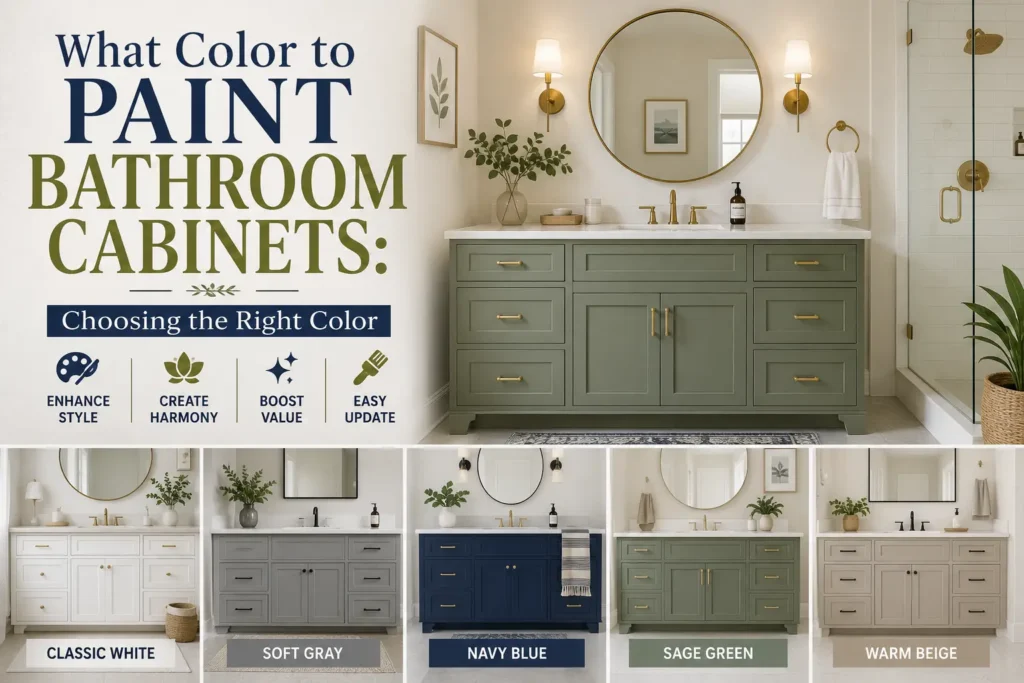
From timeless white and soft gray to rich navy and natural green, there are plenty of attractive options. This guide covers 12 bathroom cabinet colors, tips for choosing the right shade, and practical advice for getting a beautiful, long-lasting finish.
Affiliate disclosure: As an Amazon Associate I earn from qualifying purchases.
What to Buy for Painting Bathroom Cabinets
Before starting your project, gather the supplies needed to prepare, prime, and paint the cabinets. Choose products suitable for your cabinet material and the moisture conditions in your bathroom.
- Bathroom cabinet paint
- Bonding primer for cabinets
- Fine-grit sanding sponges
- Cabinet degreaser cleaner
- Angled paintbrush set
- Small foam paint rollers
- Painter’s tape
- Canvas drop cloth
- Wood filler
- Bathroom cabinet knobs and pulls
- Paint tray and liners
What Color to Paint Bathroom Cabinets: Choosing the Right Color
The best cabinet color should complement your bathroom’s existing finishes and the atmosphere you want to create. Consider these 12 shades before choosing your favorite.
1. Classic White
White bathroom cabinets create a clean, bright, and timeless appearance. This color works especially well in small bathrooms because it helps the vanity blend with light walls and other pale surfaces.
Pair white cabinets with marble-look countertops, white sinks, and chrome or brushed nickel hardware for a fresh traditional look. If you prefer a little contrast, choose matte black handles. White is also a flexible option when you enjoy changing towels, rugs, and accessories because it works with many accent colors.
2. Warm Off-White
Warm off-white is a softer alternative to bright white. It has subtle cream or beige undertones that make a bathroom feel welcoming rather than stark.
This shade looks beautiful with beige tile, natural wood flooring, cream countertops, and brass hardware. It is particularly suitable for traditional, farmhouse, and transitional bathrooms. If your bathroom already has warm finishes, off-white can create a more coordinated appearance than a cool, bright white.
3. Soft Gray
Soft gray is a versatile neutral that gives bathroom cabinets a calm, understated look. It works beautifully with white countertops, marble surfaces, chrome fixtures, and pale flooring.
Choose a light gray for a bright and airy atmosphere or a medium gray when you want the vanity to stand out a little more. Pay attention to undertones before choosing a paint color. Blue-gray shades feel cooler, while gray with beige undertones creates a warmer appearance.
4. Greige
Greige combines gray and beige, making it a practical choice for bathrooms with mixed warm and cool finishes. It offers more depth than plain white without making the cabinets look too dark.
Pair greige cabinets with white walls, cream countertops, stone-look flooring, and brushed brass hardware. This shade works well in contemporary, minimalist, and farmhouse-inspired spaces. It is also a good option when you want a neutral vanity that feels a little more interesting than traditional gray.
Navy blue creates an elegant and sophisticated bathroom vanity. Its deep color provides contrast against white countertops, pale walls, and light flooring.
Brushed brass or gold-toned hardware can make navy cabinets look especially polished. Chrome and brushed nickel also work well if you prefer a cooler, more contemporary style. In a smaller bathroom, keep the surrounding surfaces light so the deep blue does not make the room feel visually crowded.
6. Sage Green
Sage green brings a gentle natural touch to bathroom cabinets. Its muted green and gray undertones create a relaxing appearance without making the vanity look overly colorful.
This shade pairs beautifully with white sinks, cream walls, light wood, and natural stone. Brushed brass hardware adds warmth, while matte black handles create a more modern contrast. Sage green is a lovely choice for farmhouse, cottage, Scandinavian, and spa-inspired bathrooms.
7. Forest Green
Forest green is a deeper, richer option for anyone who wants a statement vanity. It adds character and works particularly well with white marble-look countertops, cream walls, and warm metallic fixtures.
Because forest green is quite dark, balance it with lighter surfaces and good lighting. You can use it on the entire vanity or just the lower cabinets while keeping upper storage lighter. This shade is especially attractive in traditional and nature-inspired bathrooms.
8. Charcoal Gray
Charcoal gray offers a modern alternative to black. It creates strong contrast while looking slightly softer and less dramatic than a completely black vanity.
Combine charcoal cabinets with white walls, pale countertops, chrome fixtures, and simple hardware. A satin or semi-gloss finish can give the cabinets a polished appearance. If your bathroom has limited natural light, use charcoal on the vanity rather than throughout the entire room.
9. Black
Black bathroom cabinets create a bold and sophisticated focal point. They look particularly striking with white sinks, light countertops, marble-look tile, and metallic handles.
For a modern design, pair black cabinets with matte black hardware and simple accessories. For a more luxurious appearance, consider brushed brass or gold-toned pulls. Black can work in both large and small bathrooms, but it is best balanced with bright walls, mirrors, and adequate lighting.
10. Dusty Blue
Dusty blue is a muted shade that combines blue with a subtle gray undertone. It adds color while keeping the bathroom’s overall appearance soft and relaxed.
Pair it with white countertops, light gray tile, cream walls, and brushed nickel fixtures. Dusty blue is a lovely option for coastal, cottage, and traditional bathrooms. If you want a slightly warmer combination, use brass hardware and natural wood accessories.
11. Taupe
Taupe is an earthy neutral that can make a bathroom feel warm and refined. Depending on its undertone, it may appear closer to beige, gray, or brown.
This shade works well with cream tile, natural stone, white sinks, and wood accents. Choose a light taupe if you want a subtle vanity or a deeper shade for more contrast. Test samples carefully because some taupe colors have pink or purple undertones that may look different beside your existing finishes.
12. Muted Terracotta
Muted terracotta adds warmth and personality to a bathroom. Its earthy character works beautifully with cream walls, beige tile, natural wood, and warm brass hardware.
This color is a good choice if you want something different from the usual white, gray, or blue cabinets. Keep the surrounding surfaces relatively simple so the vanity remains the main feature. A soft, muted terracotta is often easier to coordinate than a very bright orange-red shade.
How to Choose the Best Color for Your Bathroom Cabinets
Selecting a color involves more than choosing a shade you like. Your bathroom’s lighting, countertop, flooring, and wall colors all influence how the finished cabinets will look.
Consider the Bathroom Size
Light colors such as white, warm off-white, pale gray, and light greige can help a small bathroom feel brighter. They work particularly well when the walls and flooring are also light.
However, you do not have to avoid dark colors in a compact bathroom. Navy, charcoal, and forest green can create a beautiful focal point when balanced with a light countertop, bright walls, and a large mirror.
In a spacious bathroom, you have more flexibility to experiment with deeper shades or stronger contrasts.
Match the Existing Countertop
Your countertop is one of the most noticeable surfaces beside the cabinets. Consider its color and pattern before choosing paint.
- White countertop: Works with almost every cabinet shade, including navy, green, gray, and black.
- Cream countertop: Looks natural with warm white, taupe, greige, and sage.
- Gray countertop: Pairs well with white, charcoal, dusty blue, and cool gray.
- Marble-look countertop: Can complement both dark statement colors and soft neutrals.
- Dark countertop: Creates contrast with white, off-white, and light gray cabinets.
If the countertop has a strong pattern, a simple cabinet color can help keep the bathroom from looking too busy.
Pay Attention to Lighting
Bathroom lighting can change how paint colors appear. A gray shade may look blue under cool lighting, while a warm beige may appear more yellow under certain bulbs.
Before buying a full container of paint, test a few samples in your bathroom. Look at them during the day and at night with the lights switched on. This helps you understand how the color will look in your actual space.
Choose a Color That Matches Your Style
Your preferred decorating style can help narrow down the options.
- Modern bathroom: Black, charcoal, soft gray, or white.
- Farmhouse bathroom: Sage green, warm white, greige, or dusty blue.
- Traditional bathroom: Navy, taupe, warm off-white, or forest green.
- Minimalist bathroom: White, pale gray, greige, or black.
- Coastal bathroom: Dusty blue, white, or soft gray.
- Natural bathroom: Sage green, forest green, taupe, or warm beige.
These combinations are suggestions rather than strict rules. The most important thing is choosing shades that look balanced together.
Coordinate Cabinet Hardware
Cabinet hardware is a small detail that can make a noticeable difference.
- Brushed brass: Complements navy, sage green, forest green, warm white, and taupe.
- Chrome: Works well with white, gray, dusty blue, and modern color schemes.
- Matte black: Creates contrast against white, greige, sage, and pale gray.
- Brushed nickel: Looks attractive with cool neutrals and blue shades.
- Dark bronze: Adds warmth to traditional and earthy bathroom designs.
You can keep your existing hardware if it still looks good. Replacing old knobs and handles is an optional way to give the newly painted vanity a more updated appearance.
What Is the Best Paint Finish for Bathroom Cabinets?
The finish affects both the appearance and maintenance of your cabinets. Bathrooms experience moisture, splashes, and frequent cleaning, so choose a durable coating designed for cabinetry.
Satin Finish
Satin has a soft, subtle sheen. It offers a smooth appearance without reflecting as much light as gloss paint. It is a good option when you want a balanced finish that is relatively easy to wipe clean.
Semi-Gloss Finish
Semi-gloss has more shine and is generally easier to clean than flatter finishes. It is a practical option for many bathroom vanities because cabinet doors and drawer fronts are frequently touched.
Gloss Finish
Gloss creates a shiny, reflective appearance that can make a vanity look sleek and polished. However, it may highlight scratches, dents, and uneven surfaces. Careful preparation is important if you choose this finish.
Always check the paint label to confirm that the product is suitable for cabinets and the material you are painting.
How to Paint Bathroom Cabinets Step by Step
Once you have selected your color, follow these steps to prepare and paint the vanity. Good preparation is essential for a smooth finish and reliable adhesion.
Step 1: Empty the Cabinets and Prepare the Area
Remove everything from the drawers and cabinets. Place a drop cloth on the floor to protect it from dust, drips, and spills.
Open windows or arrange suitable ventilation when using cleaning products, primer, and paint. Protect nearby walls, countertops, sinks, and flooring with painter’s tape and coverings.
Step 2: Remove Doors, Drawers, and Hardware
Use a screwdriver to remove cabinet doors, drawer fronts where possible, knobs, handles, and hinges. Keep the screws and hardware together in labeled bags.
Label each door and drawer so you can return everything to its original position. This can save time when you reassemble the vanity.
Step 3: Clean the Cabinet Surfaces
Bathroom cabinets can collect soap residue, lotion, dust, hairspray, and grease. These contaminants can prevent paint from sticking properly.
Clean the surfaces with a suitable degreasing cleaner. Rinse away any residue as directed by the cleaner’s instructions and allow the cabinets to dry completely.
Step 4: Repair and Sand the Cabinets
Inspect the cabinet doors, drawer fronts, and frame for scratches, dents, holes, or peeling paint. Use an appropriate filler for minor imperfections and allow it to dry.
Lightly sand the surfaces with suitable sandpaper to create a smooth, paint-ready finish. Follow the instructions for your cabinet material and primer. If the existing coating may contain lead, do not sand or disturb it until you have obtained appropriate safety guidance.
Remove all sanding dust before continuing.
Step 5: Apply the Primer
Choose a primer designed for your cabinet material and compatible with the paint you plan to use. A bonding primer may be needed for slick or previously finished surfaces.
Apply an even coat using a brush or small roller. Pay attention to corners, edges, and detailed areas. Allow the primer to dry according to the manufacturer’s instructions.
Step 6: Apply the First Coat of Paint
Stir the paint thoroughly and apply a thin, even coat to the cabinet frame, doors, and drawer fronts. Use a brush for corners and detailed sections and a small roller for broader, flat areas.
Avoid applying too much paint at once because heavy coats can leave drips and uneven marks. Allow the first coat to dry for the recommended period.
Step 7: Apply Additional Coats
Apply another coat after the previous one has dried sufficiently. The number of coats depends on the paint, primer, original cabinet color, and coverage.
Use smooth, even strokes and inspect the surface for missed areas or drips. Follow the product instructions for recoat times rather than relying only on how dry the surface feels.
Step 8: Allow the Paint to Cure
Drying and curing are not the same. Paint may feel dry before it has reached its intended hardness and durability.
Give the cabinets the recommended curing time before regular use. Avoid placing heavy objects against painted surfaces or exposing them to unnecessary moisture during this period.
Step 9: Reattach the Hardware
Once the paint has cured sufficiently according to the product instructions, reinstall the hinges, knobs, handles, doors, and drawers.
Check that everything opens and closes properly. Clean up the work area and enjoy your refreshed bathroom vanity.
Common Mistakes to Avoid When Painting Bathroom Cabinets
A few common mistakes can affect the appearance and durability of your finished project.
Skipping Surface Preparation
Painting over dirt, soap residue, or grease can lead to poor adhesion. Clean, dry, and properly prepared surfaces give primer and paint a better chance of bonding.
Choosing the Wrong Primer
Some cabinet materials have smooth or nonporous surfaces that ordinary primer may not grip well. Select a primer made for the surface and test it in an inconspicuous area when appropriate.
Applying Thick Coats
Thick coats can create drips, brush marks, and uneven coverage. Apply thinner coats and allow enough drying time between applications.
Ignoring Bathroom Ventilation
Moisture and poor ventilation can contribute to paint problems over time. Make sure the bathroom has suitable ventilation and address existing leaks or persistent dampness before painting.
Reassembling Too Soon
Paint that feels dry may not be fully cured. Reattaching doors too early can cause sticking, marks, or damage. Follow the manufacturer’s curing instructions.
Frequently Asked Questions
What is the best color for bathroom cabinets?
White, warm off-white, gray, navy, and sage green are versatile choices. White and pale neutrals create a bright appearance, while navy and green add more character. Choose a shade that complements your countertop, flooring, and wall color.
What color makes a small bathroom look bigger?
White, warm off-white, pale gray, and light greige can help a small bathroom feel brighter and more open. Pairing light cabinets with light walls and good lighting can create a more spacious impression.
Are dark bathroom cabinets a good idea?
Yes. Navy, charcoal, black, and forest green can create an attractive focal point. Balance dark cabinets with lighter countertops, walls, and flooring to avoid making the room feel too heavy.
Should bathroom cabinets match the walls?
They do not have to match. You can choose a similar shade for a subtle look or use contrasting colors to make the vanity stand out. Consider the undertones of both colors so they look coordinated.
Is satin or semi-gloss better for bathroom cabinets?
Both can be suitable when the paint is designed for cabinetry. Satin offers a softer sheen, while semi-gloss has more shine and is generally easier to wipe clean. Follow the paint manufacturer’s recommendations for bathroom use.
Can I paint laminate bathroom cabinets?
Yes, some laminate cabinets can be painted. They need thorough cleaning, appropriate surface preparation, and a bonding primer designed for the material. Test the primer’s adhesion in a hidden area before painting the entire cabinet.
Do I need to sand bathroom cabinets before painting?
Many previously finished cabinets benefit from light sanding to improve adhesion and smooth the surface. However, the correct preparation depends on the cabinet material and primer instructions. Never disturb potentially lead-containing paint without proper safety precautions.
How many coats of paint do bathroom cabinets need?
The number varies with the product, existing finish, primer, and color change. Many projects use a primer coat followed by two finish coats, but always follow the manufacturer’s instructions for coverage and recoating.
Final Words
Choosing the right bathroom cabinet color can give your vanity a completely refreshed appearance without replacing the entire unit. White, warm off-white, and soft gray are timeless options, while navy, sage green, forest green, and charcoal offer more personality.
Before making your final decision, compare paint samples with your countertop, flooring, and wall color. Choose a durable cabinet coating, prepare the surface carefully, and allow enough time for the paint to cure. With the right shade and proper preparation, your bathroom cabinets can become a beautiful part of the room.
Helpful Resources
- How to Paint a Bathroom Vanity – Lowe’s – Provides practical guidance on choosing cabinet paint, finishes, and preparing a bathroom vanity.
- How to Paint a Bathroom Vanity – The Home Depot – Explains the supplies and preparation steps involved in painting bathroom cabinets.