
High gloss trim paint can give baseboards, window frames, interior doors, and crown molding a smooth, reflective finish that makes architectural details stand out. It is also a practical choice for trim that needs regular cleaning, provided you select a durable enamel designed for the surface. The challenge is finding a paint that offers the shine you want without excessive brush marks, poor adhesion, or unwanted yellowing.
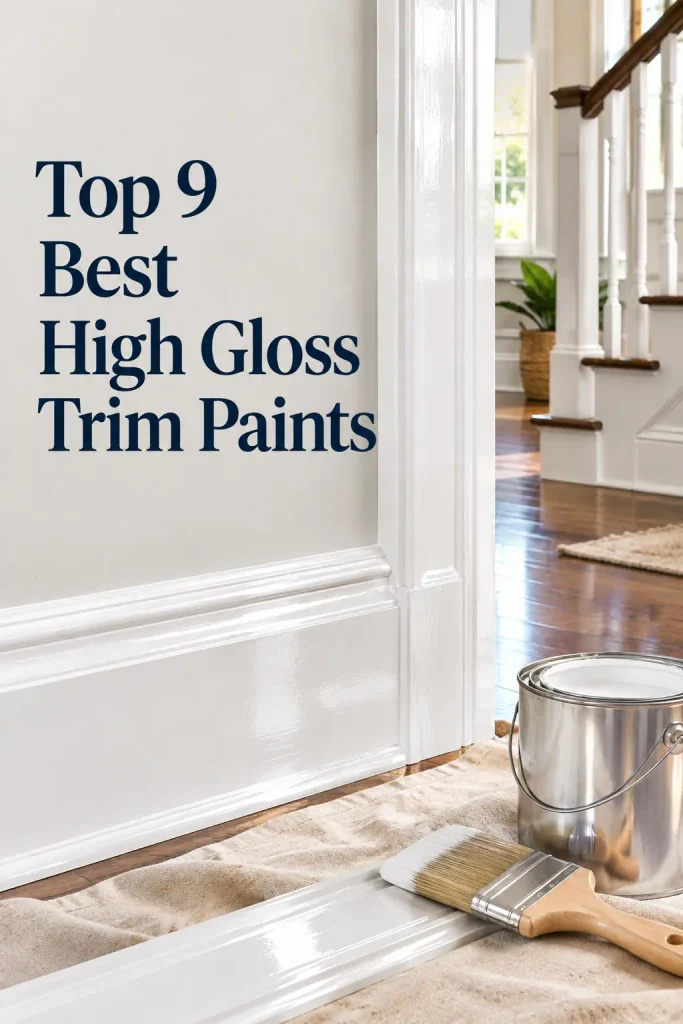
The best high gloss trim paint depends on your budget, the condition of your existing trim, and whether you prefer water-based acrylic, waterborne alkyd, or another enamel formulation. Below, we compare nine options to investigate for interior trim projects, explain their advantages and limitations, and share tips for achieving a polished finish.
Top 9 Best High Gloss Trim Paint: Comparison Table
| Product Name | Best For | Check Price |
|---|---|---|
| 1. Benjamin Moore ADVANCE Interior Paint — High Gloss | Smooth finish on doors and trim | Check on Amazon |
| 2. Sherwin-Williams Emerald Urethane Trim Enamel — Gloss | Durable finish for frequently used trim | Check on Amazon |
| 3. BEHR PREMIUM PLUS Interior Hi-Gloss Enamel | Budget-conscious trim projects | Check on Amazon |
| 4. BEHR MARQUEE Interior Hi-Gloss Enamel | Trim repainting and color options | Check on Amazon |
| 5. Benjamin Moore Aura Interior Paint — Gloss | Premium colors and decorative trim | Check on Amazon |
| 6. INSL-X Cabinet Coat | Repainting suitable cabinets and trim | Check on Amazon |
| 7. Rust-Oleum Painter’s Touch Ultra Cover — Gloss | Small trim projects and decorative details | Check on Amazon |
| 8. Valspar Ultra High Gloss Paint + Primer | High-shine projects on approved surfaces | Check on Amazon |
| 9. Sherwin-Williams ProClassic Waterborne Interior Acrylic Enamel — Gloss | Interior doors, molding, and trim | Check on Amazon |
Affiliate disclosure: As an Amazon Associate I earn from qualifying purchases.
1. Benjamin Moore ADVANCE Interior Paint — High Gloss
Best for: A smooth, refined finish on doors and trim
Benjamin Moore ADVANCE Interior Paint is a popular product to consider when a trim project calls for a refined, enamel-like finish. Its waterborne alkyd formulation is designed to provide good flow and leveling, making it worth investigating for baseboards, door frames, interior doors, and decorative molding.
One of the biggest challenges with high gloss paint is that reflected light makes surface imperfections easy to see. Brush marks, small dents, uneven joints, and sanding scratches can become more noticeable after the finish dries. A paint that levels well can help, but preparation still matters enormously. Sanding, cleaning, priming where needed, and applying controlled coats are essential for a professional-looking result.
ADVANCE is particularly worth considering when appearance is a priority. However, waterborne alkyd paints may take longer to recoat and fully cure than some conventional acrylic paints. Follow the current product instructions and avoid closing freshly painted doors against their frames before the finish is ready.
Pros
- Designed for interior trim, doors, and other suitable surfaces.
- Waterborne alkyd formulation offers useful leveling characteristics.
- Worth considering for a smooth, furniture-like finish.
- Available in multiple sheen options, depending on the product range.
- Water cleanup is convenient when compared with traditional solvent-based alkyd paint.
Cons
- Recoat and cure times may be longer than those of some acrylic paints.
- High gloss can reveal imperfections in poorly prepared trim.
- Premium paint may cost more than basic interior enamel.
- Exact sheen availability should be confirmed before buying.
Buying tip: Look specifically for the gloss version if you want strong reflectivity. Do not accidentally order satin or semi-gloss when your project calls for high gloss.
2. Sherwin-Williams Emerald Urethane Trim Enamel — Gloss
Best for: Frequently used trim, doors, and baseboards
Sherwin-Williams Emerald Urethane Trim Enamel is worth comparing for trim that needs a durable finish and regular cleaning. It is designed for applications such as doors, cabinets, and trim, depending on the product specifications. For busy hallways, family rooms, and frequently handled doors, choosing a dedicated trim enamel can be more suitable than using ordinary wall paint.
The main advantage of a specialized trim enamel is that it is formulated for surfaces that experience more contact and wear than walls. Baseboards can be bumped by vacuum cleaners, door casings can collect fingerprints, and interior doors are frequently touched. The right enamel can help the finish withstand everyday use, although the actual result depends on preparation, application, and adequate curing.
Before purchasing, verify that the exact Emerald Urethane product is offered in gloss. Product lines can have different sheen ranges, and not every finish is available in every base or color. The paint may also cost more than budget alternatives, so consider whether the extra performance is worthwhile for your project.
Pros
- Formulated for suitable interior trim and door applications.
- A useful option for high-contact surfaces.
- Worth considering where cleanability and durability matter.
- Available in selected sheen and color options.
- Can be used for coordinated trim projects when the product label permits.
Cons
- Premium pricing may not suit every budget.
- Gloss availability varies by formula and market.
- Requires careful preparation for reliable adhesion.
- The coating needs adequate time to cure before heavy use.
Buying tip: Confirm the exact gloss sheen and the approved surface list. If you are repainting old glossy trim, check whether a bonding primer is recommended.
3. BEHR PREMIUM PLUS Interior Hi-Gloss Enamel
Best for: Budget-conscious trim projects
BEHR PREMIUM PLUS Interior Hi-Gloss Enamel is worth investigating if you want a reflective finish without automatically choosing a premium-priced specialty enamel. A high-gloss interior paint can be useful for suitable trim, molding, and other approved surfaces where you want a bright, polished appearance.
Budget-friendly paint can be a sensible choice for a large project involving many feet of baseboard or several door frames. However, price should not be the only consideration. Trim is viewed at close range, and high gloss emphasizes brush marks, uneven surfaces, and drips. Good preparation and careful application are particularly important when the desired result is smooth and shiny.
Before buying, verify the current product name and label. Paint ranges are updated over time, and not every product marketed as interior paint is equally suitable for trim. Check the approved surfaces, available sheen, recoat interval, and cleaning instructions.
Pros
- A product to compare for budget-conscious projects.
- High-gloss finishes can make trim stand out.
- Suitable for approved interior applications.
- May offer convenient cleanup, depending on the current formula.
- Worth considering for larger projects where material cost matters.
Cons
- May not level as smoothly as a specialized trim enamel.
- Surface imperfections remain visible in a glossy finish.
- Durability depends on the exact formulation and preparation.
- The current product range and gloss option should be confirmed.
Buying tip: If you are painting prominent doors or detailed molding, compare the total project cost with a dedicated trim enamel. The smoother finish may justify the extra expense for highly visible areas.
4. BEHR MARQUEE Interior Hi-Gloss Enamel
Best for: Trim repainting and decorative color choices
BEHR MARQUEE is another interior paint range to investigate when comparing high-gloss finishes for trim. The line is known for interior paint products in selected sheens, but you should confirm the current availability of the exact hi-gloss version rather than assuming every range or color is offered in every finish.
For a trim repaint, consider whether you are changing the color dramatically or simply refreshing an existing finish. A large color change may require a suitable primer and more than one coat. If the old surface is glossy, greasy, peeling, or previously painted with an incompatible coating, preparation is essential regardless of the paint’s price or advertised coverage.
A reflective finish can make white trim look crisp and can add contrast around colored walls. It can also highlight dents and uneven caulking, so inspect the surface carefully before painting. Repairing the trim and sanding it smooth may make a bigger visual difference than upgrading the paint alone.
Pros
- Worth comparing for interior trim repainting.
- High-gloss finishes can create a polished decorative effect.
- May provide useful color choices, depending on current availability.
- Can suit approved interior surfaces.
- Offers another option for comparing coverage and total cost.
Cons
- Confirm that the exact range is available in high gloss.
- Not every interior paint formula is ideal for detailed trim.
- Gloss can reveal poor sanding and application marks.
- Primer may be needed for certain surfaces or color changes.
Buying tip: Check the exact label and product specifications before ordering. If high gloss is unavailable in the current range, choose another product that clearly lists gloss as an available sheen.
5. Benjamin Moore Aura Interior Paint — Gloss
Best for: Premium colors and decorative trim
Benjamin Moore Aura Interior Paint is worth comparing if you want a premium interior finish and a specific color for your home. It can be an option for suitable interior applications, but the exact product, sheen, and approved surfaces need to be verified. Do not assume every Aura formulation is designed specifically for trim or available in high gloss.
For decorative trim, color can have a major impact. Glossy white molding creates a crisp outline against colored walls, while a deep green, navy, or charcoal finish can make architectural details feel more dramatic. The key is to choose a product that supports both your desired appearance and the practical demands of the surface.
Because high-gloss finishes reflect light strongly, preparation becomes especially important when using a premium paint. Fill small defects, sand rough areas, remove dust, and prime when recommended. A premium topcoat cannot reliably hide deep scratches, loose paint, or poor repairs.
Pros
- Worth investigating for premium interior color projects.
- Offers a range of color possibilities, depending on the current product line.
- Can help create a coordinated decorative finish.
- Suitable for approved interior applications.
- Useful to compare when color selection is a priority.
Cons
- Exact high-gloss availability must be verified.
- Premium pricing may not be necessary for every trim project.
- Surface imperfections can remain obvious.
- Not every Aura product is specifically a trim enamel.
Buying tip: Confirm the exact Aura product name, surface suitability, and available sheen. If the paint is not explicitly rated for your trim application, select a dedicated trim enamel instead.
6. INSL-X Cabinet Coat
Best for: Repainting suitable cabinets and compatible trim
INSL-X Cabinet Coat is a product to consider when repainting cabinets and other suitable surfaces that need a durable finish. It is especially relevant to projects involving previously finished surfaces, but it should not automatically be treated as a true high-gloss trim paint. Verify the current sheen options and approved applications before selecting it for baseboards, doors, or molding.
One of the most challenging trim projects is painting over an old, smooth finish. New paint may not adhere well to a glossy surface that has not been properly cleaned and prepared. A product designed for suitable cabinet surfaces may be useful for some repainting jobs, but compatibility still matters. Follow the manufacturer’s instructions for cleaning, sanding, and priming, and do not assume that every old coating can be painted over directly.
If you need a very reflective high-gloss appearance, compare Cabinet Coat’s available sheen with a product that explicitly offers gloss. It may be a useful alternative for certain surfaces, but the desired finish should be confirmed before purchasing.
Pros
- Designed for specified cabinet and refinishing applications.
- Worth investigating for suitable previously finished surfaces.
- Useful to compare for repainting projects.
- Offers an alternative to general-purpose wall paint.
- Can suit selected trim-related projects when approved.
Cons
- Not automatically a high-gloss product.
- Available sheen and approved surfaces must be verified.
- Proper cleaning and surface preparation are still necessary.
- Not a substitute for a compatible bonding primer where one is required.
Buying tip: Choose INSL-X Cabinet Coat only if its current label matches the intended surface and finish. If you need true high gloss, make sure the product offers that sheen before ordering.
7. Rust-Oleum Painter’s Touch Ultra Cover — Gloss
Best for: Small trim projects and decorative details
Rust-Oleum Painter’s Touch Ultra Cover in a gloss finish is a product to investigate for small projects and suitable surfaces. It is commonly associated with multipurpose paint applications, so it is important to check the exact formula and whether it is intended for the trim material you want to paint.
For example, a small decorative molding piece, trim accessory, or suitable wooden item may be a different project from repainting all the baseboards in a home. Product format matters too: spray paint can be convenient for small objects and intricate details, but it is not always the most economical or practical option for long runs of interior trim.
If you are painting wood or previously coated trim, follow the surface preparation instructions and use the appropriate primer when required. For larger indoor jobs, also consider overspray control, ventilation, and protecting nearby surfaces. A glossy spray finish can look attractive, but achieving a uniform result takes steady application and the correct distance from the surface.
Pros
- Useful to investigate for small decorative projects.
- Gloss versions may provide a shiny finish.
- Convenient format for certain objects and detailed surfaces.
- Offers an alternative to brush-applied products for approved uses.
- Can be practical for limited areas rather than whole-room trim.
Cons
- Not necessarily the best choice for long baseboards or large trim runs.
- Exact surface suitability depends on the formula.
- Spray application requires careful masking and ventilation.
- A gloss finish can show drips and uneven coverage.
Buying tip: Check the can for approved materials and interior-use instructions. For whole-room trim, compare a dedicated brush- or roller-applied enamel before choosing a multipurpose spray paint.
8. Valspar Ultra High Gloss Paint + Primer
Best for: High-shine projects on approved surfaces
Valspar Ultra High Gloss Paint + Primer is worth investigating if your priority is a very reflective finish. However, verify the exact product and its approved uses before selecting it for interior trim. Product names and formulas can vary, and a paint marketed for a particular surface should not be assumed to work on all wood, MDF, metal, or previously painted trim.
High-gloss paint is often chosen to make molding and door frames stand out. Its reflective surface can create a polished appearance, but it also exposes defects that lower-sheen paint may disguise. Before application, repair dents, sand rough edges, and remove dust so that the finish does not emphasize every imperfection.
The words “paint + primer” do not mean that separate preparation is never necessary. Glossy old paint, bare wood, knots, stains, and factory-finished surfaces may require specific preparation or a dedicated primer. Follow the current label rather than relying only on the product name.
Pros
- Worth comparing for high-shine projects.
- Can provide a reflective appearance on approved surfaces.
- Paint-and-primer formulations may simplify certain jobs.
- Useful to compare for color and finish options.
- May suit smaller or larger projects depending on the product format.
Cons
- Exact trim suitability must be confirmed.
- Paint-and-primer labeling does not eliminate every priming need.
- High gloss emphasizes surface flaws.
- Product availability and sheen naming may vary.
Buying tip: Confirm that the current product is intended for your trim material and interior conditions. If you cannot verify those details, choose a dedicated trim enamel with a clearly stated gloss finish.
9. Sherwin-Williams ProClassic Waterborne Interior Acrylic Enamel — Gloss
Best for: Interior doors, molding, and trim
Sherwin-Williams ProClassic Waterborne Interior Acrylic Enamel is another dedicated enamel line to compare for interior trim projects. It is worth investigating for doors, baseboards, and molding when the current formulation and sheen match your requirements.
Acrylic enamel can be a practical choice for interior trim, but the final appearance depends on how well the surface is prepared and how the paint is applied. On high-gloss trim, even small brush ridges or uneven patches may be visible in bright daylight. Using a good-quality angled brush, applying controlled coats, and avoiding overworking the paint can help produce a more even finish.
Before purchasing, confirm the current product name, available sheen, and approved surfaces. Product lines can change, and different enamel products may have different application instructions and cure times. If your main priority is a true high-gloss finish, do not settle for semi-gloss merely because it is available in the same product family.
Pros
- Dedicated interior enamel category.
- Worth comparing for suitable doors and trim.
- Can provide a more appropriate finish than ordinary wall paint.
- Useful for projects involving multiple trim surfaces.
- Available in selected finishes, depending on the current range.
Cons
- Exact gloss availability must be checked.
- Application quality affects the final appearance.
- Proper preparation is essential on previously painted trim.
- Recoat and cure times depend on the current formula.
Buying tip: Confirm the current product’s sheen and surface compatibility with the seller or manufacturer. Compare it with Emerald Urethane and ADVANCE if you want a premium trim finish.
How to Choose the Best High Gloss Trim Paint
1. Confirm that the paint is truly high gloss
Paint sheen labels can include flat, matte, eggshell, satin, semi-gloss, gloss, and high gloss. These terms are not always used identically across brands. If you want a highly reflective finish, check the exact sheen listed for the product and color rather than relying on the product name.
2. Choose a formula designed for trim
Baseboards, door frames, and molding need a finish that can handle bumps, fingerprints, and cleaning. A dedicated trim enamel is often a better starting point than ordinary wall paint. Look for a product specifically approved for your surface and intended use.
3. Consider water-based versus alkyd paint
Water-based acrylic paints are often convenient to apply and clean up. Waterborne alkyd paints can offer useful leveling characteristics, although their recoat and cure times may be longer. Traditional oil-based alkyd enamels may produce a hard finish, but can yellow over time, particularly on white surfaces in low-light interiors.
Compare the specific product instructions instead of assuming all paints in a category behave the same way.
4. Think about the condition of your trim
New, primed trim is different from old trim covered with glossy paint. If the existing finish is peeling, remove loose material and repair the surface. If the old coating is glossy, cleaning and sanding may be needed, and a compatible bonding primer may be recommended.
5. Consider color and yellowing
White is a classic choice for baseboards and molding, but it can show yellowing or dirt over time depending on the coating and room conditions. Black, deep green, navy, and charcoal can make trim more dramatic, while warm white and cream provide a softer look. Check whether the selected formula is suitable for the color and sheen you want.
6. Compare coverage and project cost
Compare the stated coverage per gallon, number of coats, primer requirements, and the cost of brushes or rollers. A lower-priced paint may require more preparation or additional coats, so compare the total project cost rather than the price of one container.
7. Check drying, recoat, and curing times
Dry-to-touch time is not the same as full cure. Trim may feel dry but remain vulnerable to sticking, scratches, or dents. Follow the product instructions before closing painted doors, replacing hardware, or cleaning the surface.
8. Choose the right application method
A high-quality angled sash brush is useful for corners and detailed molding. A small, suitable roller can help on flat sections, depending on the desired texture and paint instructions. Spraying can provide a uniform finish on suitable projects, but requires careful masking, equipment, and ventilation.
How to Paint Trim for a Smooth High-Gloss Finish
Step 1: Protect the surrounding area
Move furniture away from the trim and cover floors with drop cloths. Use painter’s tape where needed to protect walls, flooring, and adjacent surfaces.
Step 2: Clean the trim thoroughly
Remove dust, fingerprints, grease, and cleaning-product residue. Let the surface dry fully before sanding or painting. Paint will not reliably adhere to a dirty or greasy surface.
Step 3: Repair dents and imperfections
Fill small holes and dents with a repair product suitable for the material. Allow repairs to dry and sand them smooth. High gloss reflects light, so take extra care around joints, nail holes, and damaged corners.
Step 4: Sand the surface
Lightly sand the existing finish where appropriate to remove roughness and improve adhesion. Avoid damaging thin veneer or delicate profiles. Remove all sanding dust before continuing.
Step 5: Apply a compatible primer
Use a primer suitable for the substrate and existing finish when required. Bare wood, knots, stains, MDF edges, and glossy factory finishes may need different preparation. Follow the primer manufacturer’s instructions.
Step 6: Stir the paint gently
Mix the paint thoroughly without whipping excess air into it. Use the recommended thinner or conditioner only if the manufacturer allows it. Unapproved additives can affect the finish.
Step 7: Paint with controlled strokes
Use a quality angled brush on detailed areas. Work in manageable sections and maintain a wet edge. Avoid repeatedly brushing paint that has started to set, as this can leave visible marks.
Step 8: Apply a second coat if needed
Follow the specified recoat time. Lightly sand between coats only when the product instructions recommend it. Remove dust before applying the next layer.
Step 9: Allow the finish to cure
Keep the trim protected from bumps and sticking while it cures. Avoid pressing freshly painted doors against frames or placing objects against painted baseboards too soon.
Step 10: Remove tape carefully
Remove painter’s tape at the time recommended for the product and tape used. Pull it slowly to avoid lifting the new finish or damaging adjacent paint.
Common High Gloss Trim Painting Mistakes to Avoid
Skipping surface preparation
High gloss highlights scratches, dents, raised grain, and uneven joints. Cleaning, filling, sanding, and priming are essential parts of the project.
Using wall paint on trim
Ordinary wall paint may not provide the durability or leveling characteristics you want for frequently touched doors and baseboards. Select a paint rated for trim or the intended surface.
Applying paint too heavily
Thick coats can sag, drip, or dry unevenly. Apply the recommended amount and follow the product’s coverage guidance.
Overworking the paint
Repeated brushing after the paint begins to set can create drag marks. Work in sections and let the coating level according to its instructions.
Ignoring old glossy paint
New paint may adhere poorly to a slick, contaminated surface. Clean and prepare the existing finish, and use a compatible primer when required.
Choosing the wrong sheen
Semi-gloss and high gloss are not identical. If a mirror-like or strongly reflective finish is important, verify the precise sheen before buying.
Rushing the cure time
A finish that feels dry may still be vulnerable to sticking or damage. Allow sufficient curing time before heavy use or cleaning.
Frequently Asked Questions
What is the best high gloss trim paint?
Benjamin Moore ADVANCE and Sherwin-Williams Emerald Urethane Trim Enamel are two premium options worth comparing for suitable interior trim. The best choice depends on the exact available sheen, your surface, application preferences, budget, and required durability.
Is high gloss paint good for baseboards?
Yes. High gloss can create a reflective, easy-to-wipe finish on properly prepared baseboards when the selected product is designed for that use. However, it also makes dents, brush marks, and uneven surfaces more visible.
Is high gloss better than semi-gloss for trim?
Not always. High gloss is more reflective and can create a dramatic, traditional look. Semi-gloss offers a noticeable shine with a somewhat less reflective appearance. Both can work well for trim when the paint is appropriate for the surface.
Does high gloss trim paint show imperfections?
Yes. The reflective surface can highlight dents, sanding scratches, brush marks, and uneven joints. Thorough preparation and careful application are particularly important when choosing a high-gloss finish.
Should I prime trim before painting?
Priming is recommended or required for many situations, including bare wood, certain MDF surfaces, stained trim, and glossy existing finishes. Follow the paint manufacturer’s instructions for the exact material and condition.
Can I paint over old oil-based trim paint?
Often, but the surface must be properly prepared and the new coating must be compatible. Clean the trim, prepare the old finish as directed, and use an appropriate bonding primer if required. If the old paint may contain lead, follow appropriate lead-safe procedures before disturbing it.
Does high gloss paint yellow over time?
Some paint formulations are more prone to yellowing than others. Traditional oil-based alkyd paints can yellow, especially in low-light areas. Modern water-based and waterborne alkyd products may offer better color retention, but performance varies by formula.
How many coats of high gloss trim paint do I need?
Many projects need a primer where required and two finish coats, but the correct number depends on the surface, color change, and product instructions. Follow the stated coverage and recoat guidance.
Can I use a roller for high gloss trim paint?
Yes, if the product and surface are suitable for roller application. A small high-quality roller can be useful on flat sections, while an angled brush is better for corners and detailed profiles. The roller texture and application technique can affect the final appearance.
How long does high gloss trim paint take to cure?
Cure time varies by formulation, temperature, humidity, ventilation, and coat thickness. Check the product label for drying, recoating, and full-cure times. Avoid heavy use until the coating has cured as directed.
Is high gloss paint suitable for MDF trim?
It can be, provided the selected paint is approved for MDF and the surface is prepared correctly. MDF edges can absorb paint more readily than the smooth face, so sealing or priming may be necessary. Follow the manufacturer’s instructions.
Can I use high gloss paint on interior doors?
Yes, when the paint is approved for doors and the door material. High gloss can create a crisp, polished appearance, but good preparation is necessary because it highlights surface defects.
Final Words
The best high gloss trim paint combines the sheen you want with reliable adhesion, suitable durability, and a finish that complements your home. Benjamin Moore ADVANCE and Sherwin-Williams Emerald Urethane Trim Enamel are strong premium options to investigate, while BEHR interior hi-gloss products may be worth comparing for budget-conscious projects. INSL-X Cabinet Coat and Rust-Oleum Painter’s Touch are alternatives for particular surfaces and smaller projects, but they should not automatically be treated as direct substitutes for a true high-gloss trim enamel.
Before purchasing, confirm the exact product, available sheen, and approved surfaces. Prepare the trim carefully, use a compatible primer when needed, apply controlled coats, and allow the finish to cure fully. These steps will help you achieve a cleaner, smoother, more reflective result.