
Best Kitchen Island Paint Colors can instantly elevate your kitchen by turning an ordinary island into a stunning focal point. Whether you prefer timeless neutrals, bold statement shades, or soft earthy hues, the right paint color can add personality, improve visual balance, and complement your cabinetry, countertops, and flooring.
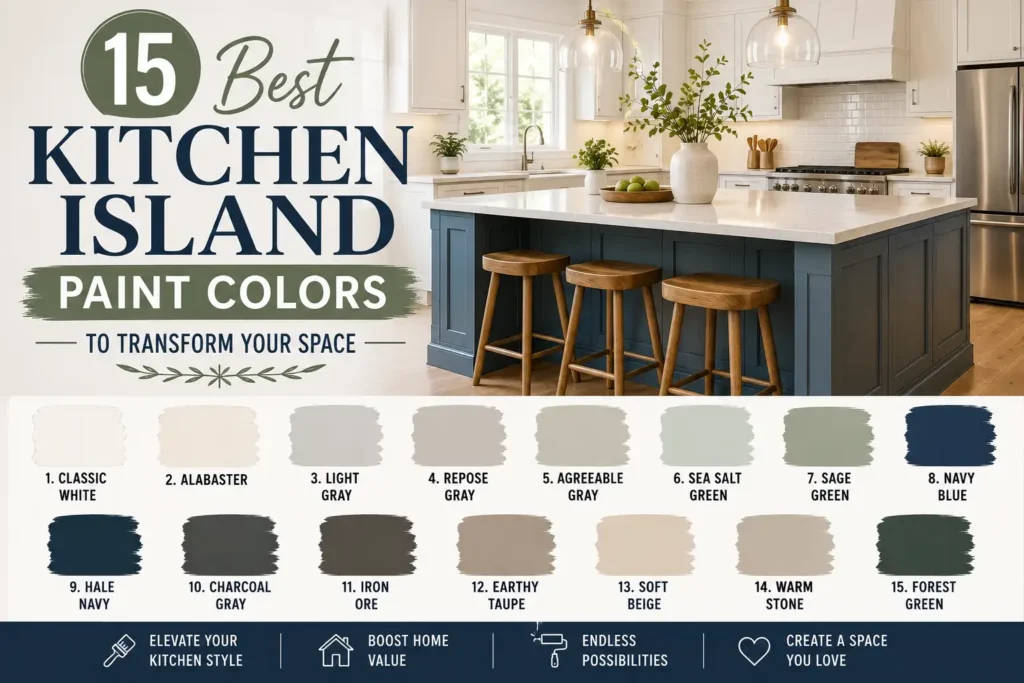
A painted kitchen island is one of the easiest ways to refresh your kitchen without a complete renovation. In this guide, you’ll discover the best kitchen island paint colors, practical painting tips, and expert advice to help you choose a color that stays stylish for years.
Items to Buy
Before painting your kitchen island, gather these essential supplies:
- Cabinet and furniture paint
- Bonding primer
- Degreaser or TSP cleaner
- High-density foam roller
- Angled paintbrush
- Paint sprayer (optional)
- Paint tray
- Fine-grit sandpaper (220–320 grit)
- Tack cloth
- Painter’s tape
- Drop cloths
- Screwdriver
- Wood filler
- Caulk
- Microfiber cloths
- Protective topcoat (if recommended)
- New cabinet hardware (optional)
Quality tools and cabinet-grade paint help create a smooth, durable finish that withstands everyday use.
How to Choose the Right Kitchen Island Paint Color
Your kitchen island should complement—not necessarily match—your surrounding cabinets. Choosing a contrasting color creates visual interest while giving the island its own identity.
Consider your countertops, backsplash, flooring, and lighting before selecting a paint color. Warm-toned kitchens often pair well with earthy colors, while cool-toned kitchens look beautiful with blues, grays, and crisp whites.
Natural light also affects how paint appears. Always test paint samples on several sides of the island and observe them throughout the day before making your final decision.
Choose a durable cabinet paint with a satin or semi-gloss finish for easy cleaning and long-lasting beauty.
15 Best Kitchen Island Paint Colors
Classic navy blue remains one of the most popular kitchen island colors because it creates timeless elegance without overwhelming the room. It adds depth while serving as a sophisticated focal point.
Pair navy with white perimeter cabinets, brass hardware, and marble or quartz countertops. The contrast creates a balanced kitchen that’s both modern and classic.
2. Warm White
Warm white creates a bright, inviting kitchen while maintaining a clean and timeless appearance. Creamy undertones prevent the island from feeling too stark or clinical.
This versatile shade complements natural wood flooring, butcher block countertops, and nearly every decorating style. It’s an excellent choice for farmhouse and traditional kitchens.
3. Charcoal Gray
Charcoal gray introduces modern sophistication while remaining neutral enough to complement various cabinet colors. It works especially well in contemporary and transitional kitchens.
Pair charcoal with white cabinets, stainless steel appliances, and matte black hardware for a bold yet balanced design that never feels dated.
4. Sage Green
Sage green brings a calming touch of nature into the kitchen while adding subtle color. Its muted tone feels fresh without overpowering the surrounding cabinetry.
Natural oak shelves, brass fixtures, and white subway tile beautifully complement sage green. The result is a welcoming kitchen with timeless farmhouse appeal.
5. Black
Black kitchen islands create dramatic contrast and luxurious style. Despite their bold appearance, they pair surprisingly well with a variety of countertop materials and cabinet finishes.
Balance black with bright white cabinets, warm wood accents, and good lighting to keep the kitchen feeling open and inviting rather than heavy.
6. Dusty Blue
Dusty blue combines soft blue with gentle gray undertones, creating a relaxed and elegant kitchen centerpiece. It’s perfect for coastal, cottage, and transitional interiors.
White quartz countertops, brushed nickel hardware, and light wood flooring create a fresh, airy look that feels timeless and comfortable.
7. Greige
Greige blends beige and gray into one incredibly versatile neutral. It offers warmth without looking yellow and sophistication without feeling cold.
Greige islands pair beautifully with white cabinets, marble countertops, black fixtures, and natural wood accents, making them suitable for almost any kitchen style.
8. Deep Forest Green
Deep forest green creates a luxurious statement while maintaining a strong connection to nature. This rich color has become increasingly popular in modern farmhouse and traditional kitchens.
Pair it with brass hardware, creamy white cabinets, and warm wood flooring for a refined kitchen that’s both elegant and inviting.
9. Soft Blue-Gray
Soft blue-gray offers a subtle blend of cool blue and gentle gray, creating a kitchen island that feels both modern and timeless. The muted tone adds personality without overwhelming the surrounding cabinetry.
Pair blue-gray with white shaker cabinets, polished nickel hardware, and marble countertops. Warm wood stools and woven pendant lights help balance the cool color palette while adding farmhouse charm.
10. Olive Green
Olive green introduces earthy warmth and natural elegance into the kitchen. Its muted richness makes it an excellent choice for homeowners who want color without choosing overly bold shades.
Combine olive green with cream cabinets, butcher block countertops, and antique brass hardware. The natural palette creates a cozy, welcoming kitchen that’s perfect for farmhouse, rustic, or Mediterranean-inspired homes.
11. Soft Taupe
Soft taupe is a sophisticated neutral that blends warm beige and gray undertones into a timeless cabinet color. It complements almost every countertop and flooring material while adding subtle depth.
Pair taupe with crisp white cabinets, black pendant lights, and brushed gold hardware. The balanced combination feels elegant while remaining flexible enough for changing décor styles over the years.
12. Rich Teal
Rich teal creates a bold, eye-catching kitchen island filled with personality. Combining blue and green tones, this vibrant shade adds color while maintaining a refined appearance.
Balance teal with white cabinetry, light quartz countertops, and warm brass hardware. Neutral walls help the colorful island become the focal point without making the kitchen feel overly busy.
13. Mushroom Gray
Mushroom gray blends warm brown and gray undertones into a soft neutral that’s perfect for modern farmhouse and transitional kitchens. Its understated beauty creates a calming atmosphere.
Natural oak flooring, white cabinets, and matte black fixtures complement mushroom gray beautifully. Layering different textures keeps the neutral color palette visually interesting and inviting.
14. Deep Burgundy
Deep burgundy offers a unique alternative to traditional blues and grays while creating a luxurious kitchen centerpiece. The rich color feels warm, sophisticated, and full of character.
Pair burgundy with creamy white cabinets, marble countertops, and brass hardware. The combination creates an elegant space that blends traditional charm with contemporary style.
15. Natural Wood-Toned Brown
A warm wood-inspired brown paint brings timeless character to kitchen islands while complementing rustic and farmhouse interiors. This earthy shade creates a welcoming focal point without overpowering the room.
Combine brown with white cabinets, stone countertops, and black hardware for a balanced design. Natural greenery and woven décor complete the warm, organic look.
Kitchen Island Painting Tips
Proper preparation makes the biggest difference in achieving a professional-looking finish. Remove drawers, doors, shelves, and hardware before beginning so every surface can be painted evenly.
Clean every surface thoroughly using a degreaser or TSP cleaner. Kitchen islands collect grease, fingerprints, and food residue that can prevent paint from bonding properly.
Lightly sand glossy finishes before applying primer. Even previously painted cabinets benefit from light sanding because it improves paint adhesion and creates a smoother finish.
Always use a high-quality bonding primer designed specifically for cabinets and furniture. Primer creates a durable foundation while helping the paint achieve consistent color coverage.
Apply several thin coats rather than one thick coat. Thin layers reduce brush marks, dry more evenly, and produce the smooth finish typically found on factory-painted cabinetry.
Allow the paint to cure completely before placing heavy items on the island or reinstalling hardware. Waiting several days protects the finish from scratches and dents.
Choosing the Right Hardware
Cabinet hardware has a major impact on your finished kitchen design. Warm brass pulls and knobs pair beautifully with navy, forest green, burgundy, and teal islands, adding warmth and elegance.
Matte black hardware creates a clean, contemporary appearance that’s ideal for charcoal gray, mushroom gray, and greige islands. It also complements industrial and modern farmhouse kitchens.
Brushed nickel and polished chrome remain timeless choices for lighter paint colors such as warm white, soft blue-gray, and taupe. Their subtle finish keeps the overall design fresh and balanced.
For a rustic farmhouse style, consider leather pulls or wood knobs. These natural materials add texture and reinforce the warm, welcoming atmosphere.
Common Mistakes to Avoid
One of the most common mistakes is choosing a color without considering the rest of the kitchen. Your island should complement the surrounding cabinets, countertops, backsplash, flooring, and lighting rather than compete with them.
Another mistake is skipping surface preparation. Painting over grease, dust, or glossy finishes often leads to peeling and poor durability.
Avoid applying thick coats of paint in an effort to finish faster. Heavy coats increase the likelihood of drips, uneven drying, and visible brush strokes.
Many homeowners also forget to test paint samples under different lighting conditions. Natural daylight, under-cabinet lighting, and evening light can dramatically change how a color appears.
Finally, don’t rush the curing process. Cabinet paint continues hardening for several days, so giving it adequate time ensures a durable finish that withstands everyday use.
Maintaining Your Painted Kitchen Island
Clean painted surfaces regularly using a soft microfiber cloth and a mild dish soap solution. Avoid abrasive cleaners that can dull the paint finish over time.
Wipe away spills quickly, especially around sinks and food preparation areas. Prompt cleaning helps protect the paint and prevents staining.
Inspect the island periodically for small chips or scratches. Touching up minor damage early helps preserve the finish and extends the life of your paint job.
Adding felt pads beneath bar stools or frequently moved furniture can also reduce accidental scuffs and scratches around the island.
FAQs
What is the most popular kitchen island paint color?
Classic navy blue continues to be one of the most popular kitchen island colors because it offers timeless elegance, complements many cabinet styles, and pairs beautifully with white countertops and brass hardware.
Should my kitchen island match my cabinets?
Not necessarily. A contrasting island color often creates more visual interest while allowing the island to become a stylish focal point within the kitchen.
What finish is best for painting a kitchen island?
Satin and semi-gloss finishes are both excellent choices. They provide durability, resist moisture, and are easy to clean in busy kitchens.
Are dark kitchen islands still in style?
Yes. Navy, charcoal, black, forest green, and deep burgundy remain highly popular because they add sophistication while creating beautiful contrast with lighter cabinetry.
What hardware looks best on painted kitchen islands?
Brass, matte black, brushed nickel, and polished chrome are all timeless choices. Select hardware that complements both the island color and the overall kitchen design.
How long should cabinet paint cure?
Although paint may feel dry within a day, most cabinet paints require several days to fully cure. Waiting before heavy use helps protect the finish from scratches and dents.
Final Words
Best Kitchen Island Paint Colors can dramatically transform your kitchen by adding color, personality, and visual interest without requiring a complete renovation. Whether you’re drawn to the timeless elegance of navy blue, the calming beauty of sage green, the sophistication of charcoal gray, or the warmth of soft taupe, the right paint color can make your island the centerpiece of the room.
Before starting your project, take time to evaluate your countertops, flooring, lighting, and surrounding cabinetry. Testing paint samples in different lighting conditions and investing in quality cabinet paint will help ensure a finish that looks beautiful and lasts for years.
With careful preparation, thoughtful color selection, and proper application, a freshly painted kitchen island can completely refresh your space while increasing both style and functionality. Choose a color that reflects your personal taste, complements your home’s design, and creates a kitchen you’ll enjoy gathering in every day.