
Choosing what color to paint garage walls can make a bigger difference than most homeowners expect. A garage is no longer just a place to park cars. For many people, it’s also a workshop, storage area, home gym, hobby room, or even an extension of the home’s living space. The right wall color can improve visibility, make the garage feel larger, hide dirt and scuffs, and create a more organized appearance.
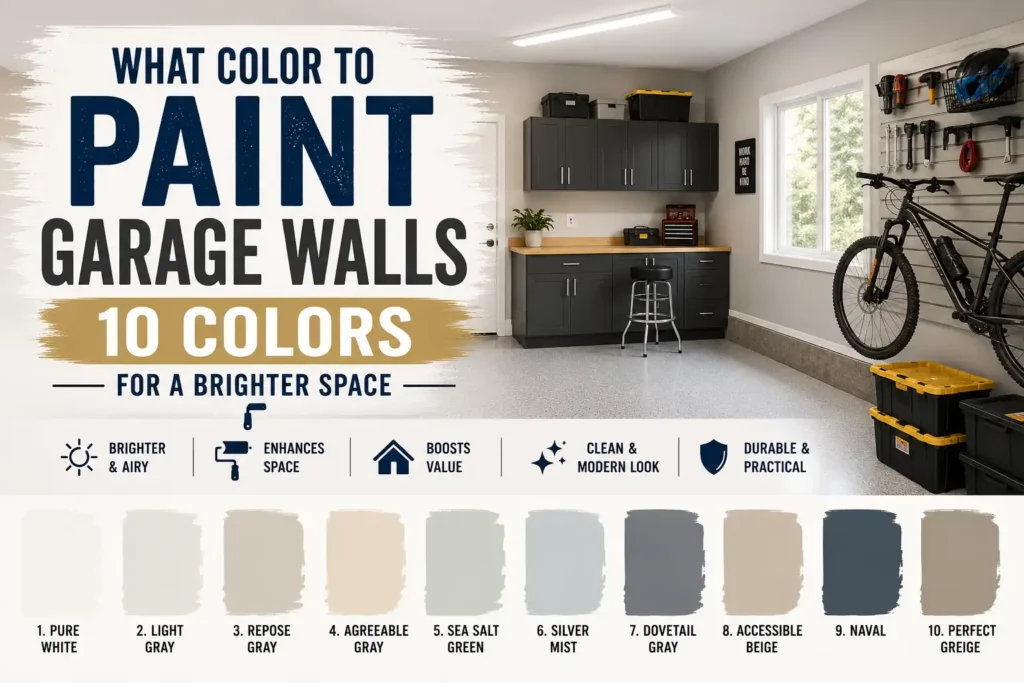
While white has traditionally been the default choice, modern garages often benefit from a wider range of colors that balance brightness, practicality, and style. Whether you’re updating an unfinished garage or giving a dated space a fresh look, this guide will help you choose the best garage wall color for your needs.
Why Garage Wall Color Matters
Garage walls endure more wear and tear than many other rooms in the home. They are exposed to dirt, dust, tools, bicycles, sports equipment, and vehicles. Because of this, the color you choose affects both the appearance and functionality of the space.
A well-chosen paint color can:
- Improve visibility while working
- Make the garage feel larger
- Reflect available light
- Create a cleaner appearance
- Hide dirt and marks
- Complement flooring and storage systems
- Increase the overall appeal of the space
The best garage color isn’t always the trendiest one—it’s the one that works best for your garage’s size, lighting, and purpose.
Factors to Consider Before Choosing a Garage Wall Color
Natural Light
Many garages have limited windows, which makes wall color especially important.
Lighter colors reflect available light and help brighten dark corners. If your garage receives very little natural light, darker shades may make the space feel smaller and more enclosed.
Garage Size
Smaller garages generally benefit from lighter colors that create an open feeling.
Larger garages have more flexibility and can support darker or more dramatic colors without feeling cramped.
How You Use the Garage
Think about the primary function of the space.
A garage used mainly for:
- Parking vehicles
- DIY projects
- Woodworking
- Exercise equipment
- Storage
may benefit from different color choices.
Maintenance Needs
Garages are high-traffic areas. Colors that hide dust, tire marks, and everyday wear often require less maintenance than bright white walls.
1. Light Gray
Light gray is widely considered one of the best overall garage wall colors.
It provides many of the brightness benefits of white while hiding dirt and scuffs more effectively.
Why It Works
- Reflects light well
- Looks modern and clean
- Hides minor marks
- Works with most flooring types
Best For
- Attached garages
- Workshops
- Home gyms
- Multi-purpose garages
For many homeowners, light gray offers the ideal balance between appearance and practicality.
2. Soft White
Soft white remains one of the most popular choices for garage walls.
Unlike bright white, it contains subtle warm undertones that make the space feel less stark.
Why It Works
- Brightens the room
- Creates a clean appearance
- Makes small garages feel larger
- Complements any décor style
Best For
- Small garages
- Dark garages
- Attached garages
Soft white provides a welcoming look without sacrificing brightness.
3. Bright White
If maximum visibility is your goal, bright white is difficult to beat.
It reflects the highest amount of light and makes garages feel as large as possible.
Why It Works
- Maximizes brightness
- Improves visibility
- Creates a fresh appearance
- Works with every design style
Best For
- Workshops
- Hobby spaces
- Garages with limited lighting
The main drawback is that bright white tends to show dirt more quickly than other colors.
4. Greige
Greige, a blend of gray and beige, has become increasingly popular in modern homes.
It offers warmth while maintaining the clean appearance of a neutral color.
Why It Works
- Sophisticated and modern
- Hides dust better than white
- Works with warm and cool finishes
- Timeless appeal
Best For
- Finished garages
- Attached garages
- Contemporary homes
Greige creates a polished look that feels more connected to the rest of the home.
5. Medium Gray
Medium gray is a practical choice for busy garages that experience heavy use.
Why It Works
- Conceals dirt and scuffs
- Modern appearance
- Durable-looking finish
- Easy to maintain
Best For
- Vehicle storage garages
- Utility spaces
- Active households
This color is especially popular when paired with epoxy garage floors.
6. Beige
Beige creates a warmer and more inviting environment than many gray tones.
Why It Works
- Comfortable appearance
- Hides dust effectively
- Complements warm flooring
- Timeless style
Best For
- Traditional homes
- Storage-focused garages
- Attached garages
Modern beige shades look far more sophisticated than older versions often associated with the color.
7. Sage Green
Sage green offers a subtle way to add personality without overwhelming the space.
Why It Works
- Nature-inspired appearance
- Calming atmosphere
- Hides minor dirt
- Feels current without being trendy
Best For
- Home gyms
- Hobby spaces
- Multi-use garages
Sage green works particularly well in garages that function as more than just vehicle storage.
8. Pale Blue
Pale blue can make a garage feel brighter and more inviting.
Why It Works
- Reflects light well
- Creates a fresh atmosphere
- Adds subtle color
- Feels clean and airy
Best For
- Workshops
- Craft spaces
- Hobby garages
This color works best when paired with white trim and bright lighting.
9. Charcoal Gray
Charcoal gray creates a dramatic and modern look.
Why It Works
- Sophisticated appearance
- Hides wear and tear
- Complements metal storage systems
- Creates strong contrast
Best For
- Large garages
- Luxury homes
- Custom workshops
Good lighting is essential when using charcoal gray walls.
10. Two-Tone Gray and White
Many professionally designed garages use a two-tone color scheme.
Popular combinations include:
- White upper walls with gray lower walls
- Light gray upper walls with charcoal lower walls
Why It Works
- Hides dirt near the floor
- Maintains brightness
- Creates visual interest
- Professional appearance
This approach is both practical and attractive.
Best Garage Wall Colors for Different Uses
For Parking Vehicles
Choose:
- Light gray
- Medium gray
- Greige
These colors hide dirt while maintaining visibility.
For Workshops
Choose:
- Bright white
- Soft white
- Light gray
These shades maximize light for detailed tasks.
For Home Gyms
Choose:
- Sage green
- Blue-gray
- Charcoal gray
These colors create a motivating environment.
For Storage Areas
Choose:
- Greige
- Beige
- Light gray
These colors create an organized appearance.
How Lighting Affects Garage Paint Colors
Lighting dramatically changes how paint appears.
Garages With Limited Light
The best choices are:
- Bright white
- Soft white
- Light gray
- Pale blue
These colors help maximize available light.
Garages With Plenty of Natural Light
You can comfortably use:
- Charcoal gray
- Sage green
- Medium gray
- Greige
Natural light prevents these colors from feeling too dark.
Always test paint samples under your actual garage lighting conditions before making a final decision.
Best Paint Finish for Garage Walls
Color is important, but finish matters too.
Satin Finish
Satin is often the best overall choice.
Benefits include:
- Easy cleaning
- Good durability
- Moderate light reflection
Eggshell Finish
Eggshell offers:
- Soft appearance
- Easy maintenance
- Good durability
Semi-Gloss Finish
Semi-gloss provides:
- Excellent durability
- Moisture resistance
- Easy cleanup
Many professionals recommend satin because it balances durability and appearance.
Common Mistakes to Avoid
Choosing Pure White Without Considering Maintenance
While bright, pure white shows dirt and tire marks quickly.
Using Dark Colors in Small Garages
Dark walls can make compact garages feel even smaller.
Ignoring Lighting Conditions
The same paint color can look dramatically different depending on lighting.
Prioritizing Trends Over Function
A garage should remain practical first and decorative second.
Skipping Surface Preparation
Proper cleaning and priming are essential for long-lasting paint results.
Final Thoughts
If you’re wondering what color to paint garage walls, light gray is often the best overall choice because it combines brightness, durability, and easy maintenance. It reflects enough light to keep the garage feeling open while hiding everyday dirt and scuffs better than white.
For maximum brightness, choose soft white or bright white. If you want a more custom appearance, consider greige, sage green, or charcoal gray. The best garage wall color ultimately depends on how you use the space, how much light it receives, and the atmosphere you want to create. With the right paint color, your garage can become a cleaner, brighter, and far more functional part of your home.