
Ceramic pots can be transformed with fresh colors, decorative patterns, and creative finishes, whether you are refreshing an old planter, decorating indoor flowerpots, or adding personality to an outdoor garden. However, choosing the right paint matters. A glossy glazed pot has a smooth, nonporous surface, while an unglazed ceramic pot absorbs paint differently. Outdoor planters also face sunlight, rain, temperature changes, and repeated watering.
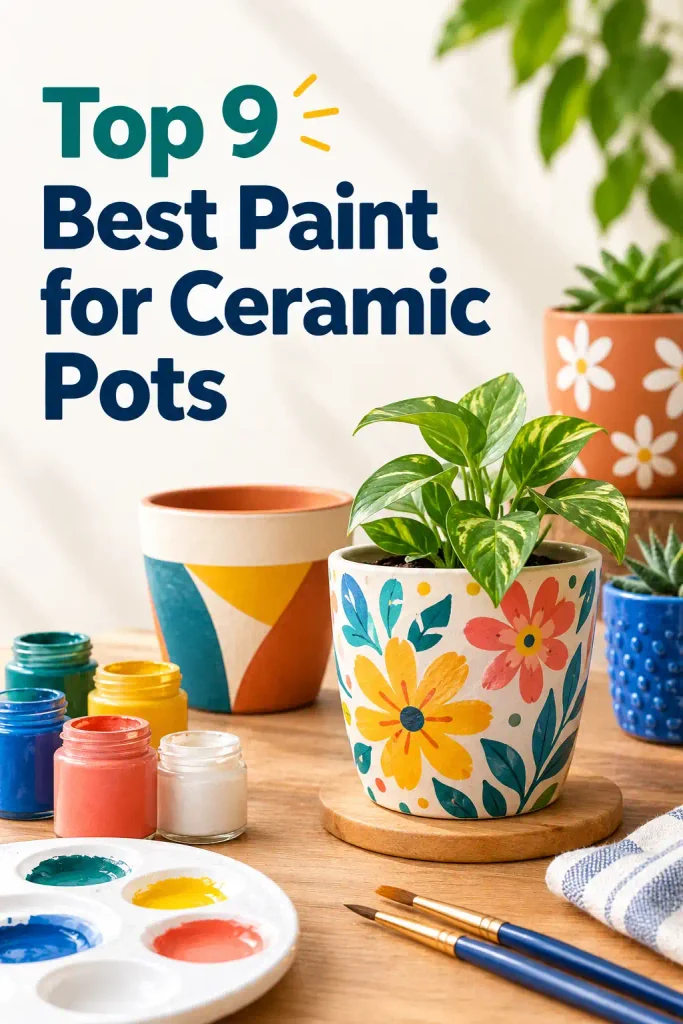
The best paint for ceramic pots depends on the pot’s surface and where you plan to display it. Multi-surface acrylics are convenient for decorative projects, ceramic-specific paints can be useful on suitable glazed surfaces, and exterior-rated spray paints may be practical for larger planters when the label approves ceramic. This guide compares nine options and explains how to prepare, paint, and protect your pots.
Affiliate disclosure: As an Amazon Associate I earn from qualifying purchases.
Top 9 Best Paint for Ceramic Pots: Quick Comparison
| Product Name | Best For | Check Price |
|---|---|---|
| 1. Rust-Oleum Painter’s Touch 2X Ultra Cover Spray Paint | Quick coverage on compatible decorative pots | Check on Amazon |
| 2. Rust-Oleum Universal All Surface Spray Paint | Curved pots and decorative planters | Check on Amazon |
| 3. FolkArt Multi-Surface Acrylic Paint | Hand-painted designs and indoor pots | Check on Amazon |
| 4. FolkArt Enamel Acrylic Paint | Decorative designs on suitable glazed ceramic | Check on Amazon |
| 5. DecoArt Americana Multi-Surface Satin Acrylic Paint | Satin-finish patterns and accents | Check on Amazon |
| 6. Liquitex BASICS Acrylic Paint | Artistic designs and custom color mixing | Check on Amazon |
| 7. Apple Barrel Acrylic Paint | Budget-friendly craft projects | Check on Amazon |
| 8. INSL-X STIX Waterborne Bonding Primer | Preparing compatible glossy surfaces | Check on Amazon |
| 9. Krylon COLORmaxx Spray Paint | Decorative color changes on approved surfaces | Check on Amazon |
1. Rust-Oleum Painter’s Touch 2X Ultra Cover Spray Paint
Best for: Quick coverage on compatible decorative pots
Rust-Oleum Painter’s Touch 2X Ultra Cover Spray Paint is worth considering when you want to refresh a ceramic pot with a consistent color rather than create an intricate hand-painted design. Spray paint can be convenient for rounded planters, simple cylinder-shaped pots, and decorative containers with broad exterior surfaces.
This type of project works particularly well when you want to coordinate several pots in one color scheme. For example, you could refresh a collection of planters in warm white, muted green, charcoal, or terracotta-inspired shades. A coordinated finish can make mismatched pots look more intentional on a windowsill, patio, or shelf.
Surface compatibility is essential. Ceramic pots may be glazed or unglazed, and a spray paint that adheres to one surface may not perform the same way on another. Before purchasing, check the exact can label and technical information for ceramic compatibility and whether a primer is recommended. A glossy pot may require careful surface preparation to help the coating adhere.
Why consider this paint:
- Convenient for covering larger exterior areas.
- Useful when you want a uniform color across multiple pots.
- Spray application can reach curved surfaces and simple contours.
- Available in a range of decorative finishes and colors, depending on the product.
- Can save time compared with painting a large pot entirely by hand.
Potential drawback: Spray paint can create overspray, runs, or uneven coverage if applied too heavily. A coating that is not approved for the pot’s surface may chip or peel, particularly around the rim and base.
Buying tip: Check the current product label before using it on glazed ceramic. Work outdoors or in a properly ventilated area, protect surrounding surfaces, and apply several light coats if the instructions recommend that approach. Keep the paint away from the pot’s interior, drainage holes, and any area that must remain uncoated.
2. Rust-Oleum Universal All Surface Spray Paint
Best for: Curved pots and decorative planters
Rust-Oleum Universal All Surface Spray Paint is another option to investigate when you want to update a ceramic planter without brush marks. Its all-surface positioning makes it worth comparing for decorative projects, but the exact product label should still be checked to confirm that your particular ceramic surface and intended location are approved.
Spray application is helpful for pots with rounded sides, tapered bodies, and decorative contours. A brush can leave visible marks on broad curved surfaces, especially when the paint begins to dry before the entire area is covered. A suitable spray coating can make it easier to achieve a consistent appearance, provided you use light, even passes.
This product may suit projects where the pot’s overall color is more important than intricate details. You could use one shade for a modern minimalist planter or coordinate several containers with a patio’s furniture and accessories. For a two-tone effect, allow the first color to dry as directed, mask the relevant areas, and apply the second color carefully.
Why consider this paint:
- Spray application can cover curved exterior surfaces evenly.
- Worth comparing for decorative planters when ceramic is an approved substrate.
- Useful for coordinated color schemes.
- Can be convenient for refreshing multiple containers.
- Offers an alternative to brush-applied paint for simple designs.
Potential drawback: The phrase all surface should not replace checking the technical data. Outdoor exposure, prolonged moisture, and the specific glaze can affect how well a coating performs.
Buying tip: Confirm the approved surfaces and exterior-use guidance for the exact can. Clean the pot thoroughly, dull a glossy surface only if the instructions permit it, and apply the paint in a controlled, ventilated area. Allow the coating to cure fully before placing the pot outdoors.
3. FolkArt Multi-Surface Acrylic Paint
Best for: Hand-painted designs and indoor pots
FolkArt Multi-Surface Acrylic Paint is a convenient option for people who prefer to paint ceramic pots by hand. It is useful for decorative projects involving stripes, dots, leaves, flowers, geometric shapes, or personalized patterns. The brush-on format gives you more control over small design elements than a spray can.
For example, you might paint a simple white base and add green botanical leaves, or use several pastel colors to create a playful pattern for a windowsill planter. The paint can also be useful when decorating a group of small pots for a craft project or gift.
The main consideration is whether the exact formulation is suitable for your pot. Unglazed ceramic is generally more absorbent, while glazed ceramic has a smooth surface that can be harder to coat reliably. Multi-surface labeling does not automatically mean that the paint will withstand every outdoor condition or prolonged water exposure.
For a decorative pot, apply thin coats and allow each layer to dry before adding details. If you plan to use the pot outdoors, check whether the paint is rated for that environment and whether a compatible exterior sealer is recommended.
Why consider this paint:
- Well suited to brush-painted designs and patterns.
- Offers control for small decorative details.
- Useful for customizing pots in different colors.
- Convenient for craft projects and coordinated sets.
- Easier to use for detailed artwork than broad spray coverage.
Potential drawback: It may not provide sufficient durability on every glossy pot or in every outdoor environment. Repeated moisture and abrasion can affect the finish if the paint system is not designed for those conditions.
Buying tip: Choose the exact FolkArt formulation according to the pot’s surface and intended use. Test a small area first, and do not assume that air-dried craft paint is waterproof or permanently bonded to glazed ceramic.
4. FolkArt Enamel Acrylic Paint
Best for: Decorative designs on suitable glazed ceramic
FolkArt Enamel Acrylic Paint is worth considering when you want a paint line intended for suitable glass and ceramic craft projects. Compared with general-purpose acrylic craft paint, a ceramic-oriented enamel formulation may be a better fit for certain glazed decorative surfaces, provided the exact product instructions approve the application.
This option is useful for detailed work on small or medium-sized planters. You can paint a solid base color, add contrasting bands around the rim, or create small floral and botanical motifs. It is also practical when you want to personalize a ceramic pot with a simple pattern rather than cover it with a single spray-painted color.
Before you begin, check the curing instructions. Some enamel-style craft paints specify a particular curing process, while others may have different instructions. Do not bake a ceramic pot unless the exact paint label directs or permits it and the pot itself can safely tolerate the process.
For a planter intended to hold a living plant, keep the project focused on the exterior and avoid assuming that the coating is safe for direct soil contact or prolonged moisture.
Why consider this paint:
- Intended for suitable ceramic and glass decorating projects.
- Useful for detailed brushwork and decorative accents.
- Can suit colorful patterns on small planters.
- Offers an alternative to ordinary craft acrylic for certain glazed surfaces.
- Convenient when you want a painted finish rather than a spray coating.
Potential drawback: It is not automatically an exterior garden-paint system. Its durability depends on the exact formulation, curing, surface preparation, and the conditions the pot experiences.
Buying tip: Read the current instructions for surface compatibility and curing. If the pot will sit outdoors in rain or direct sun, verify that the complete paint system is approved for those conditions before choosing this option.
5. DecoArt Americana Multi-Surface Satin Acrylic Paint
Best for: Satin-finish patterns and accents
DecoArt Americana Multi-Surface Satin Acrylic Paint is an option to investigate if you prefer a soft satin appearance for decorative ceramic pots. Satin finishes have less shine than a glossy coating but generally reflect more light than a flat matte finish. That balance can work well for botanical designs, contemporary patterns, and colorful accents.
This paint can be useful when you want to decorate rather than simply recolor a pot. For example, you could paint the body a neutral shade and add a contrasting rim, small dots, or a repeating leaf pattern. A satin finish can help the design look coordinated without producing the strong reflections associated with some glossy coatings.
As with other acrylic products, surface preparation matters. Unglazed ceramic and glossy glazed ceramic behave differently, so verify that the exact formulation is suitable for your pot. If the pot is intended for outdoor use, confirm the product’s exterior suitability and follow any recommended sealing instructions.
Why consider this paint:
- Offers a satin finish for decorative projects.
- Useful for patterned designs and color accents.
- Suitable for controlled brushwork.
- Can help coordinate a collection of planters.
- Provides an alternative to high-gloss spray finishes.
Potential drawback: Satin craft paint should not automatically be treated as waterproof or weatherproof. The finish can wear or peel if the substrate is poorly prepared or the product is used outside its intended conditions.
Buying tip: Verify the exact product’s approved surfaces and recommended curing process. For pots exposed to rain or repeated watering, choose a compatible exterior-rated system and allow every layer to cure as directed.
6. Liquitex BASICS Acrylic Paint
Best for: Artistic designs and custom color mixing
Liquitex BASICS Acrylic Paint is worth considering when your ceramic pot is a canvas for more artistic work. Artist-oriented acrylics are useful for mixing custom colors, painting layered illustrations, and creating shadows or highlights that make a design feel more dimensional.
This option may appeal to you if you want to paint a botanical illustration, abstract shapes, a landscape-inspired design, or a detailed pattern on a decorative pot. The ability to mix colors is particularly helpful when you want several coordinated shades rather than relying only on premixed craft colors.
However, artist acrylics are not automatically formulated for every glazed ceramic surface or outdoor environment. They may be more appropriate for suitable unglazed pots or decorative projects where the paint system can be properly prepared and protected. A clear sealer may help protect a compatible finish, but it cannot fix poor adhesion underneath.
If you intend to use the planter outdoors, check whether the paint and chosen clear finish are appropriate for sunlight, moisture, and temperature changes. A pot that is regularly watered or exposed to rain needs more consideration than a dry decorative container indoors.
Why consider this paint:
- Useful for custom color mixing and artistic effects.
- Offers a broad palette for detailed designs.
- Good for layered illustrations and decorative patterns.
- Helpful for painters who already use artist acrylics.
- Can create a more personalized finish than a single-color coating.
Potential drawback: Standard artist acrylic is not a dedicated outdoor ceramic coating. On a glossy pot, adhesion may be limited without appropriate preparation, and an incompatible sealer may affect the final appearance.
Buying tip: Consider Liquitex BASICS for artistic decorative work, especially on suitable unglazed ceramic. For glossy pots or planters exposed to weather, verify the complete coating system rather than relying on acrylic paint alone.
7. Apple Barrel Acrylic Paint
Best for: Budget-friendly craft projects
Apple Barrel Acrylic Paint is a familiar craft-paint option for beginners and hobbyists who want to decorate ceramic pots without buying a large collection of specialist products. It is particularly convenient for simple indoor projects, practice designs, and small planters that will be used mainly for display.
You could use it to paint an unglazed ceramic pot in a solid color, add colorful dots, or create a simple seasonal design. The wide range of craft colors makes it easy to experiment with different palettes, and the brush-on format is straightforward for beginners.
The important limitation is that ordinary craft acrylics do not automatically adhere well to glossy glazed ceramic. If the pot has a shiny surface, verify whether the exact product is approved for it and whether a bonding primer or other preparation is recommended. For outdoor planters, also check the coating’s weather resistance rather than assuming that acrylic paint alone will withstand rain and sunlight.
Why consider this paint:
- A budget-friendly option for many craft projects.
- Convenient for simple decorative designs.
- Available in a variety of colors.
- Easy to apply with small brushes.
- Useful for practicing patterns before attempting more complex artwork.
Potential drawback: It may chip or peel from glossy ceramic if adhesion is inadequate. Outdoor moisture and sunlight can also shorten the life of a finish that is not designed for those conditions.
Buying tip: For an inexpensive indoor project, consider it for a suitable unglazed pot. For glossy or outdoor planters, check surface compatibility and use only a primer or clear sealer that the manufacturers confirm is compatible with the paint.
8. INSL-X STIX Waterborne Bonding Primer
Best for: Preparing compatible glossy surfaces
INSL-X STIX Waterborne Bonding Primer is a preparation product to investigate when painting a smooth or difficult-to-coat surface. A bonding primer can help a compatible finish coat adhere to an approved substrate, which is especially important when working with a glossy ceramic pot.
Unlike porous, unglazed ceramic, glazed ceramic has a smooth surface that can be difficult for conventional paint to grip. If you plan to use a compatible topcoat on a glazed planter, a suitable bonding primer may be part of the recommended system. However, you must confirm that the exact primer is approved for your pot and compatible with the finish paint.
This product is not the decorative paint itself. It provides a foundation for a topcoat when the manufacturer’s instructions call for it. You will still need to select a finish suitable for the pot’s location and intended use.
Before priming, remove dirt, grease, mineral residue, and any loose material. Follow the current instructions for surface preparation, application, drying, and recoating.
Why consider this primer:
- Designed as a bonding primer for suitable difficult surfaces.
- Worth investigating for compatible glossy ceramic projects.
- Can support a properly selected primer-and-topcoat system.
- Useful when a finish paint needs a suitable adhesion-promoting base.
- Helps separate surface preparation from the final decorative coating.
Potential drawback: It is a primer, not a finish paint, and it does not automatically make the final coating waterproof or weatherproof. Compatibility with ceramic and the selected topcoat must be verified.
Buying tip: Confirm that the current STIX formulation is suitable for your particular ceramic pot and the intended environment. Follow the topcoat manufacturer’s system recommendations rather than combining products without checking compatibility.
9. Krylon COLORmaxx Spray Paint
Best for: Decorative color changes on approved surfaces
Krylon COLORmaxx Spray Paint is another spray-paint option to compare when you want to refresh the appearance of a decorative pot. Spray paint can be convenient for a clean, uniform finish, particularly on broad curved surfaces where brush strokes would be noticeable.
This type of application may work well for a coordinated set of decorative planters. You could use a neutral shade for a modern look, a brighter color for a statement pot, or complementary colors for several containers displayed together. Spray paint can also make it easier to reach some exterior curves, although the base and rim may require careful repositioning.
Do not assume that every COLORmaxx formulation is suitable for ceramic. Check the current can label for approved surfaces and intended interior or exterior use. If the pot is glazed, preparation may be needed to help the paint adhere. If it will remain outdoors, the complete coating system must be suitable for weather exposure.
Why consider this paint:
- Convenient for uniform decorative color.
- Useful for broad and curved exterior surfaces.
- Can simplify painting several pots in a coordinated palette.
- Offers a spray alternative to brush-on acrylics.
- Suitable to compare for approved decorative surfaces.
Potential drawback: Spray application requires careful control to prevent runs and overspray. If ceramic is not listed as an approved surface, or if the pot is poorly prepared, the finish may not adhere reliably.
Buying tip: Check the exact product label and technical information before buying. Apply light coats from the recommended distance, protect the surrounding area, and allow the full recommended cure before exposing the pot to outdoor conditions.
What Type of Paint Is Best for Ceramic Pots?
The best paint depends on whether your pot is glazed or unglazed, whether it will be kept indoors or outdoors, and whether you want a solid color or a detailed design.
Acrylic craft paint
Acrylic craft paint is a convenient choice for decorative projects, especially on suitable unglazed ceramic. It is available in many colors, easy to apply with a brush, and useful for hand-painted patterns.
On glossy glazed pots, ordinary acrylic may not adhere reliably without appropriate preparation. For outdoor use, check the paint’s weather-resistance guidance and whether a compatible protective coating is recommended.
Ceramic enamel paint
Ceramic enamel paints are designed for certain ceramic and glass decorating applications. They can be useful for decorative work on glazed pots when the exact formulation lists the surface as suitable.
Some ceramic paints require a specified curing process. Follow the manufacturer’s instructions and do not bake a pot unless the paint label permits or requires it and the pot itself is safe to heat.
Spray paint
Spray paint is convenient when you want to cover a pot in one consistent color. It works especially well for simple shapes and larger exterior surfaces, but only when the exact product is approved for ceramic or the specific surface.
Apply light coats and use adequate ventilation. Keep spray paint away from drainage holes and the interior of a planter unless the product is explicitly approved for those areas.
Bonding primer with a compatible topcoat
For glossy ceramic, a bonding primer may be part of the recommended coating system. The primer should be approved for the surface, and the finish paint must be compatible with it.
A primer does not turn an unsuitable wall paint into an outdoor planter coating. Choose the complete system based on the pot’s location and exposure.
Exterior-rated coating systems
Pots kept outdoors face sunlight, rain, and temperature changes. Choose a paint or spray coating that is approved for the ceramic surface and exterior conditions. A compatible clear finish may provide additional protection if the manufacturer recommends one.
Remember that moisture can also come from inside the pot. If the planter will contain soil and a living plant, avoid assuming that painting the outside will prevent all moisture-related coating problems.
How to Choose the Best Paint for Ceramic Pots
1. Identify whether the pot is glazed or unglazed
A glazed pot has a smooth, often shiny surface that resists paint adhesion. An unglazed ceramic pot is usually more porous and may absorb paint differently.
This distinction helps determine whether you should prioritize a ceramic-specific paint, a bonding primer, or a more general craft acrylic for your project. If you are uncertain, test the selected system on a small, inconspicuous area or a similar spare pot.
2. Decide whether the pot will stay indoors or outdoors
An indoor decorative pot may not need the same weather resistance as a planter that sits in direct sunlight and rain. Outdoor conditions can expose the coating to moisture, ultraviolet light, temperature swings, and abrasion during handling.
Choose a product whose current instructions approve the intended environment. Do not rely on a generic claim such as durable or multi-surface without checking the details.
3. Choose between brush-on paint and spray paint
Brush-on acrylics are useful for patterns, flowers, lettering, and small decorative details. Spray paint is often more convenient for applying one consistent color to a larger pot.
You can combine both methods if the products are compatible. For example, a spray-painted base can be decorated with brush-applied designs once the first coating has dried and cured as directed.
4. Check the need for a bonding primer
Glossy ceramic can be challenging to coat, so a compatible bonding primer may be recommended. Unglazed ceramic may need a different preparation approach.
Use the primer specified by the paint manufacturer whenever possible. Avoid mixing unrelated products unless their compatibility is confirmed.
5. Consider the finish and color
Matte finishes create a softer, understated appearance, satin finishes offer a moderate sheen, and gloss finishes create a brighter reflective look. The best option depends on the style of your home or garden.
For a coordinated display, choose a small color palette rather than giving every pot a completely different finish. Neutral shades can work well in modern spaces, while brighter colors can add contrast to a patio or windowsill.
6. Think about moisture and drainage
A planter holding soil may experience moisture from watering, damp soil, or condensation. A painted exterior does not eliminate those conditions, and coating the inside may interfere with the pot’s normal moisture behavior or drainage.
Keep drainage holes open and follow the product’s restrictions on interior use. If the pot is porous and intended for a living plant, consider whether painting it is appropriate for the plant and planter design.
7. Check whether a sealer is needed
A compatible clear sealer may help protect certain decorative finishes, but not every paint requires one. Some sealers can alter the color or sheen, and incompatible coatings may become cloudy or fail to adhere.
Confirm that the sealer is compatible with the paint and suitable for the pot’s environment. Test the complete system before applying it to the entire planter.
8. Compare total project cost
A small craft project may need only a few paint bottles and brushes. Larger pots may require spray paint, primer, masking materials, and a compatible clear coat.
Include preparation supplies and any protective equipment in your budget. Buying a large set of colors may be convenient, but individual bottles can be more economical when you only need one or two shades.
How to Paint Ceramic Pots Step by Step
These steps are a general guide for decorative pots. Always follow the instructions for your specific paint, primer, and sealer.
Step 1: Inspect the pot
Check for cracks, loose material, damaged glaze, and existing paint that is flaking. A coating cannot repair a structurally damaged pot.
If the pot is an antique or collectible, consider its value before changing the original finish.
Step 2: Clean the surface thoroughly
Remove dust, soil, grease, and residue with a cleaning method suitable for the pot. Rinse as appropriate and allow it to dry completely.
Do not paint over a damp pot. Moisture trapped beneath a coating can interfere with adhesion and contribute to bubbling or peeling.
Step 3: Prepare the surface
For unglazed ceramic, remove loose dust and follow the paint manufacturer’s preparation instructions. For glossy glazed ceramic, check whether light scuff-sanding or a compatible bonding primer is recommended.
Do not aggressively sand a delicate glaze or a valuable pot. If sanding is required, use appropriate protective equipment and remove all dust afterward.
Step 4: Protect the surrounding area
Place the pot on a drop cloth or another protected work surface. If using spray paint, work outdoors or in a properly ventilated location and protect nearby items from overspray.
Keep the paint away from the pot’s interior and drainage holes unless the exact product is approved for those areas.
Step 5: Apply primer if required
Use a primer compatible with both the ceramic surface and the selected topcoat. Apply it evenly and follow the specified drying and recoating times.
Do not add a primer automatically if the selected product’s instructions call for a different preparation system. Follow the system recommended for that paint.
Step 6: Apply the base color
Use a brush for detailed work or an approved spray coating for broad coverage. Apply thin, even coats rather than one heavy layer.
On a curved pot, rotate the container gradually to cover the exterior evenly. Avoid allowing paint to pool around the rim, base, or decorative grooves.
Step 7: Add patterns and details
Once the base coat has dried as directed, add stripes, dots, leaves, flowers, geometric patterns, or other designs. Use a fine brush for small details and allow contrasting colors to dry before working next to them.
If combining paint types, confirm that they are compatible and follow the recoat instructions for the base layer.
Step 8: Apply a compatible sealer if recommended
If the manufacturer recommends a clear protective coating, apply one that is compatible with the paint and appropriate for the pot’s intended location.
A sealer can change the sheen, so test it first. Do not rely on a clear coat to compensate for paint that has not adhered properly to the ceramic.
Step 9: Let the entire coating system cure
Allow the paint and any sealer to cure for the full period specified by the manufacturers. A surface that feels dry may not yet be ready for outdoor weather, watering, or regular handling.
Avoid placing the pot in direct rain or filling it with soil until the instructions say it is ready for use.
Step 10: Use and maintain the pot carefully
Keep drainage holes open and avoid abrasive cleaning methods that could scratch the finish. Inspect outdoor pots occasionally for chips or peeling.
If the coating begins to fail, identify whether moisture, surface preparation, or product compatibility may be responsible before repainting.
Common Mistakes to Avoid When Painting Ceramic Pots
Using ordinary acrylic directly on glossy glaze
A smooth glazed surface can prevent standard craft paint from adhering well. Verify the paint’s approved surfaces and use the recommended preparation system.
Skipping cleaning and drying
Dust, soil, oils, and moisture can interfere with adhesion. Clean the pot thoroughly and allow it to dry before applying primer or paint.
Applying thick coats
Heavy coats may run, pool around details, or dry unevenly. Thin coats generally provide better control, particularly on curved surfaces.
Assuming every spray paint works on ceramic
Spray paint formulas differ. Check the current label for ceramic compatibility and the intended indoor or outdoor use.
Painting the inside without checking the label
The interior of a planter may contact damp soil and standing water. Do not coat it unless the product is approved for that use, and keep drainage holes unobstructed.
Forgetting about outdoor weather
Indoor craft paint may not tolerate prolonged sunlight, rain, or temperature changes. Choose a system specifically suited to the intended environment.
Using an incompatible sealer
A clear coat can alter the paint’s appearance or fail to bond if the products are incompatible. Check the manufacturers’ instructions and test the complete system first.
Placing the pot outside before it cures
Paint may feel dry before it has reached the required cure. Follow the stated curing period before exposing the pot to moisture or weather.
Frequently Asked Questions
What is the best paint for ceramic pots?
The best paint depends on the pot’s surface and location. For decorative designs, FolkArt Multi-Surface Acrylic and FolkArt Enamel are options to investigate when the exact formulation is approved for the ceramic. For a uniform color, a compatible spray paint such as Rust-Oleum Painter’s Touch 2X or Universal may be worth comparing. Check the label before buying.
Can you paint glazed ceramic pots?
Yes, some glazed ceramic pots can be painted, but their smooth surface makes adhesion more challenging. Clean the pot thoroughly and follow the coating manufacturer’s preparation instructions. A ceramic-specific paint or compatible bonding primer may be appropriate.
Can I use acrylic paint on ceramic pots?
Acrylic craft paint can work for certain decorative projects, especially on suitable unglazed ceramic. On glossy glazed pots, adhesion may be less reliable without additional preparation. For outdoor planters, verify weather suitability and use only compatible protective coatings.
What is the best paint for outdoor ceramic pots?
Choose a paint or spray coating whose current instructions explicitly approve the ceramic surface and exterior exposure. Outdoor planters face rain, sunlight, temperature changes, and moisture from watering. A product that works for indoor crafts may not withstand those conditions.
Do ceramic pots need primer before painting?
Not every pot needs primer. Glazed ceramic may benefit from a compatible bonding primer, while unglazed ceramic may require a different preparation approach. Follow the instructions for the selected paint system rather than applying primer automatically.
Should I sand a ceramic pot before painting?
Some coatings recommend light scuff-sanding on glossy surfaces to help adhesion, while other systems specify different preparation. Follow the product label and avoid aggressive sanding that could damage the glaze. Always remove dust before painting.
Do I need to seal painted ceramic pots?
A compatible sealer may help protect some decorative finishes, especially when the product instructions recommend one. However, not every paint needs a sealer, and a clear coat does not guarantee waterproofing. Check compatibility and outdoor-use guidance before applying it.
Can I use spray paint on ceramic pots?
You can use spray paint when the exact formulation is approved for the ceramic surface and intended conditions. Spray paint is useful for smooth, even coverage on curved pots. Apply light coats in a ventilated area and allow the coating to cure fully.
Can I paint the inside of a ceramic planter?
Do not assume the inside is suitable for paint. It may contact wet soil and standing water, and a coating could affect moisture behavior or fail under prolonged exposure. Paint the exterior unless the manufacturer explicitly approves interior use.
Is painted ceramic safe for growing herbs or vegetables?
Do not assume that a decorative paint is safe for direct soil contact or edible plants. Check the exact product’s safety and intended-use information, and keep paint away from the interior and drainage openings unless explicitly approved. If you are unsure, use an unpainted food- or garden-safe pot for edible plants.
How long should paint cure before I use the pot?
Curing time varies by product, coat thickness, temperature, and humidity. Follow the manufacturer’s instructions and wait for the full stated cure before exposing the pot to weather or moisture. Dry-to-touch does not necessarily mean the coating is ready for use.
What is better for ceramic pots: brush-on paint or spray paint?
Brush-on paint is better for fine patterns, lettering, and detailed artwork. Spray paint is often more convenient for applying a uniform color over a large curved surface. Either option must be approved for the ceramic and intended environment.
Can I paint a ceramic pot that already has a crack?
Paint will not repair a crack or make a damaged pot watertight. Small cosmetic defects may be manageable depending on the pot’s use, but a structurally cracked planter may continue to deteriorate. Repair or replace damaged pots before painting.
Can I use chalk paint on ceramic pots?
Some chalk paints may adhere to certain ceramic surfaces, but suitability depends on the formulation and whether the pot will be indoors or outdoors. Chalk paint is not inherently weatherproof. Confirm the manufacturer’s instructions and use a compatible protective finish only if recommended.
Final Words
The best paint for ceramic pots is the one that suits the pot’s surface, the finish you want, and the conditions where it will be displayed. Rust-Oleum spray paints are worth comparing for compatible pots that need a uniform color, while FolkArt Multi-Surface, FolkArt Enamel, DecoArt Americana, and Liquitex BASICS offer options for different decorative painting styles. Apple Barrel is a budget-friendly choice to investigate for suitable craft projects, and INSL-X STIX is a primer option rather than a finish paint.
Before purchasing, verify ceramic compatibility, exterior-use guidance, and curing requirements for the exact product. Prepare the pot carefully, apply thin coats, and allow the full coating system to cure before use. For outdoor planters, pay particular attention to moisture exposure and keep drainage holes open. Choosing products for the actual surface and environment gives your painted ceramic pots a better chance of staying attractive over time.