
Painting laminate cabinets is an affordable way to refresh an outdated kitchen or bathroom without replacing the cabinetry. However, choosing the right paint for laminate cabinets takes more care than selecting an ordinary wall paint. Laminate has a smooth, nonporous surface, so paint needs a suitable bonding primer and a durable cabinet-grade finish to help prevent peeling, chipping, and premature wear.
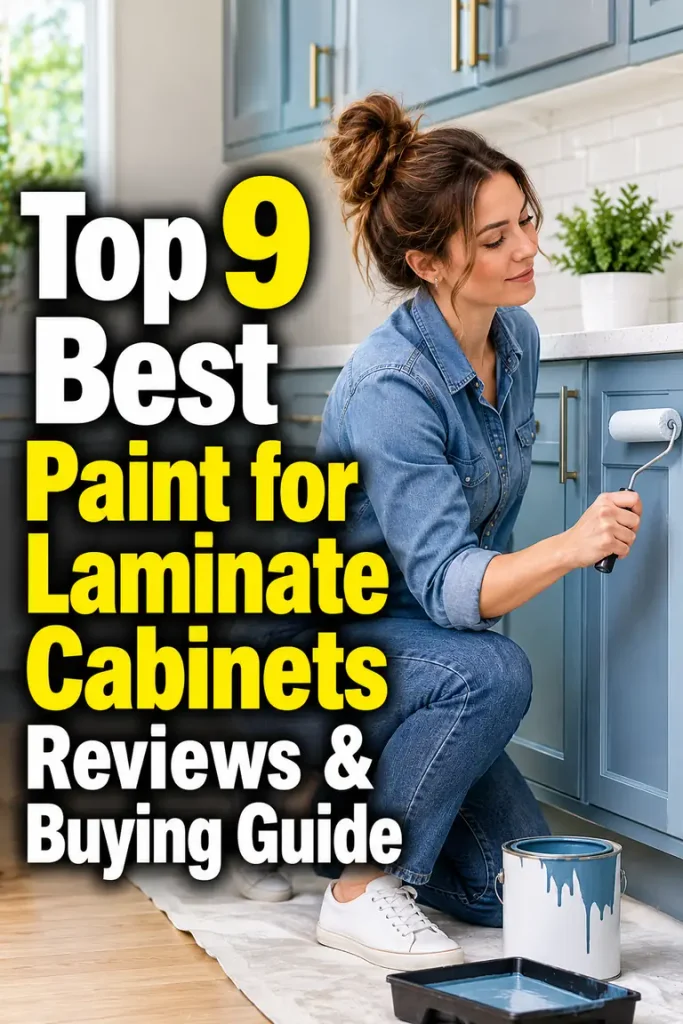
The good news is that several cabinet enamels and refinishing products can create an attractive, washable finish when used according to their instructions. Below, we look at nine options, explain what each is best for, and cover the preparation steps that make a difference to the final result.
Our Top Picks
- Best Overall: INSL-X Cabinet Coat
- Best Smooth Finish: Benjamin Moore ADVANCE Interior Paint
- Best Premium Durability: Sherwin-Williams Emerald Urethane Trim Enamel
- Best Fast-Recoating Option: BEHR PREMIUM Cabinet, Door & Trim Enamel
- Best Cabinet Refinishing Kit: Rust-Oleum Cabinet Transformations
- Best Oil-Enriched Enamel: Valspar Cabinet, Door & Trim Enamel
- Best All-in-One Alternative: Beyond Paint All-in-One Refinishing Paint
- Best Decorative Finish: General Finishes Milk Paint
- Best Cabinet Makeover Kit: Giani Nuvo Cabinet Paint Kit
Paints for Laminate Cabinets Comparison Table
| Product Name | Best For | Check Price |
|---|---|---|
| INSL-X Cabinet Coat | Overall cabinet finish | Check on Amazon |
| Benjamin Moore ADVANCE | Smooth, self-leveling finish | Check on Amazon |
| Sherwin-Williams Emerald Urethane | Premium durability | Check on Amazon |
| BEHR PREMIUM Cabinet, Door & Trim | Faster recoating | Check on Amazon |
| Rust-Oleum Cabinet Transformations | Cabinet refinishing system | Check on Amazon |
| Valspar Cabinet, Door & Trim Enamel | Oil-enriched enamel finish | Check on Amazon |
| Beyond Paint All-in-One | Simplified refinishing projects | Check on Amazon |
| General Finishes Milk Paint | Decorative cabinet finishes | Check on Amazon |
| Giani Nuvo Cabinet Paint Kit | Coordinated DIY makeover | Check on Amazon |
Affiliate disclosure: As an Amazon Associate I earn from qualifying purchases.
Shopping note: These are Amazon search links for the named products, not confirmed individual product listings. Some specialty paints may be easier to find through paint retailers than Amazon. Check the exact product, seller, finish, size, and manufacturer instructions before ordering. The products below are not all direct-to-laminate systems; several require a separate bonding primer.
Top 9 Best Paint for Laminate Cabinets Reviews
1. INSL-X Cabinet Coat – Best Overall
INSL-X Cabinet Coat is a strong option for homeowners who want a smooth, durable finish on kitchen and bathroom cabinets. It is a urethane-acrylic cabinet and trim enamel designed for surfaces that need a washable finish and resistance to everyday wear.
One of its main advantages is its flow and leveling. When applied correctly, the paint can create a smooth, refined appearance that looks more like a professionally finished cabinet than a typical brush-painted surface. Its resistance to scuffing, chipping, grease, food stains, and water also makes it appealing for frequently used cabinetry.
For laminate cabinets, however, it is important to distinguish between the paint’s general adhesion properties and the preparation needed for a particular surface. INSL-X describes Cabinet Coat as suitable for challenging surfaces, but laminate should still be cleaned and prepared carefully. A compatible bonding primer such as INSL-X STIX is a sensible choice for a glossy laminate surface unless the current product instructions specifically approve another system.
The paint is available in satin and semi-gloss finishes. Satin offers a softer appearance and can be useful for hiding minor surface imperfections, while semi-gloss provides a brighter look that is easier to wipe clean.
What we like:
- Designed specifically for cabinets and trim.
- Creates a smooth, factory-like appearance.
- Resists scuffing, chipping, grease, and water.
- Available in satin and semi-gloss.
- Water-based formula allows soap-and-water cleanup.
Things to consider:
- A separate bonding primer may be needed on laminate.
- Proper preparation is essential.
- Allow adequate drying and curing time.
- Availability may vary by retailer.
Our verdict: INSL-X Cabinet Coat is our best overall choice for a refined cabinet finish. Pair it with an appropriate bonding primer on laminate and follow the product’s preparation and curing instructions for a more dependable result.
2. Benjamin Moore ADVANCE Interior Paint – Best Smooth Finish
Benjamin Moore ADVANCE is a waterborne alkyd paint that is popular for cabinetry, doors, and trim. It is worth considering if your main priority is a smooth, refined finish rather than the quickest possible project.
Its leveling properties help the paint settle as it dries, reducing the appearance of brush marks when it is applied correctly. This is particularly useful on cabinet doors, where visible strokes and uneven coverage can make a repaint look less professional.
ADVANCE also offers a range of colors and finishes, making it easier to coordinate your cabinets with countertops, backsplashes, walls, and hardware. A satin finish gives cabinets a subtle appearance, while semi-gloss can create a more reflective and wipeable surface.
For laminate, do not treat ADVANCE as a substitute for bonding primer. Benjamin Moore’s laminate-painting guidance recommends preparing the surface and using a suitable primer, including INSL-X STIX in its general laminate furniture instructions. Allow the primer to dry completely before applying the finish coats.
Another consideration is its slower recoating schedule compared with some faster-drying cabinet enamels. That may be inconvenient if you want to finish the entire kitchen in a weekend, but taking the recommended time can help you achieve a more consistent finish.
What we like:
- Excellent leveling for a smooth appearance.
- Suitable for cabinets, doors, and trim.
- Available in a broad range of colors.
- Waterborne alkyd formula.
- Good choice for carefully applied brush or roller finishes.
Things to consider:
- Requires a suitable primer on laminate.
- Longer time between coats.
- Needs adequate curing before heavy use.
- May cost more than basic cabinet paints.
Our verdict: Benjamin Moore ADVANCE is a good option if you want a polished, smooth cabinet finish and can allow enough time between coats. Use a compatible bonding primer underneath when painting laminate.
3. Sherwin-Williams Emerald Urethane Trim Enamel – Best Premium Durability
Sherwin-Williams Emerald Urethane Trim Enamel is a premium finish to consider for cabinets that receive frequent handling. Kitchen cabinet doors are opened, closed, wiped, and touched throughout the day, so the final coating needs to handle more than occasional contact.
This water-based urethane-modified alkyd enamel is designed for trim and other surfaces that benefit from a hard, durable finish. Its smooth appearance can help give cabinet doors a more refined look, particularly when applied in thin, even coats.
For laminate cabinets, the important step is using the right primer. Sherwin-Williams’ cabinet refinishing guidance recommends an adhesion-promoting primer such as Extreme Bond for laminate and previously painted cabinets. The enamel should be treated as the topcoat in that system, not as a replacement for the bonding layer.
Emerald Urethane is available in different sheens, allowing you to choose a finish that suits your kitchen. Satin can provide a softer look, while semi-gloss is a practical option for cabinets that need regular cleaning.
This is a premium product, so the cost may be higher than some DIY-focused alternatives. It is also important to follow the manufacturer’s application and drying instructions rather than rushing the project.
What we like:
- Durable urethane-modified enamel.
- Designed for trim and high-use surfaces.
- Creates a refined cabinet finish.
- Multiple sheen options.
- Suitable as a topcoat over a compatible laminate primer.
Things to consider:
- Premium pricing.
- Requires appropriate laminate preparation.
- Primer and paint should be compatible.
- Allow sufficient time for the finish to cure.
Our verdict: Emerald Urethane is a strong premium option if you want a durable, polished cabinet finish. It is especially worth considering for busy kitchens when paired with a suitable adhesion-promoting primer.
4. BEHR PREMIUM Cabinet, Door & Trim Enamel – Best Fast-Recoating Option
BEHR PREMIUM Cabinet, Door & Trim Enamel is designed for cabinets, doors, trim, and other surfaces that need a hard, washable finish. It is a practical choice for homeowners who want a dedicated cabinet enamel with a relatively quick recoat schedule.
The product is a urethane-alkyd enamel available in satin and semi-gloss. Its flow and leveling properties help create a smooth finish, while its resistance to household dirt and grime makes it useful for frequently handled cabinet doors.
One of its notable advantages is its stated drying schedule. BEHR lists approximately one hour to dry to the touch and two hours before recoating under suitable conditions. Actual times can be longer in cooler or more humid environments, so follow the label rather than relying only on the shortest advertised time.
BEHR specifically confirms that its cabinet enamel can be used on laminate and melamine cabinets when they are cleaned, scuff-sanded, and primed first. The manufacturer recommends BEHR Bonding Primer for this type of preparation. This makes the product particularly relevant to the subject of this guide.
You can choose satin for a softer cabinet appearance or semi-gloss for a brighter, more reflective finish. Two coats are recommended for optimal durability.
What we like:
- Specifically recommended for properly prepared laminate cabinets.
- Available in satin and semi-gloss.
- Hard, washable finish.
- Relatively quick recoat time.
- Good flow and leveling.
Things to consider:
- Requires a separate bonding primer on laminate.
- Two coats are recommended.
- Cooler and humid conditions can extend drying time.
- Do not rush the full curing period.
Our verdict: BEHR PREMIUM Cabinet, Door & Trim Enamel is one of the clearest choices for laminate cabinet projects because the manufacturer specifically describes the preparation and primer requirements for laminate and melamine. It is a particularly practical option for DIY painters.
5. Rust-Oleum Cabinet Transformations – Best Cabinet Refinishing Kit
Rust-Oleum Cabinet Transformations is worth considering if you prefer a coordinated cabinet-refinishing system rather than selecting every product separately. Cabinet makeover kits can be convenient for DIY projects because they bring several stages of the process together.
A cabinet refinishing system may include products for cleaning, preparing, coating, and protecting the cabinet surface. This can make it easier to follow a planned sequence, particularly if you have never refinished cabinets before.
Before choosing this product, check the exact version and kit contents. Rust-Oleum has offered different cabinet refinishing products and systems, and the preparation instructions can vary. Confirm that the particular kit is approved for your laminate or melamine cabinet surface. Do not assume that every kit can be applied directly over glossy laminate without preparation.
The biggest advantage of a kit is convenience. You can follow a consistent system rather than mixing unrelated products from different manufacturers. It may also be useful for smaller cabinet makeovers where you want a coordinated color and finish.
However, compare the kit’s coverage with the total surface area of your cabinet doors, drawer fronts, and frames. A kit that seems inexpensive may not cover a large kitchen.
What we like:
- Coordinated refinishing approach.
- Convenient for DIY cabinet makeovers.
- Can simplify product selection.
- Useful for updating several cabinet surfaces.
- Offers an alternative to buying separate finishing products.
Things to consider:
- Check the exact kit and current availability.
- Confirm laminate compatibility.
- Coverage may be limited for large kitchens.
- Follow the full system instructions.
Our verdict: Rust-Oleum Cabinet Transformations is worth exploring if you want a coordinated refinishing system. Verify the exact kit’s laminate compatibility and coverage before purchasing.
6. Valspar Cabinet, Door & Trim Enamel – Best Oil-Enriched Enamel
Valspar Cabinet, Door & Trim Enamel is another option for homeowners who want a dedicated coating for high-contact surfaces. Cabinet doors need a finish that can tolerate frequent cleaning and handling, and a cabinet-specific enamel is generally a better direction than ordinary interior wall paint.
The oil-enriched enamel formula is designed to provide a durable finish on suitable prepared surfaces. It can be useful for cabinets, doors, and trim where a smooth, washable appearance is important.
For laminate, surface preparation remains essential. Clean the cabinet thoroughly, remove grease, and lightly dull the glossy surface. Use a bonding primer that is approved for laminate before applying the topcoat unless the exact Valspar product instructions specify a suitable direct-application system.
This product is worth considering if you want a cabinet enamel from a widely recognized paint brand. Check the available colors and sheen options because product ranges can vary between retailers and locations.
It is also important to compare the manufacturer’s technical information for the exact version you are buying. Different Valspar products may have different application requirements, coverage, and recoat times.
What we like:
- Designed for cabinet, door, and trim applications.
- Oil-enriched enamel finish.
- Useful for high-contact surfaces.
- Worth considering for a coordinated home repaint.
- Available through selected paint retailers.
Things to consider:
- Confirm the exact product formulation.
- Use a compatible bonding primer on laminate.
- Availability can vary by location.
- Follow the specific label for drying and curing.
Our verdict: Valspar Cabinet, Door & Trim Enamel is a reasonable option to compare if you want a dedicated cabinet coating. Make sure the specific product is suitable for your intended surface and use the required bonding primer.
7. Beyond Paint All-in-One Refinishing Paint – Best All-in-One Alternative
Beyond Paint All-in-One Refinishing Paint appeals to DIY painters who want a simplified approach to updating cabinets and furniture. Its all-in-one positioning makes it different from traditional cabinet enamels that are normally used over a separate primer.
This type of refinishing product may be attractive if you are working on a smaller project, such as a bathroom vanity, laundry cabinet, or a few kitchen doors. It can also be worth comparing if you want a particular decorative appearance without assembling a multi-product coating system.
However, the term all-in-one should not be interpreted as permission to skip every preparation step. Laminate cabinets still need to be clean, dry, and free from grease, polish, and loose material. Check the current label to confirm whether your specific laminate surface is approved and whether scuff-sanding or another preparation step is required.
The product’s finish and application method should also be considered. Practice on an inconspicuous area or a spare laminate piece first so you can evaluate adhesion and appearance before coating the entire kitchen.
What we like:
- Simplified refinishing approach.
- Worth considering for smaller cabinet projects.
- Useful alternative to traditional multi-product systems.
- Suitable for exploring decorative color changes.
- Convenient option for DIY furniture updates.
Things to consider:
- Verify current laminate compatibility.
- Do not skip cleaning and preparation.
- Test adhesion before committing to the whole project.
- Follow the product’s instructions for protection and curing.
Our verdict: Beyond Paint is an interesting all-in-one alternative for DIY cabinet updates. It may simplify product selection, but confirm the current instructions for laminate and test a small area before painting all your cabinets.
8. General Finishes Milk Paint – Best Decorative Finish
General Finishes Milk Paint is a decorative furniture and cabinet coating worth exploring if you want a particular color or a more customized appearance. Despite its name, it is a modern water-based paint rather than traditional milk paint made from milk protein.
It is popular for furniture refinishing because it offers a range of colors and can create a clean, contemporary finish. It may be useful for changing the look of cabinet doors, bathroom vanities, and other decorative surfaces.
For laminate cabinets, do not assume that the paint can be applied directly without a bonding layer. A smooth laminate surface can be difficult for coatings to grip. Check the manufacturer’s current recommendations for laminate and use a suitable adhesion primer if required. The exact primer and topcoat system should be compatible.
Another consideration is the protective finish. Kitchen cabinets are exposed to moisture, grease, and repeated cleaning, so the appropriate protective coating may be important depending on the product instructions and the level of use.
General Finishes Milk Paint is particularly appealing if color selection and a refined decorative appearance matter to you. It is not necessarily the simplest choice for someone who wants a quick, single-product kitchen makeover.
What we like:
- Wide range of decorative color options.
- Water-based paint.
- Useful for furniture and cabinet updates.
- Suitable for customized refinishing projects.
- Can create an attractive painted appearance.
Things to consider:
- Confirm laminate compatibility before application.
- A bonding primer may be necessary.
- Check whether a protective topcoat is recommended.
- Allow sufficient drying and curing time.
Our verdict: General Finishes Milk Paint is worth considering when appearance and color selection are important. For laminate cabinets, use the manufacturer’s approved preparation and coating system rather than treating it as ordinary wall paint.
9. Giani Nuvo Cabinet Paint Kit – Best Cabinet Makeover Kit
The Giani Nuvo Cabinet Paint Kit is a DIY-focused option for homeowners who want to change the appearance of their cabinets without replacing them. Its kit format can be appealing if you prefer a coordinated makeover product rather than buying a separate paint color and several finishing supplies.
Nuvo products are marketed for cabinet transformations, and selected systems are designed to simplify the process. That can make them attractive for homeowners updating older kitchen cabinets, bathroom vanities, or other built-in storage.
Before purchasing, check the current kit’s surface compatibility. Cabinet materials are not all the same: solid wood, painted wood, laminate, and thermofoil can require different preparation. Confirm that the particular Nuvo kit is approved for your cabinet construction and follow its instructions for cleaning, sanding, priming, and application.
Also check the coverage information. Cabinet kits are often sold for a stated kitchen size or number of cabinet doors, but your actual coverage will depend on the dimensions and number of surfaces being painted.
If you want to change the look of your kitchen without investing in a complete replacement, a kit can be a convenient starting point. Just make sure the kit is appropriate for the surface you have.
What we like:
- Designed for DIY cabinet makeovers.
- Coordinated kit approach.
- Convenient for planned refinishing projects.
- Offers an alternative to replacing cabinets.
- Useful for homeowners who prefer a guided process.
Things to consider:
- Confirm the exact kit’s laminate compatibility.
- Check coverage against your cabinet size.
- Follow the included preparation instructions.
- Product versions and availability may change.
Our verdict: Giani Nuvo is worth considering if you want a coordinated DIY cabinet makeover kit. Check the specific product’s approved surfaces and coverage before deciding whether it is right for your laminate cabinets.
How to Choose Paint for Laminate Cabinets
Choosing cabinet paint is only part of the project. The right primer, surface preparation, finish, and application method all contribute to the final result.
1. Choose a Paint Designed for Cabinets
Cabinets experience more handling than most walls. They are opened and closed repeatedly, exposed to fingerprints, and cleaned regularly. Ordinary wall paint may not provide the hard, washable finish you need.
Look for a product specifically designed for cabinets, doors, trim, or furniture. Cabinet enamels and suitable refinishing coatings are generally better choices because they are intended for surfaces that receive frequent contact.
2. Use a Bonding Primer for Laminate
This is one of the most important parts of the project. Laminate is smooth and nonporous, which means ordinary primer may not grip it reliably.
A dedicated bonding primer creates a suitable base for the topcoat. Some products worth researching include:
- INSL-X STIX Waterborne Bonding Primer: Designed for challenging surfaces, including laminate and glossy materials.
- Zinsser Bulls Eye 1-2-3: A general-purpose primer with manufacturer-listed uses that include laminates.
- Zinsser B-I-N Shellac-Based Primer: A specialty primer worth considering when strong stain blocking and adhesion are needed; observe its ventilation and safety requirements.
- Sherwin-Williams Extreme Bond Primer: An adhesion-promoting option identified in the manufacturer’s cabinet refinishing guidance for laminate.
Choose one primer system and confirm that it is compatible with your selected topcoat. Do not combine products simply because they are individually popular.
3. Decide on the Finish
The sheen affects both appearance and cleaning.
| Finish | Appearance | Best For |
|---|---|---|
| Satin | Soft, subtle sheen | Most everyday kitchen cabinets |
| Semi-gloss | Noticeably reflective | Cabinets that need frequent wiping |
| Gloss | Highly reflective | Very smooth, carefully prepared cabinets |
| Matte | Low reflection | Decorative projects with less demanding cleaning needs |
Satin is a practical starting point for many kitchens because it offers a balanced appearance. Semi-gloss is useful if you prefer a brighter finish that is easy to wipe down.
4. Consider Water-Based or Oil-Based Paint
Both types have advantages, but modern water-based cabinet enamels are popular because they combine practical cleanup with a durable finish.
| Paint Type | Main Characteristics | Best For |
|---|---|---|
| Waterborne alkyd | Smooth leveling and durable finish | Refined cabinet projects |
| Urethane-modified alkyd | Hard, washable finish | Frequently handled cabinets |
| Urethane acrylic | Smooth finish and water cleanup | Kitchen and bathroom cabinets |
| Oil-based enamel | Traditional hard finish, solvent cleanup | Projects where the product system specifically suits the surface |
| All-in-one refinishing paint | Simplified product approach | Selected DIY makeover projects |
Always check the manufacturer’s instructions for the cabinet material and the primer underneath.
5. Check the Color
The right cabinet color can change the entire appearance of a kitchen.
- White: Creates a bright, classic appearance.
- Warm cream: Adds softness without looking stark.
- Light gray: Offers a subtle contemporary look.
- Greige: Combines gray and beige for a versatile neutral.
- Sage green: Creates a relaxed, natural feel.
- Navy blue: Adds depth and contrast.
- Charcoal: Gives cabinets a dramatic, modern appearance.
- Black: Creates a bold look, particularly with lighter countertops.
Before painting every cabinet, test a sample in your kitchen lighting. Natural light, artificial lighting, countertops, and flooring can all influence how a color appears.
6. Check Durability and Curing Time
Drying and curing are not the same. A cabinet may feel dry to the touch while the coating is still developing its full hardness.
Read the product label for recoat time and full cure guidance. Avoid heavy cleaning, repeated handling, and placing objects against newly painted surfaces before the manufacturer says the finish is ready.
7. Compare Coverage and Project Size
Cabinet doors, drawer fronts, frames, and side panels all contribute to the total area. Measure the surfaces before purchasing paint.
For a small bathroom vanity, a quart may be enough depending on the product’s coverage and number of coats. A large kitchen may require several quarts or gallons. Follow the coverage information on the product label and allow for additional coats where necessary.
How to Paint Laminate Cabinets
A good painting process can make a major difference in how long the finish lasts. Follow these general steps, while always giving priority to the instructions for your selected primer and paint.
Step 1: Remove the Cabinet Doors and Hardware
Remove the doors, drawers, hinges, handles, and other removable hardware. Label each door and its corresponding location so you can reinstall everything correctly.
Place screws and hardware in separate labeled bags. Lay the doors on a stable, protected work surface.
Step 2: Clean the Laminate Thoroughly
Kitchen cabinets can accumulate grease, cooking residue, fingerprints, and cleaning-product buildup. These contaminants can interfere with primer adhesion.
Use a suitable degreaser or cabinet-safe cleaner. Wipe the surfaces thoroughly, rinse away any cleaner residue as directed, and allow the laminate to dry completely.
Do not apply primer over a greasy or damp surface.
Step 3: Repair Damaged Areas
Inspect the doors and cabinet frames for chips, dents, peeling edge banding, or swollen areas.
Use a filler suitable for the damaged material and follow its application instructions. Allow it to dry and sand repaired areas smooth.
If laminate is badly swollen or separating from the substrate because of water damage, painting alone may not solve the underlying problem. Repair or replace the damaged section before continuing.
Step 4: Lightly Scuff-Sand the Surface
Use fine sandpaper, commonly around 180- to 220-grit, to lightly dull the glossy surface. The purpose is to create a better surface for the primer, not to sand through the laminate layer.
Use light pressure and avoid aggressive sanding, especially around edges and corners. Remove all dust with a suitable tack cloth or clean, lint-free cloth.
Wear appropriate protective equipment and control dust during sanding.
Step 5: Apply a Bonding Primer
Apply a primer specifically approved for laminate or similarly slick surfaces. Use a quality synthetic brush for corners and edges and a suitable fine-finish roller for larger flat areas.
Apply thin, even coats and avoid excessive buildup around corners, panel details, and handle holes.
Allow the primer to dry for the full period specified on its label. If the instructions recommend light sanding between coats, use the recommended grit and remove all dust before continuing.
Step 6: Apply the First Coat of Cabinet Paint
Once the primer is ready, apply your selected cabinet enamel or refinishing paint.
Use a fine-finish roller on flat surfaces and a quality brush for edges and detailed areas. If you have suitable spraying equipment and experience, spraying can also produce a smooth finish.
Work in thin, even coats rather than trying to achieve full coverage in one application.
Step 7: Apply Additional Coats
Allow the first coat to dry according to the manufacturer’s instructions. Lightly sand between coats only if the product directions recommend it.
Apply a second coat for consistent coverage and durability. Some dramatic color changes may need another coat, depending on the paint and original cabinet color.
Step 8: Allow the Finish to Cure
Do not rush the final stage. Dry-to-touch time does not mean the paint has reached full hardness.
Keep doors and drawers protected from knocks, moisture, and repeated handling while the coating cures. Reinstall the hardware and doors only when the paint manufacturer’s instructions say it is safe to do so.
Common Mistakes to Avoid When Painting Laminate Cabinets
Skipping the Bonding Primer
This is one of the biggest mistakes. Laminate does not absorb paint like unfinished wood, so a regular wall primer may not provide the adhesion you need. Use a primer specifically approved for laminate or glossy surfaces.
Painting Over Grease
Even a small amount of cooking grease can interfere with adhesion. Clean the doors, frames, and edges carefully before sanding or priming.
Sanding Too Aggressively
The goal is to dull the glossy finish, not remove the laminate. Heavy sanding can damage the thin decorative layer and expose the substrate underneath.
Applying Thick Coats
Thick coats may dry unevenly, sag, or leave visible texture. Apply thin layers and allow the correct drying time between them.
Reassembling Too Soon
Paint can feel dry before it has developed enough hardness to handle repeated contact. Reinstalling doors too early can cause sticking, marks, and damage around the edges.
Ignoring the Cabinet Edges
Edges and corners receive frequent contact and are often the first areas to show wear. Prepare and coat these areas carefully, but avoid allowing paint to build up around joints and hardware openings.
Frequently Asked Questions
Can you paint laminate cabinets?
Yes. Laminate cabinets can be painted if they are in sound condition and properly prepared. Clean them thoroughly, lightly scuff-sand the surface, apply a suitable bonding primer, and finish with a cabinet-grade paint approved for the system.
What is the best paint for laminate cabinets?
INSL-X Cabinet Coat, Benjamin Moore ADVANCE, Sherwin-Williams Emerald Urethane Trim Enamel, and BEHR PREMIUM Cabinet, Door & Trim Enamel are options worth considering. For laminate, the primer and preparation system are just as important as the topcoat.
Do I need to prime laminate cabinets before painting?
In most cases, yes. A bonding primer helps the paint adhere to the smooth, nonporous laminate surface. Some specialty refinishing products may have different instructions, so check the exact product label before deciding to skip primer.
Can I paint laminate cabinets without sanding?
Some specialty products may allow reduced sanding or a different preparation method, but lightly scuff-sanding is a common recommendation for conventional laminate painting systems. Follow the manufacturer’s instructions for your exact product and test adhesion in an inconspicuous area.
What primer should I use on laminate cabinets?
INSL-X STIX, Zinsser Bulls Eye 1-2-3, and other primers specifically approved for laminate or glossy surfaces are worth researching. Choose a primer compatible with your topcoat and follow both manufacturers’ instructions.
Is satin or semi-gloss better for laminate cabinets?
Both can work. Satin offers a softer appearance and can be more forgiving of minor surface imperfections. Semi-gloss is more reflective and easier to wipe clean. Choose according to the look you want and the paint manufacturer’s available finishes.
Can I use regular wall paint on laminate cabinets?
It is generally not the best choice. Wall paint is designed for a different type of use and may not provide the durability needed for cabinet doors and drawers. A cabinet enamel or suitable refinishing paint is a better option.
How many coats of paint do laminate cabinets need?
A typical project uses a bonding primer followed by two coats of cabinet paint. A major color change or a product with lower hiding power may require another coat. Follow the coverage and application directions on the product label.
How long does paint take to cure on laminate cabinets?
Curing time varies by product. Some coatings may be dry to the touch within hours but need several days or longer to develop their intended hardness. Follow the manufacturer’s full cure guidance before heavy use or cleaning.
Can I paint laminate cabinets in a bathroom?
Yes, if the cabinets are in sound condition and the selected primer and paint are suitable for the environment. Bathroom cabinets can experience humidity and occasional water contact, so careful preparation, ventilation, and adequate curing are important.
Will painted laminate cabinets peel?
They can peel if the surface is dirty, glossy, poorly prepared, or coated with an incompatible primer and paint. Cleaning, light scuff-sanding, using a suitable bonding primer, and allowing proper curing help reduce this risk.
Should I use a brush, roller, or sprayer?
A fine-finish roller is useful for large flat surfaces, while a quality brush helps with corners and detailed areas. A sprayer can create a smooth finish when used correctly, but it requires proper equipment, ventilation, masking, and technique.
Final Words
The best paint for laminate cabinets should provide a durable, washable finish while working with the smooth surface underneath. INSL-X Cabinet Coat is a strong overall option, Benjamin Moore ADVANCE is worth considering for its smooth finish, and Sherwin-Williams Emerald Urethane offers a premium cabinet enamel. BEHR PREMIUM Cabinet, Door & Trim Enamel is particularly useful because the manufacturer specifically explains how to prepare and prime laminate cabinets before applying it.
Before buying, compare the paint’s finish, application requirements, coverage, and curing time. Most importantly, do not skip proper cleaning and bonding primer when your chosen system requires it. A carefully prepared surface and compatible coating system are the keys to a cabinet makeover that looks good and holds up to everyday use.
Helpful Resources
- Benjamin Moore: A DIY Guide to Painting Laminate Furniture – Manufacturer guidance on preparing laminate, choosing primer, and applying cabinet paint.
- BEHR: How to Paint Kitchen Cabinets – Includes specific advice for painting laminate and melamine cabinets with the recommended preparation and enamel.