
The best paint for stucco should protect the exterior surface from rain, sunlight, temperature changes, and everyday weathering while allowing trapped moisture to escape. Stucco is porous and textured, so ordinary exterior wall paint may not always provide the adhesion, flexibility, and breathability needed for a lasting finish. Choosing a coating specifically suited to masonry can help reduce peeling, fading, and premature paint failure.
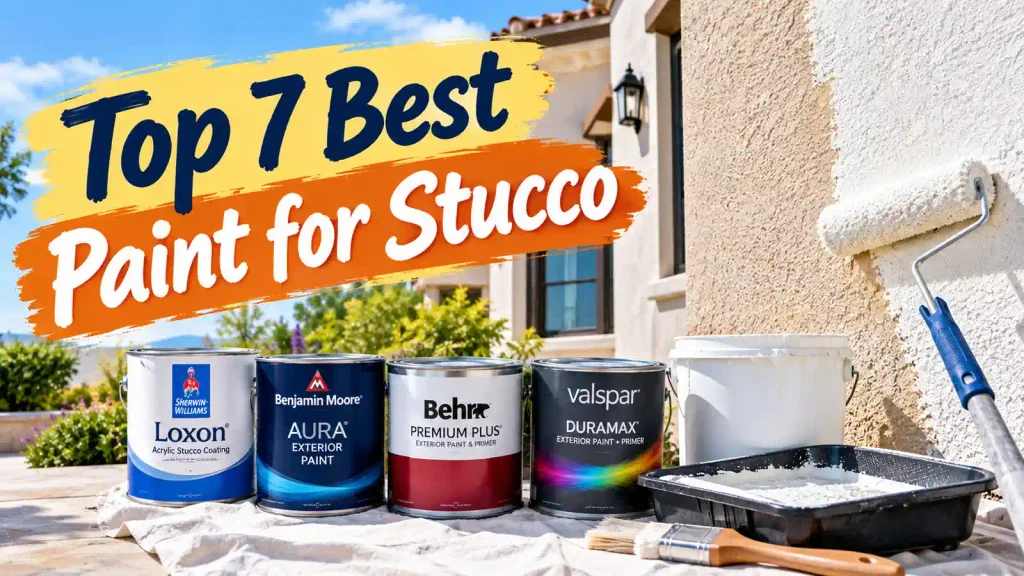
Acrylic masonry paint is a popular choice for most properly prepared stucco walls because it offers color retention, durability, and moisture-vapor permeability. Elastomeric coatings are another option when hairline cracks and additional water resistance are concerns. Below, we’ll compare seven products and explain how to choose, prepare, and paint stucco for a smooth, attractive exterior.
Affiliate disclosure: As an Amazon Associate I earn from qualifying purchases.
Top Picks: 7 Paints for Stucco
- Sherwin-Williams Loxon XP Masonry Coating – Best overall for stucco and masonry
- BEHR Premium Elastomeric Masonry, Stucco & Brick Paint – Best for hairline cracks and added water resistance
- BEHR Premium Masonry, Stucco & Brick Paint – Best conventional masonry paint
- Sherwin-Williams Duration Exterior Acrylic Latex – Best for previously painted stucco
- Benjamin Moore Aura Exterior Paint – Best premium exterior color finish
- AMES BWRF5 Water Base High Strength Elastomeric – Best for flexible protective coating
- PPG Perma-Crete Exterior Masonry Coating – Best to compare for exterior masonry projects
Comparison Table: Best Paint for Stucco
| Product Name | Best For | Check Price |
|---|---|---|
| Sherwin-Williams Loxon XP Masonry Coating | Stucco and masonry surfaces | Check on Amazon |
| BEHR Premium Elastomeric Masonry Paint | Hairline cracks and water resistance | Check on Amazon |
| BEHR Premium Masonry, Stucco & Brick Paint | Conventional stucco repainting | Check on Amazon |
| Sherwin-Williams Duration Exterior | Previously painted stucco | Check on Amazon |
| Benjamin Moore Aura Exterior | Premium exterior color finish | Check on Amazon |
| AMES BWRF5 Elastomeric | Flexible protective coating | Check on Amazon |
| PPG Perma-Crete Masonry Coating | Exterior masonry projects | Check on Amazon |
Shopping note: These are tagged Amazon search links, not verified direct product listings. Some professional paint lines are primarily sold through manufacturer stores or authorized paint retailers. Confirm the exact product, coating type, container size, and availability before purchasing.
Top 7 Best Paints for Stucco Reviews
1. Sherwin-Williams Loxon XP Masonry Coating – Best Overall
Sherwin-Williams Loxon XP Masonry Coating is a strong option for homeowners and contractors looking for a coating designed specifically for demanding masonry surfaces. Stucco is porous and can be highly alkaline, particularly when it is new or recently repaired. A masonry coating designed to handle these conditions can provide a more appropriate solution than ordinary exterior wall paint.
Loxon XP is formulated for concrete, stucco, and other masonry surfaces. Its high-build acrylic formula is designed to provide protection against moisture intrusion while maintaining properties suitable for masonry applications. It is especially worth considering when painting bare or difficult stucco that needs a specialized coating.
Another advantage is that this product is designed to handle the challenges associated with alkaline masonry. That makes it useful for exterior walls where ordinary paint might struggle to adhere properly.
What makes it appealing
- Specifically designed for masonry surfaces
- Suitable for stucco and concrete
- High-build acrylic coating
- Designed to resist wind-driven rain
- Helps protect against alkali-related coating problems
- Suitable for demanding exterior applications
Things to consider
Loxon XP is a specialized coating, so it may cost more than conventional exterior paint. Check the manufacturer’s current technical data sheet for surface preparation, coverage, application temperature, and primer requirements. Extremely porous or damaged stucco may need additional preparation before application.
Best for: Homeowners who want a specialized masonry coating for properly prepared stucco walls.
2. BEHR Premium Elastomeric Masonry, Stucco & Brick Paint – Best for Hairline Cracks
BEHR Premium Elastomeric Masonry, Stucco & Brick Paint is designed for exterior masonry surfaces that need a flexible, high-build coating. Its elastomeric formula can expand and contract with normal surface movement, making it worth considering for suitable stucco walls with small, stable hairline cracks.
Unlike conventional exterior paint, elastomeric coatings create a thicker film. This added film build can help bridge minor surface imperfections and provide additional resistance to wind-driven rain. The BEHR product is specifically designed for masonry, stucco, and brick.
It is also formulated to resist mildew and dirt, which can be helpful on exterior walls exposed to changing weather conditions. The coating is available in custom colors, allowing homeowners to choose a finish that suits their home’s exterior.
What makes it appealing
- Designed for masonry, stucco, and brick
- Flexible elastomeric coating
- Helps bridge suitable hairline cracks
- Resists moisture and wind-driven rain
- Mildew- and dirt-resistant finish
- Available in custom colors
Things to consider
Elastomeric paint is not automatically the best solution for every stucco wall. Its thicker film can reduce moisture-vapor movement compared with some breathable acrylic coatings, depending on the product and applied thickness. Do not use it to cover leaks, dampness, structural cracks, or failing stucco. Resolve underlying moisture problems first and follow the manufacturer’s application instructions.
Best for: Sound exterior stucco with suitable hairline cracks where a flexible, higher-build coating is appropriate.
3. BEHR Premium Masonry, Stucco & Brick Paint – Best Conventional Masonry Paint
BEHR Premium Masonry, Stucco & Brick Paint is worth considering if you want a conventional exterior coating made for masonry surfaces. It is designed for applications such as stucco, brick, and concrete, making it more directly relevant to this type of project than general-purpose interior or exterior wall paint.
A conventional masonry paint can be a practical choice when the stucco is in good condition and does not require a thick elastomeric coating. It provides an exterior finish while allowing you to select a color that complements the rest of your home.
This product is particularly worth comparing for previously painted or properly prepared stucco that needs a fresh appearance. Its intended surface compatibility makes it a useful option for homeowners who want a dedicated masonry paint from a familiar brand.
What makes it appealing
- Designed for stucco, brick, and masonry
- Suitable for exterior painting projects
- Available in different color choices
- Practical for conventional stucco repainting
- Alternative to thicker elastomeric coatings
- Designed for exterior surface exposure
Things to consider
Do not confuse this product with BEHR’s separate elastomeric masonry coating. They are different products with different film characteristics and intended uses. Check the surface preparation and primer instructions, particularly when applying paint to bare or highly porous stucco.
Best for: Properly prepared stucco walls that need a conventional masonry paint rather than a thick elastomeric coating.
4. Sherwin-Williams Duration Exterior Acrylic Latex – Best for Previously Painted Stucco
Sherwin-Williams Duration Exterior Acrylic Latex is a premium exterior paint option to consider when repainting stucco that already has a sound, compatible coating. It is designed for exterior applications and offers a durable finish for homes exposed to sunlight, rain, and changing weather.
Acrylic exterior paint is often a sensible choice for properly prepared stucco because it can provide a balance of flexibility, color retention, and moisture-vapor permeability. Duration is worth comparing when you want a premium exterior finish without automatically choosing a thick elastomeric product.
It is available in multiple colors and exterior sheens, giving homeowners flexibility when refreshing an older stucco house. A flat or low-sheen finish can also help minimize the appearance of small surface irregularities.
What makes it appealing
- Premium exterior acrylic latex paint
- Suitable for compatible exterior masonry applications
- Available in a broad range of colors
- Designed for weather exposure
- Useful for repainting sound existing finishes
- Multiple exterior finish options
Things to consider
Although Duration is an exterior paint, confirm that the specific product version and application instructions permit your stucco surface. Bare, highly porous, chalky, or newly repaired stucco may require a masonry primer or a specialized coating instead.
Best for: Previously painted stucco in sound condition when a premium exterior acrylic finish is suitable.
5. Benjamin Moore Aura Exterior Paint – Best Premium Exterior Color Finish
Benjamin Moore Aura Exterior Paint is a premium option for homeowners who want a high-quality exterior finish and a broad range of color choices. It is designed for exterior surfaces and is worth considering for compatible, properly prepared stucco.
Color retention is an important consideration when painting stucco because exterior walls receive prolonged exposure to sunlight. A quality exterior acrylic paint can help maintain an attractive appearance while providing protection against ordinary weathering.
Aura Exterior is especially appealing when the appearance of the finished home is a priority. It offers a range of colors and finishes, allowing you to coordinate stucco walls with shutters, doors, trim, and other exterior details.
What makes it appealing
- Premium exterior paint option
- Wide selection of colors
- Designed for exterior weather exposure
- Suitable for compatible masonry surfaces
- Useful for decorative exterior renovations
- Attractive finish options
Things to consider
Aura Exterior is not the same as a specialized elastomeric or high-build masonry coating. Check the manufacturer’s instructions to confirm suitability for your particular stucco, especially if it is new, unpainted, chalky, or heavily patched. Use the recommended primer when necessary.
Best for: Homeowners prioritizing exterior color and finish quality on properly prepared, compatible stucco.
6. AMES BWRF5 Water Base High Strength Elastomeric – Best for Flexible Protective Coating
AMES BWRF5 Water Base High Strength Elastomeric is another option for homeowners comparing flexible coatings for exterior surfaces. Its elastomeric formulation is intended to provide a thicker protective layer that can help resist moisture and cover minor surface imperfections.
Stucco walls can develop small cracks as buildings naturally settle and experience temperature changes. A suitable elastomeric coating may help bridge certain hairline cracks while providing a protective exterior finish.
The AMES product is marketed for multiple surface types, including stucco, concrete, and masonry. It can be worth comparing when you want a flexible coating rather than a conventional thin exterior paint.
What makes it appealing
- Water-based elastomeric coating
- Flexible protective film
- Intended for stucco and masonry applications
- Helps cover suitable small surface cracks
- Designed for moisture resistance
- Alternative to conventional exterior paint
Things to consider
Elastomeric products can have different coverage rates, application thicknesses, and drying requirements. A thick coating may also change the appearance of textured stucco. Check the manufacturer’s instructions and make sure the wall is dry and free of moisture problems before applying it.
Best for: Homeowners comparing a flexible coating for suitable exterior stucco and masonry surfaces.
7. PPG Perma-Crete Exterior Masonry Coating – Best to Compare for Exterior Masonry Projects
PPG Perma-Crete Exterior Masonry Coating is a product line worth investigating when selecting a coating for stucco and other exterior masonry surfaces. PPG offers masonry-focused coatings intended for demanding exterior applications, making the Perma-Crete range relevant to homeowners comparing specialized alternatives.
Stucco requires a coating that can adhere to a porous cement-based surface while handling exposure to moisture and sunlight. Masonry coatings are developed with these substrate characteristics in mind and can be more appropriate than ordinary wall paint.
Before choosing a specific Perma-Crete product, check its technical information to confirm the exact application, surface compatibility, and finish. Product names and formulations can vary across the manufacturer’s range.
What makes it appealing
- Masonry-focused coating category
- Useful for comparing exterior stucco products
- Designed for demanding masonry applications
- Professional-grade product range
- Worth considering for exterior renovation projects
Things to consider
Perma-Crete includes different products, so make sure you select the correct exterior coating rather than a primer or another specialty product. Confirm that the exact version is approved for your stucco type and follow its preparation and application requirements.
Best for: Homeowners and contractors comparing professional masonry coating options for exterior stucco.
How to Choose the Best Paint for Stucco
Choosing the right stucco paint depends on the wall’s condition, moisture exposure, existing coating, and desired appearance. These factors can help you narrow down the options.
1. Choose the Right Paint Type
Three main coating categories are worth considering for stucco.
Acrylic masonry paint: A popular option for most sound stucco walls. Quality acrylic products can offer good color retention, flexibility, and moisture-vapor permeability.
Elastomeric coating: A thicker, flexible coating that can bridge certain hairline cracks and provide added resistance to wind-driven rain. It is not suitable for every wall, particularly where moisture is already trapped behind the surface.
Mineral or silicate paint: A specialized option for compatible mineral and cement-based substrates. It can offer excellent vapor permeability, but it requires the correct surface conditions and application system.
For most ordinary stucco repainting projects, a suitable exterior acrylic masonry coating is a sensible starting point.
2. Consider Breathability
Stucco is porous, and moisture can move through it. A suitable paint should allow water vapor to escape rather than unnecessarily trapping moisture inside the wall.
Breathability is particularly important when painting older stucco or walls exposed to heavy rain. A coating that is too restrictive for the wall’s moisture conditions may contribute to blistering, peeling, or other coating problems.
Check the manufacturer’s technical data for vapor permeability or perm ratings when available.
3. Check Water Resistance
Exterior stucco needs protection from rain and moisture. If your home receives frequent wind-driven rain, a coating with appropriate water resistance can help protect the surface.
However, water resistance does not mean the paint should trap moisture. Choose a product that balances resistance to liquid water with suitable vapor permeability for the wall.
4. Look for Crack-Bridging Ability
Small hairline cracks can appear in stucco over time. Elastomeric coatings are designed to stretch and bridge certain minor cracks.
Before choosing one, determine whether the cracks are cosmetic or indicate a more serious problem. Active structural cracks, wide cracks, and areas with loose or hollow stucco need repair rather than simply being covered with paint.
5. Select the Right Finish
Flat or matte finishes are common for stucco because they help hide small surface imperfections and preserve a traditional exterior appearance.
Other finishes may be available depending on the coating. Consider the texture of the wall and the appearance you want before choosing a sheen.
6. Check Color Retention
Stucco walls can receive strong sunlight throughout the day. Choose an exterior product designed for color retention and UV exposure.
Lighter colors can also be practical in sunny climates because they generally absorb less heat than darker colors. Always check the manufacturer’s color and substrate recommendations.
7. Consider Coverage and Application Requirements
Stucco’s rough texture can absorb more paint than a smooth wall. This means the actual coverage may be lower than the figure printed on the container.
Check the estimated coverage for your surface type and account for additional material if the stucco is especially rough or porous. Also compare application temperature, drying time, recoat time, and recommended tools.
How to Prepare Stucco Before Painting
Preparation is essential for a durable stucco finish. Even high-quality paint can fail if applied over dirt, loose material, moisture, or an unstable old coating.
Step 1: Inspect the Stucco
Walk around the exterior and inspect the walls carefully. Look for cracks, peeling paint, stains, efflorescence, soft areas, and signs of water intrusion.
Pay special attention to areas around windows, doors, rooflines, and gutters. These locations may reveal leaks or drainage problems that should be corrected before painting.
Step 2: Repair Damaged Areas
Remove loose or deteriorated material and repair cracks with a repair product suitable for the stucco system.
Do not simply cover large cracks, moving cracks, or hollow stucco with paint. Serious damage may require professional inspection and repair.
Step 3: Clean the Surface
Remove dirt, dust, cobwebs, loose paint, and other contaminants. Use a suitable exterior cleaning method that will not damage the stucco.
If using a pressure washer, keep the pressure appropriate for the surface and avoid forcing water into cracks or damaged areas. Allow the wall to dry thoroughly.
Step 4: Remove Efflorescence
Efflorescence appears as a white, powdery deposit caused by soluble salts moving to the surface with moisture.
Brush away loose deposits using a suitable dry brush and identify the moisture source. Painting over recurring efflorescence without correcting the underlying issue can lead to coating failure.
Step 5: Allow New Stucco to Cure
New cement-based stucco needs sufficient curing time before painting. Follow the stucco and paint manufacturers’ recommendations for curing, moisture, and pH requirements.
Do not assume that new stucco is ready for paint simply because its surface looks dry.
Step 6: Apply the Appropriate Primer
Bare, porous, patched, or highly alkaline stucco may require a masonry primer or sealer. Previously painted stucco in sound condition may need only localized priming, depending on the coating system.
Choose a primer compatible with the selected topcoat.
How to Paint Stucco
Once the surface is clean, repaired, and dry, you can begin painting.
Step 1: Protect Surrounding Areas
Cover windows, doors, light fixtures, landscaping, and nearby surfaces. Use painter’s tape and drop cloths to prevent unwanted paint splashes.
Wear appropriate protective equipment, especially when spraying exterior coatings.
Step 2: Stir the Paint Thoroughly
Mix the coating according to the manufacturer’s instructions. If using multiple containers of the same color, consider boxing them together in a larger container to reduce minor color variations.
Do not add water or other materials unless the product instructions specifically allow it.
Step 3: Paint the Edges and Details
Use a suitable masonry brush to reach corners, edges, and areas around windows and doors.
Work carefully around trim and other surfaces that should not receive the stucco coating.
Step 4: Apply Paint to the Main Wall
A suitable roller with a thick nap can help reach the recesses of textured stucco. For large exterior walls, professional spraying equipment may provide faster and more consistent coverage.
Follow the manufacturer’s recommended application thickness and technique. Back-rolling may be appropriate for certain products and surfaces.
Step 5: Apply Additional Coats
Allow the first coat to dry for the recommended period. Apply the next coat as directed by the product manufacturer.
Do not apply additional coats too quickly, as this can affect drying, adhesion, and final performance.
Step 6: Allow the Coating to Cure
Protect the freshly painted stucco from rain, excessive humidity, and unsuitable temperatures while it dries.
Follow the product’s instructions for drying and curing. Avoid judging the finished coating solely by its appearance immediately after application.
Common Mistakes to Avoid When Painting Stucco
Painting Damp Stucco
Moisture trapped behind a new coating can cause blistering, peeling, and other problems. Find and correct leaks or drainage issues before painting.
Using Ordinary Interior Paint
Interior wall paint is not designed for prolonged outdoor exposure. Use an exterior coating approved for stucco or masonry.
Applying Elastomeric Paint Everywhere
Elastomeric paint can be useful in certain conditions, but it is not automatically the best option for every stucco wall. Consider vapor permeability, existing coatings, moisture conditions, and future maintenance before choosing it.
Skipping Repairs
Paint cannot repair loose stucco, structural cracks, or water-damaged areas. Repair the substrate before applying a new finish.
Ignoring Surface Alkalinity
New or recently repaired cement-based stucco can be highly alkaline. Choose a coating system designed for the surface and follow the manufacturer’s curing and primer requirements.
Applying Paint Too Thickly
Applying excessive paint in one pass can lead to uneven drying, runs, and other finish problems. Follow the recommended film thickness and number of coats.
Painting in Unsuitable Weather
Extreme heat, cold, wind, rain, and high humidity can affect application and curing. Check the product’s temperature and weather requirements before starting.
Frequently Asked Questions
What is the best paint for stucco?
Sherwin-Williams Loxon XP Masonry Coating is a strong option for specialized stucco and masonry applications. For conventional stucco repainting, a quality exterior acrylic masonry paint is often a good choice. BEHR Premium Elastomeric is worth considering when a flexible coating is appropriate for the wall’s condition.
Is acrylic or elastomeric paint better for stucco?
Acrylic paint is generally a good choice for sound, properly prepared stucco because it can provide durability and allow moisture vapor to escape. Elastomeric paint is useful for certain walls that need additional flexibility and hairline-crack bridging. The best option depends on moisture conditions, existing coatings, and the manufacturer’s specifications.
Can you use regular exterior paint on stucco?
Some regular exterior acrylic paints are suitable for stucco, but always confirm that the specific product is approved for masonry or stucco surfaces. A dedicated masonry coating may be a better choice for bare, porous, or highly alkaline walls.
Does stucco need primer before painting?
Bare, porous, patched, or highly alkaline stucco may require a suitable masonry primer or sealer. Previously painted stucco in good condition may not need a full primer coat if the new paint is compatible. Follow the manufacturer’s recommendations.
How many coats of paint does stucco need?
Many stucco painting projects require two coats, although the exact number depends on the product, surface porosity, original color, and desired coverage. Follow the manufacturer’s specified application system rather than assuming one coat will be enough.
What is the best finish for stucco paint?
Flat or matte is a popular choice because it helps conceal minor imperfections and suits the textured appearance of stucco. Other finishes may work depending on the coating and the desired exterior style.
Can elastomeric paint cover cracks in stucco?
Elastomeric coatings can bridge certain small, stable hairline cracks. They should not be used as a substitute for repairing structural cracks, moving cracks, or damaged stucco. Identify and repair the cause before painting.
How long does stucco paint last?
The lifespan depends on the paint formula, surface preparation, application quality, climate, and exposure to sunlight and moisture. Properly prepared stucco with a suitable coating can often go several years before needing repainting. Inspect the exterior regularly for peeling, fading, and cracking.
Can you paint stucco in hot weather?
It depends on the product’s application temperature limits and the condition of the wall. Very hot surfaces and direct sunlight can cause paint to dry too quickly, affecting application and finish quality. Follow the manufacturer’s temperature guidance and avoid painting when conditions are unsuitable.
Is flat or satin paint better for stucco?
Flat paint is commonly preferred because it hides texture irregularities. Satin may be suitable for some stucco products and projects, but its slight sheen can make surface imperfections more noticeable. Check the available finishes for your selected coating.
Should I pressure wash stucco before painting?
Pressure washing can help remove dirt and loose material, but excessive pressure can damage stucco or force water into cracks. Use an appropriate cleaning method, repair damaged areas, and allow the wall to dry fully before painting.
Can you paint stucco that has already been painted?
Yes, provided the existing coating is sound and compatible with the new product. Remove peeling paint, clean the surface, repair damage, and prime areas as needed. If the existing coating is failing extensively, address that problem before repainting.
What is the best paint for old stucco?
The best choice depends on the condition of the old stucco. A breathable acrylic masonry coating may work well on sound, properly prepared walls. If the surface is cracked, damp, chalky, or deteriorating, repair and moisture assessment should come before selecting a topcoat.
Final Words
The best paint for stucco should offer suitable adhesion, weather resistance, color retention, and moisture-vapor permeability. Sherwin-Williams Loxon XP is a strong option for specialized masonry applications, while BEHR Premium Masonry Paint is worth comparing for conventional stucco repainting. BEHR Premium Elastomeric and AMES BWRF5 are alternatives when a flexible coating is appropriate for the surface.
Before purchasing, inspect your stucco, repair cracks, correct moisture problems, and choose a coating compatible with the existing surface. A properly prepared wall and the right application method can make a significant difference in how long the new finish lasts.
Helpful Resources
- Stucco Manufacturers Association: Painting Stucco – Guidance on vapor permeability, elastomeric coatings, and considerations when painting cement-based stucco.
- BEHR: Premium Elastomeric Masonry, Stucco & Brick Paint – Manufacturer information about the coating’s intended surfaces, flexibility, application, and product features.