
The best paint for plywood depends on where the panel will be used, how much wear it will receive, and whether it will be exposed to moisture or sunlight. Plywood is porous, and its layered edges can absorb paint unevenly, so choosing a suitable coating and preparing the surface properly are both important. A good paint system can give plywood a smooth, attractive finish while helping protect it from everyday wear.
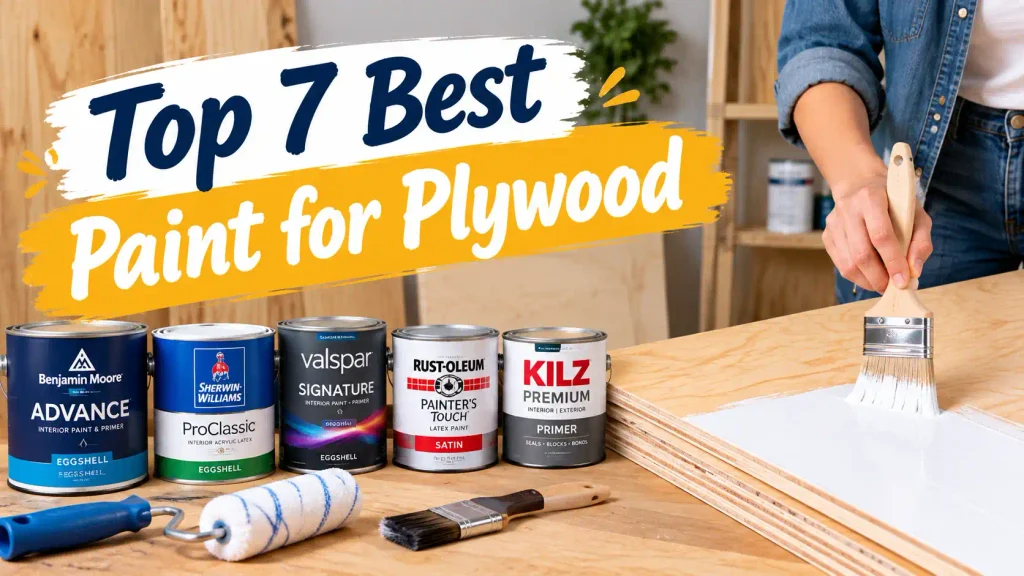
For most indoor plywood projects, acrylic latex paint or a durable water-based enamel is a practical choice. Exterior plywood usually benefits from a quality 100% acrylic exterior paint, while plywood floors need a coating designed to handle foot traffic. Below, you’ll find seven options to compare, along with tips for priming, painting, and protecting plywood.
Affiliate disclosure: As an Amazon Associate I earn from qualifying purchases.
Top Picks: 7 Paints for Plywood
- Benjamin Moore Advance Interior Paint – Best overall for smooth interior plywood furniture
- BEHR Premium Plus Interior Paint – Best for general interior plywood projects
- Rust-Oleum Painter’s Touch 2X Ultra Cover – Best for small plywood projects and crafts
- Sherwin-Williams Duration Exterior Acrylic Latex – Best premium option for compatible exterior plywood
- Valspar Duramax Exterior Paint – Best for outdoor plywood projects
- KILZ Porch & Patio Floor Paint – Best for plywood floors
- INSL-X Cabinet Coat Enamel – Best for plywood cabinets and built-ins
Comparison Table: 7 Best Paints for Plywood
| Product Name | Best For | Check Price |
|---|---|---|
| Benjamin Moore Advance Interior Paint | Smooth interior furniture and plywood panels | Check on Amazon |
| BEHR Premium Plus Interior Paint | General indoor plywood projects | Check on Amazon |
| Rust-Oleum Painter’s Touch 2X Ultra Cover | Small projects and crafts | Check on Amazon |
| Sherwin-Williams Duration Exterior | Compatible exterior plywood | Check on Amazon |
| Valspar Duramax Exterior Paint | Outdoor plywood projects | Check on Amazon |
| KILZ Porch & Patio Floor Paint | Plywood floors and walking surfaces | Check on Amazon |
| INSL-X Cabinet Coat Enamel | Plywood cabinets and built-ins | Check on Amazon |
Shopping note: These are tagged Amazon search links, not verified direct product listings. Some specialty paint lines are primarily sold through paint retailers. Confirm the exact product, intended surface, finish, container size, and current availability before ordering.
Top 7 Best Paints for Plywood Reviews
1. Benjamin Moore Advance Interior Paint – Best Overall
Benjamin Moore Advance Interior Paint is an excellent option to consider when you want a smooth, refined finish on interior plywood furniture, shelves, cabinets, and built-ins. Its waterborne alkyd formula is designed for interior trim, doors, and cabinets, making it relevant to plywood projects where a more polished enamel finish is desired.
One of its main attractions is its flow and leveling performance. When applied correctly over a properly prepared and primed surface, it can help reduce visible brush and roller marks. This is useful on plywood cabinet doors, bookcases, and furniture panels where an uneven finish can be noticeable.
Advance is available in different sheens, allowing you to choose a softer satin appearance or a more reflective finish. It also offers water cleanup, which is convenient compared with traditional solvent-based oil paint.
What makes it appealing
- Waterborne alkyd enamel formula
- Designed for interior doors, trim, and cabinets
- Smooth flow and leveling characteristics
- Suitable for compatible primed plywood furniture
- Available in different sheen options
- Water-based cleanup
Things to consider
This is a specialty interior coating, not a universal paint for every plywood application. Use a suitable primer on bare plywood and confirm compatibility with the panel and existing finish. It is not the right choice for exposed exterior plywood or a floor that receives regular foot traffic.
Best for: Interior plywood cabinets, furniture, shelving, and built-in projects where a smooth enamel finish is important.
2. BEHR Premium Plus Interior Paint – Best for General Interior Plywood Projects
BEHR Premium Plus Interior Paint is worth considering for general indoor plywood projects such as decorative wall panels, shelving, hobby surfaces, and other areas that do not experience heavy abrasion. Its water-based acrylic formula makes it convenient for many household painting jobs.
For plywood panels used indoors, a quality acrylic latex paint can provide an attractive finish without the stronger odor and cleanup requirements associated with many traditional oil-based coatings. It is available in a range of colors and sheen options, so you can coordinate painted plywood with the rest of your room.
The key to getting a good result is preparing the plywood before applying the paint. Bare plywood can absorb paint unevenly, particularly around cut edges and repaired areas. A compatible wood primer helps create a more uniform surface and improves the appearance of the finish coats.
What makes it appealing
- Water-based interior paint
- Suitable for many general indoor painting projects
- Available in a broad selection of colors
- Multiple sheen choices
- Convenient cleanup
- Useful for decorative plywood panels and low-wear surfaces
Things to consider
Ordinary interior wall paint is not the best option for every plywood application. For cabinet doors, frequently handled furniture, or floors, choose a coating specifically designed for those surfaces. Prime bare plywood first and follow the manufacturer’s recommendations.
Best for: Indoor plywood panels, decorative projects, and general surfaces that do not require a heavy-duty enamel finish.
3. Rust-Oleum Painter’s Touch 2X Ultra Cover – Best for Small Plywood Projects and Crafts
Rust-Oleum Painter’s Touch 2X Ultra Cover is a convenient spray-paint option for smaller plywood projects. It can be useful for decorative signs, craft panels, small shelves, display pieces, and other projects where using a brush or roller would be less convenient.
Spray paint can reach corners and narrow details more easily than some traditional application methods. It is also useful when working with small objects that have several exposed sides or decorative shapes.
The product is designed as a multi-surface spray paint, but plywood still needs proper preparation. Sand the surface, remove dust, and use a compatible primer when recommended for the particular panel and finish. Applying several light coats generally gives better control than trying to cover everything with one heavy pass.
What makes it appealing
- Convenient aerosol application
- Useful for small plywood crafts and decorative projects
- Available in multiple colors and finishes
- Helps reach edges and detailed areas
- Suitable for selected interior and exterior project applications when the label permits
- Practical for touch-ups and smaller surfaces
Things to consider
Spray paint is usually less economical for covering large plywood sheets. Aerosol application also requires suitable ventilation and protection against overspray. Check the label for the approved surfaces, indoor or outdoor use, and recommended drying conditions.
Best for: Small plywood crafts, decorative signs, display pieces, and projects where spray application is convenient.
4. Sherwin-Williams Duration Exterior Acrylic Latex – Best Premium Option for Compatible Exterior Plywood
Sherwin-Williams Duration Exterior Acrylic Latex is a premium exterior paint to compare for plywood applications where the manufacturer approves the specific surface and coating system. It is designed for exterior exposure and offers a durable finish for properly prepared outdoor surfaces.
Exterior plywood can expand and contract as moisture and temperature conditions change. A flexible exterior acrylic coating is generally a better starting point than a hard, brittle finish for broad plywood panels exposed to weather. The primer and topcoat should be selected as a compatible system, with particular attention paid to exposed edges.
Duration offers a range of colors and exterior finishes, giving you flexibility when painting suitable outdoor plywood structures or panels. A flat finish can help reduce the visibility of minor surface irregularities, while other sheens may be available depending on the product version.
What makes it appealing
- Premium exterior acrylic latex paint
- Designed for outdoor weather exposure
- Available in multiple colors
- Useful for compatible exterior wood applications
- Flexible coating characteristics
- Different finish options
Things to consider
Do not assume that every exterior wall paint is approved for every plywood panel. Check the current technical data sheet for wood or plywood suitability. Bare exterior plywood needs an appropriate exterior-rated primer, and all exposed edges should be carefully sealed and coated.
Best for: Suitable exterior plywood panels and structures where the manufacturer’s coating system specifically permits the application.
5. Valspar Duramax Exterior Paint – Best for Outdoor Plywood Projects
Valspar Duramax Exterior Paint is another exterior coating worth comparing for compatible plywood applications. It is intended for outdoor painting projects and can be considered when refreshing suitable exterior panels, sheds, and other painted wood surfaces.
Outdoor plywood needs more than a color change. Sunlight, rain, humidity, and repeated wet-dry cycles can affect the panel and its finish. A suitable exterior acrylic paint system can help protect the surface while accommodating some of the natural movement of wood.
Before applying this paint to plywood, check the exact product label and technical information. Pair the topcoat with an appropriate exterior wood primer, and give special attention to the cut edges, joints, and fastener holes where water can enter.
What makes it appealing
- Exterior paint category
- Suitable for comparing outdoor coating options
- Available in different color choices
- Useful for compatible exterior wood projects
- Designed for outdoor exposure
- Can be paired with a suitable exterior primer
Things to consider
The product’s exact approved substrates and application instructions should guide your choice. Paint alone cannot make ordinary plywood waterproof. Use a plywood grade appropriate for the outdoor application and protect edges and joints against water entry.
Best for: Outdoor plywood projects where the selected Valspar product is approved for the substrate and exposure conditions.
6. KILZ Porch & Patio Floor Paint – Best for Plywood Floors
KILZ Porch & Patio Floor Paint is worth considering when the plywood will be used as a floor or walking surface. Regular wall paint is not designed to withstand repeated foot traffic, furniture movement, and abrasion, so a floor-specific coating is a more appropriate category.
Plywood floors can be found in workshops, utility spaces, enclosed porches, and some interior renovation projects. These surfaces need a finish that can handle more physical wear than ordinary wall panels. A porch and patio floor paint is designed for walking surfaces and is therefore a better starting point for this type of project.
Before painting, make sure the plywood is structurally sound, firmly secured, clean, and dry. Sand rough areas, fill suitable defects, and follow the manufacturer’s instructions for priming and coating the particular wood surface.
What makes it appealing
- Designed for porch and patio floor applications
- More appropriate for walking surfaces than ordinary wall paint
- Useful for selected plywood floor projects
- Available in different colors
- Intended for surfaces exposed to regular foot traffic
- Suitable for comparing floor-specific coatings
Things to consider
Confirm that the exact product version is approved for your plywood floor and whether it requires a primer. Do not use it as a substitute for a waterproofing system. If the plywood is exposed to standing water or outdoor weather, the panel and entire floor assembly need appropriate moisture protection.
Best for: Compatible plywood floors in porches, workshops, and other areas where a floor-specific finish is needed.
7. INSL-X Cabinet Coat Enamel – Best for Plywood Cabinets and Built-Ins
INSL-X Cabinet Coat Enamel is a useful option to investigate for plywood cabinets, shelves, and built-in furniture. Cabinet coatings are designed for surfaces that need a smoother, more durable finish than ordinary wall paint can usually provide.
Plywood is frequently used for cabinet boxes, shelving, and storage units. These surfaces may receive repeated contact, cleaning, and occasional bumps, so a coating intended for cabinet refinishing can be a sensible choice when the product is compatible with the panel.
A carefully prepared plywood surface can help this type of enamel create a more uniform finish. Sanding, dust removal, and appropriate priming are particularly important around exposed edges and repaired areas.
What makes it appealing
- Cabinet-oriented enamel coating
- Useful for compatible plywood cabinetry
- Designed for a smooth refinishing appearance
- Suitable for selected furniture and built-in projects
- Alternative to ordinary interior wall paint
- Available in selected colors and finishes
Things to consider
Check the current product information for approved substrates and preparation requirements. Cabinet enamel is not intended to replace exterior paint or floor coatings. Bare plywood should be properly primed before applying the finish.
Best for: Plywood cabinets, built-in shelving, and furniture where a smooth, durable interior finish is desired.
How to Choose the Best Paint for Plywood
The right paint depends on the location, purpose, and condition of the plywood. Consider these factors before buying.
1. Decide Whether the Plywood Is Indoors or Outdoors
This is one of the most important decisions.
For indoor plywood furniture, cabinets, and shelves, acrylic enamel or a waterborne alkyd enamel can provide a smooth, practical finish. General interior acrylic paint may be sufficient for decorative panels and low-wear surfaces.
For outdoor plywood, look for a quality exterior acrylic coating approved for wood. Exterior products are designed to handle sunlight and changing weather conditions better than interior paints.
Do not use interior paint on outdoor plywood simply because it is less expensive or available in the color you want.
2. Match the Paint to the Project
Different plywood applications have different requirements.
- Furniture: Water-based enamel or a suitable furniture coating can provide a smooth, durable finish.
- Cabinets: Cabinet enamel is a useful option for surfaces that receive frequent handling.
- Walls and decorative panels: Interior acrylic latex paint is often practical.
- Floors: Use a floor coating approved for the plywood substrate.
- Outdoor panels: Choose an exterior acrylic paint system designed for wood.
- Crafts and signs: Spray paint can be convenient for smaller projects.
3. Consider Durability
A plywood shelf used for decoration does not need the same coating as a workshop floor or kitchen cabinet.
For surfaces that receive frequent contact, consider a durable enamel or a coating specifically intended for furniture and cabinetry. For floors, use a product designed for foot traffic and abrasion.
4. Check Primer Compatibility
Bare plywood generally needs a suitable primer before painting. The primer helps control absorption, improves adhesion, and can reduce discoloration caused by wood extractives.
Choose a primer based on the plywood, the paint, and whether the project is indoors or outdoors. A stain-blocking primer may be useful when knots, resin, or discoloration could bleed through the finish.
5. Choose the Right Sheen
Paint sheen affects the final appearance and how easily the surface can be cleaned.
- Flat or matte: Creates a low-reflection appearance and can hide minor surface imperfections.
- Eggshell: Offers a subtle sheen for decorative interior panels.
- Satin: A practical choice for many shelves, furniture pieces, and cabinets.
- Semi-gloss: Easier to wipe clean and often suitable for cabinets and trim.
- Gloss: Creates a reflective finish but can make sanding marks and surface defects more noticeable.
For many plywood furniture and cabinet projects, satin or semi-gloss is a sensible starting point.
6. Think About Moisture Protection
Plywood can swell, delaminate, or deteriorate if water enters the panel. Paint can help reduce moisture exposure, but it does not make ordinary plywood waterproof.
For outdoor applications, select an appropriate exterior-grade panel and protect every exposed edge, joint, and fastener hole. For areas with regular water exposure, use a suitable waterproofing system rather than relying on paint alone.
7. Compare Application and Drying Requirements
Some paints are designed for brush or roller application, while others are better suited to spraying. Consider the size and shape of your project before choosing.
Also check the recommended drying time, recoat window, application temperature, and full curing period. A finish that feels dry to the touch may not yet be hard enough for heavy use.
How to Prepare Plywood Before Painting
Proper preparation helps prevent uneven coverage, rough texture, and peeling. Do not rush this stage, especially when working with bare plywood.
Step 1: Inspect the Plywood
Check the panel for loose veneer, delamination, cracks, holes, rough patches, and water damage.
Replace severely damaged plywood rather than trying to hide structural problems under paint. Make sure the panel is dry and stable before beginning.
Step 2: Sand the Surface
Lightly sand the plywood face to smooth rough fibers and improve paint adhesion. Use a suitable grit for the condition of the panel, taking care not to sand through the thin face veneer.
Sand exposed edges separately because they can be rougher and more absorbent than the main surface.
Step 3: Fill Holes and Imperfections
Use a suitable wood filler for small holes, dents, and surface defects. Allow the filler to dry fully, then sand it level with the surrounding plywood.
For visible furniture and cabinet projects, careful filling can make the final paint finish look much more professional.
Step 4: Remove Dust
Vacuum the panel and wipe it with a clean, dry, lint-free cloth. Remove dust from corners, edges, and filled areas.
Do not apply primer over sanding dust. Remaining particles can create bumps and reduce the quality of the finish.
Step 5: Seal the Edges
Plywood edges absorb moisture and paint more readily than the broad faces. Apply a compatible primer or edge-sealing product to exposed edges, following the manufacturer’s instructions.
For exterior projects, give extra attention to bottom edges, joints, and cutouts where water may collect.
Step 6: Apply Primer
Use a primer designed for plywood or wood and compatible with the selected topcoat.
A stain-blocking primer can help prevent discoloration, while a suitable bonding primer can improve adhesion on difficult or previously coated surfaces. Allow it to dry as directed before painting.
Step 7: Sand the Primer Lightly
If recommended by the primer manufacturer, lightly sand the dried primer to remove raised fibers and small imperfections. Remove all sanding dust before applying the finish paint.
How to Paint Plywood for a Smooth Finish
Once the surface is properly prepared, follow these steps to apply the paint.
Step 1: Protect the Work Area
Place a drop cloth beneath the plywood and protect nearby surfaces. If spraying, work in a suitable, well-ventilated area and protect surrounding objects from overspray.
Step 2: Stir the Paint
Stir the paint thoroughly according to the label. Avoid shaking a can unnecessarily if it can introduce bubbles into the coating.
If you are using multiple cans of the same color, mixing them together in a larger container can help maintain consistent color across the project.
Step 3: Paint the Edges First
Use a suitable brush to coat the exposed edges and corners. These areas can absorb more paint, so apply the coating evenly without leaving thick drips.
Allow the first application to dry according to the product instructions.
Step 4: Apply the First Coat to the Face
Use a quality brush, roller, or sprayer suitable for the selected paint. Apply a thin, even coat and work consistently across the panel.
Avoid applying too much paint at once. Thick coats can dry unevenly and leave visible marks.
Step 5: Allow the Paint to Dry
Follow the manufacturer’s recommended recoat time. Temperature, humidity, ventilation, and application thickness can all affect drying.
Do not rush the next coat just because the surface looks dry.
Step 6: Sand Lightly if Needed
If the first coat has raised wood fibers or left small imperfections, lightly sand it when the paint instructions allow. Remove the dust before applying the next coat.
Step 7: Apply the Final Coat
Apply another thin, even coat to improve coverage and create a consistent finish. Some projects may need additional coats depending on the paint, color change, and surface condition.
Step 8: Let the Paint Cure
Allow the finished plywood to cure according to the product instructions before placing objects on it, installing hardware, or exposing it to heavy use.
Drying and full curing are different. Handle the panel gently until the finish has hardened sufficiently.
Common Mistakes to Avoid When Painting Plywood
Skipping Primer
Bare plywood absorbs paint unevenly. Without suitable primer, the finish may look patchy, and stains can sometimes bleed through lighter colors.
Ignoring the Edges
The edges of plywood are particularly absorbent. Leaving them unsealed can allow moisture to enter and contribute to swelling or delamination.
Applying Thick Coats
One heavy coat is not necessarily better than two thin coats. Thick applications can produce drips, uneven drying, and a rough finish.
Using Interior Paint Outdoors
Interior paint is not formulated for prolonged outdoor weather exposure. Use an exterior coating approved for the plywood application.
Using Wall Paint on Floors
Ordinary wall paint is not designed to withstand repeated foot traffic. Choose a floor coating that specifically permits application to the plywood substrate.
Painting Damp or Damaged Plywood
Paint should not be used to conceal water damage, delamination, or unstable panels. Repair or replace damaged material and allow the surface to dry before coating.
Sanding Through the Face Veneer
Plywood face veneers can be thin. Aggressive sanding can expose the underlying layers and create defects that are difficult to hide.
Frequently Asked Questions
What is the best plywood paint?
The best paint depends on the application. Benjamin Moore Advance is a strong option for smooth interior furniture and cabinets, while a quality exterior acrylic paint is generally a better choice for compatible outdoor plywood. For floors, choose a floor coating approved for plywood.
Can you paint directly onto plywood?
Yes, but applying paint directly to bare plywood may produce uneven absorption and a rough finish. Sanding and priming first usually create better adhesion and more consistent coverage.
Does plywood need primer before painting?
Yes, bare plywood generally benefits from a suitable primer. Primer helps seal the porous surface, improves adhesion, and can reduce discoloration. Choose an interior or exterior primer compatible with the selected paint.
Is acrylic or oil-based paint better for plywood?
Acrylic latex is a practical choice for many plywood projects because it offers flexibility, easy cleanup, and relatively quick drying. Oil-based products can be useful in certain interior applications, but rigid oil or alkyd finish systems are generally not the preferred choice for weather-exposed plywood. Follow the panel and coating manufacturer’s recommendations.
What is the best paint for outdoor plywood?
A quality 100% acrylic exterior paint system is a strong starting point for compatible outdoor plywood. Use an exterior-rated primer and protect exposed edges carefully. Remember that paint reduces moisture exposure but does not make ordinary plywood waterproof.
What is the best paint for plywood floors?
A porch-and-floor or other floor-specific coating approved for plywood is generally more suitable than ordinary interior wall paint. Confirm that the exact product is designed for wood floors and follow its preparation and primer requirements.
Can I use spray paint on plywood?
Yes. Multi-surface spray paint can work well on small plywood crafts, signs, and decorative pieces. Sand and prime the surface when required, apply light coats, and use proper ventilation. Spray paint may not be economical for large panels.
How many coats of paint does plywood need?
A common system is one suitable primer coat followed by two finish coats. The exact number depends on the product, plywood porosity, color change, and intended use. Follow the manufacturer’s instructions.
How do I get a smooth finish on plywood?
Sand the surface, fill visible defects, remove dust, apply a suitable primer, and lightly sand the primer if recommended. Use a quality brush, fine-finish roller, or sprayer and apply thin, even coats.
Can plywood be painted without sanding?
It is possible in some situations, but light sanding usually improves the result. It helps smooth raised fibers and creates a better surface for primer and paint to adhere to. Avoid aggressive sanding that could damage the face veneer.
How do you stop plywood edges from absorbing paint?
Apply a compatible primer or edge-sealing product to the exposed edges. Depending on the project, you may need more than one application because the layered edge grain can absorb coating more readily than the face.
Is latex paint good for plywood?
Yes. Acrylic latex paint is suitable for many interior plywood projects when the surface is properly prepared and primed. Exterior acrylic latex is also a common choice for compatible outdoor plywood applications.
Does painting plywood make it waterproof?
No. Paint can help reduce moisture absorption, but it does not make plywood completely waterproof. For wet or outdoor environments, use an appropriate plywood grade and a suitable waterproofing or protective system. Seal edges, joints, and cutouts carefully.
Final Words
The best paint for plywood is the one that matches the panel’s location and purpose. Benjamin Moore Advance and INSL-X Cabinet Coat are options to compare for interior furniture and cabinetry, while BEHR Premium Plus can work for general indoor projects. For outdoor plywood, look for a compatible exterior acrylic paint system, and choose a dedicated floor coating for plywood floors.
Do not overlook preparation. Sand the surface, fill imperfections, prime bare plywood, and seal exposed edges before applying the finish coats. With the right coating system and careful application, plywood can achieve an attractive finish that stands up better to everyday use.
Helpful Resources
- APA – The Engineered Wood Association: Plywood Product and Finishing Guidance – Technical guidance on plywood paint systems, primers, exterior applications, and edge treatment.
- Tikkurila: How Do I Paint Plywood? – Practical information about preparing, priming, and choosing interior or exterior finishes for plywood.