
The best porch paints can transform a worn porch into a cleaner, more attractive outdoor space while protecting the surface from everyday foot traffic and changing weather. Whether your porch has wooden boards, concrete steps, or a masonry floor, choosing a coating designed for outdoor floors is important. Ordinary wall paint is not made to handle the same wear, moisture, and frequent contact.
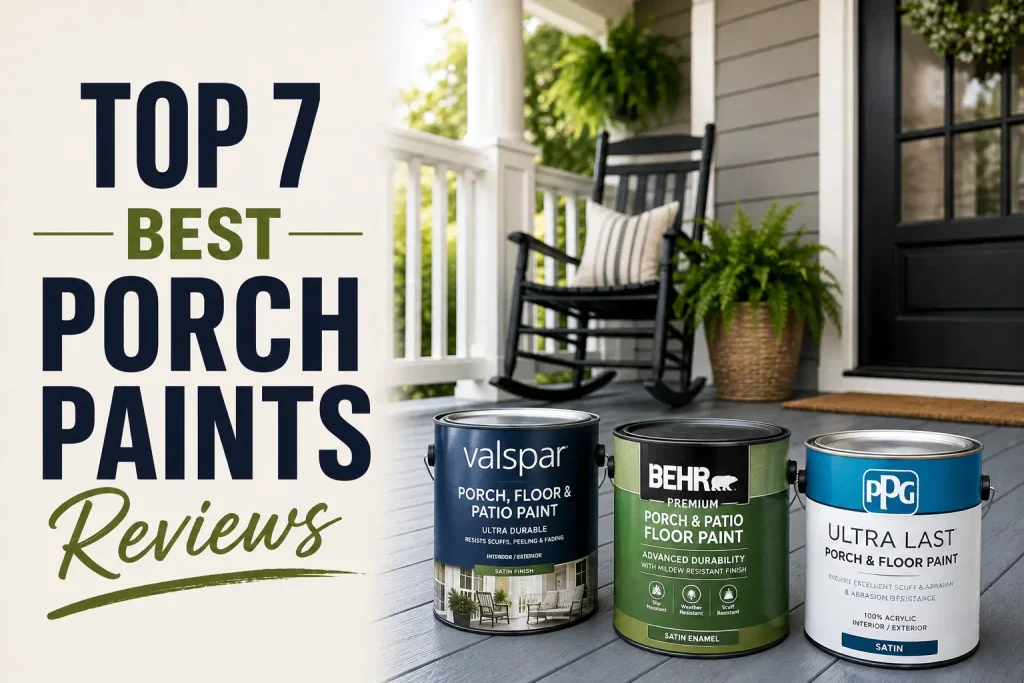
Porch paints are available in different formulas and finishes, including acrylic floor enamels, textured anti-slip coatings, and durable porch-and-patio paints. Some are suitable for both wood and concrete, while others are designed specifically for masonry or high-traffic walkways. Below, you’ll find seven options worth comparing, along with their advantages, limitations, and advice for choosing the right coating.
Affiliate disclosure: As an Amazon Associate I earn from qualifying purchases.
Top Picks: 7 Porch Paints
- KILZ Porch & Patio Floor Paint – Best overall for traditional porch floors
- BEHR PREMIUM Porch & Patio Floor Paint – Best for wood and concrete surfaces
- Rust-Oleum Porch & Floor Coating – Best for weather and wear resistance
- Valspar Porch, Floor & Patio Latex Paint – Best for color and finish choices
- Glidden Porch and Floor Paint – Best for everyday porch maintenance
- INSL-X Sure Step Acrylic Anti-Slip Paint – Best for added traction on concrete porches
- FIXALL Skid Grip Anti-Slip Coating – Best for textured outdoor concrete surfaces
Comparison Table: Best Porch Paint
| Product Name | Best For | Check Price |
|---|---|---|
| KILZ Porch & Patio Floor Paint | Traditional wood and concrete porches | Check on Amazon |
| BEHR PREMIUM Porch & Patio Floor Paint | Wood and concrete surfaces | Check on Amazon |
| Rust-Oleum Porch & Floor Coating | Weather and wear resistance | Check on Amazon |
| Valspar Porch, Floor & Patio Latex Paint | Color and finish choices | Check on Amazon |
| Glidden Porch and Floor Paint | Everyday porch maintenance | Check on Amazon |
| INSL-X Sure Step Acrylic Anti-Slip Paint | Added traction on concrete | Check on Amazon |
| FIXALL Skid Grip Anti-Slip Coating | Textured concrete surfaces | Check on Amazon |
Shopping note: These are tagged Amazon search links, not verified direct product listings. Check the exact product name, surface compatibility, finish, container size, and current availability before purchasing. Some specialty porch coatings may be easier to find through paint retailers.
7 Best Porch Paints Reviews
1. KILZ Porch & Patio Floor Paint – Best Overall
KILZ Porch & Patio Floor Paint is a practical option for homeowners who want a dedicated coating for outdoor floors. It is designed for porch and patio applications, making it more appropriate for these surfaces than ordinary interior wall paint.
This product is worth considering for properly prepared wood and concrete porch floors. Its low-lustre finish creates a relatively subtle appearance that works well with traditional home exteriors, covered porches, and outdoor sitting areas. It is also available in selected colors, allowing you to coordinate the floor with your siding, trim, railings, and outdoor furniture.
A porch floor needs to handle more than occasional foot traffic. Dirt, moisture, sunlight, and furniture movement can gradually affect the finish. A dedicated floor enamel helps provide a coating intended for these conditions, although preparation and proper drying remain essential.
What makes it appealing
- Designed for porch and patio floor applications
- Suitable for compatible wood and concrete surfaces
- Low-lustre finish for a subdued appearance
- Available in selected colors
- Useful for residential outdoor floor projects
- Practical for refreshing an older porch
Things to consider
The exact preparation requirements depend on whether the surface is bare wood, previously painted wood, or concrete. Some surfaces may need primer or additional preparation. Check the current product label for approved surfaces, coverage, application conditions, and recoat instructions.
Best for: Homeowners who want a traditional porch floor coating for compatible wood or concrete surfaces.
2. BEHR PREMIUM Porch & Patio Floor Paint – Best for Wood and Concrete
BEHR PREMIUM Porch & Patio Floor Paint is a versatile choice for homeowners who want a finish that works across different porch materials. Its 100% acrylic formula is intended for wood and concrete surfaces, making it useful for a variety of outdoor floor projects.
One advantage is the selection of available colors and finishes. You can choose a traditional neutral shade or a more noticeable color to change the appearance of your porch. Its low-lustre option offers a relatively understated finish, while the gloss version creates a more reflective appearance.
This paint is also worth considering when you want a coating from a widely available paint brand. It can be used for suitable high-traffic indoor and outdoor surfaces, but the surface must be properly prepared before application.
What makes it appealing
- 100% acrylic formula
- Suitable for compatible wood and concrete
- Available in low-lustre and gloss finishes
- Multiple color options
- Designed for high-traffic floor surfaces
- Useful for porch and patio updates
Things to consider
Acrylic porch paint still requires a clean, sound, dry surface. Do not apply it over loose or peeling paint, damp concrete, or untreated contamination. Check whether your particular project needs primer and follow the manufacturer’s recoat and curing instructions.
Best for: Homeowners who want a versatile porch paint for compatible wood or concrete floors with a choice of finishes.
3. Rust-Oleum Porch & Floor Coating – Best for Weather and Wear Resistance
Rust-Oleum Porch & Floor Coating is a useful option for outdoor surfaces that experience regular foot traffic and changing weather. Its urethane-fortified acrylic formula is designed to provide a decorative and protective finish on compatible wood and concrete surfaces.
The product is intended to resist scuffing, staining, cracking, and peeling. Its weather-resistant formulation makes it worth considering for porches, patios, walkways, stairs, and other approved surfaces. It is also designed for easier cleanup with soap and water.
A satin finish can be a good middle ground if you do not want an extremely glossy floor. It provides some sheen without creating the highly reflective appearance of a gloss coating.
One important point is that this product is not intended for garage floors or driveways. Those surfaces have different demands and should receive a coating specifically approved for vehicle traffic.
What makes it appealing
- Urethane-fortified acrylic formula
- Designed for compatible wood and concrete
- Interior and exterior applications
- Resistance to scuffing and staining
- Intended to resist cracking and peeling
- Soap-and-water cleanup
Things to consider
Although it is designed for outdoor use, correct surface preparation is still essential. Check the label for temperature limits, drying time, and approved surfaces. Avoid applying it to areas that are unsuitable for this coating, including garage floors and driveways.
Best for: Homeowners who want a porch coating designed to handle regular foot traffic and outdoor exposure.
4. Valspar Porch, Floor & Patio Latex Paint – Best for Color and Finish Choices
Valspar Porch, Floor & Patio Latex Paint is worth considering if you want flexibility when selecting a color and finish for your outdoor space. The product line includes coatings intended for compatible wood and concrete floors, making it relevant to many porch renovation projects.
Its latex formula is designed to provide a durable, weather-resistant finish. Depending on the product version, you can choose from satin or gloss options. Satin is useful when you prefer a softer appearance, while gloss creates a brighter and more reflective surface.
Valspar also offers a separate anti-skid version for applications where added traction is important. This distinction matters because the standard porch-and-floor paint and textured anti-skid coating are not interchangeable products.
For a typical wooden porch or concrete patio, the standard latex version may be the more appropriate choice. Always confirm the exact product label before purchasing.
What makes it appealing
- Designed for compatible wood and concrete floors
- Available in selected colors
- Satin and gloss options in the product line
- Weather-resistant finish
- Suitable for certain interior and exterior floor projects
- Water cleanup for the latex formula
Things to consider
The standard latex paint is not the same as Valspar’s anti-skid coating. If traction is a priority, compare the dedicated textured version instead. Follow the product instructions for preparation and avoid applying it to surfaces where water regularly pools.
Best for: Homeowners who want color flexibility and a conventional porch floor finish for compatible wood or concrete.
5. Glidden Porch and Floor Paint – Best for Everyday Porch Maintenance
Glidden Porch and Floor Paint is another option for refreshing worn-looking outdoor floors. It is designed for porch and floor applications, with product versions intended for interior and exterior use.
Some versions feature Cool Surface Technology, which is designed to help reduce surface heat compared with conventional coatings under certain conditions. This may be worth investigating if your porch receives substantial direct sunlight and you want a more comfortable walking surface.
The product line also includes different finishes and formulations, so it is important to select the correct version for your project. A standard porch-and-floor paint should not automatically be treated as equivalent to a specialized anti-slip coating.
Glidden is worth comparing if you want a familiar paint brand and a practical option for maintaining an existing porch. As with other floor coatings, the result depends heavily on the condition of the surface and the quality of preparation.
What makes it appealing
- Designed for porch and floor surfaces
- Selected versions offer Cool Surface Technology
- Available in different colors
- Suitable for certain interior and exterior applications
- Useful for routine porch renovation projects
- Practical option for homeowners comparing floor paints
Things to consider
Check the exact product version and its approved surfaces before buying. The Cool Surface feature is not a substitute for shade, ventilation, or a slip-resistant finish. Follow the label’s instructions for application temperature, drying, and recoat time.
Best for: Homeowners who want a porch floor paint from an established brand, particularly when comparing cool-surface options.
6. INSL-X Sure Step Acrylic Anti-Slip Paint – Best for Added Traction on Concrete Porches
INSL-X Sure Step Acrylic Anti-Slip Paint is a specialized choice for porches and walkways where traction is an important consideration. Unlike a conventional smooth floor enamel, this coating is designed to create a textured surface that helps reduce the risk of slipping.
It is particularly worth considering for concrete steps, entryways, patios, and other areas that may become slippery when wet. The acrylic coating is intended for interior and exterior applications and is designed to resist abrasion and standing water exposure under the conditions specified by the manufacturer.
The product can also fill and seal minor surface cracks, although it should not be considered a repair solution for major cracks or structural damage.
The manufacturer recommends two coats and provides a coverage estimate of approximately 80–120 square feet per gallon. It also specifies a period before light and heavy foot traffic can resume, so plan your project accordingly.
What makes it appealing
- Acrylic anti-slip coating
- Textured finish for added traction
- Suitable for approved concrete and other listed substrates
- Designed for stairs, walkways, and patios
- Abrasion-resistant finish
- Available in selected colors
Things to consider
The textured finish may feel rougher underfoot than a traditional smooth porch enamel. It is important to follow the manufacturer’s application and curing instructions. Allow the recommended time before returning the surface to normal foot traffic.
Best for: Concrete porch steps, walkways, and outdoor areas where added traction is more important than a smooth decorative finish.
7. FIXALL Skid Grip Anti-Slip Coating – Best for Textured Outdoor Concrete Surfaces
FIXALL Skid Grip Anti-Slip Coating is a specialized textured coating for outdoor surfaces where a higher-grip finish is desired. Its 100% acrylic formula is designed for asphalt, concrete, and other approved surfaces that need additional traction.
This product is particularly relevant for concrete porch floors, entry areas, steps, and walkways. Its textured finish can provide a more secure walking surface than a conventional smooth paint, making it worth comparing for areas exposed to rain or frequent moisture.
FIXALL offers several color options, allowing you to coordinate the coated surface with the rest of your outdoor space. It is also designed for residential and commercial applications, including pedestrian walkways and recreational areas.
Because this is a textured safety coating, it is not necessarily the best choice for someone who wants a smooth, decorative finish on a wooden porch. Check the manufacturer’s approved surfaces before purchasing.
What makes it appealing
- 100% acrylic coating
- Textured, slip-resistant finish
- Suitable for approved concrete and asphalt surfaces
- Designed for outdoor walkways and entry areas
- Available in several colors
- Intended for residential and commercial applications
Things to consider
The textured finish may not suit every porch design or bare-foot walking preference. Coverage can also differ from ordinary floor paint because of the coating’s texture. Check the product’s technical information and confirm compatibility with your exact surface.
Best for: Concrete porches, entryways, and outdoor walkways where a durable textured surface and added traction are priorities.
How to Choose the Best Porch Paint
The right product depends on the material, location, foot traffic, and finish you want. Consider these factors before choosing a porch coating.
1. Identify the Porch Surface
Start by identifying what you are painting. Wood and concrete have different surface characteristics, so they may require different preparation methods and coating systems.
Wood porch: Choose a product specifically approved for exterior wood floors or porches. The coating should be suitable for the condition of the boards and the expected movement of the wood.
Concrete porch: Look for a coating approved for concrete and masonry. Some concrete surfaces need cleaning, etching, or a compatible primer before painting.
Previously painted porch: Check the condition of the existing coating. Loose, peeling, or poorly bonded paint should be removed before applying a new finish.
Metal railings and trim: Do not assume that porch floor paint is suitable for every railing or metal component. Select a coating specifically approved for the material and application.
2. Choose the Right Paint Formula
Different porch paints use different binders and coating technologies.
Acrylic latex paint: Water-based acrylic floor paints are popular for porch projects because they are relatively easy to apply and clean up. They are available in products designed for wood and concrete.
Urethane-fortified acrylic: These coatings combine acrylic technology with urethane modification. They are designed to improve resistance to wear and other everyday stresses.
Textured acrylic coating: Anti-slip products contain texture designed to improve traction. They are useful for steps, walkways, and certain concrete porch surfaces.
Always check the product label rather than choosing solely by the formula name. Surface compatibility and application instructions matter just as much.
3. Consider Slip Resistance
A porch can become slippery when rain, dirt, or algae accumulates on the surface. If your porch has exposed steps or receives frequent rainfall, traction deserves special attention.
Consider the following:
- Smooth finishes are often easier to clean.
- Textured coatings can provide added grip.
- Anti-slip products are useful for steps and walkways.
- Some coatings require a separate approved anti-slip additive.
- A painted surface can still become slippery when contaminated or wet.
If safety is your priority, compare dedicated products such as INSL-X Sure Step or FIXALL Skid Grip rather than assuming every porch paint provides the same traction.
4. Select a Suitable Finish
Porch paints are available in several finishes. Your choice affects the appearance and maintenance of the floor.
| Finish | Appearance | Best Use |
|---|---|---|
| Flat | Very little reflection | Traditional, understated appearance |
| Low-lustre | Soft, subtle sheen | General porch floors |
| Satin | Gentle reflection | Everyday outdoor floor projects |
| Gloss | More reflective | Decorative floors where gloss is desired |
| Textured | Visible surface texture | Steps and walkways needing added traction |
A low-lustre or satin finish is often a practical choice for a conventional porch. A textured finish may be more suitable where slip resistance matters.
5. Check Weather and Moisture Resistance
Exterior porch floors are exposed to sunlight, rain, humidity, and temperature changes. Choose a coating specifically intended for the expected exposure.
Look for product information about:
- Exterior suitability
- Weather resistance
- UV and color retention
- Moisture exposure
- Mildew resistance
- Resistance to scuffing and peeling
Even a quality exterior coating can fail if it is applied to damp wood or concrete. Make sure the surface is dry enough for the selected product.
6. Compare Coverage and Container Size
Coverage estimates help you calculate how much paint to buy. However, actual coverage depends on surface texture, porosity, color changes, and application method.
Rough or unsealed concrete can absorb more paint than a smooth, previously coated surface. Old wooden boards may also require additional material if the finish is worn or uneven.
Measure the porch before shopping. Multiply its length by its width to calculate the approximate floor area, then compare that figure with the product’s coverage estimate. Remember to account for the recommended number of coats.
7. Review Drying and Curing Time
Dry-to-touch time does not necessarily mean the floor is ready for normal use. Some coatings need additional time before they can handle regular foot traffic, furniture, or outdoor conditions.
Before buying, check:
- Time before applying another coat
- Time before light foot traffic
- Time before heavy foot traffic
- Full curing time
- Temperature and humidity requirements
Plan your project so people and pets can stay off the freshly coated porch until the product instructions allow it.
Best Porch Paint for Wood vs. Concrete
The best choice depends on the material you are coating. Although some products are approved for both wood and concrete, others have more specific uses.
| Porch Surface | Suitable Product Type | Important Consideration |
|---|---|---|
| Wooden porch boards | Exterior porch and floor enamel | Check compatibility with exterior wood |
| Concrete porch floor | Concrete-approved porch floor paint | Prepare porous concrete properly |
| Concrete steps | Anti-slip acrylic coating | Added traction can improve grip |
| Outdoor walkway | Textured floor coating | Confirm the product is rated for exterior use |
| Previously painted wood | Compatible porch floor paint | Remove loose paint and test adhesion |
| Previously painted concrete | Compatible concrete floor coating | Check the existing coating’s condition |
For a wooden porch, begin with a conventional floor paint approved for exterior wood. For a concrete porch with slippery steps, consider a dedicated textured coating. Avoid using a product on a surface that is not listed on its label.
How to Paint a Porch Floor
Proper preparation is one of the most important parts of a successful porch painting project. Follow these general steps and adjust them according to the product manufacturer’s instructions.
Step 1: Check the Porch Condition
Inspect the entire floor before purchasing paint. Look for peeling paint, loose boards, cracks, mildew, rust stains, and areas where water collects.
Replace damaged wood and address drainage problems before painting. A new coating cannot correct structural damage or ongoing moisture problems.
Step 2: Remove Furniture and Clean the Surface
Move furniture, planters, rugs, and other objects away from the porch. Sweep away loose dirt and debris.
Wash the floor using a suitable cleaner for the surface. Remove grease, mildew, and other contaminants, then rinse as directed. Allow the porch to dry completely.
Step 3: Remove Loose or Peeling Paint
Scrape away loose coating and flaking material. Sand rough edges so the transition between the old finish and exposed surface is smoother.
If the existing paint is severely damaged or incompatible with the new coating, more extensive removal may be necessary.
Step 4: Sand and Repair the Surface
For wood, sand rough boards and remove splinters. Replace rotten or damaged sections rather than covering them with paint.
For concrete, repair suitable minor cracks using an appropriate repair product. Allow repairs to cure according to their instructions before painting.
Do not paint over active water intrusion, major structural cracks, or deteriorating concrete.
Step 5: Remove Dust and Residue
After scraping and sanding, remove all dust. Use a vacuum, brush, or suitable cleaning method to ensure that the surface is free from loose particles.
Any remaining dust can interfere with adhesion and create an uneven finish.
Step 6: Apply Primer When Required
Some porch paints are designed for properly prepared surfaces without a separate primer. Others require primer on bare wood, bare concrete, repaired areas, or certain previously coated surfaces.
Use only a primer approved for the substrate and compatible with the selected topcoat. Follow the manufacturer’s instructions for drying and recoat time.
Step 7: Protect Nearby Areas
Use painter’s tape and drop cloths to protect siding, railings, doors, steps, and landscaping. Make sure the masking materials are secure before opening the paint.
Keep pets and children away from the work area.
Step 8: Apply the First Coat
Stir the paint thoroughly before use. Apply it with a suitable roller, brush, or other recommended tool.
Work in manageable sections and maintain an even application. For wooden boards, follow the direction of the grain where appropriate. Avoid applying a thick coat simply to achieve faster coverage.
Step 9: Apply the Second Coat
Allow the first coat to dry for the period specified by the manufacturer. Apply another coat if required.
Two properly applied coats may provide more uniform coverage than one heavy coat, but the exact coating system should determine the number of coats.
Step 10: Allow the Porch to Cure
Keep the surface protected while it dries and cures. Avoid moving furniture back too early or allowing people to walk on it before the specified time.
Follow the label’s instructions for light foot traffic, heavy foot traffic, and exposure to rain.
Tips for Making Porch Paint Last Longer
Prepare the Surface Thoroughly
Dirt, mildew, loose paint, and moisture can interfere with adhesion. Take time to clean and prepare the porch before applying the first coat.
Avoid Painting Damp Surfaces
Moisture trapped beneath a coating can contribute to peeling and other finish problems. Make sure the surface is sufficiently dry according to the product instructions.
Choose a Product for the Exact Material
A coating approved for concrete is not automatically suitable for exterior wood. Confirm the approved surfaces before buying.
Apply Thin, Even Coats
Heavy application can cause uneven drying, runs, and other defects. Follow the recommended spreading rate and coat thickness.
Watch the Weather Forecast
Avoid painting when rain is expected within the product’s specified protection period. Extreme heat, cold, or humidity can also affect application and curing.
Use an Anti-Slip Product Where Needed
For steps and frequently wet concrete areas, a suitable textured coating may be more appropriate than a smooth enamel. Make sure the product is approved for the intended surface.
Maintain the Surface
Sweep away dirt and leaves regularly. Clean spills promptly and use cleaning products compatible with the cured coating.
Inspect the floor periodically for damage, peeling, or areas where water collects.
Common Porch Painting Mistakes to Avoid
Using Ordinary Wall Paint on a Porch Floor
Interior wall paint is not designed for the abrasion and foot traffic of an outdoor floor. Choose a coating specifically approved for porch and floor applications.
Painting Over Dirt or Mildew
Contamination can prevent proper adhesion. Clean the surface and address mildew before applying paint.
Ignoring Moisture Problems
Painting damp wood or concrete can lead to coating failure. Resolve leaks, drainage issues, and persistent dampness first.
Skipping Surface Repairs
Loose boards, rotten wood, and damaged concrete should be repaired before painting. A coating cannot make an unstable surface sound.
Choosing a Smooth Finish for a Slippery Area
A smooth coating may not be the best choice for exposed steps or wet walkways. Consider a dedicated anti-slip product where added traction is needed.
Applying Too Much Paint
Thick coats can dry unevenly and may take longer to cure. Follow the recommended application rate.
Rushing the Curing Process
Walking on the porch or replacing furniture too soon can damage a fresh finish. Follow the manufacturer’s full return-to-service instructions.
Frequently Asked Questions
What is the best paint for a porch floor?
KILZ Porch & Patio Floor Paint is a strong option for conventional porch floors, while BEHR PREMIUM Porch & Patio Floor Paint is worth considering for compatible wood and concrete. For concrete steps or walkways where traction is important, INSL-X Sure Step and FIXALL Skid Grip are specialized alternatives.
What type of paint should I use on a wooden porch?
Choose an exterior porch and floor paint specifically approved for wood. A suitable acrylic or urethane-fortified floor enamel can provide a decorative finish intended for foot traffic and outdoor exposure. Prepare the boards carefully before applying it.
Can I use porch paint on concrete?
Yes, provided the selected product specifically lists concrete as an approved surface. Clean the concrete, remove loose material, repair suitable defects, and follow the manufacturer’s preparation instructions.
Is porch paint waterproof?
Porch paint can provide protection against ordinary moisture exposure, but it should not automatically be considered a waterproofing membrane. Persistent standing water, water intrusion, or dampness beneath the surface can still cause coating problems.
Should porch paint be flat or satin?
Flat and low-lustre finishes provide a more understated appearance, while satin offers a little more sheen. The best choice depends on the desired look and the product’s intended use. If slip resistance is a concern, compare textured coatings rather than relying on sheen alone.
Is anti-slip porch paint worth it?
Anti-slip paint is worth considering for concrete steps, walkways, and outdoor areas that become slippery when wet. A textured coating can provide additional grip, although regular cleaning and maintenance are still important.
How many coats of porch paint should I apply?
The required number depends on the product, surface condition, and color change. Many porch floor systems require two finish coats, but some products have different instructions. Follow the label rather than assuming one coat is sufficient.
Do I need to prime a porch before painting?
Not always. Some porch paints are designed for certain properly prepared surfaces without a separate primer. Bare wood, bare concrete, repaired areas, and previously coated surfaces may have different requirements. Check the product label before applying paint.
How long does porch paint take to dry?
Drying time varies by formula, temperature, humidity, and coat thickness. A surface may become dry to the touch before it is ready for foot traffic. Follow the manufacturer’s instructions for recoating, light use, heavy use, and full curing.
Can I paint over old porch paint?
Yes, if the existing coating is firmly attached and compatible with the new product. Remove loose or peeling areas, clean the floor, prepare the surface, and check whether the new coating requires a primer.
What is the best color for a porch floor?
Gray, slate, beige, white, and muted blue are popular choices. Gray is practical for hiding some everyday dirt, while lighter shades can make a small porch feel brighter. Choose a color that complements your home’s exterior and outdoor furniture.
Can I paint a porch when it is humid?
High humidity can slow drying and affect coating performance. Check the product’s temperature and humidity requirements. Avoid painting when rain, condensation, or unsuitable weather conditions are expected.
How do I prevent porch paint from peeling?
Start with a clean, dry, properly prepared surface. Remove loose paint, repair damaged areas, use compatible primer when required, and apply the coating according to the manufacturer’s instructions. Address moisture problems before painting.
Can I use deck paint on a porch?
Some deck paints are suitable for porch floors, but not every deck coating is approved for every porch surface. Check whether the product is intended for horizontal foot-traffic surfaces and whether it is compatible with wood or concrete.
Final Words
Choosing the best porch paints depends on the surface material, weather exposure, desired finish, and amount of foot traffic. KILZ Porch & Patio Floor Paint and BEHR PREMIUM Porch & Patio Floor Paint are useful options for conventional porch projects. Rust-Oleum and Valspar offer additional choices for decorative floor finishes, while INSL-X Sure Step and FIXALL Skid Grip are worth considering when added traction is important.
Before painting, clean and prepare the surface, repair damaged areas, and confirm that the product is approved for your porch material. Apply the recommended coats and allow the finish to cure fully before using the area. The right coating and careful preparation can help your porch look refreshed and stay attractive longer.
Helpful Resources
- BEHR PREMIUM: Porch & Patio Floor Paint – Manufacturer information about the acrylic formula, approved surfaces, and available finishes.
- Benjamin Moore: INSL-X Sure Step Acrylic Anti-Slip Paint – Product guidance covering textured traction, application, coverage, and curing requirements.