
Painting a vinyl fence can refresh your yard, improve curb appeal, and help coordinate the fence with your home’s exterior. However, vinyl has a smooth, nonporous surface that can make paint adhesion difficult. Choosing the right coating is essential if you want to reduce the risk of peeling, cracking, and premature fading.
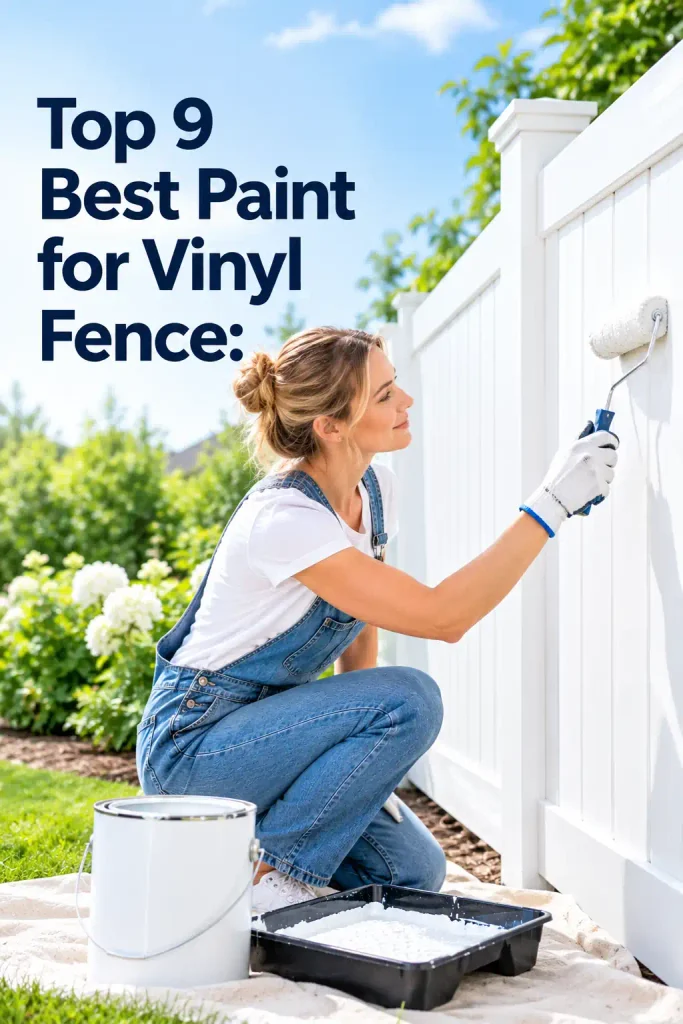
The best paint for vinyl fence projects is generally a compatible exterior acrylic coating designed for vinyl, applied over an approved bonding primer when required. This guide compares nine products and paint-system options, explains their best uses, and covers the preparation and color choices that matter most for outdoor vinyl fencing.
Affiliate disclosure: As an Amazon Associate I earn from qualifying purchases.
Top 9 Best Paint for Vinyl Fence: Quick Comparison
| Product Name | Best For | Check Price |
|---|---|---|
| 1. Benjamin Moore Regal Select Exterior Paint | Painting vinyl fences with an approved color | Check on Amazon |
| 2. INSL-X STIX Waterborne Bonding Primer | Helping paint adhere to vinyl | Check on Amazon |
| 3. Benjamin Moore Aura Exterior Paint | Premium exterior color projects | Check on Amazon |
| 4. Sherwin-Williams Duration Exterior Acrylic Latex | Exterior color coordination | Check on Amazon |
| 5. Sherwin-Williams SuperPaint Exterior Acrylic Latex | General exterior repainting projects | Check on Amazon |
| 6. Sherwin-Williams Emerald Exterior Acrylic Latex | Premium exterior finish options | Check on Amazon |
| 7. Rust-Oleum Specialty Vinyl Spray Paint | Small vinyl touch-ups | Check on Amazon |
| 8. Rust-Oleum Universal All Surface Spray Paint | Small-area coating projects | Check on Amazon |
| 9. Krylon Fusion All-In-One Spray Paint | Small plastic-surface projects | Check on Amazon |
1. Benjamin Moore Regal Select Exterior Paint
Best for: Painting vinyl fences with an approved color
Benjamin Moore Regal Select Exterior Paint is a strong starting point for a vinyl fence painting project because Benjamin Moore specifically recommends it for painting vinyl fences. The company pairs it with INSL-X STIX Waterborne Bonding Primer to help the coating adhere to the smooth surface.
This combination is worth considering when you want to coordinate your fence with your home’s siding, exterior trim, or front door. A compatible exterior paint system can give the fence a refreshed appearance without requiring you to replace every section of vinyl that is still structurally sound.
Color selection is especially important. Vinyl can expand and contract as temperatures change, and darker colors may absorb more heat than the original surface. Benjamin Moore advises against painting vinyl a darker color than its original finish and offers a vinyl-safe color palette to help homeowners choose suitable shades.
Why consider this paint:
- Specifically recommended by Benjamin Moore for vinyl fences.
- Offers a range of exterior colors.
- Can be paired with the manufacturer’s recommended bonding primer.
- Suitable for coordinating the fence with other exterior features.
- Designed for exterior painting applications.
Potential drawback: A bonding primer is part of the recommended system, so the total cost includes both primer and paint. You also need to follow the approved color guidance rather than choosing any shade from the general color collection.
Buying tip: Ask a Benjamin Moore retailer to confirm the appropriate STIX primer, Regal Select Exterior formula, and vinyl-safe color for your particular fence. Check the fence manufacturer’s warranty before painting.
2. INSL-X STIX Waterborne Bonding Primer
Best for: Helping paint adhere to vinyl
INSL-X STIX Waterborne Bonding Primer is an important product to consider when a compatible topcoat requires additional adhesion support. Vinyl is smoother and less absorbent than wood, so an appropriate bonding primer can help prepare the surface for a suitable exterior coating.
Benjamin Moore specifically recommends STIX when painting vinyl fences before applying Regal Select Exterior Paint. That makes this primer particularly relevant to homeowners who want to follow a documented paint system instead of mixing unrelated products and hoping they will work together.
The primer is not the decorative finish itself. It creates the preparation layer for the approved topcoat, so you still need to purchase a compatible exterior paint in the desired vinyl-safe color.
Why consider this primer:
- Designed as a bonding primer for difficult surfaces.
- Specifically recommended by Benjamin Moore for its vinyl fence painting system.
- Waterborne formulation.
- Can help improve the adhesion of a compatible topcoat.
- Useful when a paint system requires a dedicated primer.
Potential drawback: Primer alone does not provide the final decorative color or replace the topcoat. Applying it without a compatible finish will not complete the painting project.
Buying tip: Confirm the exact primer and topcoat combination with the manufacturer or retailer. Follow the current instructions for cleaning, application, drying, and recoating. Do not add a primer automatically if another paint system specifically says it is unnecessary.
3. Benjamin Moore Aura Exterior Paint
Best for: Premium exterior color projects
Benjamin Moore Aura Exterior Paint is another exterior paint line to investigate when you want a carefully coordinated color scheme for your home’s outdoor spaces. It offers a premium option for homeowners comparing exterior finishes and color choices.
For a vinyl fence, however, the product name alone is not enough to establish suitability. Benjamin Moore’s specific recommendation for vinyl fencing is Regal Select Exterior Paint with STIX bonding primer. Before choosing Aura Exterior for a fence, ask Benjamin Moore whether the exact formula is approved for your vinyl surface and whether a particular primer is required.
A well-chosen color can make a fence feel like an intentional part of the landscape. Soft gray, warm off-white, or a light neutral may coordinate with a home without creating a dramatic contrast. The important consideration is choosing a manufacturer-approved color that will not create excessive heat buildup.
Why consider this paint:
- Premium exterior paint line to compare.
- Offers exterior color options for home improvement projects.
- May be useful for coordinating nearby painted features.
- Worth discussing with a paint specialist if you want to compare premium systems.
Potential drawback: Do not assume Aura Exterior is interchangeable with the product Benjamin Moore specifically recommends for vinyl fences. Compatibility and primer requirements must be confirmed for the exact product.
Buying tip: Ask the retailer to verify the selected Aura formula for vinyl fencing before purchase. If the application is not explicitly approved, use the manufacturer’s documented vinyl fence system instead.
4. Sherwin-Williams Duration Exterior Acrylic Latex
Best for: Exterior color coordination
Sherwin-Williams Duration Exterior Acrylic Latex is an exterior paint line to compare when planning a broader home color refresh. It may be worth discussing with a Sherwin-Williams retailer if you want your fence to coordinate with exterior trim or other painted features.
Exterior acrylic paints are commonly used on outdoor surfaces, but a fence made from vinyl presents different adhesion challenges from wood siding or masonry. You should therefore confirm that the exact Duration product is approved for your vinyl fence rather than relying only on its exterior designation.
Color also needs careful consideration. Even if a shade is available through the paint system, it may not be suitable for your fence’s original material and finish. Follow the vinyl fence manufacturer’s restrictions and the paint manufacturer’s color guidance.
Why consider this paint:
- Established exterior paint line.
- Useful to compare for coordinated exterior color schemes.
- Offers a variety of colors through the manufacturer’s system.
- Can be discussed with a retailer when planning a larger exterior project.
Potential drawback: General exterior suitability does not automatically mean suitability for vinyl fencing. A compatible primer or a different approved product may be necessary.
Buying tip: Ask Sherwin-Williams to confirm vinyl compatibility, primer requirements, and permitted colors for the exact product. If the company cannot confirm suitability for your fence, choose a documented vinyl-safe system.
5. Sherwin-Williams SuperPaint Exterior Acrylic Latex
Best for: General exterior repainting projects
Sherwin-Williams SuperPaint Exterior Acrylic Latex is another exterior paint line worth comparing when you are planning a home improvement project involving several exterior surfaces.
The advantage of evaluating a paint line through its manufacturer is that you can ask for current guidance about the exact product, color, and surface preparation. This is particularly important for vinyl fencing, where adhesion and heat buildup can affect the finish’s performance.
SuperPaint should not automatically be considered a vinyl fence paint. Confirm that the specific formula is approved for the fence material and that the selected color meets the manufacturer’s restrictions.
Why consider this paint:
- Exterior acrylic latex paint line.
- Useful to compare when coordinating exterior colors.
- Offers a range of paint colors.
- Can be evaluated with the help of a paint specialist.
Potential drawback: Its general exterior application does not guarantee compatibility with a particular vinyl fence. The correct primer and color need to be verified before starting.
Buying tip: Ask for written product guidance or the current technical data sheet confirming the intended substrate. If a different product is specifically recommended for vinyl, follow that recommendation instead of substituting a general exterior paint.
6. Sherwin-Williams Emerald Exterior Acrylic Latex
Best for: Comparing premium exterior finish options
Sherwin-Williams Emerald Exterior is another paint line to investigate if you are comparing premium exterior coatings. It may be relevant when coordinating the fence with nearby exterior details and when you want to discuss color and finish options with a specialist.
For vinyl fencing, the critical question is whether the exact Emerald product is approved for your surface. Do not assume that a premium finish automatically provides the adhesion and flexibility needed for a vinyl fence. Confirm whether a compatible bonding primer is necessary and whether the chosen shade is appropriate for the original vinyl color.
A good exterior color scheme does not have to make the fence the focal point. A light, approved neutral can blend with the landscape, while a modest contrast can define the boundary without creating an overly dark surface.
Why consider this paint:
- Premium exterior paint line to compare.
- Offers options for coordinating exterior colors.
- Useful for discussing finish choices with a paint specialist.
- May suit a broader exterior painting plan if the product is approved.
Potential drawback: Product suitability for vinyl fencing must be confirmed rather than assumed. This is an option to investigate, not a substitute for the manufacturer’s documented vinyl fence recommendation.
Buying tip: Confirm the precise product name and substrate approval before purchasing. If your priority is the most straightforward documented system, compare it with Benjamin Moore’s STIX primer and Regal Select Exterior recommendation.
7. Rust-Oleum Specialty Vinyl Spray Paint
Best for: Small vinyl touch-ups
Rust-Oleum Specialty Vinyl Spray Paint is worth investigating for small vinyl items and localized touch-up work. A vinyl-focused coating can be useful for small projects where a brush or roller would be awkward, such as a small accessory or a limited damaged area.
However, do not assume that a product designed for vinyl upholstery, trim, or small plastic components is automatically appropriate for an entire outdoor fence. Exterior exposure, flexibility, and the intended substrate all matter.
For a large fence, spray cans can also become expensive and time-consuming. A compatible exterior paint system applied with a brush, roller, or suitable spray equipment may be more practical, provided the manufacturer approves the method.
Why consider this product:
- A vinyl-specific product to investigate for small jobs.
- Spray application can reach narrow or detailed areas.
- May be useful for compatible vinyl components.
- Can be convenient for limited touch-up work.
Potential drawback: The exact formulation may have restrictions on outdoor exposure or the type of vinyl it can coat. It should not be treated as the default choice for a complete residential fence.
Buying tip: Read the current label and verify that the product is intended for rigid outdoor vinyl fencing. If it is intended for upholstery or other limited applications, do not use it on the fence.
8. Rust-Oleum Universal All Surface Spray Paint
Best for: Small-area coating projects
Rust-Oleum Universal All Surface Spray Paint is a multi-surface coating to consider only after verifying that the exact product and color are appropriate for the intended vinyl application.
Its spray format may make it convenient for small items or localized work, but a multi-surface claim does not automatically confirm long-term performance on a large outdoor vinyl fence. The surface preparation, outdoor exposure, and movement of the material all influence the result.
If you are dealing with a few small details rather than dozens of fence panels, a spray product may be easier to control. For an entire fence, compare the cost of multiple cans with the cost and suitability of an approved exterior paint system.
Why consider this product:
- Spray format can be convenient for small areas.
- Designed for multiple surface categories.
- Useful to investigate for compatible small exterior projects.
- Can be compared with vinyl-specific products.
Potential drawback: It is not the first product to choose for a full vinyl fence without explicit manufacturer confirmation. A multi-surface label alone is insufficient evidence of suitability.
Buying tip: Check the label for vinyl or PVC approval and confirm that the product is intended for outdoor use on rigid fencing. Test a small, inconspicuous area only if the manufacturer permits it.
9. Krylon Fusion All-In-One Spray Paint
Best for: Small plastic-surface projects
Krylon Fusion All-In-One Spray Paint is another multi-surface spray product to investigate when working with compatible plastic items. Its convenience may appeal to DIYers who want to coat small components without using a brush or roller.
A vinyl fence, however, is exposed to sunlight, changing temperatures, and weather for long periods. A spray paint that works on one plastic item is not automatically a reliable coating for every outdoor vinyl fence. Check the product’s approved substrates and exterior-use instructions before deciding whether it fits your project.
For a complete fence, an approved brush-on exterior system may provide a more practical route to consistent coverage. Spray paint is better considered for a limited area when the product instructions permit the application.
Why consider this product:
- Convenient spray application for suitable small items.
- Multi-surface formulation to investigate for compatible plastics.
- Useful for small, detailed coating projects.
- Can be compared with vinyl-specific spray products.
Potential drawback: Confirm suitability for rigid vinyl fencing and outdoor exposure. Do not rely on general plastic compatibility alone.
Buying tip: Check the current product label, color restrictions, and outdoor-use guidance. If the manufacturer does not explicitly support the intended application, choose a product system designed for vinyl fencing.
What Type of Paint Is Best for a Vinyl Fence?
The best choice is generally a compatible exterior acrylic paint system designed for vinyl. The system must adhere to the smooth surface, tolerate outdoor exposure, and use a color that does not create excessive heat buildup.
Vinyl-safe exterior acrylic paint
An exterior acrylic coating approved for vinyl is a practical option for changing a fence’s color. Confirm the exact formula with the manufacturer and use a vinyl-safe color rather than assuming every exterior tint is appropriate.
Bonding primer with exterior paint
Some systems call for a bonding primer before the topcoat. Benjamin Moore specifically recommends INSL-X STIX Waterborne Bonding Primer followed by Regal Select Exterior Paint for vinyl fences. This is a documented combination to investigate rather than mixing products at random.
Vinyl-specific spray paint
Vinyl spray paint may be useful for small compatible components or touch-ups. Check the label carefully because products intended for upholstery, dashboards, or other vinyl items may not be suitable for a rigid outdoor fence.
Paints to avoid unless specifically approved
Avoid ordinary interior wall paint, generic concrete paint, and products intended only for wood or metal unless the manufacturer explicitly approves them for your vinyl fence. The phrase exterior paint by itself does not establish vinyl compatibility.
How to Choose the Best Paint for Vinyl Fence
1. Check the fence manufacturer’s warranty
Some vinyl fence warranties exclude damage or failure associated with painting or applying an aftermarket coating. Painting can also affect the original finish. Read the warranty and care instructions before beginning.
2. Choose a vinyl-safe color
Darker colors absorb more solar heat than lighter ones. Excessive heat buildup can increase the risk of distortion or other damage to vinyl components.
As a general rule, avoid choosing a paint darker than the fence’s original color unless the fence and coating manufacturers explicitly approve the proposed color system. Some manufacturers offer special vinyl-safe palettes designed for this type of application.
3. Confirm the surface is in good condition
Paint is not a repair for cracked, warped, loose, or structurally damaged fence sections. Address damage first and determine whether the fence is worth coating.
4. Select the right application method
A brush or roller is often more practical for a long fence. Spray paint may be useful for small areas, but wind, overspray, masking, and material costs can make it less convenient for a large project.
Use only the application method permitted by the product manufacturer.
5. Check primer requirements
A compatible bonding primer may improve adhesion when the chosen paint system requires one. However, some products have their own preparation requirements. Do not add an unrelated primer without confirming compatibility.
6. Compare the total cost
Estimate the fence’s surface area and the coverage of the full system. Include primer, paint, masking materials, cleaning supplies, and any equipment you need.
For a large fence, compare the cost of painting with the cost of replacing individual sections or choosing a factory-finished replacement fence. Painting may not be the best value if the original finish is deteriorating.
How to Paint a Vinyl Fence Step by Step
Follow the exact directions for the product you choose. The steps below are a general overview, not a substitute for the manufacturer’s instructions.
Step 1: Inspect the fence
Check for cracks, warped panels, loose rails, damaged posts, and other problems. Make sure the fence is stable before starting.
Step 2: Clean the vinyl thoroughly
Remove dirt, dust, algae, and other contamination using a cleaner approved by the fence and paint manufacturers. Rinse as directed and let the surface dry completely.
Avoid aggressive cleaners or solvents that could damage the vinyl.
Step 3: Protect the surrounding area
Cover plants, nearby siding, paving, gates, hardware, and other surfaces that should not be painted. If using spray equipment, take particular care with wind and overspray.
Step 4: Prepare the surface as directed
Follow the chosen product’s instructions for any scuffing or additional preparation. Do not sand the fence aggressively or use a solvent unless the manufacturer specifically permits it.
Step 5: Apply the compatible primer if required
If the approved system requires a bonding primer, apply it evenly and allow it to dry for the specified period. Follow the instructions for the primer and the topcoat.
Step 6: Apply the exterior paint
Use the recommended brush, roller, or spray method. Apply even coats and avoid heavy buildup around joints, edges, and decorative details. Follow the manufacturer’s coverage and recoat instructions.
Step 7: Allow the paint to cure
Protect the fence from rain, dust, and accidental contact for the time specified by the manufacturer. Dry-to-touch does not necessarily mean the coating has fully cured.
Step 8: Inspect the finished fence
Check for missed areas, drips, and uneven coverage. Correct any problems using the manufacturer’s recommended procedure.
Common Mistakes to Avoid
Painting a dark color over white vinyl without approval
Dark colors can increase heat absorption. Follow the manufacturer’s vinyl-safe color guidance and do not assume a standard exterior color is suitable.
Skipping cleaning and preparation
Dirt and residue can prevent the paint from adhering properly. Clean the fence thoroughly and let it dry before applying the approved coating system.
Using an incompatible primer
A primer designed for another material may not bond well to vinyl or may not work with the selected topcoat. Use a compatible system.
Treating spray paint as a universal fence solution
Some spray products are intended for specific vinyl or plastic items rather than complete outdoor fencing. Verify the exact application before buying.
Painting a fence that is still under warranty without checking the terms
Painting may affect the fence’s warranty. Review the manufacturer’s requirements before making a permanent change to the original finish.
Rushing the drying and curing process
Rain, contact, and handling before the coating has cured can damage the finish. Follow the product label’s instructions for weather and curing conditions.
Frequently Asked Questions
What is the best paint for a vinyl fence?
Benjamin Moore recommends Regal Select Exterior Paint over INSL-X STIX Waterborne Bonding Primer for vinyl fence painting. Check the fence manufacturer’s warranty and use a color approved for vinyl before proceeding.
Can you paint a vinyl fence?
Yes, some vinyl fences can be painted with an approved coating system, but painting may affect the warranty and requires careful product selection. Check the fence manufacturer’s instructions first.
Do I need a primer for a vinyl fence?
It depends on the coating system. Benjamin Moore recommends INSL-X STIX bonding primer with Regal Select Exterior Paint for vinyl fences. Follow the instructions for the exact products you choose.
Can I paint a white vinyl fence black?
Do not assume that black is safe for a white vinyl fence. Dark colors absorb more heat and can increase the risk of distortion. Use a dark shade only if the fence manufacturer and paint manufacturer explicitly approve that application.
Is spray paint good for vinyl fences?
Spray paint may be useful for small areas when the exact product is approved for rigid outdoor vinyl. For a large fence, a compatible exterior paint system applied with a brush or roller may be more practical.
Will paint peel off a vinyl fence?
It can peel if the coating is incompatible, the surface is dirty, the primer is unsuitable, or the application conditions are wrong. Selecting an approved system and preparing the surface carefully can reduce the risk, but no coating is guaranteed to last indefinitely.
Can I use regular exterior acrylic paint on vinyl fencing?
Only if the manufacturer confirms that the exact product is suitable for vinyl fencing. Not every exterior acrylic formula is approved for smooth vinyl surfaces.
How many coats does a vinyl fence need?
The number of primer and paint coats depends on the product system and the existing surface. Follow the manufacturer’s instructions rather than applying a fixed number to every fence.
Is painting a vinyl fence better than replacing it?
Painting may be an option when the fence is in sound condition and the manufacturer permits it. Replacement may be more suitable when the fence is warped, cracked, badly damaged, or still covered by a warranty that would be affected by painting.
How long does paint take to dry on a vinyl fence?
Drying and curing times vary by product, temperature, humidity, and airflow. Check the label and choose suitable weather conditions. Protect the fence until the coating has cured as instructed.
Final Words
The best paint for a vinyl fence is a compatible exterior coating system, not simply any paint labeled for outdoor use. Benjamin Moore’s documented recommendation—INSL-X STIX Waterborne Bonding Primer followed by Regal Select Exterior Paint—is a useful starting point for homeowners who want a clear product path.
Before buying, confirm the fence warranty, select a manufacturer-approved vinyl-safe color, and verify the exact primer and topcoat requirements. For large fences, compare the practicality and total cost of a brush-on system with spray products, which are generally more suitable for small areas. Careful preparation and the right product combination can help you refresh your fence while reducing the risk of peeling and heat-related damage.