
Wooden stairs experience constant foot traffic, scuffs, dirt, and repeated cleaning, so choosing the right paint is about more than color. The coating must be suitable for the surface, adhere properly to the wood, and withstand everyday wear. If you are painting the stair treads, slip resistance is another important consideration.
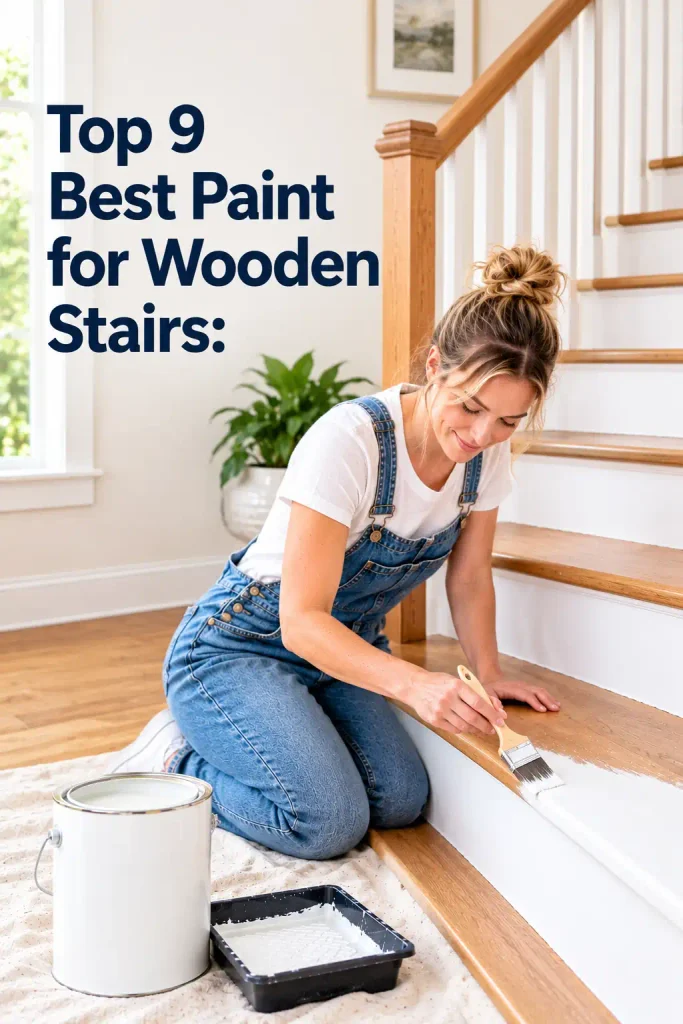
The best paint for wooden stairs is generally a durable floor or porch enamel specifically approved for the stair’s intended use. Handrails, balusters, and vertical risers may need a different coating from the horizontal treads. This guide compares nine paint and preparation options, explains their best uses, and walks you through the process of creating an attractive, durable staircase.
Affiliate disclosure: As an Amazon Associate I earn from qualifying purchases.
Top 9 Best Paint for Wooden Stairs: Quick Comparison
| Product Name | Best For | Check Price |
|---|---|---|
| 1. INSL-X Sure Step Acrylic Anti-Slip Coating | Stair treads where traction matters | Check on Amazon |
| 2. Benjamin Moore Floor & Patio Latex Enamel | Compatible interior or exterior stair treads | Check on Amazon |
| 3. BEHR PREMIUM Porch & Patio Floor Paint | Painting suitable porch and stair surfaces | Check on Amazon |
| 4. Rust-Oleum Porch & Floor Coating | Compatible wood steps and porch areas | Check on Amazon |
| 5. Sherwin-Williams Porch & Floor Enamel | Comparing floor-rated enamel options | Check on Amazon |
| 6. Valspar Porch, Floor & Patio Paint | Suitable porch and floor projects | Check on Amazon |
| 7. Benjamin Moore ADVANCE Interior Paint | Handrails, balusters, and suitable trim | Check on Amazon |
| 8. INSL-X Cabinet Coat | Risers, stringers, and other suitable woodwork | Check on Amazon |
| 9. Zinsser Bulls Eye 1-2-3 Primer | Preparing compatible bare or previously painted wood | Check on Amazon |
1. INSL-X Sure Step Acrylic Anti-Slip Coating
Best for: Stair treads where traction matters
INSL-X Sure Step Acrylic Anti-Slip Coating is a strong option to investigate when your main priorities are a durable finish and added traction. Stairs are different from ordinary painted woodwork because people repeatedly walk across the same narrow surfaces. A coating designed with a skid-resistant finish can be especially useful on outdoor steps or other suitable areas where slipping is a concern.
The textured finish distinguishes this type of coating from conventional smooth paint. It may be a good choice when you want to refresh worn-looking stairs while improving the grip of the walking surface. However, the exact product instructions must confirm suitability for your wooden stairs, particularly if the project is indoors.
Surface preparation is critical. Dirt, grease, loose paint, and poorly adhered coatings can interfere with adhesion. The wood also needs to be in sound condition, and the product’s instructions should be followed for any required primer, application temperature, and drying time.
Why consider this product:
- Designed as an anti-slip floor coating.
- Worth investigating for compatible stair treads.
- Offers an alternative to ordinary smooth floor paint.
- Useful when traction is an important project consideration.
- Can help create a more functional finish when applied to an approved surface.
Potential drawback: A textured finish may feel rougher underfoot and can be more difficult to clean than a smooth coating. Confirm that the exact formulation is appropriate for your stair location and wood substrate.
Buying tip: Read the current label before purchasing. Verify whether the product is approved for indoor or outdoor wooden stairs and whether a primer is required. Do not assume that an anti-slip label automatically makes the coating suitable for every type of stair.
2. Benjamin Moore Floor & Patio Latex Enamel
Best for: Compatible interior or exterior stair treads
Benjamin Moore Floor & Patio Latex Enamel is a floor-coating option worth investigating when you want a painted finish on suitable wooden steps. Unlike conventional wall paint, a floor-rated enamel is intended for surfaces that experience more regular contact and wear.
Benjamin Moore’s staircase guidance identifies Floor & Patio Latex Enamel as an option for treads, risers, stringers, and nosing. That makes this product particularly relevant when planning a coordinated painted staircase. Always check the current product label to confirm the exact formulation and intended use for your project.
The color can help determine the overall style of the staircase. White or cream risers paired with darker treads create a traditional contrast, while a single neutral shade can make the staircase appear more unified. Before painting the entire staircase, test the selected color and finish on a small area or sample board.
Why consider this paint:
- A floor enamel specifically worth considering for stair surfaces.
- Suitable to investigate for compatible wood treads and other staircase components.
- Offers color options for coordinating with the surrounding interior or exterior.
- Can provide a more appropriate starting point than ordinary wall paint.
- Helps you plan a consistent finish when the full system is compatible.
Potential drawback: Floor paint still requires careful preparation and curing. The exact product’s approval for your stair location, surface, and expected traffic must be confirmed.
Buying tip: Ask a Benjamin Moore retailer to verify the current Floor & Patio formula and the appropriate primer for your wood. Follow the recommended coat count and keep the stairs out of service until the coating has cured sufficiently for foot traffic.
3. BEHR PREMIUM Porch & Patio Floor Paint
Best for: Painting suitable porch and stair surfaces
BEHR PREMIUM Porch & Patio Floor Paint is worth comparing for exterior porch steps and other compatible floor surfaces. Porch and patio coatings are formulated for applications that need to withstand more wear than ordinary wall paint, although the exact approved substrates and conditions vary by product.
If your wooden stairs connect a porch, deck landing, or outdoor entrance, this type of coating may be relevant. Before using it on the treads, verify that the selected formulation is approved for the specific wood surface and the exposure conditions. An exterior coating must be able to handle the environment where it is installed, but that does not mean every porch paint is suitable for every stair.
The finish can be coordinated with the porch floor, railing, and surrounding trim. A medium gray can help conceal some everyday dirt, while a lighter neutral may create a cleaner, brighter appearance. The actual durability will depend on the surface preparation, application, and curing conditions.
Why consider this paint:
- Designed for porch and patio floor applications.
- Worth comparing for compatible wooden outdoor steps.
- Offers color options for coordinating outdoor spaces.
- May be useful when painting a porch and its stairs together.
- Provides a floor-coating alternative to standard exterior wall paint.
Potential drawback: Product variants and approved uses may differ. Confirm that the exact paint is suitable for the stair substrate and expected foot traffic before using it on the treads.
Buying tip: Check the manufacturer’s technical data sheet for wood compatibility, primer requirements, coat count, and the required time before walking on the surface. If your stairs are indoors, verify indoor suitability rather than assuming an exterior porch coating is the best option.
4. Rust-Oleum Porch & Floor Coating
Best for: Compatible wood steps and porch areas
Rust-Oleum Porch & Floor Coating is another option to investigate when painting suitable wooden steps, porch surfaces, or other compatible floor areas. A floor-specific coating is generally a better starting point than an ordinary wall paint when the surface will experience repeated foot traffic.
The most important consideration is the exact product formulation. Rust-Oleum sells different types of coatings, and not every product with a porch or floor designation is necessarily suitable for every wooden staircase. Check the current label for the approved substrate, location, and preparation requirements.
For a staircase, choose a color that works with the surrounding floor, walls, and railing. Darker treads with lighter risers can create a defined, classic appearance, while a uniform color may give a narrow staircase a more streamlined look.
Why consider this product:
- A porch and floor coating category to compare.
- Worth investigating for compatible wooden steps.
- Can coordinate stair surfaces with adjacent porch flooring.
- Offers an alternative to conventional exterior paint.
- Useful for projects where floor-rated performance is a priority.
Potential drawback: The exact formulation may have restrictions on the wood type, application location, or traffic level. Do not assume that a product intended for concrete or another substrate will automatically work on wood stairs.
Buying tip: Confirm the exact product name and verify that the label explicitly supports your intended surface. Follow the instructions for priming, recoating, ventilation, and curing. For interior stair treads, check that the product is suitable for indoor use.
5. Sherwin-Williams Porch & Floor Enamel
Best for: Comparing floor-rated enamel options
Sherwin-Williams Porch & Floor Enamel is worth investigating when choosing a coating for compatible porch floors or stair surfaces. A floor enamel may be suitable for wood stairs when the exact product is approved for the substrate and application conditions.
One advantage of considering a dedicated floor coating is that you can evaluate the product according to its intended use rather than selecting a paint simply because it is available in the color you want. Stair treads need to tolerate concentrated wear, and the finish must be applied according to the product’s preparation and curing requirements.
This option may be particularly relevant for outdoor steps connected to a porch or entrance. If your project is an interior staircase, confirm the intended indoor use and suitability of the exact formula before proceeding.
Why consider this paint:
- Floor enamel category to compare for suitable surfaces.
- Useful for planning a coordinated porch and stair color scheme.
- Worth discussing with a paint specialist for substrate-specific advice.
- Can provide an alternative to general exterior wood paint.
- Offers an option for projects where foot-traffic suitability matters.
Potential drawback: Product names and availability can vary, and a floor enamel is not automatically suitable for every wooden tread. Confirm the current product specification rather than relying on the category name alone.
Buying tip: Ask Sherwin-Williams to confirm whether the exact enamel is recommended for your stairs, whether a primer is needed, and how long the coating must cure before use. If your stair treads are indoors, make sure the formulation is approved for that environment.
6. Valspar Porch, Floor & Patio Paint
Best for: Suitable porch and floor projects
Valspar Porch, Floor & Patio Paint is another product category to compare for compatible floor surfaces and outdoor steps. If you are painting porch flooring and a connected staircase, a coordinated floor coating can help the two areas look consistent.
The suitability of this paint depends on the exact formulation, the wood condition, and the intended location. Wooden stair treads experience frequent impact and abrasion, so the label must support the application. Do not assume that a coating suitable for a concrete porch will necessarily be appropriate for wooden indoor stairs.
Color selection also matters. A mid-tone gray, muted brown, or traditional neutral may coordinate with outdoor flooring and surrounding trim. If you are painting both the treads and risers, you can use contrasting shades if both are suitable for the surfaces receiving them.
Why consider this paint:
- Porch and floor paint category to investigate.
- May suit compatible wooden steps when approved by the manufacturer.
- Useful for coordinating a porch and staircase.
- Offers another option for comparing floor-coating systems.
- Can be evaluated by coverage, finish, and required preparation.
Potential drawback: The exact product may have limits on surface type, location, or application conditions. Verify its suitability before buying, particularly for indoor stairs or heavily used treads.
Buying tip: Read the current label and technical data sheet. Confirm wood compatibility, primer requirements, coat count, and curing time. For a staircase that gets heavy daily use, do not compromise on the product’s approved traffic rating.
7. Benjamin Moore ADVANCE Interior Paint
Best for: Handrails, balusters, and suitable trim
Benjamin Moore ADVANCE Interior Paint is worth considering for the parts of a wooden staircase that are touched rather than walked on, such as handrails, balusters, newel posts, and suitable trim. These components have different demands from stair treads, so they do not always need the same coating.
Handrails are handled repeatedly and can collect oils, fingerprints, and scuffs. A suitable trim or cabinet-style finish can be useful when you want a smooth, refined appearance that coordinates with the rest of the staircase.
ADVANCE should not automatically be used on horizontal stair treads. Unless the current product instructions explicitly approve the application, reserve it for appropriate woodwork and use a floor-rated coating on the walking surfaces.
Why consider this paint:
- Interior paint line to investigate for suitable staircase woodwork.
- Useful for coordinating handrails and balusters with painted risers.
- Offers a range of color possibilities.
- Can help create a smooth, furniture-like finish on appropriate surfaces.
- Provides an option separate from the coating selected for the treads.
Potential drawback: It is not a substitute for a floor coating on stair treads. The finish also requires proper surface preparation and adequate drying and curing time.
Buying tip: Confirm the current product’s approved surfaces and primer requirements. If the handrail has an old glossy varnish or polyurethane finish, prepare it according to the manufacturer’s instructions before painting.
8. INSL-X Cabinet Coat
Best for: Risers, stringers, and other suitable woodwork
INSL-X Cabinet Coat is another coating to investigate for appropriate staircase components that do not receive direct foot traffic. Risers, stringers, and other vertical woodwork can be finished differently from the treads, provided the product is approved for the surface.
A cabinet-style coating may appeal to homeowners who want a smooth, durable-looking finish on the vertical parts of the staircase. For example, white risers paired with natural or dark treads can create a traditional contrast, while a single coordinated color can make the staircase feel more contemporary.
However, this product should not be treated as a universal stair paint. Its suitability for the exact wood surface and application must be confirmed, and the instructions for primer, preparation, and curing should be followed.
Why consider this product:
- Worth investigating for suitable non-walking woodwork.
- Can be considered for risers and stringers if approved.
- Offers an alternative to standard wall paint for selected staircase details.
- Useful for coordinating the staircase with cabinets and interior trim.
- Can help create a unified color scheme across vertical components.
Potential drawback: It should not be assumed to withstand stair-tread traffic. A smooth trim finish and a floor-rated tread coating have different intended uses.
Buying tip: Confirm the current technical data sheet and use the product only on approved surfaces. Select a separate floor-rated coating for the treads unless the manufacturer explicitly permits Cabinet Coat for that application.
9. Zinsser Bulls Eye 1-2-3 Primer
Best for: Preparing compatible bare or previously painted wood
A good primer can be an important part of painting wooden stairs, especially when the existing finish is uneven, the wood has discoloration, or the chosen topcoat requires a primer. Zinsser Bulls Eye 1-2-3 is a general-purpose primer to investigate for suitable wood preparation.
Primer is not the final decorative coating. Instead, it prepares the surface for the topcoat when used according to the approved system. The right primer can help create a more uniform base, but it cannot compensate for wood that is dirty, unstable, damp, or coated with a poorly adhered finish.
Before choosing this product, check whether the exact formulation is approved for your staircase and compatible with the finish paint. Some floor paints have their own primer recommendations, and mixing products without confirming compatibility can compromise the result.
Why consider this primer:
- General-purpose primer to compare for suitable wood surfaces.
- Can help prepare compatible surfaces for a finish coat.
- Useful when the chosen paint system calls for priming.
- May help create a more uniform base for the finish.
- Offers an option for projects involving bare or previously painted wood.
Potential drawback: Primer alone does not provide the finished color or the wear resistance required on stair treads. It is not necessarily the right primer for every existing finish or floor-coating system.
Buying tip: Check the current label for wood compatibility and the recommended topcoat. If the stair treads need a specialist floor primer, follow the floor-paint manufacturer’s recommendation instead of choosing a general-purpose primer automatically.
What Type of Paint Is Best for Wooden Stairs?
The best coating depends on which part of the staircase you are painting. Treads carry foot traffic, while risers and handrails have different wear patterns. Treating every component as if it were an ordinary wall can lead to premature wear or an unsuitable finish.
Floor-rated paint for stair treads
For the horizontal walking surfaces, start by comparing paints or enamels specifically approved for floors, porches, or stairs. The product must be suitable for the wood substrate and intended indoor or outdoor environment.
If slip resistance is a concern, look for a coating with a documented anti-slip finish or a compatible traction additive approved by the manufacturer. Do not assume that a glossy finish or a standard floor paint automatically provides adequate grip.
Interior trim paint for risers and handrails
Risers, balusters, stringers, and handrails can often be finished with suitable interior trim or cabinet paint. These areas do not experience the same direct foot traffic as the treads.
A separate trim paint can make it easier to create a two-tone design, such as white risers with darker treads. Verify the product’s suitability for the wood and existing finish before applying it.
Primer for bare wood
Bare wood may need a primer to support adhesion, improve coverage, or address discoloration. The appropriate primer depends on the surface, the existing coating, and the topcoat system.
Follow the paint manufacturer’s instructions rather than assuming every stair needs the same primer.
Paint for outdoor wooden stairs
Outdoor stairs must withstand weather, moisture, temperature changes, and sunlight. Choose a coating explicitly approved for exterior use on the particular wood surface.
If the steps are part of a deck or porch, check whether the coating is rated for horizontal foot traffic. A general exterior siding paint is not necessarily suitable for walking surfaces.
Paint versus clear wood finish
If you want to preserve the natural grain of the wood, a suitable stain and clear floor-rated finish may be more appropriate than opaque paint. This approach requires its own compatible preparation and coating system.
Do not apply a clear coat over paint unless the paint manufacturer confirms compatibility. An incompatible topcoat can cause softening, peeling, wrinkling, or discoloration.
How to Choose the Best Paint for Wooden Stairs
1. Decide whether the stairs are indoors or outdoors
This is the first decision because indoor and outdoor stairs face different conditions. Interior stairs may need a washable, scuff-resistant finish, while outdoor steps require a coating approved for weather exposure.
Check the exact product label instead of relying on a general description such as “durable paint.”
2. Identify the parts you are painting
Decide whether the project includes the treads, risers, stringers, handrails, balusters, or all of them. The horizontal treads usually need a coating rated for foot traffic, while vertical parts can often use an appropriate trim paint.
Using separate compatible products can produce a better result than forcing one paint to serve every purpose.
3. Check the condition of the existing finish
Look for peeling paint, loose varnish, cracks, deep scratches, or damaged wood. A new coating will not reliably adhere to an unstable old finish.
Remove loose material and repair damage according to the product instructions. If the stairs are structurally unsound, fix the underlying problem before painting.
4. Choose the right primer
Some surfaces require a bonding primer, while other floor-paint systems specify a different preparation method. A previously varnished staircase may need a different approach from bare, unfinished wood.
Confirm compatibility between the primer and finish paint. Do not assume that a primer designed for walls is automatically appropriate for stair treads.
5. Consider traction and safety
Stair treads can become slippery, particularly when smooth paint is combined with socks, moisture, or worn footwear. Consider a product with an approved anti-slip finish where appropriate.
Avoid adding arbitrary amounts of sand or other materials to paint. Use a manufacturer-approved traction additive or coating and test the result before completing the entire staircase.
6. Pick a suitable sheen
Satin and semi-gloss finishes are popular for painted woodwork because they can be easier to clean than flat finishes. However, sheen alone does not determine durability or slip resistance.
Choose the finish according to the product’s intended use and your cleaning preferences. If the surface is a walking tread, its approved floor use and traction characteristics matter more than appearance alone.
7. Compare coverage and total cost
Measure the staircase and estimate the surface area of the treads, risers, and other components. Check the manufacturer’s coverage information and calculate how much primer and paint you need for the recommended coats.
Remember to include sandpaper, cleaning supplies, masking materials, brushes, rollers, and any required safety equipment in the budget.
8. Plan for drying and curing
Stairs are difficult to take out of service, but rushing the process can damage the finish. Paint may feel dry before it has reached the hardness needed for repeated foot traffic.
Read the label for recoat times, light-foot-traffic times, and full curing. Plan an alternative route if possible so you can keep people off the staircase while the coating cures.
How to Paint Wooden Stairs Step by Step
Step 1: Inspect the staircase
Check every tread, riser, handrail, and baluster. Tighten loose components and repair damage before painting. If a tread is cracked, unstable, or structurally unsafe, painting is not a substitute for repair or replacement.
Step 2: Clean the wood
Vacuum dust and debris, then clean the surface using a method suitable for the existing finish and chosen coating. Remove oils, dirt, and other contamination that might interfere with adhesion.
Allow the wood to dry completely after cleaning. Do not apply paint over damp surfaces unless the product instructions explicitly permit it.
Step 3: Remove loose paint and prepare the surface
Scrape off loose or peeling material and sand where the product instructions call for it. For an old glossy finish, the manufacturer’s recommended preparation may include scuff-sanding and using a suitable bonding primer.
Avoid damaging the wood or creating unnecessary dust. Follow applicable safety precautions when sanding older coatings, particularly if lead-containing paint could be present.
Step 4: Remove dust and protect surrounding areas
Vacuum the stairs thoroughly and wipe away remaining dust with an appropriate cloth. Use painter’s tape and drop cloths to protect adjacent walls, floors, and trim.
Make sure the tape will not damage the existing finish when removed.
Step 5: Apply primer if required
Apply the compatible primer according to the label. Work evenly and pay attention to corners, edges, and areas where bare wood is exposed.
Allow the primer to dry for the specified time. Do not proceed simply because it looks dry; follow the product’s recoat instructions.
Step 6: Paint the risers and other vertical parts
If you are using a separate trim paint for risers, stringers, balusters, or handrails, apply it according to the instructions for that product. Keep the finish even and avoid heavy buildup around corners and joints.
You can use painter’s tape to help create crisp color boundaries between the treads and risers.
Step 7: Apply the tread coating
Use a floor-rated paint approved for the stair’s material and location. Apply it evenly with the recommended brush or roller, following the specified spread rate and coat count.
If an anti-slip finish or approved traction additive is part of the system, follow the manufacturer’s mixing and application instructions precisely.
Step 8: Apply additional coats as directed
Allow the first coat to dry for the required time before recoating. Do not apply another coat too early, and avoid making the coating excessively thick in an attempt to improve durability.
Step 9: Allow the staircase to cure
Keep foot traffic off the stairs for the time specified by the manufacturer. Dry-to-touch is not the same as fully cured, and premature use can leave marks, cause scuffing, or damage the finish.
If you cannot close the entire staircase, plan the work carefully and follow the product instructions for safe access. Do not use partially cured stairs simply because the surface feels dry.
Step 10: Inspect and maintain the finish
Once the coating has cured, inspect the treads and woodwork for missed areas or defects. Follow the manufacturer’s cleaning recommendations and address chips or peeling promptly.
Common Mistakes to Avoid When Painting Wooden Stairs
Using ordinary wall paint on the treads
Wall paint is not necessarily designed to handle repeated foot traffic. Use a coating explicitly approved for stair treads or the relevant floor surface.
Using the same paint on every component without checking
The treads, risers, handrails, and balusters have different requirements. Select a compatible product for each part and confirm the intended use.
Skipping surface preparation
Dust, grease, loose paint, and glossy old finishes can interfere with adhesion. Proper cleaning and preparation are essential for a durable finish.
Ignoring slip resistance
A smooth, glossy coating may not provide the traction you want on a stair tread. Consider an approved anti-slip product or compatible traction additive when appropriate.
Applying a clear coat without checking compatibility
A clear finish may not bond properly to every paint. Use a topcoat only when the paint manufacturer confirms that the products are compatible.
Walking on the stairs too soon
Paint can be dry to the touch while still too soft for normal traffic. Follow the full curing instructions before returning the stairs to regular use.
Painting damaged or loose treads
Paint cannot correct structural problems. Repair or replace unsafe components before beginning the cosmetic work.
Frequently Asked Questions
What is the best paint for wooden stairs?
A floor-rated enamel or stair coating approved for the wood and intended location is generally the best starting point for stair treads. INSL-X Sure Step is worth investigating when traction is important, while Benjamin Moore Floor & Patio Latex Enamel is another option to compare for suitable stair surfaces. Verify the exact product instructions before buying.
Can I use regular interior paint on wooden stairs?
Ordinary interior wall paint is generally not the best choice for stair treads because it is not necessarily designed for concentrated foot traffic. A suitable trim paint may work on vertical risers or handrails, while the walking surfaces should use a product approved for floors or stairs.
Do wooden stairs need primer before painting?
It depends on the condition of the wood and the chosen paint system. Bare wood, an old glossy finish, or a surface with stains may require a compatible primer. Follow the topcoat manufacturer’s instructions and use a primer approved for that application.
What paint finish is best for wooden stairs?
Satin or semi-gloss may be suitable for certain staircase components, but the product’s approved use matters more than sheen alone. For the treads, prioritize durability and traction rather than choosing a finish solely because it looks shiny.
How can I make painted wooden stairs less slippery?
Choose a coating with a suitable anti-slip finish or use a compatible traction additive approved by the manufacturer. Follow the application instructions and test the finish for grip and cleanability. Do not assume that every textured coating is suitable for every indoor stair.
Can I paint wooden stairs without sanding?
Sometimes, but it depends on the existing finish and the coating system. Loose paint must be removed, and glossy surfaces often require preparation to help the new coating adhere. Follow the manufacturer’s instructions rather than skipping sanding automatically.
How long does paint take to dry on wooden stairs?
Drying and curing times depend on the paint, temperature, humidity, ventilation, and number of coats. The label should specify when you can recoat and when the stairs can be used. Full curing may take considerably longer than surface drying.
Can I paint stairs that already have varnish?
Yes, if the existing finish is sound and the chosen paint system is compatible with it. Clean the surface, prepare the old finish according to the product instructions, and use a suitable bonding primer if required. Test the system in an inconspicuous area first.
Should stair treads and risers be the same color?
Not necessarily. Darker treads with lighter risers can create a classic contrast, while a single color can make the staircase feel more uniform. Choose a design that suits the surrounding interior and maintains clear visibility of the step edges.
What is the best paint for outdoor wooden stairs?
Use an exterior floor or porch coating specifically approved for the wood and intended foot traffic. Confirm that it is suitable for horizontal steps, not just siding or trim. Weather exposure, moisture, and traction should all factor into your choice.
Can I apply polyurethane over painted wooden stairs?
Only if the paint manufacturer confirms that the specific polyurethane is compatible with the paint and appropriate for stair use. An incompatible clear coat can damage the underlying finish. A clear topcoat is not always necessary when the selected floor paint is designed to be used as the final coating.
How many coats of paint do wooden stairs need?
The number depends on the product, primer, existing color, and surface condition. Follow the manufacturer’s specified coat count and coverage rate. Applying excessive thickness does not necessarily improve durability and may interfere with drying or curing.
Final Words
The best paint for wooden stairs is a coating designed for the part of the staircase you are painting. For treads, prioritize a floor-rated product with suitable durability and traction; for handrails, balusters, and risers, a compatible trim or cabinet paint may be more appropriate.
INSL-X Sure Step and Benjamin Moore Floor & Patio Latex Enamel are options to investigate for suitable stair-tread applications, while BEHR, Rust-Oleum, Sherwin-Williams, and Valspar floor-coating products provide additional options to compare. Benjamin Moore ADVANCE and INSL-X Cabinet Coat are better considered for suitable non-walking woodwork, and Zinsser Bulls Eye 1-2-3 is a primer option rather than a finish paint.
Before purchasing, confirm the exact product’s approved use, primer requirements, slip-resistance guidance, and curing time. Thorough preparation and patience during curing are essential for a finish that looks good and stands up to everyday use.