
Ceramic tiles can look dated even when they are still in good condition. If you want to refresh an old backsplash, update decorative bathroom wall tiles, or change the appearance of a tiled surface without replacing it, painting may be a practical alternative. However, ceramic tile has a smooth, often glossy surface that ordinary paint cannot reliably adhere to without proper preparation and a compatible coating system.
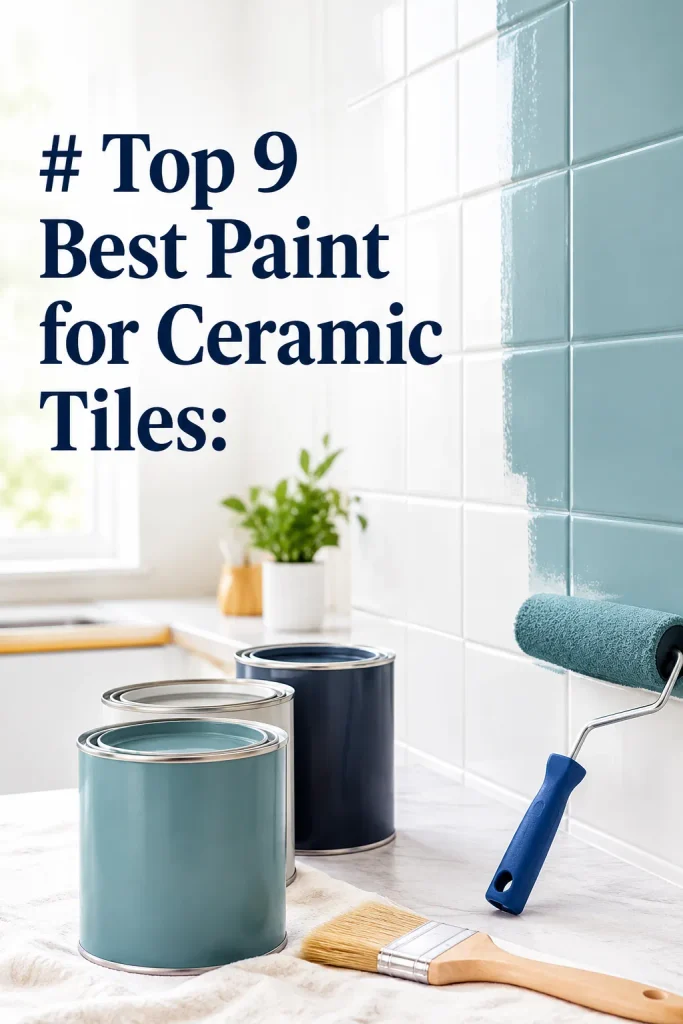
The best paint for ceramic tiles depends on where the tiles are installed. A bonding primer and compatible interior paint may work for suitable decorative wall tiles, while a specialized two-part refinishing coating is designed for different applications. Floor tiles and surfaces exposed to standing water require particular caution because paint can wear, chip, or peel under demanding conditions.
Affiliate disclosure: As an Amazon Associate I earn from qualifying purchases.
Top 9 Best Paint for Ceramic Tiles: Quick Comparison
| Product Name | Best For | Check Price |
|---|---|---|
| 1. Sherwin-Williams Emerald Interior Acrylic Latex | Suitable decorative ceramic wall tiles | Check on Amazon |
| 2. Sherwin-Williams Extreme Bond Primer | Preparing glossy ceramic tiles for compatible paint | Check on Amazon |
| 3. Rust-Oleum Tub & Tile Refinishing Kit | Compatible bathtub and bathroom tile refinishing | Check on Amazon |
| 4. Rust-Oleum HOME Floor Coating Kit | Certain compatible interior tile floors | Check on Amazon |
| 5. INSL-X STIX Waterborne Bonding Primer | Improving adhesion on suitable slick surfaces | Check on Amazon |
| 6. Benjamin Moore ADVANCE Interior Paint | Compatible decorative wall tile projects when approved | Check on Amazon |
| 7. KILZ Adhesion Primer | Preparing compatible difficult surfaces | Check on Amazon |
| 8. Zinsser Bulls Eye 1-2-3 Primer | General-purpose preparation where tile compatibility is confirmed | Check on Amazon |
| 9. EPODEX 2K Epoxy Tile Paint | Investigating two-component tile coating systems | Check on Amazon |
1. Sherwin-Williams Emerald Interior Acrylic Latex
Best for: Suitable decorative ceramic wall tiles
Sherwin-Williams Emerald Interior Acrylic Latex is a paint option worth considering for certain ceramic wall tile projects. Sherwin-Williams recommends Emerald Interior Acrylic Latex as a topcoat for suitable tile-painting projects when used with its Extreme Bond Primer and the recommended surface preparation.
This option is particularly relevant when you want to update decorative wall tiles or a suitable kitchen backsplash. For example, an outdated backsplash with a color that no longer matches your cabinets may benefit from a new neutral finish. Soft white, warm beige, muted gray, or a gentle green can change the appearance of the kitchen without the disruption of removing the existing tiles.
The important point is that the primer and preparation are part of the system. Ceramic glaze is smooth and relatively nonporous, so simply rolling ordinary paint directly onto the tile is unlikely to produce the most dependable result.
Before choosing this product, check whether the intended location is suitable. A decorative backsplash that receives occasional splashes is different from a shower enclosure, bathtub surround, or frequently used floor.
Why consider this paint:
- Recommended by Sherwin-Williams for suitable tile-painting projects.
- Offers a broad selection of interior colors.
- Can be used as a topcoat over the recommended compatible primer.
- Useful for refreshing selected decorative wall tiles.
- Makes it possible to coordinate tile color with cabinets and surrounding walls.
Potential drawback: This is not a dedicated floor coating or a universal waterproof tile-refinishing product. It should not automatically be used on shower floors, heavily trafficked tile floors, or surfaces regularly exposed to standing water.
Buying tip: Confirm the current Emerald Interior formulation and the manufacturer’s complete tile-painting instructions. If your project is a dry decorative wall or suitable backsplash, ask Sherwin-Williams to confirm that the exact surface and location are appropriate.
2. Sherwin-Williams Extreme Bond Primer
Best for: Preparing glossy ceramic tiles for compatible paint
A bonding primer is one of the most important products to consider when painting glazed ceramic tiles. Sherwin-Williams Extreme Bond Primer is specifically recommended by the company for preparing suitable tile surfaces before applying Emerald Interior Acrylic Latex.
Ceramic tiles are manufactured to provide a smooth, durable surface. That is helpful for ordinary tile use but makes painting more challenging. A compatible bonding primer creates a better foundation for the finish coat than applying conventional paint directly to a glossy surface.
This primer is particularly worth investigating for decorative wall tile, selected backsplash projects, and other applications that the manufacturer approves. The key is to use it as part of a compatible system rather than assuming that a bonding primer makes every topcoat suitable for every tiled surface.
Preparation still matters. Soap residue, grease, mineral deposits, and other contaminants can interfere with adhesion. The surface needs to be thoroughly cleaned, prepared as directed, and completely dry before the primer is applied.
Why consider this primer:
- Designed to improve adhesion on suitable difficult surfaces.
- Recommended by Sherwin-Williams for its tile-painting process.
- Can help prepare glossy tiles for a compatible finish coat.
- Useful when ordinary paint does not have an appropriate surface to grip.
- Allows you to follow a manufacturer-recommended primer-and-paint system.
Potential drawback: Primer is not the final decorative coating. It also does not make an unsuitable topcoat waterproof or automatically suitable for floors and showers.
Buying tip: Check the current technical data sheet for approved surfaces, preparation requirements, application method, and recoat time. Pair the primer with a topcoat that the manufacturer confirms is suitable for your ceramic tile project.
3. Rust-Oleum Tub & Tile Refinishing Kit
Best for: Compatible bathtub and bathroom tile refinishing
Rust-Oleum Tub & Tile Refinishing Kit is worth considering when you want to refinish compatible bathroom surfaces using a specialized coating rather than ordinary wall paint. Refinishing kits are designed for specific applications and typically require more careful handling than conventional water-based interior paint.
A kit of this type may be useful when the goal is to refresh a suitable tub or tile surface without undertaking a full replacement. A dated bathroom can look significantly different after a coordinated update, particularly when the existing fixtures are still in sound condition.
However, you need to distinguish between a bathroom tile wall and a floor. A coating intended for a tub or tile surround should not automatically be used on a walking surface. Foot traffic, abrasion, standing water, and cleaning methods can create conditions that the product was not designed to handle.
Two-component or refinishing coatings also require close attention to mixing, ventilation, application time, and curing. The finish may not be easy to correct once it begins to set.
Why consider this product:
- A specialized refinishing kit rather than ordinary wall paint.
- Worth investigating for compatible bathtub and tile applications.
- Can help refresh certain bathroom surfaces without replacing them.
- Offers an option for homeowners considering a cosmetic bathroom update.
- May provide a more suitable coating approach than standard interior paint for approved refinishing applications.
Potential drawback: Product instructions may restrict the types of tile, fixtures, or locations that can be coated. Application can be less forgiving than using conventional paint, and the surface may need to remain unused while the coating cures.
Buying tip: Read the current label carefully and confirm that your specific ceramic tile application is included. Do not use the kit on a tile floor or another surface unless the manufacturer explicitly approves that use. Follow all ventilation, protective-equipment, and curing instructions.
4. Rust-Oleum HOME Floor Coating Kit
Best for: Certain compatible interior tile floors
Painting ceramic floor tiles requires a different approach from painting a decorative wall. Floors are exposed to walking, grit, furniture movement, cleaning, and repeated abrasion. Rust-Oleum HOME Floor Coating Kit is worth investigating for compatible interior floor-renovation projects because it is designed as a floor coating system rather than ordinary wall paint.
A floor-coating kit may be appealing if you want to update the appearance of a tiled room without removing the existing floor. For example, changing an old floor’s color could help coordinate it with a newly painted vanity, kitchen cabinets, or a refreshed laundry room.
The most important consideration is whether the exact kit is approved for your particular ceramic tile. A product’s suitability for certain existing floors does not guarantee that every glazed tile, grout condition, or room is covered by its instructions.
Also consider the condition of the floor. Loose tiles, cracked grout, movement, or moisture problems should be addressed before coating. Paint cannot repair an unstable floor or correct an underlying waterproofing problem.
Why consider this product:
- Designed as a floor coating system.
- Worth investigating for compatible interior floor renovation.
- Offers a way to change the look of selected existing floors.
- May help coordinate tile color with the rest of a room.
- Provides a more relevant starting point than ordinary wall paint for a floor project.
Potential drawback: Not every floor coating is appropriate for every ceramic or porcelain tile. High-traffic floors and areas frequently exposed to moisture can be challenging, and the wrong coating may scratch, chip, or peel.
Buying tip: Verify that the exact product instructions explicitly approve your ceramic tile and room conditions. Confirm the primer or base-coat requirements, any required topcoat, and the full curing period before allowing foot traffic.
5. INSL-X STIX Waterborne Bonding Primer
Best for: Improving adhesion on suitable slick surfaces
INSL-X STIX Waterborne Bonding Primer is another bonding primer worth investigating when preparing difficult surfaces for painting. It is designed to help a compatible finish coat adhere to surfaces that can be challenging for conventional paint.
For ceramic tile, the most important question is whether the exact primer and chosen topcoat are approved for the surface and intended location. A primer may be designed for multiple slick substrates, but that does not mean every finish paint can be applied over it in every environment.
This product may be useful when working with selected decorative tile surfaces, particularly if you want to coordinate a tiled wall with other painted features. For example, a backsplash could be updated to complement a neutral kitchen or a renovated bathroom vanity area.
Preparation should not be overlooked. Remove grease, soap residue, and other contaminants, then follow the manufacturer’s instructions for surface abrasion, cleaning, and drying. Do not assume that primer can compensate for a surface that is poorly prepared.
Why consider this primer:
- Designed as a waterborne bonding primer.
- Worth comparing for suitable difficult-to-coat surfaces.
- Can help prepare a surface for a compatible topcoat.
- Useful when a paint system calls for a dedicated adhesion-promoting primer.
- Offers an alternative to choosing a primer intended only for ordinary porous surfaces.
Potential drawback: It is a primer, not a finish paint. It will not provide the final color or automatically make the completed coating suitable for standing water, showers, or heavy floor traffic.
Buying tip: Confirm that the current STIX formulation is approved for your particular ceramic tile and that the finish paint is compatible with it. Follow the manufacturer’s instructions rather than mixing products from different systems without checking compatibility.
6. Benjamin Moore ADVANCE Interior Paint
Best for: Compatible decorative wall tile projects when approved
Benjamin Moore ADVANCE Interior Paint is a waterborne alkyd paint line worth investigating for certain interior painting projects. It is often considered for cabinetry and trim where a smooth finish is desirable. For ceramic tile, however, its suitability must be confirmed for the exact surface and application.
If your goal is to coordinate decorative tiles with a kitchen or bathroom color scheme, a smooth finish can be appealing. A carefully selected neutral shade may make an older space feel more cohesive, especially when the surrounding cabinets, walls, and fixtures are also being updated.
The critical distinction is that a paint suitable for cabinetry is not automatically suitable for glazed tile. The surface is different, and the moisture, abrasion, and cleaning conditions may also be different. A compatible bonding primer and manufacturer-approved topcoat system are essential considerations.
For that reason, treat ADVANCE as an option to investigate rather than a universal tile paint. If the manufacturer cannot confirm that the exact formula is appropriate for the intended tile surface, select a coating system with clearly documented tile suitability instead.
Why consider this paint:
- Offers a smooth finish for suitable interior painting applications.
- Provides color options for coordinating with surrounding cabinetry and trim.
- Worth discussing with a paint specialist for approved decorative tile projects.
- May be relevant when planning a broader interior color update.
- Can be compared with dedicated tile coatings and other approved finish systems.
Potential drawback: It is not specifically a universal ceramic tile refinishing product. Do not assume that it can withstand shower conditions or floor traffic simply because it performs well on approved woodwork.
Buying tip: Ask a Benjamin Moore retailer to confirm the exact product’s suitability for the tile and location. Verify the primer, surface preparation, and any topcoat requirements before purchasing.
7. KILZ Adhesion Primer
Best for: Preparing compatible difficult surfaces
KILZ Adhesion Primer is a bonding primer worth comparing when a project involves a smooth or difficult-to-coat surface. The purpose of a bonding primer is to prepare an approved substrate so that the selected finish coating has a more appropriate foundation.
This can be an important consideration with ceramic tile, particularly when the existing glaze is smooth and glossy. Instead of applying finish paint directly to the tile, you can investigate whether a compatible primer-and-topcoat system is available for your specific project.
The primer itself does not determine the final finish’s performance. You still need a topcoat that is approved for the tile and its environment. A suitable product for a decorative wall may not be appropriate for a kitchen floor or a frequently wet shower surround.
Before beginning, thoroughly clean the tile and remove any contamination that could affect adhesion. Follow the current label for surface preparation, application, drying, and recoating.
Why consider this primer:
- Designed for adhesion on suitable difficult surfaces.
- Worth comparing when preparing a surface for a compatible coating.
- Can be useful for selected interior renovation projects.
- Helps separate the preparation stage from the decorative finish stage.
- Provides an alternative to primers intended only for porous surfaces.
Potential drawback: It is not a ceramic tile finish paint. Compatibility with the exact tile, finish coating, and moisture conditions must be verified before use.
Buying tip: Check the current technical data sheet and confirm that the primer is approved for your tile and intended application. Pair it with a finish coating that the manufacturer specifically recommends for that surface.
8. Zinsser Bulls Eye 1-2-3 Primer
Best for: General-purpose preparation where tile compatibility is confirmed
Zinsser Bulls Eye 1-2-3 Primer is a general-purpose primer that may be relevant to certain renovation projects. However, because glazed ceramic tile is a particularly slick substrate, you should not assume that a general-purpose primer will perform as well as a product specifically recommended for that surface.
The right primer depends on the tile’s condition, its finish, and the intended topcoat. Some paint systems specifically recommend a dedicated bonding primer for tile. Others may include a primer or preparation process as part of a refinishing kit.
If you already have Bulls Eye 1-2-3 available, verify its current approved uses before deciding to use it on ceramic tile. The fact that a primer works on drywall, wood, or other surfaces does not establish that it is the correct choice for glazed tile.
For the best chance of a durable finish, avoid combining products simply because they are from familiar brands. A tested, compatible system is preferable to selecting the primer and finish independently without checking their specifications.
Why consider this primer:
- General-purpose primer for a range of approved applications.
- Worth comparing when planning a compatible preparation system.
- May be useful for certain renovation projects involving suitable surfaces.
- Can help create a uniform base where the product instructions call for it.
- Offers another primer option to discuss with a paint specialist.
Potential drawback: It should not be treated as the first-choice tile primer without verifying the exact formulation and approved surface. Primer alone cannot make an unsuitable finish paint appropriate for ceramic tile.
Buying tip: Check the current label and technical data sheet for explicit ceramic tile suitability. If the instructions do not confirm the intended application, choose a dedicated bonding primer recommended for your tile-painting system.
9. EPODEX 2K Epoxy Tile Paint
Best for: Investigating two-component tile coating systems
EPODEX 2K Epoxy Tile Paint is worth investigating if you are comparing two-component coating systems specifically marketed for tiles. Two-component products generally combine a resin and a hardener, producing a coating that cures through a chemical reaction rather than drying solely through water or solvent evaporation.
That type of system can be attractive for projects where resistance to wear and moisture is a priority. Nevertheless, the word epoxy alone does not establish that a product is appropriate for every tile surface. Wall tiles, floor tiles, shower areas, and countertops all present different requirements.
Check the exact product’s approved substrates, preparation process, mixing instructions, and curing conditions. Some products sold internationally may have different specifications, package sizes, or application instructions depending on the market.
A two-component coating may also require more careful handling than conventional paint. You may have a limited working time after mixing, and ventilation and protective equipment can be particularly important.
Why consider this product:
- A two-component tile coating option to investigate.
- Worth comparing when researching epoxy-based tile finishes.
- May be relevant to projects that need a specialized coating system.
- Offers an alternative to conventional interior acrylic paint.
- Encourages you to compare complete systems rather than paint color alone.
Potential drawback: Product formulations and approved uses vary. Do not assume the exact product is suitable for a shower floor, a frequently wet area, or a high-traffic floor without explicit manufacturer confirmation.
Buying tip: Verify the current product documentation and purchase a kit that is specifically approved for your tile type and intended location. Follow its mixing ratio, application window, ventilation guidance, and full curing instructions.
What Type of Paint Is Best for Ceramic Tiles?
The best type of paint depends on where the tile is located and what it experiences each day. A decorative backsplash has different requirements from a shower wall, and both differ from a tiled floor.
1. Bonding primer with compatible interior paint
For suitable decorative wall tiles, a bonding primer paired with a compatible interior topcoat can be a practical option. Sherwin-Williams recommends Extreme Bond Primer followed by Emerald Interior Acrylic Latex for its tile-painting process.
This type of system is worth considering for selected dry wall surfaces and suitable backsplashes. It is not a universal solution for all tile installations, so verify the exact product and location before beginning.
2. Specialized tub and tile refinishing coating
A specialized refinishing kit is designed for the particular fixtures and surfaces listed on its label. Products in this category may be useful for approved tub and tile refinishing projects where an ordinary wall paint would be inappropriate.
Read the product instructions carefully. A coating intended for a bathtub or vertical tile surround should not automatically be used on a floor.
3. Two-component epoxy tile coating
Two-component epoxy coatings combine resin and hardener to create a cured film. They may be worth comparing when researching specialized tile coatings, but suitability depends on the exact product and intended application.
Check whether the product is approved for ceramic tile, whether it is intended for walls or floors, and whether it can tolerate the moisture and wear expected in that location.
4. Floor coating for compatible ceramic tile
If you want to change the color of ceramic floor tiles, start with a floor coating that explicitly lists the particular tile surface as an approved substrate.
A floor coating is not automatically suitable for every glazed tile. Verify the full system, including any required primer, base coat, and topcoat. High-traffic floors and wet areas may be poor candidates for painting.
5. Primer is not finish paint
Bonding primers such as Extreme Bond, STIX, and KILZ Adhesion are preparation products. They are not substitutes for the final decorative coating.
The primer and topcoat must work together. Do not choose a primer based only on its ability to adhere to a difficult surface; confirm that the entire system is appropriate for the tile and its environment.
How to Choose the Best Paint for Ceramic Tiles
1. Identify where the tiles are installed
Start by identifying whether you are painting a backsplash, a decorative wall, a shower surround, a bathtub surround, or a floor. This is the most important decision because each location has different exposure and wear conditions.
For example, a decorative kitchen backsplash may receive occasional splashes, while a shower surround experiences frequent moisture and cleaning. A floor also has to withstand abrasion from shoes, furniture, and everyday movement.
Do not select a product simply because it says bathroom paint or multi-surface paint. Confirm that the exact formulation is approved for your particular application.
2. Check whether painting is appropriate
Painting is usually most practical when the existing tiles are structurally sound and you want to change their appearance. Cracked tiles, loose sections, damaged grout, and moisture problems should be addressed before any coating is considered.
Painting cannot repair loose tiles or replace failed waterproofing. If the surface is already deteriorating, replacement or professional refinishing may be a better long-term solution.
3. Choose a compatible bonding primer
Glazed ceramic has a smooth surface that can be difficult for paint to grip. A bonding primer specifically recommended for tile can help create a more suitable base for the topcoat.
Check the manufacturer’s instructions before choosing the primer. If a refinishing kit includes its own preparation system, follow that system rather than automatically adding another primer.
4. Select the right topcoat
The topcoat determines the finished color and contributes to the appearance and performance of the coating. However, it must be compatible with the primer and suitable for the intended location.
For decorative wall tile, an approved interior coating may be appropriate. For a floor or a specialized bathroom application, look for a dedicated coating system that explicitly permits that use.
5. Consider water exposure
Moisture is one of the most important factors when painting ceramic tile. Occasional splashes are not the same as constant water exposure, standing water, or the repeated wetting and drying that occurs inside a shower.
If the tile is exposed to frequent moisture, carefully review the manufacturer’s approved uses and maintenance instructions. If a product does not explicitly support that environment, do not assume that a waterproof-sounding description makes it suitable.
6. Check cleaning requirements
Painted tile may not tolerate the same cleaning methods as the original ceramic glaze. Abrasive cleaners, harsh chemicals, and aggressive scrubbing can damage some coating systems.
Choose a product with maintenance requirements that fit the location. Kitchen and bathroom surfaces may need regular cleaning, so make sure the cured finish is suitable for the cleaning products you expect to use.
7. Compare the complete project cost
The price of the paint is only part of the budget. You may also need a bonding primer, cleaning supplies, sandpaper, masking materials, brushes, rollers, protective equipment, and possibly a compatible topcoat.
Specialized refinishing products may have additional ventilation and application requirements. Compare the total cost with the cost of replacing the tiles or hiring a professional refinishing service.
8. Allow enough time for curing
A coating can feel dry before it is ready for regular use. The time required for full curing varies by product, temperature, humidity, and the thickness of the applied coats.
Plan the project so that the surface can remain undisturbed for the required period. Do not expose newly painted tiles to water, cleaning, or foot traffic earlier than the manufacturer’s instructions permit.
How to Paint Ceramic Tiles Step by Step
The following steps are a general overview for suitable tile-painting projects. Always follow the instructions for the exact primer and coating you choose.
Step 1: Inspect the tiles and grout
Examine the tiles for cracks, loose areas, damaged grout, and signs of water intrusion. Repair underlying problems before painting.
If the tiles move, feel unstable, or have ongoing moisture problems, do not simply cover them with paint. Address the underlying issue first.
Step 2: Clean the surface thoroughly
Remove dirt, grease, soap residue, and other contamination using a cleaner suitable for the tiles and coating system. Kitchen tiles may have grease buildup, while bathroom tiles may have soap scum or mineral deposits.
Rinse as directed and allow the surface to dry completely. Residue left behind can interfere with primer adhesion.
Step 3: Prepare the surrounding area
Use masking tape and suitable protective coverings to protect adjacent surfaces, fixtures, counters, and floors. Remove or protect hardware where appropriate.
Make sure the work area is adequately ventilated, especially if the selected product contains strong solvents or requires a chemical curing process.
Step 4: Prepare the tile surface as directed
Many glazed ceramic tile projects require scuff-sanding to reduce the glossy sheen and help the coating adhere. Use the method and abrasive recommended by the product manufacturer.
Avoid aggressive sanding that could damage the tile or grout. If the tile coating system specifies a different preparation method, follow the instructions for that system.
Step 5: Remove dust and allow the tile to dry
After sanding, remove the dust using the recommended cleaning method. Check corners, grout lines, and edges, where residue can collect.
Allow the tile to dry completely before applying primer. Moisture trapped in grout or around fixtures can interfere with the coating process.
Step 6: Apply the bonding primer if required
Apply a compatible bonding primer evenly, following the recommended application thickness and coverage rate. Use a suitable roller for broad areas and a brush for corners or detailed sections.
Do not apply the finish paint until the primer has reached the required recoat stage. Follow the manufacturer’s specified drying time rather than relying only on touch.
Step 7: Apply the finish coating
Use the application method recommended for the selected product. Apply even coats and avoid excessive buildup around grout lines, corners, and tile edges.
If you are using a two-component coating, measure and mix the components precisely. Observe any working-time limits and never reuse a mixture that has passed its stated application window.
Step 8: Apply additional coats as directed
Some systems require multiple finish coats. Follow the specified coat count and recoat interval.
Applying another coat too early may interfere with curing, while applying excessive thickness can lead to an uneven finish or other coating problems.
Step 9: Allow the surface to cure fully
Protect the tiles from water, cleaning, contact, and traffic for the period specified by the manufacturer. Dry-to-touch does not necessarily mean the coating is ready for normal use.
For bathrooms, wait until the coating has reached the specified level of cure before exposing it to moisture. For floors, do not allow foot traffic until the instructions say it is safe.
Step 10: Maintain the painted tiles carefully
Once the coating has cured, clean the surface using the approved cleaning products and methods. Avoid abrasive pads or chemicals that the manufacturer says may damage the finish.
Inspect the coating occasionally for chips, peeling, or damage. If defects appear, identify the underlying cause before attempting a touch-up.
Common Mistakes to Avoid When Painting Ceramic Tiles
Using ordinary wall paint without a suitable system
Ceramic glaze is not like drywall. Conventional paint applied directly to a glossy tile may have poor adhesion and can peel or chip.
Use a coating system that is approved for the tile and intended location, including the appropriate primer when required.
Skipping cleaning and surface preparation
Even a suitable primer cannot compensate for grease, soap residue, dust, or loose material. Clean the tiles carefully and prepare them according to the manufacturer’s instructions.
Assuming every epoxy product works everywhere
Epoxy coatings vary in formulation and intended use. A product designed for one application may not be suitable for a different tile surface.
Check whether the exact product is approved for the location, moisture exposure, and expected wear.
Painting a shower or tub surround without checking the limitations
Frequent moisture and cleaning can challenge painted finishes. A product intended for decorative wall tiles may not be suitable for a shower enclosure.
Read the product’s limitations carefully and consider professional refinishing or replacement if the surface experiences constant water exposure.
Using wall paint on a tile floor
Floor tiles face abrasion and impact that ordinary wall coatings may not withstand. A finish that looks good on a wall may wear quickly under foot traffic.
Choose a floor coating that explicitly approves the tile and intended room, and consider whether painting is practical for the level of use.
Ignoring damaged grout or loose tiles
Paint does not repair structural defects or restore failed waterproofing. Repair damaged grout and unstable tiles before applying a coating.
Rushing the curing process
Premature exposure to water, cleaning, or foot traffic can damage a coating that has not cured sufficiently. Follow the full curing instructions, not just the initial drying time.
Frequently Asked Questions
What is the best paint for ceramic tiles?
The best option depends on the tile’s location. For suitable decorative wall tiles, Sherwin-Williams recommends Extreme Bond Primer followed by Emerald Interior Acrylic Latex. For other applications, a dedicated refinishing kit or an approved floor coating may be more appropriate.
Can you paint ceramic tiles?
Yes, certain ceramic tiles can be painted when the surface is in good condition and you use a compatible coating system. Proper cleaning, surface preparation, and primer selection are important. Painting is not suitable for every tile installation, particularly surfaces exposed to constant moisture or heavy wear.
Do ceramic tiles need primer before painting?
Many glazed tile-painting systems require a compatible bonding primer because the surface is smooth and nonporous. Follow the instructions for the exact coating. If the product is a complete refinishing kit, use the preparation system specified by its manufacturer.
Can I use acrylic paint on ceramic tiles?
Some acrylic paints can be used on suitable ceramic wall tiles when paired with the recommended primer and preparation process. Ordinary acrylic craft paint or standard wall paint should not be assumed to provide a durable finish on glossy tile.
What is the best paint for bathroom ceramic tiles?
The right product depends on whether the tiles are on a decorative wall, backsplash, tub surround, or inside a shower. A compatible primer-and-paint system may suit some decorative walls, while a specialized refinishing product may be designed for other applications. Verify the exact moisture limitations before buying.
Can I paint ceramic floor tiles?
Some floor coatings are designed for selected existing floor surfaces, but ceramic floor tiles can be difficult to coat reliably. Foot traffic, grit, furniture movement, and cleaning can cause wear or peeling. Use only a coating explicitly approved for the exact tile and floor conditions, and consider replacement if long-term durability is the priority.
Can I paint ceramic tiles without sanding?
Some products may have specific preparation methods, but glossy glazed tiles often require scuff-sanding or another manufacturer-approved method to improve adhesion. Do not skip surface preparation simply because the primer is advertised as a bonding product.
Will paint stick to glossy ceramic tiles?
It can adhere when the tile is properly cleaned and prepared and the coating system is designed for the surface. Applying conventional paint directly to glossy glaze without the recommended preparation is more likely to result in adhesion problems.
Can I use Rust-Oleum Tub & Tile on a ceramic floor?
Do not assume that a tub and tile refinishing kit is suitable for a walking surface. Check the exact product instructions for approved substrates and locations. Use it on a floor only if the manufacturer explicitly permits that application.
Is epoxy paint better than acrylic paint for ceramic tiles?
Neither type is automatically best for every tile project. Two-component epoxy systems may be suitable for certain demanding applications, while an approved acrylic paint-and-primer system may work for suitable decorative wall tiles. The product’s approved use, preparation requirements, and moisture limitations matter more than the label alone.
How many coats of paint do ceramic tiles need?
The required number of primer and finish coats varies by product and surface condition. Follow the manufacturer’s specified coat count, coverage rate, and recoat interval. Applying extra coats beyond the recommended system does not guarantee better durability.
How long does ceramic tile paint take to cure?
Curing time depends on the coating formulation, temperature, humidity, ventilation, and coat thickness. Check the product label for recoat, light-use, and full-cure times. Avoid water exposure, cleaning, or foot traffic until the manufacturer permits it.
Can I paint over ceramic tile grout?
Some coating systems can cover tile and grout together, but the finish may change the appearance and texture of the grout lines. Repair damaged grout first and check whether the product is appropriate for the entire surface. Do not use paint as a substitute for grout repair or waterproofing.
Is painting ceramic tiles cheaper than replacing them?
Painting can reduce upfront cost for a suitable cosmetic update, particularly when the tiles are sound and the area is appropriate for a coating. However, labor, preparation products, and the possibility of future repairs should be included in the comparison. Replacing tiles may be the better investment for damaged surfaces or demanding wet and high-traffic areas.
Final Words
The best paint for ceramic tiles is a coating system suited to the tile’s location, surface condition, and everyday exposure. For suitable decorative wall tiles, Sherwin-Williams Emerald Interior Acrylic Latex with Extreme Bond Primer is a documented option to investigate. Rust-Oleum Tub & Tile Refinishing Kit and Rust-Oleum HOME Floor Coating Kit are separate options to consider only when the exact application is approved by the manufacturer.
Before purchasing, verify the current product specifications, primer compatibility, preparation requirements, and full curing time. Ceramic tile is smooth and often glossy, so cleaning and proper surface preparation are essential. Most importantly, do not assume that a product suitable for decorative wall tiles will withstand a shower, standing water, or heavy floor traffic. Choosing the right system for the exact surface will give you a more realistic chance of achieving an attractive and lasting result.