
The best paint gun for cars can make a major difference in how evenly automotive paint covers a vehicle and how smooth the final finish looks. Whether you’re repainting a car, refinishing individual panels, applying primer, or working on a restoration project, the right spray gun helps control paint flow, atomization, and overspray.
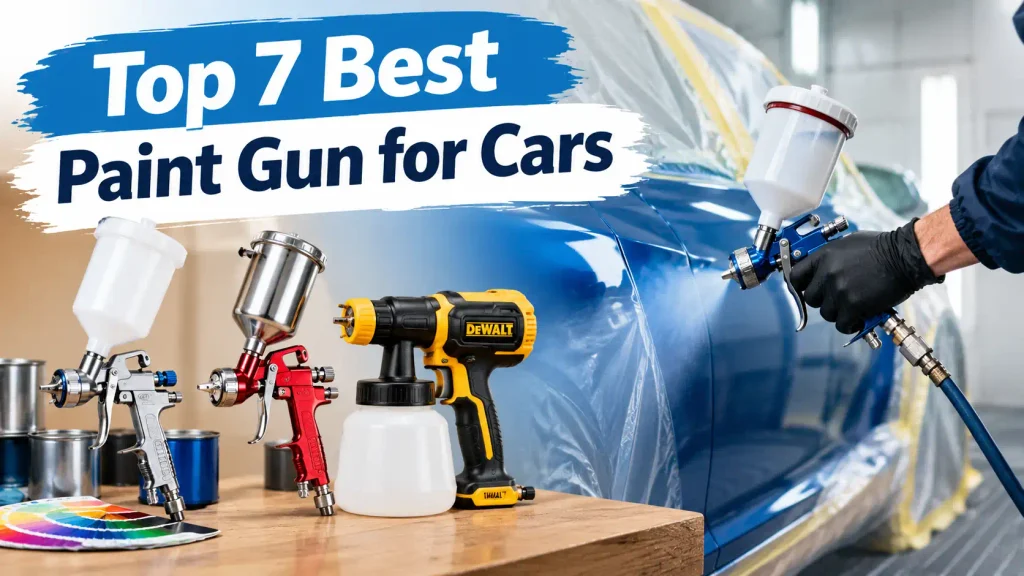
HVLP and LVLP spray guns are popular choices for automotive painting because they offer different combinations of transfer efficiency and air requirements. Professional painters may prefer advanced systems such as 3M or DeVilbiss, while DIY users may find an LVLP gun more practical for a smaller air compressor. Below, you’ll find seven options to compare, including their features, advantages, limitations, and tips for choosing the right automotive spray gun.
Affiliate disclosure: As an Amazon Associate I earn from qualifying purchases.
Top Picks: 7 Paint Gun for Cars
- 3M Performance Spray Gun Starter Kit – Best overall for professional automotive refinishing
- DeVilbiss StartingLine HVLP Spray Gun Kit – Best for a complete automotive spray gun setup
- InoKraft D1 LVLP Spray Gun Premium Kit – Best for DIY painters with smaller compressors
- AEROPRO R500 LVLP Spray Gun – Best for air-efficient automotive painting
- TCP Global Professional Automotive HVLP Spray Gun Set – Best multi-gun option for different coating stages
- Fuji Spray 2203G Semi-PRO 2 Gravity HVLP System – Best turbine-powered alternative
- NEIKO 31213A HVLP Gravity Feed Spray Gun – Best budget-friendly option for smaller projects
Comparison Table: Best Paint Gun for Cars
| Product Name | Best For | Check Price |
|---|---|---|
| 3M Performance Spray Gun Starter Kit | Professional automotive refinishing | Check on Amazon |
| DeVilbiss StartingLine HVLP Kit | Complete automotive spray setup | Check on Amazon |
| InoKraft D1 LVLP Spray Gun Kit | DIY users with smaller compressors | Check on Amazon |
| AEROPRO R500 LVLP Spray Gun | Air-efficient spraying | Check on Amazon |
| TCP Global Automotive HVLP Set | Multiple coating stages | Check on Amazon |
| Fuji Spray 2203G Semi-PRO 2 | Turbine-powered spraying | Check on Amazon |
| NEIKO 31213A HVLP Spray Gun | Budget and smaller projects | Check on Amazon |
Top 7 Best Paint Guns for Cars Reviews
1. 3M Performance Spray Gun Starter Kit – Best Overall
The 3M Performance Spray Gun Starter Kit is a strong option for automotive painters who want a professional-oriented spray system with interchangeable components. Its lightweight composite construction and replaceable atomizing heads make it different from conventional spray guns that rely on a fixed metal fluid nozzle and needle arrangement.
One of its main advantages is flexibility. The system is designed to accommodate different replaceable atomizing heads, allowing painters to select an appropriate setup for different coatings. This can be useful when working with automotive primers, basecoats, and clearcoats, provided the selected head is compatible with the coating manufacturer’s recommendations.
The disposable paint cup system can also simplify certain parts of the painting process. Instead of relying entirely on a traditional reusable cup, compatible PPS components can help with mixing, handling, and cleanup. This is particularly useful for painters who frequently change colors or work on multiple vehicles.
What makes it appealing
- Lightweight composite spray gun construction
- Replaceable atomizing heads
- Designed for professional coating applications
- Compatible with the 3M PPS paint preparation system
- Useful for different automotive refinishing stages
- Can simplify certain cleanup tasks
Things to consider
This is a premium system, and the cost of compatible atomizing heads and paint preparation accessories should be considered. You also need a suitable compressed-air supply and the correct setup for your coating. Check exactly which components are included in the kit because different packages may contain different accessories.
Best for: Professional painters and serious automotive enthusiasts who want a flexible spray system for regular refinishing work.
2. DeVilbiss StartingLine HVLP Spray Gun Kit – Best Complete Automotive Setup
The DeVilbiss StartingLine HVLP Spray Gun Kit is worth considering if you want a collection of spray equipment for different automotive painting tasks. DeVilbiss is an established name in spray finishing, and its StartingLine range is designed to provide an accessible entry into automotive refinishing equipment.
Depending on the package, a StartingLine kit may include a full-size spray gun, a detail gun, and accessories for different application needs. Having more than one gun can be convenient because detailed repairs and broad panel spraying do not always require the same equipment.
The HVLP design is intended to transfer a greater proportion of the coating to the surface than conventional high-pressure spraying. This can help reduce overspray and paint waste when the gun is correctly configured and operated.
What makes it appealing
- Automotive-oriented HVLP spray equipment
- Some kits include a full-size gun and detail gun
- Useful for different refinishing applications
- Established spray-equipment manufacturer
- Suitable for compatible primers and finish coatings
- Offers a more complete starting setup than a single basic gun
Things to consider
The compressor must provide enough continuous airflow for the specific gun. HVLP equipment can require substantial air volume, so check the manufacturer’s CFM requirements before buying. Also confirm the nozzle sizes and accessories included in the particular kit.
Best for: DIY automotive painters and small workshops that want a multi-gun setup for panel painting and smaller repair work.
3. InoKraft D1 LVLP Spray Gun Premium Kit – Best for Smaller Compressors
The InoKraft D1 LVLP Spray Gun Premium Kit is a useful option for DIY painters who want an automotive spray gun without immediately investing in a large professional compressor. LVLP stands for Low Volume Low Pressure, describing a spray-gun design intended to operate with lower air consumption than many conventional HVLP guns.
The D1 kit is commonly offered with multiple nozzle sizes, allowing users to select different configurations for compatible coatings. This flexibility can be helpful when moving between thinner finishes and thicker materials, although the paint manufacturer’s technical instructions should always determine the appropriate setup.
Its accessories can also make the kit convenient for home workshops. Depending on the package, you may receive a regulator, filters, and cleaning accessories that help with basic setup and maintenance.
What makes it appealing
- LVLP design for reduced air demand compared with many HVLP guns
- Multiple nozzle configurations in selected kits
- Gravity-feed arrangement
- Useful for automotive DIY projects
- Accessories may be included depending on the package
- Suitable for painters working with compatible coatings
Things to consider
LVLP does not mean that every small compressor will operate the gun properly. Check the required airflow at the intended working pressure and compare it with your compressor’s actual delivery. Also remember that a lower air requirement does not automatically guarantee a professional finish; paint preparation, gun adjustment, and technique remain important.
Best for: DIY users who have a smaller or mid-sized compressor and want a versatile spray gun for compatible automotive coatings.
4. AEROPRO R500 LVLP Spray Gun – Best for Air-Efficient Painting
The AEROPRO R500 LVLP Spray Gun is another option for automotive painters who need to consider compressor capacity. Its LVLP design makes it worth comparing with higher-air-demand HVLP models, especially for smaller workshops and DIY setups.
The R500 is commonly sold with interchangeable nozzle options, which can make it useful for more than one type of coating. Depending on the included configuration, different tips may be available for basecoat, primer, and other compatible materials.
A gravity-feed design allows paint to flow from the cup toward the nozzle using gravity. This arrangement is widely used in automotive refinishing because it can help with material control and makes the gun convenient to handle.
What makes it appealing
- LVLP spray technology
- Designed with air efficiency in mind
- Gravity-feed paint cup
- Multiple nozzle options in selected packages
- Useful for automotive and other compatible finishing work
- Suitable for smaller workshop setups when compressor output matches requirements
Things to consider
Check the exact R500 package before ordering because included nozzle sizes and accessories may vary. It is also important to use the recommended air pressure and maintain a clean, dry air supply. Moisture or oil contamination can affect the finish.
Best for: DIY painters and small-shop users looking for an LVLP gun for automotive panels and compatible coating applications.
5. TCP Global Professional Automotive HVLP Spray Gun Set – Best Multi-Gun Option
The TCP Global Professional Automotive HVLP Spray Gun Set is worth considering if you want several spray guns for different stages of a refinishing project. Some TCP Global automotive packages include multiple guns with different nozzle configurations, allowing painters to dedicate equipment to particular coatings or repair tasks.
This arrangement can be helpful during a complete vehicle repaint. Primers, basecoats, and clearcoats may have different viscosity and application requirements, so using a suitable dedicated gun or nozzle setup can make the workflow easier.
The gravity-feed design found in many of these kits is also convenient for automotive work. Depending on the package, the set may include full-size guns and a smaller detail gun for touch-ups or restricted areas.
What makes it appealing
- Automotive-focused HVLP gun packages
- Multiple guns in selected sets
- Different nozzle configurations may be included
- Useful for primer, color, and detail applications
- Gravity-feed designs in many packages
- Practical for larger DIY projects
Things to consider
TCP Global sells different spray-gun packages, so do not assume every set contains the same guns or nozzle sizes. Check the listing carefully. Multiple guns also mean more cleaning and maintenance, and your compressor must meet the requirements of whichever gun you operate.
Best for: DIY painters and restoration enthusiasts who want separate spray equipment for different stages of an automotive project.
6. Fuji Spray 2203G Semi-PRO 2 Gravity HVLP System – Best Turbine-Powered Alternative
The Fuji Spray 2203G Semi-PRO 2 is different from the conventional compressor-driven spray guns on this list. It uses a turbine system to supply air, so you do not need a separate air compressor to operate it.
This can be appealing if you want a self-contained spray system for selected refinishing and coating projects. Its gravity-feed gun and turbine arrangement are designed to provide controlled material application, while the system’s portability can be useful in workshops where installing a large compressor is inconvenient.
However, a turbine HVLP system is not automatically the best choice for every full-car repaint. Automotive coatings vary in viscosity and application requirements, and the system must be compatible with the particular paint. Always check the manufacturer’s recommendations before using it on vehicle panels.
What makes it appealing
- Turbine-powered HVLP system
- Does not require a separate compressed-air spray compressor
- Gravity-feed spray gun
- Portable system design
- Useful for selected finishing and refinishing projects
- Convenient for workshops without a large compressor
Things to consider
This system is a different investment from a conventional automotive air spray gun. Confirm that the turbine’s performance and included gun setup are appropriate for your chosen automotive coating. Also consider the finish requirements of a full vehicle repaint before selecting a turbine system.
Best for: Users who prefer a self-contained turbine system and have confirmed that it is compatible with their intended automotive coating application.
7. NEIKO 31213A HVLP Gravity Feed Spray Gun – Best Budget-Friendly Option
The NEIKO 31213A HVLP Gravity Feed Spray Gun is worth considering for smaller projects and occasional spray-painting tasks. It offers a more budget-oriented way to explore compressed-air spraying without purchasing a premium professional system.
Its gravity-feed design places the paint cup above the gun, allowing material to move toward the nozzle. This style is common in automotive spray equipment and can be convenient for small repairs, practice panels, and selected refinishing tasks.
For someone learning spray-gun operation, a more affordable gun can provide an opportunity to practice fan adjustment, paint flow, and spraying distance on scrap panels before moving on to a more expensive system.
What makes it appealing
- Budget-friendly spray-gun category
- HVLP gravity-feed design
- Suitable for selected smaller painting projects
- Useful for practicing spray technique
- Compact alternative to larger professional systems
- Compatible with coatings approved for its nozzle setup
Things to consider
A budget gun may not provide the same consistency, parts availability, or long-term durability as professional equipment. Check the exact nozzle size, air requirements, and coating compatibility before using it for vehicle refinishing. It may be more suitable for practice and smaller jobs than a demanding full-car finish.
Best for: Beginners and occasional users who want an affordable spray gun for practice, smaller repairs, and compatible coatings.
How to Choose the Best Paint Gun for Cars
Buying an automotive spray gun involves more than comparing brands and prices. The right equipment should match your compressor, coating type, project size, and experience level.
1. Choose Between HVLP and LVLP
HVLP and LVLP are two common spray-gun technologies used for automotive painting.
HVLP (High Volume Low Pressure)
HVLP guns use a high volume of air at relatively low pressure. They are popular for automotive refinishing because they can improve transfer efficiency and reduce overspray compared with conventional spray guns.
They can be suitable for full panels and larger refinishing projects, provided your compressor can deliver the required airflow continuously.
LVLP (Low Volume Low Pressure)
LVLP guns are designed to operate with lower air consumption than many HVLP models. This can make them attractive to DIY painters who have smaller compressors.
They can be useful for selected automotive repairs and refinishing tasks, but the finish still depends on the gun’s design, correct setup, paint compatibility, and operator technique.
2. Check the Fluid Tip Size
The fluid tip controls how much coating can pass through the spray gun. Different automotive coatings require different nozzle sizes.
The following are general starting points, not universal rules:
| Coating Type | Common Starting Tip Range |
|---|---|
| Basecoat | 1.2–1.4 mm |
| Clearcoat | 1.3–1.5 mm |
| Single-stage paint | 1.3–1.5 mm |
| Primer surfacer | 1.7–2.0 mm |
| Heavy or high-build primer | Larger tips may be required |
Always follow the coating manufacturer’s technical data sheet. A product’s viscosity, formulation, and recommended application method can change the required tip size.
3. Match the Gun to Your Air Compressor
Your compressor is one of the most important parts of an automotive spray setup.
A spray gun needs a consistent supply of clean, dry air. If the compressor cannot maintain the required airflow, the spray pattern may become inconsistent, and the finish may develop defects.
Before buying, check:
- Required CFM at the recommended pressure
- Compressor’s delivered CFM, not only its tank capacity
- Duty cycle and ability to run continuously
- Hose diameter and length
- Regulator and moisture-filter requirements
Do not assume a large compressor tank automatically means sufficient airflow. The compressor’s actual air delivery is what matters.
4. Consider Gravity Feed or Siphon Feed
Most modern automotive refinishing guns use gravity-feed designs, where the paint cup sits above the gun. This arrangement is popular because it can provide convenient material flow and efficient use of smaller paint quantities.
Siphon-feed guns place the paint container below the gun and use air movement to draw the material upward. They can still be useful in some applications, but gravity-feed equipment is a common choice for automotive panel work.
5. Look for Adjustable Controls
A useful automotive spray gun should provide control over its spray pattern, fluid delivery, and air adjustment.
Common controls include:
- Fan control: Adjusts the width and shape of the spray pattern.
- Fluid control: Adjusts how much paint leaves the nozzle.
- Air control: Helps regulate airflow and atomization.
These adjustments allow you to adapt the gun to different panels and coating requirements. Learn the manufacturer’s recommended settings rather than relying on one pressure setting for every paint.
6. Check the Cup Capacity
Paint cup capacity affects how often you need to refill the gun.
A smaller cup can be convenient for spot repairs, motorcycle parts, and small panels. A larger cup may be more practical for bigger vehicle sections because it reduces interruptions.
However, a large cup can make the gun heavier when full. Choose a capacity that suits the size of your project and the amount of paint you need to mix.
7. Consider Cleaning and Replacement Parts
Automotive spray guns need regular cleaning. Dried paint can block the nozzle, damage the spray pattern, and affect the quality of future applications.
Before purchasing, check whether the manufacturer offers replacement needles, nozzles, air caps, seals, and other service parts. A gun with accessible replacement components can be more practical for long-term use.
What Size Paint Gun Nozzle Is Best for Car Painting?
There is no single nozzle size that works for every automotive coating. The correct tip depends on the paint formulation and the manufacturer’s application instructions.
For many common automotive products, a 1.3–1.4 mm tip is a starting point for basecoat and clearcoat. Primers are often thicker and may require a larger tip, such as 1.7–2.0 mm.
If you plan to use one spray gun for several stages of a repaint, consider a kit with interchangeable nozzle sets. This can provide more flexibility than purchasing a gun with only one fixed tip.
Do not thin paint simply to make it work with an unsuitable nozzle. Follow the product’s technical data sheet for mixing ratios, reducer selection, and application viscosity.
HVLP vs. LVLP Paint Gun for Cars: Which Is Better?
Both technologies can be useful, but the better choice depends on your equipment and project.
| Feature | HVLP | LVLP |
|---|---|---|
| Air requirement | Often higher | Often lower |
| Transfer efficiency | Generally high | Depends on gun design |
| Compressor needs | Usually more demanding | Often more manageable |
| Suitable projects | Larger refinishing jobs and panels | DIY work and selected repairs |
| Beginner suitability | Good with suitable equipment | Often convenient for smaller setups |
| Finish quality | Can be excellent | Can also be excellent with correct setup |
If you have a compressor that meets the gun’s airflow requirements, an HVLP gun is a strong choice for automotive refinishing. If your compressor has limited output, an LVLP model may be more practical.
Neither technology guarantees a flawless finish by itself. Correct paint preparation, air quality, spray distance, overlap, and coating compatibility are equally important.
How to Paint a Car With a Spray Gun
A quality paint gun is only one part of a successful vehicle repaint. Proper preparation and application technique are essential.
Step 1: Prepare the Vehicle
Wash the vehicle thoroughly to remove dirt, grease, and road residue. Remove or protect trim, lights, handles, glass, and other parts that should not receive paint.
Repair dents, scratches, and damaged areas before applying the new coating.
Step 2: Sand the Existing Finish
Sand the surface according to the coating system’s instructions. Remove loose or peeling paint and create a suitable surface for primer or the next coating stage.
Use appropriate sanding materials and avoid exposing underlying layers unnecessarily.
Step 3: Clean and Degrease
Remove sanding dust and use a suitable automotive surface cleaner or wax-and-grease remover. Follow the product instructions and allow the surface to dry.
Any remaining contamination can interfere with paint adhesion and create defects.
Step 4: Apply Primer When Required
Apply the appropriate automotive primer to repaired or prepared areas. Select the primer based on the substrate and the coating system.
Use a spray-gun tip recommended for that specific primer. Allow the required drying time and sand the primer if the product instructions call for it.
Step 5: Prepare the Paint
Mix the automotive coating according to its technical data sheet. Use the specified hardener, reducer, and mixing ratio when required.
Strain the paint if recommended, and prepare only the amount needed for the planned application.
Step 6: Set Up the Spray Gun
Connect the gun to a suitable air supply with the required regulator and moisture-control equipment.
Adjust the fan pattern, fluid flow, and inlet pressure according to the spray-gun manual and coating manufacturer’s instructions. Test the pattern on a suitable test surface before spraying the vehicle.
Step 7: Apply the Basecoat
Hold the gun at the recommended distance and maintain a consistent angle. Use steady passes with the overlap specified by the coating manufacturer.
Avoid stopping in the middle of a panel or applying excessive paint in one area.
Step 8: Apply Clearcoat When Required
For a basecoat-and-clearcoat system, allow the basecoat to reach the specified flash time before applying clearcoat.
Use the correct nozzle and application settings for the clearcoat. Follow the manufacturer’s recommended number of coats and flash intervals.
Step 9: Allow the Finish to Cure
Let the coating cure under the conditions specified by its manufacturer. Temperature, humidity, airflow, and film thickness can affect curing.
Do not rush polishing, sanding, or reassembly before the finish is ready.
Tips for Getting a Smooth Automotive Paint Finish
Use Clean, Dry Compressed Air
Moisture and oil in the air line can contaminate automotive paint. Use suitable filtration and moisture-control equipment, and maintain it regularly.
Practice on a Test Panel
Before spraying the vehicle, practice on a scrap panel. This helps you understand the spray pattern, paint flow, and overlap.
Maintain a Consistent Distance
Keep the spray gun at the distance recommended by the manufacturer. Moving too close or too far can cause uneven coverage and poor atomization.
Keep Your Passes Consistent
Use steady movements and consistent overlap. Uneven passes can lead to patchy color, striping, and inconsistent film thickness.
Avoid Excessive Paint Application
Applying too much material can cause runs, sags, and other finish defects. Follow the coating manufacturer’s recommended film thickness and application process.
Clean the Spray Gun After Use
Clean the gun promptly using the appropriate cleaner or solvent specified for the coating. Follow the manufacturer’s cleaning instructions and avoid damaging the nozzle or seals.
Important Safety Precautions When Spray Painting Cars
Automotive paint spraying can expose you to hazardous mists, solvents, and chemicals. Some two-component automotive coatings contain isocyanates, which can cause serious respiratory sensitization and occupational asthma.
Do not spray 2K isocyanate-containing automotive paint in an ordinary home garage or open area. These coatings require a properly designed and ventilated spray booth, appropriate protective equipment, and suitable procedures. A basic dust mask or ordinary cartridge respirator should not be assumed to provide adequate protection. Official guidance for isocyanate spraying calls for supplied-air respiratory protection in controlled spray facilities.
Also:
- Keep ignition sources away from flammable paints and solvents.
- Use appropriate chemical-resistant gloves and protective clothing.
- Keep unprotected people and pets away from the spraying area.
- Follow the safety data sheet for every coating and cleaning product.
- Ensure the spray area has suitable extraction and ventilation.
- Dispose of paint waste and solvent-soaked materials safely.
If you do not have the required facility and protective equipment, have a qualified automotive refinisher handle professional 2K spraying.
Common Mistakes to Avoid When Using an Automotive Paint Gun
Buying a Gun Without Checking Compressor Capacity
A spray gun may look suitable, but your compressor must deliver enough air at the required pressure. Check the actual CFM requirement before purchasing.
Using the Wrong Nozzle Size
A tip that is too small or too large for the coating can cause poor atomization and application problems. Match the nozzle to the product instructions.
Skipping Surface Preparation
Dust, grease, scratches, and loose paint can ruin the finish. Clean, repair, and prepare the vehicle before spraying.
Applying Paint Too Heavily
Heavy application can create runs, sags, and uneven film thickness. Follow the recommended coating process and use controlled passes.
Ignoring Moisture in the Air Line
Water contamination can cause defects in the finish. Use suitable air filtration and maintain the compressor and moisture separators.
Neglecting Spray Gun Cleaning
Dried coating can block passages and affect the spray pattern. Clean the equipment promptly after every use.
Frequently Asked Questions
What is the best paint gun for cars?
The 3M Performance Spray Gun Starter Kit is a strong premium option for professional automotive refinishing. The DeVilbiss StartingLine kit is worth considering for a more complete setup, while the InoKraft D1 and AEROPRO R500 are options for DIY users who need to consider compressor capacity.
Is HVLP or LVLP better for painting cars?
HVLP is a popular choice for automotive refinishing because of its transfer efficiency and reduced overspray compared with conventional spray guns. LVLP can be more practical when working with a smaller compressor. Choose according to the gun’s actual airflow requirements and your coating system.
What size spray gun tip is best for automotive paint?
A 1.3–1.4 mm tip is a common starting point for many basecoats and clearcoats. Primers often need a larger tip, such as 1.7–2.0 mm. Always check the coating manufacturer’s technical data sheet before selecting a nozzle.
Can I paint a whole car with an LVLP spray gun?
Some LVLP guns can be used for larger automotive projects, provided the gun is suitable for the coating and the compressor can maintain the required airflow. Check the manufacturer’s specifications and practice on test panels before attempting a complete repaint.
What air compressor do I need for a car paint gun?
The required compressor depends on the specific spray gun. Compare the gun’s CFM requirement at its recommended pressure with the compressor’s delivered airflow. Do not select a compressor based only on tank size.
Are gravity-feed spray guns good for automotive painting?
Yes. Gravity-feed guns are widely used for automotive refinishing. Their paint cup sits above the gun, allowing gravity to help feed material toward the nozzle. They are available in both HVLP and LVLP designs.
Can I use one spray gun for primer, basecoat, and clearcoat?
Yes, if the gun supports interchangeable nozzle setups and is compatible with all the coatings you intend to use. Some painters prefer dedicated guns for different stages to reduce cleaning time and the risk of contamination.
How many coats of paint does a car need?
The number of coats depends on the coating system, color, coverage, and manufacturer’s instructions. A typical basecoat-and-clearcoat system may involve multiple basecoat passes followed by the specified clearcoat coats. Follow the product’s technical data sheet rather than using a fixed number for every vehicle.
How do I prevent orange peel when spray painting a car?
Use the correct nozzle, air pressure, paint viscosity, and spray distance. Make sure the compressor supplies consistent, clean air and follow the coating manufacturer’s application instructions. Practice on a test panel before spraying the vehicle.
Is a cheap paint gun good enough for car painting?
A budget spray gun can be useful for practice, small repairs, and occasional projects. However, a demanding full-car repaint may benefit from more consistent atomization, better adjustment controls, and accessible replacement parts.
Do I need a special spray gun for clearcoat?
Not necessarily. A compatible automotive spray gun with the correct nozzle and air-cap setup can apply clearcoat. Some professional painters use dedicated clearcoat guns, but the coating manufacturer’s recommendations should guide your choice.
How do I clean an automotive paint gun?
Follow the spray-gun manufacturer’s cleaning instructions and use the cleaner recommended for the coating. Clean the cup, fluid passages, nozzle, and air cap carefully. Avoid using tools that can scratch or enlarge precision openings.
Final Words
Choosing the best paint gun for cars depends on your experience, compressor capacity, coating type, and project size. The 3M Performance Spray Gun Starter Kit is a strong premium choice, while the DeVilbiss StartingLine kit offers a useful multi-gun setup. For DIY painters with smaller compressors, the InoKraft D1 and AEROPRO R500 are worth comparing.
Before purchasing, check the nozzle sizes, airflow requirements, and included accessories. Proper preparation, clean compressed air, correct gun adjustment, and safe spraying conditions are just as important as the spray gun itself.
Helpful Resources
- CET: How to Select the Right Spray Gun for Automotive Refinish – Educational guidance on choosing spray guns for automotive basecoats, clearcoats, and primers.