
Choosing the best paint sprayer for interior walls can make a room makeover faster and help create a smooth, even finish. Whether you’re repainting a bedroom, updating a living room, or tackling several rooms throughout your home, the right sprayer can cover large wall surfaces more efficiently than a traditional brush and roller.
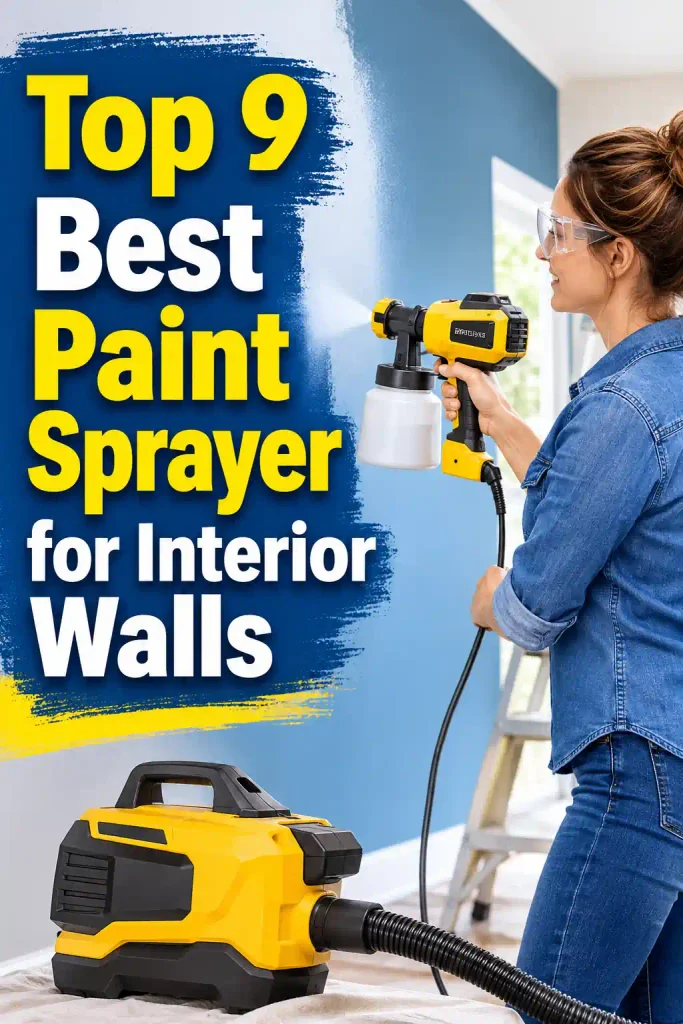
Airless paint sprayers are generally the most practical choice for larger interior projects because many models can handle unthinned latex paint directly from a bucket. HVLP sprayers offer more control for smaller jobs, although their paint containers and slower application can make them less convenient for covering entire rooms. Below, we compare nine options and explain what to consider before choosing one.
Our Top Picks
- Best Overall: Graco Magnum X5 Airless Paint Sprayer
- Best for Multiple Rooms: Graco Magnum X7 Airless Paint Sprayer
- Best for Larger Projects: Graco Magnum ProX17 Airless Paint Sprayer
- Best Low-Overspray Option: Wagner Control Pro 150
- Best for DIY Interior Painting: Wagner Control Pro 130
- Best for Frequent Use: Titan ControlMax 1700
- Best for Smaller Projects: Wagner FLEXiO 5000
- Best Compact Airless Option: Graco TrueCoat 360
- Best Alternative for DIY Users: MaXpray M1 Airless Paint Sprayer
Paint Sprayers for Interior Walls Comparison Table
| Product Name | Best For | Check Price |
|---|---|---|
| Graco Magnum X5 Airless Paint Sprayer | Overall interior wall painting | Check on Amazon |
| Graco Magnum X7 Airless Paint Sprayer | Multiple rooms | Check on Amazon |
| Graco Magnum ProX17 | Larger painting projects | Check on Amazon |
| Wagner Control Pro 150 | Reduced overspray | Check on Amazon |
| Wagner Control Pro 130 | DIY room painting | Check on Amazon |
| Titan ControlMax 1700 | Frequent home projects | Check on Amazon |
| Wagner FLEXiO 5000 | Smaller rooms and accent walls | Check on Amazon |
| Graco TrueCoat 360 | Compact painting jobs | Check on Amazon |
| MaXpray M1 Airless Paint Sprayer | DIY airless spraying | Check on Amazon |
Affiliate disclosure: As an Amazon Associate I earn from qualifying purchases.
Shopping note: The links above are Amazon search links for the named models, not confirmed individual product listings. Check the exact model number, included accessories, seller, specifications, and current availability before ordering. Some models may be sold in different configurations.
Top 9 Best Paint Sprayer for Interior Walls Reviews
1. Graco Magnum X5 Airless Paint Sprayer – Best Overall
The Graco Magnum X5 is a strong all-around option for homeowners who want to spray interior walls without repeatedly filling a small paint container. This stand-mounted airless sprayer draws paint from its container through a suction tube, making it convenient for bedrooms, living rooms, hallways, and other medium-sized painting projects.
One of its main advantages is its ability to handle many common latex paints without thinning, provided the paint and spray tip are compatible with the manufacturer’s specifications. That can save preparation time and help maintain the paint’s intended consistency. Its reversible spray tip also makes it easier to clear certain clogs during a project.
The X5 is particularly useful when you have several walls to cover and want a more efficient application method than brushing and rolling. You can move around the room while the paint supply remains in its original container rather than stopping frequently to refill a small cup.
However, airless spraying requires careful preparation. The high-pressure spray can create substantial overspray, so floors, windows, doors, furniture, electrical outlets, and nearby surfaces need thorough protection. Practice on a spare board before spraying your finished walls.
What we like:
- Draws paint directly from a larger container.
- Suitable for many interior latex painting projects.
- Reversible tip helps clear certain clogs.
- Useful for bedrooms and medium-sized rooms.
- More convenient than repeatedly filling a small paint cup.
Things to consider:
- Overspray requires extensive masking.
- Cleaning the pump and hose takes time.
- Spraying technique requires practice.
- Not the most compact option for storage.
Our verdict: The Graco Magnum X5 is our best overall choice for homeowners who want an airless sprayer for interior walls. It offers a useful balance of project capacity, convenience, and versatility for occasional home painting.
2. Graco Magnum X7 Airless Paint Sprayer – Best for Multiple Rooms
If you’re planning to repaint several rooms, the Graco Magnum X7 is worth considering. It is a cart-mounted airless paint sprayer designed to make moving equipment around a larger property easier.
Unlike smaller handheld sprayers, the X7 draws paint from a larger container. This is particularly helpful when covering long walls, ceilings, and multiple rooms because you don’t have to keep stopping to refill a small reservoir.
Its cart design is another practical advantage. You can move the sprayer from one room to another, although you still need to manage the hose carefully to prevent it from catching on furniture, corners, or doorways.
The X7 is suitable for homeowners who expect to use their sprayer for more than one small project. It can also be useful for property maintenance, rental turnovers, and larger renovation jobs.
As with other airless models, proper tip selection is essential. Choose a tip recommended for your paint and intended surface, and maintain a consistent distance from the wall. Moving too slowly can produce runs, while moving too quickly may leave uneven coverage.
What we like:
- Cart-mounted design improves mobility.
- Draws paint from larger containers.
- Suitable for multiple rooms and larger projects.
- Useful for walls and compatible coatings.
- More convenient for extended painting sessions.
Things to consider:
- Takes up more storage space.
- Requires careful masking indoors.
- Hose management can take practice.
- May be more equipment than needed for one small room.
Our verdict: The Graco Magnum X7 is a good option if you are painting multiple rooms or expect to use an airless sprayer regularly. Its cart design and larger-project capability make it a practical step up from smaller equipment.
3. Graco Magnum ProX17 Airless Paint Sprayer – Best for Larger Painting Projects
The Graco Magnum ProX17 is designed for more demanding painting work. It is worth exploring if you’re handling a large interior renovation, repainting several rooms, or completing projects regularly.
One of its important features is its higher-capacity airless pumping system. The ProX17 is designed to draw paint from a container and deliver it through a hose, which makes it more convenient for extensive wall coverage than small cup-fed models.
The longer hose supplied with the model can also be useful when working across larger areas. Depending on the room layout, you may be able to position the main unit in a convenient location while moving the spray gun around the space.
Another point worth considering is its replaceable pump design. Equipment used regularly can experience wear, so a model with a serviceable pump can be appealing to homeowners and contractors who want to maintain their sprayer rather than replace the entire machine.
The ProX17 is not necessarily the right choice for everyone. Its greater capacity may be unnecessary if you only plan to paint one bedroom. It also requires careful cleaning, suitable ventilation, and appropriate protective equipment.
What we like:
- Designed for larger painting projects.
- Bucket-fed paint supply.
- Long hose supports movement around larger areas.
- Higher-capacity design for frequent use.
- Serviceable pump system.
Things to consider:
- More expensive than basic DIY models.
- Requires storage space.
- Overspray protection is essential.
- May be excessive for occasional small jobs.
Our verdict: The Graco Magnum ProX17 is worth considering for large interior projects and frequent use. If you regularly paint several rooms or handle renovation work, its higher-capacity design may justify the investment.
4. Wagner Control Pro 150 – Best Low-Overspray Option
Indoor painting can be challenging because overspray may settle on floors, furniture, windows, and other surfaces. The Wagner Control Pro 150 is worth considering if you want an airless system designed to reduce overspray compared with conventional airless spraying.
Its High Efficiency Airless (HEA) technology is designed to operate with reduced spray pressure and provide a more controlled application. Wagner states that its HEA technology can produce up to 55% less overspray than traditional airless sprayers when used under the specified conditions.
The Control Pro 150 draws paint from a larger container, making it useful for walls and other broad surfaces. Its design can be appealing for homeowners who want the speed of airless spraying but would like a more controlled application.
The model is also suitable for larger DIY projects where a handheld cup sprayer would require frequent refilling. You can use it for compatible interior coatings, provided you select the correct tip and follow the paint manufacturer’s instructions.
Reduced overspray does not mean no overspray. You should still mask the room thoroughly, cover nearby objects, and wear suitable respiratory and eye protection.
What we like:
- HEA technology is designed to reduce overspray.
- Suitable for larger wall surfaces.
- Draws paint from a larger container.
- Useful for DIY renovation projects.
- Offers an alternative to conventional airless systems.
Things to consider:
- Still requires careful room preparation.
- Spray tips need to match the coating.
- Cleaning is necessary after use.
- Not completely free from airborne paint mist.
Our verdict: The Wagner Control Pro 150 is a strong option if you want airless spraying with a focus on overspray reduction. It is particularly worth comparing for interior projects where controlling paint mist is important.
5. Wagner Control Pro 130 – Best for DIY Interior Painting
The Wagner Control Pro 130 is another HEA airless sprayer worth considering for home renovation projects. Its tank-fed design makes it different from bucket-fed models, offering a convenient setup for homeowners who prefer a self-contained paint supply.
The integrated tank can hold a useful amount of paint for smaller projects, such as a room or a limited section of a home. It reduces the need to manage a separate paint bucket during application, although you will still need to refill the tank as necessary.
Like the Control Pro 150, this model uses Wagner’s HEA technology to help reduce overspray compared with traditional airless systems. That can be helpful when painting indoors, where airborne paint mist needs to be controlled carefully.
The Control Pro 130 may be particularly appealing if you want airless performance but do not need a larger cart-mounted machine. Its tank-based arrangement can make it easier to move around a typical DIY workspace.
Before buying, consider the size of your project. The integrated tank is convenient, but a bucket-fed model may be more practical if you are painting a large open-plan living area or several rooms without wanting to refill frequently.
What we like:
- Integrated paint tank.
- HEA spraying technology.
- Designed for DIY painting projects.
- Convenient for smaller interior jobs.
- More compact setup than larger cart-mounted equipment.
Things to consider:
- Tank capacity limits uninterrupted spraying.
- Refilling may be necessary on larger projects.
- Requires masking and cleanup.
- Check paint compatibility before use.
Our verdict: The Wagner Control Pro 130 is a practical option for DIY users who want an airless sprayer without moving a large bucket-fed machine around the house. It is especially worth considering for smaller interior projects.
6. Titan ControlMax 1700 – Best for Frequent Use
The Titan ControlMax 1700 is an airless paint sprayer designed for homeowners and users who take on regular painting projects. It is worth comparing if you want a machine that can handle broad surfaces rather than a small handheld sprayer intended mainly for furniture or trim.
Its High Efficiency Airless technology is designed to provide more controlled spraying than conventional high-pressure systems. This can be appealing for interior painting, where excessive overspray can create additional masking and cleanup work.
The ControlMax 1700 uses a larger paint supply rather than relying on a small cup attached to the gun. This makes it more convenient when covering walls, ceilings, and other large surfaces.
A major consideration is the overall project size. If you are painting an entire home, a larger airless unit can reduce interruptions and help maintain a steady workflow. For a single small bedroom, however, the setup and cleaning may take a significant portion of your available time.
Always check the exact ControlMax model and included accessories. Different versions may have different specifications, so verify the hose, spray gun, tip, and paint compatibility before purchasing.
What we like:
- Designed for larger painting projects.
- HEA technology focuses on controlled spraying.
- Suitable for broad wall surfaces.
- More convenient than small cup-fed equipment for extensive jobs.
- Worth considering for repeat home projects.
Things to consider:
- Requires thorough masking.
- Cleaning takes time.
- Check the exact model specifications.
- May be unnecessary for occasional small jobs.
Our verdict: The Titan ControlMax 1700 is a worthwhile alternative to compare with Graco and Wagner airless models. It is best suited to homeowners who expect to paint larger areas or complete projects regularly.
7. Wagner FLEXiO 5000 – Best for Smaller Rooms and Accent Walls
Not every interior painting project requires a large airless machine. The Wagner FLEXiO 5000 is an HVLP sprayer that may be more suitable for smaller jobs, accent walls, and projects where adjustable spray control is important.
Unlike airless models, this sprayer uses a turbine to push air through the system and atomize the paint. Its stationary design keeps the motor separate from the handheld spray gun, which can make the gun easier to handle during longer applications.
The FLEXiO 5000 includes different spray attachments for different types of work. Its iSpray attachment is intended for broader surfaces such as walls and ceilings, while the detail-finish attachment is more appropriate for smaller, detailed projects.
One advantage of an HVLP sprayer is its adjustable settings. You can adjust paint flow and spray pattern to suit the project and your preferred application technique.
However, HVLP sprayers generally have smaller paint containers than bucket-fed airless systems. You may need to refill more often when covering a full room. Depending on the paint and attachment, thinning may also be required, so check the manufacturer’s instructions and perform a test spray.
What we like:
- Stationary turbine design.
- Adjustable paint flow and spray pattern.
- Includes attachments for different applications.
- Useful for accent walls and smaller projects.
- Can also handle selected doors and trim projects.
Things to consider:
- Slower for large wall areas than airless sprayers.
- Smaller paint containers require refilling.
- Paint preparation may be necessary.
- Technique affects the final finish.
Our verdict: The Wagner FLEXiO 5000 is a useful choice if your interior painting project includes accent walls, smaller rooms, doors, and trim. For painting an entire home, a bucket-fed airless sprayer is generally more practical.
8. Graco TrueCoat 360 – Best Compact Airless Option
The Graco TrueCoat 360 is a handheld airless sprayer designed for smaller painting projects. Its compact design makes it easier to store and carry than a larger stand- or cart-mounted machine.
This type of sprayer can be useful for touch-ups, small wall sections, closets, and selected interior projects. It may also appeal to homeowners who want an airless tool but do not want to manage a separate pump and long hose.
Its handheld format is convenient, but it comes with a trade-off. The paint container is much smaller than the supply used by larger airless models, so you will need to refill it more frequently. That can become inconvenient when covering several large walls.
The TrueCoat 360 is therefore better viewed as a compact project sprayer rather than a full replacement for a larger airless system. Check the specific version because Graco offers different TrueCoat configurations, and features can vary.
As with any airless sprayer, follow the safety instructions carefully. High-pressure paint equipment can cause serious injection injuries if the spray contacts skin. Never point the gun toward yourself or another person, and use the correct pressure-relief procedure before cleaning or servicing it.
What we like:
- Compact handheld design.
- Easier to store than larger airless units.
- Useful for smaller painting tasks.
- No separate cart required.
- Convenient for selected touch-up projects.
Things to consider:
- Limited paint capacity.
- Frequent refilling on large walls.
- Not ideal for whole-house painting.
- Requires careful high-pressure safety practices.
Our verdict: The Graco TrueCoat 360 is worth considering for smaller interior projects and touch-ups. If you plan to spray several complete rooms, choose a larger airless model instead.
9. MaXpray M1 Airless Paint Sprayer – Best Alternative for DIY Users
The MaXpray M1 is an airless paint sprayer designed for DIY homeowners who want to tackle larger painting projects. It offers an alternative to more established models from Graco, Wagner, and Titan.
Its airless system is intended to draw paint from a larger container and deliver it through a spray hose. That makes it more suitable for broad wall surfaces than a small cup-fed HVLP sprayer.
The M1 is worth exploring if you want to repaint bedrooms, living rooms, hallways, or other interior areas. Its design is aimed at home improvement users who want to complete painting work without relying entirely on manual application.
Before choosing it, compare the included spray tip, hose length, filter, accessories, and available replacement parts. These details affect how conveniently you can use and maintain the machine. Also confirm that the model supports the specific interior latex paint you intend to spray.
As with any airless system, proper technique is important. Keep the gun moving at a steady speed, maintain a consistent distance from the wall, and overlap each pass slightly to achieve even coverage.
What we like:
- Airless design for larger surfaces.
- Suitable for DIY renovation projects.
- Draws paint from a larger supply.
- Alternative to established airless brands.
- Useful for compatible interior wall coatings.
Things to consider:
- Check replacement-part availability.
- Verify the exact included accessories.
- Requires masking and careful cleanup.
- Practice is needed for consistent coverage.
Our verdict: The MaXpray M1 is worth comparing if you want a DIY-oriented airless sprayer for interior walls. Check its specifications, support, and included accessories against established alternatives before making a decision.
How to Choose Paint Sprayer for Interior Walls
The right paint sprayer depends on your room size, paint type, experience, and how frequently you plan to use the equipment. Consider these factors before buying.
1. Choose Between Airless and HVLP
The two main sprayer types have different strengths.
| Feature | Airless Sprayer | HVLP Sprayer |
|---|---|---|
| Application speed | Generally faster | Generally slower |
| Paint supply | Often draws from a bucket or larger tank | Usually uses a smaller cup or container |
| Best for | Large walls and multiple rooms | Smaller rooms, trim, and detailed work |
| Paint preparation | Often sprays compatible latex without thinning | May require thinning, depending on paint and model |
| Overspray | Can be substantial | Often more controlled |
| Cleanup | Pump, hose, gun, and tip | Cup, nozzle, gun, and air components |
| Learning curve | Requires pressure and movement control | Requires flow and pattern adjustments |
Airless sprayers are usually the better choice for large interior wall projects. They can apply compatible latex paint quickly and reduce the need for frequent refilling.
HVLP sprayers are better suited to smaller projects where control and detail matter more than speed. They can be useful for accent walls, doors, trim, and furniture.
2. Consider Your Room Size
Project size should influence the type of sprayer you buy.
- Small room: A compact airless or suitable HVLP model may be sufficient.
- One or two medium-sized rooms: A Graco Magnum X5 or Wagner Control Pro 130 may be worth comparing.
- Several rooms: A larger bucket-fed airless model can reduce interruptions.
- Whole-house painting: Consider a higher-capacity unit or professional rental equipment.
Remember that spraying is only one part of the job. Masking, covering furniture, moving equipment, and cleaning the sprayer all take time.
3. Check Paint Compatibility
Not every sprayer handles every coating. Some models are designed for latex wall paint, while others are better suited to stains, sealers, and thinner materials.
Before purchasing, confirm that the sprayer supports:
- Interior latex paint.
- Water-based primers, if required.
- The paint’s recommended viscosity.
- The tip size needed for your coating.
- The manufacturer’s recommended thinning procedure.
Do not thin paint automatically. Many airless sprayers can handle compatible latex paint without thinning, while some HVLP models may require adjustment. Follow both the paint and sprayer instructions.
4. Look at the Spray Tip
The spray tip affects the width of the fan and the amount of paint delivered. Choosing an unsuitable tip can lead to poor atomization, uneven coverage, or excessive paint application.
For interior walls, check the paint manufacturer’s recommended tip size and the sprayer’s supported maximum tip size. A tip intended for a thin stain may not be suitable for thicker wall paint.
Reversible tips can be helpful because they allow you to clear certain blockages by turning the tip according to the manufacturer’s instructions.
5. Consider Overspray Control
Overspray is one of the biggest concerns when using a sprayer indoors. Fine paint particles can travel beyond the wall you are painting and settle on furniture, floors, windows, fixtures, and nearby rooms.
Look for features such as:
- HEA technology or other overspray-reduction designs.
- Adjustable pressure settings.
- Appropriate spray tips.
- A controlled spray pattern.
- A suitable spray guard.
Even with these features, you should cover the entire work area. Reduced overspray does not eliminate the need for masking.
6. Check Hose Length and Mobility
A longer hose can make it easier to move around a room without repositioning the main unit constantly. This is especially useful when painting large living rooms, hallways, and ceilings.
A cart-mounted sprayer can also make transportation easier. However, longer hoses may require more careful handling and cleaning.
For smaller projects, a compact handheld or stationary HVLP model may be easier to manage.
7. Think About Cleaning and Maintenance
Cleaning is an important part of owning a paint sprayer. Dried paint can block the tip, gun, filters, and internal passages.
Before purchasing, consider how easy it is to:
- Flush the system after water-based paint.
- Remove and clean the spray tip.
- Access filters.
- Replace worn components.
- Store the hose and accessories.
A machine that is easy to maintain is more likely to remain useful over multiple projects.
8. Set a Realistic Budget
The cheapest sprayer is not always the best value. Consider the total cost of the machine, paint, masking supplies, cleaning materials, replacement tips, and any additional accessories.
For one large painting project, renting a suitable airless sprayer may be more economical than buying a machine. If you expect to repaint regularly, purchasing a model with available replacement parts may make more sense.
How to Spray Interior Walls Like a Professional
A good sprayer can make painting easier, but technique and preparation determine much of the final result. Follow these general steps and always use the instructions supplied with your equipment.
Step 1: Prepare the Room
Remove as much furniture as possible. Move remaining furniture away from the walls and cover it with protective plastic.
Cover the floor, windows, doors, cabinets, light fixtures, electrical outlets, and other surfaces that should not receive paint. Use masking tape and suitable protective materials to secure the coverings.
Close off nearby rooms where possible to reduce the spread of paint mist.
Step 2: Clean and Repair the Walls
Remove dust, cobwebs, grease, and loose material. Wash areas that need cleaning and allow them to dry.
Fill small holes and cracks with an appropriate wall filler. Sand repaired areas smooth and remove the dust before painting.
If the wall has stains, water damage, or other problems, use a suitable primer or resolve the underlying issue before applying the finish paint.
Step 3: Protect Yourself
Wear appropriate eye protection, gloves, and protective clothing. Use respiratory protection suitable for the coating and spraying conditions.
Provide adequate ventilation and follow the paint and equipment safety instructions. Keep children and pets away from the work area.
Airless sprayers operate at high pressure. Never place your hand or any body part in front of the spray tip. A high-pressure injection injury requires immediate emergency medical attention, even if the wound looks small.
Step 4: Prepare the Paint
Stir the paint thoroughly and strain it if the manufacturer recommends doing so. Check the paint’s compatibility with your sprayer and use the recommended tip.
Do not add water or another thinner unless the paint and sprayer instructions allow it. Excessive thinning can affect coverage and the final coating performance.
Step 5: Test the Spray Pattern
Before spraying the wall, test the machine on cardboard or a spare board.
Check that the spray fan is even and that the paint is not spitting, producing heavy edges, or creating large droplets. Adjust the pressure, flow, or tip as directed by the equipment manufacturer.
Step 6: Start With Corners and Edges
Spray corners and difficult areas carefully. Some painters prefer to spray broad wall surfaces first and finish smaller areas with a brush or roller, depending on the room and equipment.
Keep the spray gun at a consistent distance from the surface. Avoid pointing the gun at an angle that creates uneven paint distribution.
Step 7: Use Steady, Overlapping Passes
Move the spray gun smoothly across the wall. Begin moving before pulling the trigger and release it before stopping your movement.
Overlap each pass slightly to avoid missed strips. Keep the gun parallel to the wall rather than swinging your wrist in an arc.
Apply the paint in even coats instead of trying to cover the entire wall with one heavy pass.
Step 8: Allow the Paint to Dry
Follow the paint manufacturer’s recommended drying time before applying another coat. Temperature, humidity, airflow, and paint formulation can all affect drying.
Inspect the wall under good lighting to identify thin areas, missed spots, or uneven coverage.
Step 9: Clean the Sprayer Immediately
Clean the machine as soon as you finish spraying. Follow the manufacturer’s flushing procedure for the coating you used.
Remove and clean the tip, filters, and other components as instructed. Dispose of leftover paint and cleaning water responsibly, following local waste regulations.
Common Mistakes to Avoid When Spraying Interior Walls
Skipping Masking and Surface Protection
Paint mist can travel farther than expected. Cover floors, furniture, windows, fixtures, and nearby surfaces before starting.
Holding the Gun Too Close
Spraying too close can deposit too much paint in one area, creating runs and uneven texture. Maintain the recommended distance and keep the gun moving steadily.
Moving Too Slowly
Slow movement can cause excessive paint buildup. Practice on a test surface until you can maintain a consistent speed.
Using the Wrong Spray Tip
A tip that is too small or too large for the coating can affect coverage and finish quality. Match the tip to the paint and equipment recommendations.
Applying One Heavy Coat
Trying to finish with one thick layer can cause sagging, runs, and uneven drying. Apply the recommended number of coats at the correct thickness.
Ignoring Cleaning
Leaving paint inside the sprayer can cause clogs and damage. Flush and clean the system immediately after use.
Paint Sprayer vs. Roller for Interior Walls
Both methods can produce attractive results, but they suit different situations.
| Feature | Paint Sprayer | Paint Roller |
|---|---|---|
| Application speed | Fast on large open surfaces | Moderate |
| Preparation | Extensive masking | Usually less masking |
| Finish | Smooth when used correctly | Slight roller texture |
| Learning curve | Requires practice | Easier for beginners |
| Cleanup | Equipment flushing and cleaning | Roller and tray cleaning |
| Best for | Large projects and detailed areas | Small rooms and straightforward repainting |
| Paint waste | Overspray can increase waste | Usually less airborne waste |
A sprayer is useful when you have large surfaces to cover or need to work around detailed architectural features. A roller is often more practical for one small room, especially if you do not want to spend time masking the entire space.
Some painters combine both methods. They spray the walls and then back-roll the coating when the paint manufacturer’s instructions and project conditions make that appropriate.
Frequently Asked Questions
What is the best sprayer for interior walls?
The Graco Magnum X5 is a strong overall option for many homeowners because it draws paint from a larger container and is designed for compatible interior latex coatings. The Wagner Control Pro 150 is another option worth considering if reduced overspray is a priority.
Is an airless paint sprayer better for interior walls?
An airless sprayer is generally better for covering large interior wall surfaces because it can apply compatible paint quickly and draw from a larger supply. HVLP models are often more suitable for smaller jobs and detailed work.
Can I use a paint sprayer for interior latex paint?
Yes, provided the sprayer is designed to handle the specific latex paint. Many airless models can spray compatible interior latex without thinning. Some HVLP sprayers require paint preparation or thinning, so check the manufacturer’s instructions.
Do I need to thin interior wall paint for a sprayer?
Not necessarily. Many airless sprayers can handle compatible latex paint without thinning. HVLP models may require thinning depending on the paint’s viscosity and the sprayer’s specifications. Always follow the instructions rather than adding water automatically.
Is spraying interior walls faster than rolling?
Spraying can cover large wall areas faster than rolling, but the overall time savings depend on masking, setup, cleanup, and the number of rooms. For a single small room, rolling may be quicker from start to finish.
Does a paint sprayer use more paint than a roller?
It can. Overspray and paint left inside the equipment may increase material use. Using the correct tip, pressure, and technique can help reduce waste, but a roller generally wastes less paint during straightforward wall painting.
Can beginners use an airless paint sprayer?
Yes, but beginners should practice on cardboard or a spare board first. Learn how to maintain a consistent distance, move the gun evenly, overlap passes, and operate the pressure-relief system safely before painting finished walls.
What size spray tip is best for interior walls?
The correct tip depends on the paint and sprayer. Check the paint manufacturer’s recommendation and the equipment’s supported tip range. Do not assume that one tip size works for every interior coating.
Do I need to back-roll after spraying interior walls?
Not always. Whether back-rolling is appropriate depends on the paint, wall condition, and application instructions. Back-rolling can help work paint into certain surfaces and create a consistent texture, but follow the coating manufacturer’s guidance.
Can I spray ceilings with an interior paint sprayer?
Yes. Many airless sprayers can handle compatible ceiling paints, provided the correct tip and equipment setup are used. Protect the floor and walls carefully, wear suitable eye and respiratory protection, and follow safe equipment-handling instructions.
How do I prevent paint runs when spraying walls?
Keep the spray gun moving at a steady speed, maintain the recommended distance, and apply thin, even coats. Avoid holding the trigger in one place or applying too much paint to corners and edges.
Should I rent or buy a paint sprayer?
Renting may be more economical if you are completing one large project and do not expect to use the machine again. Buying makes more sense if you regularly paint rooms, maintain rental properties, or take on other compatible spraying projects.
Final Words
The best paint sprayer for interior walls should match the size of your project, the type of paint you plan to use, and your experience with spraying equipment. The Graco Magnum X5 is our best overall choice for many homeowners, while the Magnum X7 and ProX17 are worth considering for larger projects. Wagner’s Control Pro 150 and 130 offer HEA options, and the FLEXiO 5000 is a useful alternative for smaller jobs.
Before choosing, compare paint compatibility, tip options, hose length, paint capacity, overspray control, and cleaning requirements. Most importantly, prepare the room thoroughly, practice your spraying technique, and follow the equipment’s safety instructions. The right machine combined with careful preparation can make an interior painting project much more manageable.
Helpful Resources
- Graco: Magnum Airless Paint Sprayers – Explore manufacturer information, product specifications, and operating guidance for Graco homeowner sprayers.
- Wagner SprayTech: Paint Sprayers – Review Wagner sprayer technology, product information, and guidance for choosing equipment for different painting projects.