
A VEVOR airless paint sprayer can be an appealing option for homeowners, DIY enthusiasts, and budget-conscious painters who want to cover walls, ceilings, fences, and other large surfaces more quickly. VEVOR offers several models with different motor capacities, flow rates, hose lengths, and frame designs, so choosing the right version is important.
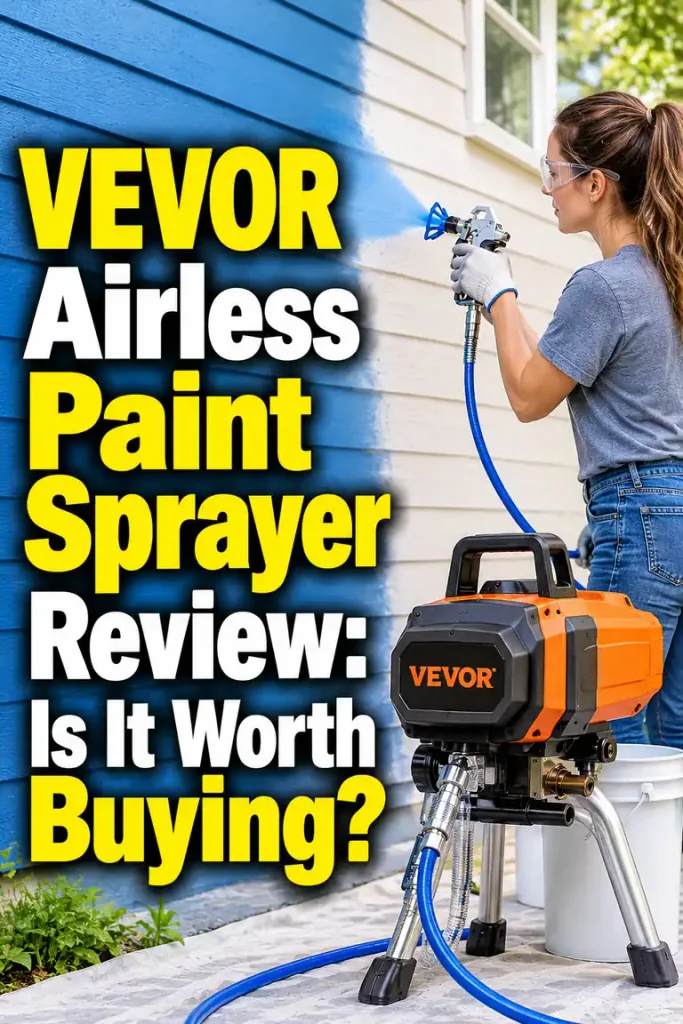
In this VEVOR airless paint sprayer review, we’ll examine popular models, compare their specifications, discuss their advantages and limitations, and explain what to consider before buying one for your next painting project.
Our Top Picks
- VEVOR 650W Stand Airless Paint Sprayer – A compact option for smaller home painting projects.
- VEVOR 750W Airless Paint Sprayer – A versatile choice for regular DIY painting.
- VEVOR 900W Airless Paint Sprayer with Cart – A higher-capacity option for larger surfaces.
- VEVOR 950W Airless Paint Sprayer – A more powerful option for demanding residential projects.
VEVOR Airless Paint Sprayers at a Glance
VEVOR sells several airless sprayers under similar product names. The following comparison highlights representative models and their published specifications. Specifications can vary by version and listing, so verify the exact model number before ordering.
| Product Name | Best For | Check Price |
|---|---|---|
| VEVOR 650W RP8623S | Smaller DIY projects | Check on Amazon |
| VEVOR 750W RP8626 | Regular home painting | Check on Amazon |
| VEVOR 900W Airless Sprayer | Larger painting jobs | Check on Amazon |
| VEVOR 950W Airless Sprayer | Higher-capacity residential work | Check on Amazon |
Affiliate disclosure: As an Amazon Associate I earn from qualifying purchases.
Top VEVOR Airless Paint Sprayer Reviews
1. VEVOR 650W Stand Airless Paint Sprayer
The VEVOR 650W Stand Airless Paint Sprayer is a compact entry-level option for homeowners who want to spray compatible paint on walls, fences, furniture, and other household surfaces.
Its RP8623S version features a 650W motor, maximum pressure of 3,000 PSI, a maximum flow rate of approximately 1.17 liters per minute, and a 25-foot high-pressure hose. It also includes a 517 spray tip and an extension rod.
The direct-draw paint system pulls coating from a container through a suction tube, eliminating the need to keep refilling a small paint cup. This can be convenient when working on larger surfaces.
The 650W model is worth considering for occasional home improvement projects. However, its lower flow rate and shorter hose make it less suitable for users who regularly handle extensive painting work.
Pros:
- Compact design for home use
- 650W motor
- Maximum pressure of 3,000 PSI
- Direct paint suction system
- Includes a 25-foot hose
- Suitable for compatible interior and exterior coatings
Cons:
- Lower flow rate than larger VEVOR models
- Shorter hose
- Not the best option for frequent large-scale work
- Requires careful cleaning after every use
Best for: Homeowners who need an affordable airless sprayer for occasional painting projects.
2. VEVOR 750W Airless Paint Sprayer
The VEVOR 750W Airless Paint Sprayer offers a step up from the smaller 650W version. It is designed for homeowners who want more capacity for painting interior walls, exterior surfaces, fences, and furniture.
The RP8626 model features a 750W motor and a maximum working pressure of 3,000 PSI. Its published specifications list a maximum flow rate of at least 1.2 liters per minute, a 25-foot high-pressure hose, and a 517 spray tip.
One advantage is its adjustable spraying system, which lets users adapt the pressure and output to the coating and surface. This is helpful when moving between different painting tasks, although the correct setting depends on the material and manufacturer’s instructions.
The 750W version is a practical middle-ground option. It offers more motor power than the 650W model without necessarily requiring the larger equipment configuration of a higher-capacity unit.
Pros:
- 750W motor
- Maximum pressure of 3,000 PSI
- Suitable for multiple residential painting tasks
- Adjustable spraying output
- Direct paint suction
- Useful for walls, fences, and furniture
Cons:
- Supplied hose is relatively short
- Cleaning takes time
- Paint compatibility must be checked
- Not intended to replace heavy-duty professional equipment
Best for: DIY painters who regularly work on medium-sized residential projects.
3. VEVOR 900W Airless Paint Sprayer with Cart
The VEVOR 900W Airless Paint Sprayer is a more powerful option for people who need to cover larger areas. Certain 900W versions are available with a wheeled cart, making the equipment easier to move around a home or worksite.
One documented 900W cart model, the 190C-L, offers a maximum pressure of 3,300 PSI and a maximum flow rate of 0.47 GPM. It comes with a 50-foot high-pressure hose and a selection of spray tips, including 317, 417, 515, 517, and 519.
The higher flow rate can be useful when painting large walls, exterior siding, fences, and other broad surfaces. Its longer hose also gives the user more flexibility when moving around a project.
The cart configuration is another practical advantage. Instead of carrying the entire machine, users can roll it around the work area. However, this model is larger than the compact portable versions and requires additional storage space.
Pros:
- 900W motor
- Maximum pressure of 3,300 PSI on the documented 190C-L version
- Maximum flow rate of 0.47 GPM
- 50-foot high-pressure hose
- Wheeled cart design
- Multiple spray tip options
Cons:
- Larger footprint
- Heavier than compact models
- Requires careful setup and cleaning
- Model specifications can vary between listings
Best for: Homeowners and DIY painters handling larger interior and exterior painting projects.
4. VEVOR 950W Airless Paint Sprayer
The VEVOR 950W Airless Paint Sprayer is designed for users who want a higher-capacity machine for demanding residential painting work.
The published 950W version features a maximum pressure of 3,000 PSI and a maximum flow rate of approximately 2.0 liters per minute, or 0.53 GPM. It is also available in a wheeled configuration, which helps with moving the machine between different work areas.
A higher flow rate can make a difference when covering large surfaces, particularly when the paint and spray tip are compatible with the equipment. It may help reduce the time spent applying coatings compared with using a brush or roller on broad surfaces.
However, more power does not automatically mean a better purchase. Users should consider their typical project size, replacement-part availability, paint requirements, and cleaning routine before choosing this model.
Pros:
- 950W motor
- Maximum pressure of 3,000 PSI
- Published flow rate of approximately 0.53 GPM
- Wheeled configuration available
- Designed for larger residential painting tasks
- Direct paint supply from a container
Cons:
- Larger than basic portable models
- Requires more storage space
- More capacity than occasional painters may need
- Exact accessories and specifications depend on the selected version
Best for: DIY users who regularly paint large walls, fences, exterior surfaces, and other extensive areas.
What Makes a VEVOR Airless Paint Sprayer Worth Considering?
Powerful High-Pressure Spraying
VEVOR airless sprayers use a pump to push paint through a high-pressure hose and spray tip. This allows the coating to be atomized without relying on compressed air.
The design is useful for covering broad surfaces more quickly than traditional hand application. Depending on the model and coating, it can be suitable for walls, ceilings, fences, exterior siding, and other compatible surfaces.
Adjustable Pressure Control
Different paints and surfaces may require different spraying pressures. An adjustable control system helps users find a suitable setting for the coating and spray tip.
Starting with a lower setting and gradually increasing it while testing on scrap material can help reduce overspray and uneven application.
Direct Paint Suction
Many VEVOR airless paint sprayers draw paint directly from a bucket through a suction tube. This eliminates the small onboard paint cup found on some handheld sprayers.
It is convenient for larger jobs because users do not need to stop frequently to refill a small container.
Multiple Spray Tip Options
Some VEVOR models include multiple spray tips, allowing users to select a suitable pattern and orifice size for different applications.
For example, a 517 tip generally indicates a nominal 10-inch fan width and a 0.017-inch orifice. Actual results depend on the coating, pressure, and spraying distance.
Always check the equipment manual to confirm which tips are compatible with your particular model.
Extension Rod for Hard-to-Reach Areas
Some versions include an extension rod that helps users reach higher walls, ceilings, and lower areas without constantly changing position.
This can make certain painting jobs more convenient, although proper balance and control remain important.
Cleaning and Maintenance Accessories
VEVOR sprayers may include cleaning brushes, filters, and other maintenance accessories. These can help with routine upkeep, but they do not eliminate the need to flush the pump, hose, gun, and tip thoroughly.
Cleaning immediately after use is essential for preventing dried paint from causing blockages.
VEVOR Airless Paint Sprayer: What Are the Drawbacks?
Although VEVOR offers several attractive features at different price points, there are some limitations to consider.
Cleaning Can Be Time-Consuming
Airless paint sprayers require more cleaning than a basic paint roller or brush. Paint can remain inside the pump, hose, filters, and gun after spraying.
If the coating dries inside the system, it can cause blockages and interfere with future operation. Users should be prepared to follow the cleaning procedure after every project.
Clogging Can Occur
A blocked spray tip or filter can interrupt painting and affect the spray pattern. Using compatible paint, straining coatings when recommended, and cleaning the equipment properly can help reduce this problem.
A reversible tip can make certain clogs easier to clear, but it does not prevent every blockage.
Replacement Parts and Long-Term Support
Before purchasing, check whether replacement tips, filters, hoses, seals, and other important components are available for the exact model.
This is particularly important if you expect to use the sprayer frequently. A low initial purchase price is less attractive if essential replacement parts are difficult to obtain.
Model Variations Can Be Confusing
VEVOR sells similar-looking sprayers with different motor ratings, flow rates, hose lengths, and frame styles. A listing may also offer several selectable configurations.
Always confirm the model number and specifications rather than relying only on the product title or photographs.
Which VEVOR Airless Paint Sprayer Should You Choose?
The right model depends on the amount of painting you expect to do.
- Choose the 650W model if you need a compact machine for occasional home improvement projects.
- Choose the 750W model if you regularly paint medium-sized residential surfaces.
- Choose the 900W model if you want a higher flow rate and longer hose for larger painting jobs.
- Choose the 950W model if you need greater output for extensive residential projects.
For most homeowners, the 750W version can be a reasonable middle-ground choice. If you regularly paint large exterior surfaces, a higher-capacity model may be more practical.
How to Use a VEVOR Airless Paint Sprayer
Step 1: Prepare the Surface
Remove loose paint, dust, grease, and dirt before spraying. Repair holes or cracks and allow the surface to dry.
Cover floors, windows, furniture, electrical outlets, and nearby objects with appropriate protective materials.
Step 2: Prepare the Paint
Read the paint manufacturer’s instructions to confirm that the coating is suitable for airless spraying.
Stir the paint thoroughly and strain it if recommended. Do not thin it unless the paint instructions or sprayer requirements call for thinning.
Step 3: Assemble the Equipment
Connect the high-pressure hose, spray gun, and suction tube according to the user manual. Check that all connections are secure.
Follow the manufacturer’s priming instructions before switching to spraying mode.
Step 4: Test the Spray Pattern
Use cardboard or scrap material to test the spray pattern. Begin with a lower pressure setting and increase it gradually until you achieve an even pattern.
Adjust the pressure and technique if you notice heavy edges, uneven coverage, or excessive overspray.
Step 5: Apply the Paint
Hold the gun at a consistent distance from the surface. Keep it perpendicular to the area and move your arm steadily.
Start moving before pulling the trigger and release it before stopping. Overlap each pass slightly to avoid missed areas and uneven bands.
Step 6: Clean the Sprayer
Follow the user manual’s cleaning instructions for the coating you used. Flush the pump and hose, then clean the gun, tip, filters, and other paint-contact components.
Do not leave paint inside the machine after completing the job.
Important Safety Tips
Airless paint sprayers operate at extremely high pressure. A high-pressure paint injection injury can cause serious damage even when the visible wound appears small.
- Never point the spray gun toward yourself or another person.
- Never place your fingers or hands in front of the spray tip.
- Engage the gun safety when the sprayer is not in use.
- Follow the pressure-relief procedure before cleaning, inspecting, or removing the tip.
- Wear suitable eye protection, gloves, and protective clothing.
- Use respiratory protection appropriate for the coating and spraying conditions.
- Maintain adequate ventilation.
- Keep children and pets away from the work area.
If a high-pressure injection injury occurs, seek emergency medical attention immediately and explain that it may be a paint injection injury.
Frequently Asked Questions
Is a VEVOR airless paint sprayer good for home use?
Yes, several VEVOR models are designed for residential painting projects. They can be useful for walls, ceilings, fences, furniture, and exterior surfaces when the coating is compatible with the equipment.
Is the VEVOR 650W or 750W paint sprayer better?
The 650W model is a compact option for smaller projects, while the 750W version offers a higher motor rating and is intended for more demanding residential use. Compare the exact flow rate, hose length, and frame configuration before choosing.
Can a VEVOR airless paint sprayer spray latex paint?
Some VEVOR airless sprayers can handle compatible latex coatings. However, suitability depends on the exact model, paint viscosity, spray tip, and manufacturer’s requirements. Check both the paint label and equipment manual.
Does VEVOR airless paint sprayer paint need thinning?
Not always. Some compatible coatings can be sprayed without thinning. Follow the paint manufacturer’s instructions and the sprayer’s requirements rather than automatically adding water or another thinner.
How much pressure does a VEVOR airless paint sprayer produce?
Pressure varies by model. Several VEVOR models list a maximum pressure of 3,000 PSI, while certain 900W versions list up to 3,300 PSI. Check the specifications for the exact model you are purchasing.
Can a VEVOR paint sprayer be used for exterior walls?
Yes, compatible VEVOR airless models can be used for exterior painting. Protect nearby surfaces and avoid spraying in windy conditions that could carry paint onto vehicles, windows, plants, or neighboring properties.
How do you clean a VEVOR airless paint sprayer?
Follow the model’s manual and the coating manufacturer’s cleaning instructions. Flush the system with the appropriate cleaning solution and clean the spray gun, tip, filters, and other paint-contact parts immediately after use.
Is VEVOR suitable for professional painting?
VEVOR offers models with different capacities, but suitability for professional work depends on the exact machine, expected daily workload, serviceability, and replacement-part availability. Contractors who depend on equipment every day should carefully compare support and repair options before purchasing.
Final Words
A VEVOR airless paint sprayer can be a practical choice for homeowners and DIY painters who want to complete larger painting projects more efficiently. The 650W and 750W models are worth considering for everyday residential work, while the 900W and 950W versions offer higher output for more demanding jobs.
Before choosing, compare the motor rating, flow rate, hose length, spray tips, and frame design. Most importantly, verify the exact model number because VEVOR sells several similar-looking versions. With compatible paint, correct spraying technique, and proper maintenance, the right model can be a useful addition to your painting equipment.
Helpful Resources
- VEVOR Airless Paint Sprayer 650W Product Specifications – Manufacturer specifications for the RP8623S model.
- VEVOR 750W Airless Paint Sprayer Specifications – Details about the RP8626 model and its features.