
The best black paint for interior doors should deliver rich color, a smooth finish, and enough durability to handle fingerprints, scratches, and everyday use. Since doors are touched more frequently than walls, choosing a quality door and trim enamel is usually a better decision than using ordinary wall paint.
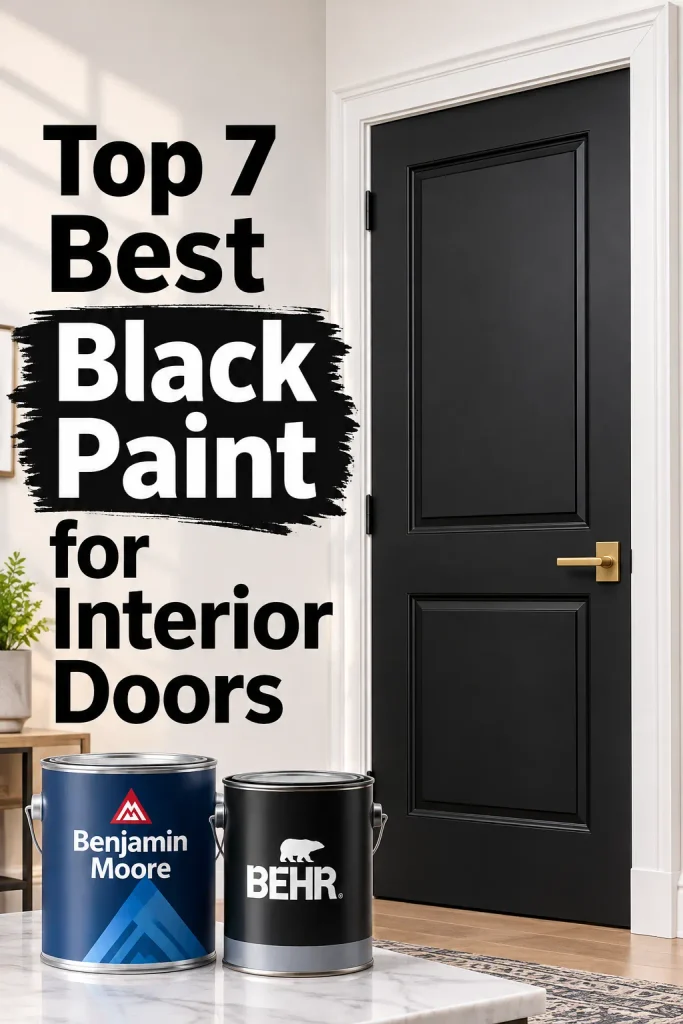
Black interior doors can add contrast and character to almost any room. A satin finish creates a softer, understated appearance, while semi-gloss gives the surface more shine and makes routine cleaning easier. Below are seven options worth comparing, along with their advantages, limitations, and tips for getting a professional-looking result.
Top 7 Best Black Paint for Interior Doors: Quick Comparison
| Product Name | Best For | Check Price |
|---|---|---|
| Rust-Oleum Advanced Dry Door & Trim Paint – Satin Black | Best Overall | Check on Amazon |
| Benjamin Moore ADVANCE – Black | Best Smooth Finish | Check on Amazon |
| Sherwin-Williams Emerald Urethane Trim Enamel – Black | Best for High-Traffic Doors | Check on Amazon |
| PPG Break-Through! Door, Trim & Cabinet Paint – Black | Best Fast-Drying Option | Check on Amazon |
| BEHR Premium Cabinet, Door & Trim Enamel – Black | Best for DIY Projects | Check on Amazon |
| INSL-X Cabinet Coat – Black Tint | Best Cabinet-Style Finish | Check on Amazon |
| Valspar Cabinet & Furniture Paint – Black | Best for Coordinated Interiors | Check on Amazon |
Affiliate disclosure: As an Amazon Associate I earn from qualifying purchases.
Top Picks: 7 Best Black Paint for Interior Doors Reviews
The products below include door-and-trim enamels as well as cabinet coatings that may suit certain interior door projects. The first group offers the clearest purpose-built choices. For cabinet and furniture paints, confirm that the exact formulation is approved for your door material before using it.
1. Rust-Oleum Advanced Dry Door & Trim Paint – Best Overall
Check Rust-Oleum Advanced Dry Satin Black on Amazon
Rust-Oleum Advanced Dry Door & Trim Paint is a particularly relevant choice for homeowners planning to paint interior doors black. Unlike ordinary wall paint, this product is specifically designed for doors and trim. Its ready-made Satin Black option also makes it convenient for anyone who wants a dark finish without arranging a custom color match.
The water-based formula is listed for compatible wood, metal, and fiberglass surfaces. That versatility is useful when you are updating several doors made from different materials. Its satin sheen provides a gentle reflection rather than the strong shine associated with gloss paint.
Another appealing feature is its quick-drying performance. Rust-Oleum promotes the formula as a faster-drying alternative to traditional oil-based paint. The product is also designed to resist fading, scuffs, and chipping, which are important considerations for frequently handled doors.
For application, use a quality synthetic brush on corners and detailed panels. A suitable small roller can help create an even finish across larger flat sections. Apply thin coats and follow the container’s instructions for recoating and curing.
Pros:
- Specifically formulated for doors and trim.
- Ready-made Satin Black option.
- Suitable for compatible wood, metal, and fiberglass.
- Water-based cleanup.
- Designed to resist scuffs, fading, and chipping.
Cons:
- Satin may not provide the reflective look some homeowners prefer.
- Color and container-size availability can vary.
- Surface preparation is still necessary.
Our Verdict: Rust-Oleum Advanced Dry is the strongest overall starting point because it is specifically designed for doors and trim and offers a convenient Satin Black finish.
2. Benjamin Moore ADVANCE – Best Smooth Finish
Check Benjamin Moore ADVANCE Black on Amazon
Benjamin Moore ADVANCE is a premium waterborne alkyd paint known for its smooth leveling characteristics. It is a strong option for homeowners who want black interior doors with a refined, furniture-like appearance.
One of its main attractions is its ability to flow and level after application. This can help reduce visible brush marks when the paint is applied correctly. That quality is especially useful on flat door panels, raised sections, and decorative woodwork where an uneven finish can be noticeable.
ADVANCE is designed for interior doors, trim, and cabinetry. It is available in different sheen options, including satin, semi-gloss, and high gloss. Satin gives a softer appearance, while semi-gloss creates a more noticeable reflection.
For a black door, ask a Benjamin Moore retailer to confirm the available black color and tint base. A deep, neutral black can create strong contrast against white walls, while a softer black may look more subtle in rooms with warm lighting.
The main drawback is that this paint requires patience. Its recoat and curing times are longer than those of some fast-drying products. Follow the technical instructions rather than rushing the next coat.
Pros:
- Smooth flow and leveling characteristics.
- Designed for interior doors, trim, and cabinets.
- Multiple sheen options.
- Suitable for refined, brush-applied finishes.
- Available in custom colors through participating retailers.
Cons:
- Generally costs more than basic interior paint.
- Recoating can take longer than with fast-drying alternatives.
- Full curing requires additional time.
Our Verdict: Choose Benjamin Moore ADVANCE if achieving a smooth, elegant black finish is more important than completing the project quickly. Confirm the exact black tint and sheen before ordering.
3. Sherwin-Williams Emerald Urethane Trim Enamel – Best for High-Traffic Doors
Check Sherwin-Williams Emerald Urethane Trim Enamel on Amazon
Interior doors in busy homes can receive considerable wear. Family members touch the same areas repeatedly, and marks often develop around handles, edges, and lower panels. Sherwin-Williams Emerald Urethane Trim Enamel is worth considering when a durable finish is a priority.
This water-based urethane-modified enamel is designed for trim, doors, and other interior surfaces that need a hard-wearing coating. Its finish is intended to handle regular cleaning and everyday contact better than many ordinary wall paints.
Another advantage is the range of available sheen options. Depending on the product version and retailer, you can explore satin, semi-gloss, or gloss. Satin creates a restrained appearance, while semi-gloss gives a more traditional trim finish.
Black color availability should be confirmed with a Sherwin-Williams retailer. Ask about the appropriate base, tinting requirements, and whether the selected version is suitable for your door’s existing coating.
Application technique matters. Use thin, even coats, maintain a wet edge, and avoid repeatedly brushing over paint that has started to set. Allow sufficient time for the finish to dry before closing the door against its frame.
Pros:
- Designed for doors and trim.
- Durable urethane-modified enamel finish.
- Suitable for frequently handled surfaces.
- Available in different sheen options.
- Can be tinted to an appropriate black shade.
Cons:
- Premium pricing may be a consideration.
- Usually easiest to obtain through a paint retailer.
- Requires careful application to avoid uneven areas.
Our Verdict: Emerald Urethane Trim Enamel is a strong choice for busy household doors where durability and cleanability are important. Confirm the exact black color and product specifications before purchasing.
4. PPG Break-Through! Door, Trim & Cabinet Paint – Best Fast-Drying Option
Check PPG Break-Through! Black on Amazon
PPG Break-Through! is a waterborne acrylic enamel developed for doors, trim, cabinets, and other demanding surfaces. It is an appealing option when you want a specialized coating but do not want to wait as long between coats as some traditional leveling enamels require.
Its flow and leveling characteristics help create a smooth appearance when brushed, rolled, or sprayed. PPG also highlights its resistance to stains, hand oils, and household cleaners. Those features are particularly relevant for interior doors because fingerprints and handling marks can become noticeable on dark finishes.
One useful detail is that PPG lists a ready-mix black version in its product range. Check the exact product code, sheen, and container size when shopping, since the Break-Through! range includes multiple versions.
The product is also promoted for quick drying and recoating. Actual results depend on temperature, humidity, film thickness, and ventilation, so use the manufacturer’s instructions rather than relying only on advertised best-case times.
Pros:
- Specifically intended for doors, trim, and cabinets.
- Ready-mix black option listed by the manufacturer.
- Designed for smooth flow and leveling.
- Resistance to hand oils and household cleaners.
- Suitable for brushing, rolling, or spraying.
Cons:
- Availability may vary by retailer.
- Multiple product versions can make selection confusing.
- Colorants and sheen options should be checked carefully.
Our Verdict: PPG Break-Through! is an excellent option if you want a purpose-built door coating with a ready-mix black version and fast-drying characteristics.
5. BEHR Premium Cabinet, Door & Trim Enamel – Best for DIY Projects
Check BEHR Premium Cabinet, Door & Trim Enamel on Amazon
BEHR Premium Cabinet, Door & Trim Enamel is worth considering for homeowners who want one coating for several interior improvement projects. Its intended applications include cabinetry, doors, and trim, making it more relevant to door refinishing than ordinary wall paint.
Black can give this enamel a dramatic appearance, especially when paired with light-colored walls and simple hardware. It can also help coordinate doors with nearby cabinets, built-ins, and painted woodwork.
The product’s enamel positioning makes it a practical candidate for surfaces that receive regular handling. However, the final result depends on preparation, application thickness, and the condition of the existing coating.
Check the available color base and ask the retailer about the specific black shade you want. Also verify the sheen options and whether the product is approved for your door material.
For a DIY project, use a quality brush and roller rather than applying an unnecessarily thick layer. Multiple thin coats generally provide better control and a more consistent appearance.
Pros:
- Designed for cabinet, door, and trim projects.
- Useful for coordinating multiple interior surfaces.
- Available through a widely recognized paint retailer.
- Enamel-style finish for suitable applications.
- Suitable for homeowners planning DIY updates.
Cons:
- Exact black tint and sheen availability can vary.
- Preparation is essential for adhesion.
- Coverage and drying depend on application conditions.
Our Verdict: BEHR Premium Cabinet, Door & Trim Enamel is a practical option for DIY homeowners who want a coating intended for doors and other interior woodwork. Verify the exact black version before buying.
6. INSL-X Cabinet Coat – Best Cabinet-Style Finish
Check INSL-X Cabinet Coat on Amazon
INSL-X Cabinet Coat is primarily a cabinet refinishing product, but it may be worth investigating for compatible interior wood doors. Its appeal lies in its smooth finish and suitability for carefully prepared cabinet surfaces.
A cabinet-style enamel can be useful when you want a coordinated appearance between doors, built-in storage, and cabinetry. This is especially relevant in open-plan homes where several painted surfaces are visible from the same room.
Before choosing this product, confirm that the specific formulation is approved for your door material. Also ask the retailer whether the selected base can be tinted to the desired black. Do not assume that every container is supplied as a ready-made black color.
Preparation is especially important on previously painted or glossy doors. Clean the surface thoroughly, sand where required, and use a compatible primer if the manufacturer recommends one.
Pros:
- Designed for cabinet refinishing.
- Suitable for compatible prepared surfaces.
- Useful for coordinating doors and cabinetry.
- Can provide a refined painted appearance.
- Worth considering for detailed woodwork projects.
Cons:
- Not primarily marketed as a door-specific paint.
- Black tint availability must be confirmed.
- Door-material compatibility needs checking.
Our Verdict: INSL-X Cabinet Coat is best considered for compatible wood doors when you want a coordinated cabinet-style finish. Choose it only after confirming the manufacturer’s instructions for your particular surface.
7. Valspar Cabinet & Furniture Paint – Best for Coordinated Interiors
Check Valspar Cabinet & Furniture Paint on Amazon
Valspar Cabinet & Furniture Paint is another option to investigate when updating several interior surfaces together. Its intended use on cabinetry and furniture makes it relevant to selected wood refinishing projects, although door suitability depends on the exact formulation.
A black finish can help connect a room’s furniture, cabinets, and interior woodwork. For example, a dark door beside a matching storage unit can create a more deliberate design than using unrelated colors across the same space.
This paint may appeal to homeowners who prefer a coordinated look rather than treating every surface as a separate project. It is particularly worth comparing when the door and nearby furniture have compatible materials and preparation requirements.
Check the product label for approved substrates, application instructions, and cleaning guidance. Also confirm whether the retailer offers the specific black shade and sheen you want.
Pros:
- Intended for cabinet and furniture projects.
- Useful for coordinating interior finishes.
- Black provides a strong decorative accent.
- Worth considering for compatible wood surfaces.
- Offers an alternative to ordinary wall paint.
Cons:
- Not every version is intended for interior doors.
- Exact black color and sheen may vary.
- Surface compatibility needs confirmation.
Our Verdict: Valspar Cabinet & Furniture Paint is a possible choice for compatible wood doors when coordinating nearby furniture or cabinetry. Check the product label before using it on a frequently handled door.
Buying Guide: How to Choose the Best Black Paint for Interior Doors
Selecting black paint involves more than finding a dark color. The paint formula, sheen, door material, and amount of daily use all affect the result.
1. Choose a Door and Trim Formula
Interior doors benefit from coatings designed for regular handling. A quality enamel is generally a better starting point than standard flat wall paint.
Common options include:
- Water-based acrylic enamel: Offers convenient cleanup and is suitable for many interior door projects.
- Waterborne alkyd: Often chosen for its smooth leveling and refined appearance.
- Urethane-modified enamel: Worth considering for doors that receive frequent handling and cleaning.
- Cabinet enamel: May work on compatible doors when the manufacturer approves the application.
Always read the label. A paint described as suitable for cabinets or furniture is not automatically appropriate for every door material.
2. Select the Right Sheen
The sheen affects both the appearance and practical maintenance of a black door.
| Finish | Appearance | Best For |
|---|---|---|
| Satin | Soft, gentle reflection | Bedrooms and living areas |
| Semi-gloss | Noticeable shine | Hallways and frequently used doors |
| High gloss | Strong reflection | Dramatic decorative interiors |
| Matte | Very little reflection | Modern looks when a durable door-rated formula is available |
Satin is a versatile starting point for most homes. Semi-gloss is a useful alternative when you want a brighter finish that is easier to wipe down. High gloss can look striking, but it may emphasize dents, brush marks, and surface imperfections.
3. Consider the Door Material
Different door materials require different preparation and coating systems.
Solid wood: Choose a compatible wood and trim enamel. Sand rough areas and prime bare sections as needed.
MDF: Use products approved for MDF. Pay special attention to exposed edges because they can absorb paint differently from the smooth faces.
Metal: Select a coating specifically approved for the type of metal. Follow the recommended primer instructions.
Fiberglass: Confirm that the paint is suitable for fiberglass. Rust-Oleum Advanced Dry lists compatible fiberglass surfaces.
Previously painted doors: Glossy or factory-finished surfaces may require cleaning, sanding, and a bonding primer to help the new coating adhere.
4. Pick the Right Shade of Black
Black paint can have different undertones, and the differences become noticeable under changing light.
- True black: Creates a crisp, dramatic contrast.
- Soft black: Provides a slightly gentler appearance.
- Charcoal black: Looks less intense than a pure black.
- Warm black: Can complement natural wood and warm metallic hardware.
- Cool black: Often pairs well with gray walls and contemporary interiors.
Test a sample on the door or a separate board before committing to the entire project. Check it in both daylight and your usual evening lighting.
5. Look for Durability and Cleanability
Interior doors are touched repeatedly, especially near handles and edges. A suitable coating should be able to tolerate routine cleaning and normal household contact.
Look for manufacturer information about scuff resistance, stain resistance, washability, and blocking resistance. Blocking is particularly important because it relates to whether painted surfaces stick together when they touch, such as a door contacting its frame.
Even a durable coating needs time to cure. Avoid heavy use before the product reaches the stage recommended by its manufacturer.
6. Check Drying, Recoating, and Curing Times
These terms describe different stages:
- Touch-dry: The surface no longer feels wet.
- Recoat time: The recommended waiting period before applying another coat.
- Full cure: The time required for the coating to reach its intended hardness and performance.
A door that feels dry may still be vulnerable to sticking or damage. Follow the product instructions before closing it against the frame or cleaning the surface.
7. Use a Compatible Primer
Primer is particularly useful when changing a light-colored door to black or painting over a glossy existing finish.
A suitable primer can improve adhesion, help create an even surface, and reduce the number of topcoats needed. Choose one compatible with both the door material and the paint.
For bare wood, select a primer designed for that surface. If the door has stains or knots, consider a stain-blocking product. Glossy factory finishes may need a bonding primer after proper cleaning and sanding.
8. Estimate the Required Amount
The amount of paint depends on the size of the door, the number of coats, and whether you are painting one or both sides.
Consider these details before purchasing:
- Number of doors.
- Door dimensions and panel design.
- Whether both sides need painting.
- Number of coats recommended.
- Coverage listed on the container.
- Additional paint needed for edges and touch-ups.
Buying enough paint for the complete project can help prevent differences in color or sheen between separate batches.
How to Paint Interior Doors Black: Step-by-Step Guide
Good preparation is essential for an even, attractive finish. Use the following process to help avoid drips, visible brush marks, and poor adhesion.
Step 1: Remove or Protect the Hardware
Remove the handle, lockset, and other hardware when practical. If removal is not possible, cover them carefully with painter’s tape.
Protect the floor with a drop cloth and move nearby furniture away from the work area. If you remove the door from its hinges, place it securely on suitable supports.
Step 2: Clean the Surface
Remove dust, fingerprints, grease, and other contaminants. Pay special attention to the area around the handle, where oils and dirt tend to collect.
Allow the door to dry completely before sanding or applying primer.
Step 3: Sand the Existing Finish
Lightly sand the surface to remove loose paint and reduce excessive gloss. Use an appropriate sanding tool and avoid damaging the door.
Wipe away all sanding dust before proceeding. If the door is in an older home, check for possible lead-based paint before disturbing the existing coating.
Step 4: Apply Primer When Needed
Choose a primer compatible with the door material and existing finish. Apply an even coat and allow it to dry according to the product instructions.
A suitable primer is particularly helpful when covering a light color, bare wood, stains, or a glossy surface.
Step 5: Paint the Panels and Details
Use a quality angled brush for corners, recessed panels, and decorative details. Apply a thin, even layer rather than leaving heavy paint in corners.
Work carefully around panel edges to prevent drips from collecting in grooves.
Step 6: Roll the Larger Sections
Use a suitable small roller for broad, flat areas. Work in manageable sections and avoid applying excessive pressure.
For a consistent appearance, maintain a wet edge and follow the recommended application method for your chosen paint.
Step 7: Apply the Next Coat
Wait for the full recommended recoat time. Apply another thin coat if needed to achieve even black coverage.
Inspect the door from different angles to find missed spots, uneven areas, or visible roller marks.
Step 8: Allow the Finish to Cure
Give the paint enough time to cure before returning the door to regular use. Avoid letting freshly painted surfaces press tightly against the frame.
Reinstall the hardware when the finish is sufficiently dry, and follow the manufacturer’s instructions for cleaning and maintenance.
Best Black Paint Sheen for Different Interior Doors
| Door Location | Recommended Finish | Why It Works |
|---|---|---|
| Bedroom door | Satin | Soft appearance with moderate sheen |
| Bathroom door | Satin or semi-gloss | Practical for routine cleaning |
| Hallway door | Semi-gloss | Suitable for frequent handling |
| Home office door | Satin | Refined, understated appearance |
| Pantry door | Semi-gloss | Convenient for regular wiping |
| Decorative panel door | Satin or gloss | Depends on the desired style |
Frequently Asked Questions
1. What is the best black paint for interior doors?
Rust-Oleum Advanced Dry Door & Trim Paint in Satin Black is a strong overall choice because it is specifically designed for doors and trim. Benjamin Moore ADVANCE is another option if you want a smooth, refined finish.
2. Should interior doors be painted satin or semi-gloss black?
Satin provides a softer appearance and is a versatile choice for most rooms. Semi-gloss creates more reflection and is often preferred for doors that need frequent cleaning.
3. Is black paint a good choice for interior doors?
Yes. Black doors can create attractive contrast against light walls, neutral flooring, and white trim. They also work with modern, traditional, and transitional decorating styles.
4. Do black interior doors show fingerprints?
Fingerprints and dust can be visible on dark surfaces, particularly around handles. The amount depends on the paint’s sheen, surface texture, lighting, and how frequently the door is touched.
5. Do I need primer before painting a door black?
Primer is recommended when the existing finish is glossy, damaged, stained, or significantly different in color. Follow the paint manufacturer’s instructions to determine whether a separate primer is necessary.
6. Can I paint a white interior door black?
Yes. Clean and prepare the door, sand glossy areas, and apply a compatible primer if needed. Use thin, even coats of black paint and respect the recommended drying times.
7. Is water-based paint suitable for interior doors?
Yes. Many modern water-based enamels are designed for doors and trim. They generally offer easier cleanup than traditional oil-based products, but you should still select a formula intended for the door’s material and use.
8. Can I use ordinary wall paint on an interior door?
Some wall paints may adhere to a suitable door surface, but ordinary wall paint may not provide the durability needed for frequent handling. A door-and-trim enamel is usually a more appropriate choice.
9. How many coats of black paint does an interior door need?
Many projects require a primer when necessary and around two topcoats. The actual number depends on the previous color, surface condition, product coverage, and manufacturer’s recommendations.
10. What hardware looks best with black interior doors?
Brushed brass creates a warm contrast, while satin nickel and polished chrome provide a cooler metallic accent. Matte black hardware gives the door a coordinated, understated appearance.
Final Words
The best black paint for interior doors should combine deep color with a durable finish that can handle everyday use. Rust-Oleum Advanced Dry Door & Trim Paint is a convenient overall choice because it is specifically designed for doors and trim and comes in Satin Black. Benjamin Moore ADVANCE and Sherwin-Williams Emerald Urethane Trim Enamel are also worth comparing when a smooth, hard-wearing finish is important.
Before buying, check the door material, select a suitable sheen, and prepare the surface properly. A compatible primer and careful application can make a noticeable difference. With the right coating, black interior doors can add contrast, depth, and character to your home.
Helpful Resources
- PPG – Break-Through! Door, Trim & Cabinet Paint – Review manufacturer information about intended uses, finish options, application, and product performance.
- U.S. Environmental Protection Agency – Lead-Based Paint – Learn about lead-paint precautions before sanding or disturbing older painted doors.