
The best wall paints should do more than add color to your home. They should provide dependable coverage, resist everyday marks, and create a finish that suits the room. Whether you’re refreshing a living room, choosing paint for a bathroom wall, updating a kitchen wall, or coating a garage wall, selecting the right formula makes a noticeable difference.
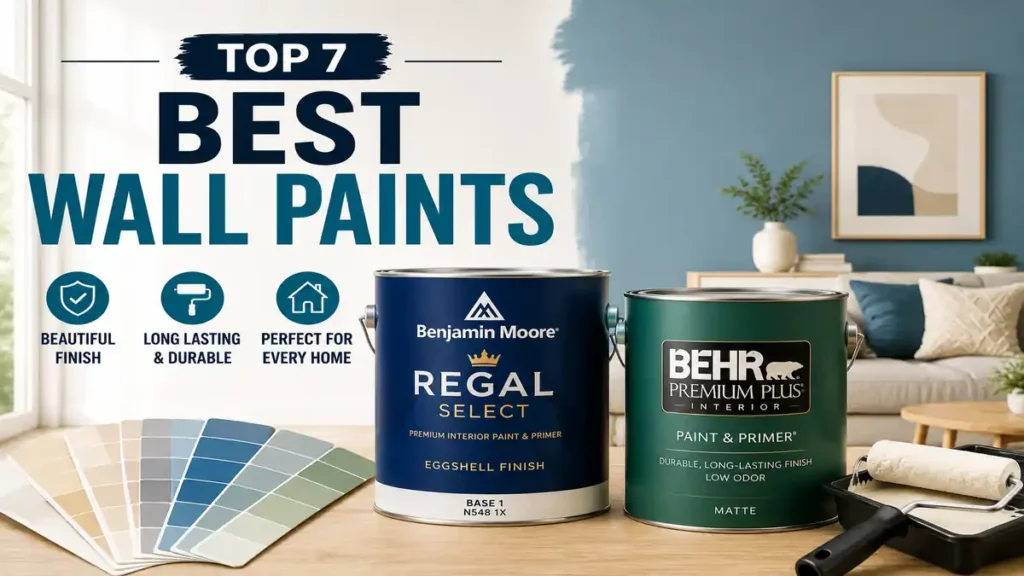
Different rooms have different painting requirements. Bathroom walls need paint that can handle humidity, while kitchen walls benefit from washable finishes that make cleaning easier. A cellar wall may need a masonry-compatible coating, and a garage wall may require paint suitable for concrete block or drywall. Choosing one product for every surface without checking its intended use can lead to peeling, staining, or other problems.
In this guide, we’ll compare seven wall paints for different indoor applications, review their strengths and limitations, and explain how to choose the right coating for your project.
Top 7 Best Wall Paints: Quick Comparison
| Product Name | Best For | Check Price |
|---|---|---|
| Zinsser Perma-White Mold & Mildew-Proof Interior Paint | Best Overall | Check on Amazon |
| Benjamin Moore Aura Bath & Spa | Best Premium Bathroom Paint | Check on Amazon |
| Sherwin-Williams Duration Home Interior Acrylic Latex | Best for Kitchens and Bathrooms | Check on Amazon |
| BEHR PREMIUM PLUS Interior Paint & Primer | Best Budget Option | Check on Amazon |
| Sherwin-Williams Emerald Interior Acrylic Latex | Best Premium All-Room Paint | Check on Amazon |
| KILZ Interior/Exterior Masonry, Stucco & Brick Paint | Best for Garage and Cellar Walls | Check on Amazon |
| Zinsser WaterTite-LX Waterproofing Paint | Best for Suitable Basement Masonry | Check on Amazon |
Affiliate disclosure: As an Amazon Associate I earn from qualifying purchases.
Top Picks: 7 Best Wall Paints Reviews
1. Zinsser Perma-White Mold & Mildew-Proof Interior Paint – Best Overall
Check Zinsser Perma-White Interior Paint on Amazon
Zinsser Perma-White Mold & Mildew-Proof Interior Paint is our best overall choice for homeowners who want a washable coating for rooms where moisture and mildew are concerns. Its acrylic formula is designed to create a durable interior finish that resists moisture, dirt pickup, and mildew growth on the dried paint film.
This product is especially useful for a bathroom wall, laundry room, basement, or other interior area that experiences higher humidity. Rust-Oleum identifies bathrooms, basements, kitchens, and similar spaces among its intended applications. The paint is also suitable for several paintable surfaces, including drywall, cured plaster, concrete, stucco, and concrete block, subject to the product instructions. <Cite refs={[“turn910103search1″,”turn910103search4”]}/>
Another advantage is its washable and scrubbable finish. Interior walls can collect fingerprints, splashes, and everyday marks, particularly in busy households. A coating designed for regular cleaning can make routine maintenance easier.
Perma-White is available in different sheen options, including eggshell, satin, and semi-gloss, depending on the product version. Its color range is more limited than some general-purpose interior paints, so check the available tint options before choosing a shade.
Keep in mind that mildew-resistant paint does not repair leaks or eliminate existing mold. Clean the surface safely, correct moisture problems, and allow the wall to dry before painting.
Pros:
- Designed for moisture-prone interior spaces.
- Mold- and mildew-resistant paint film.
- Washable and scrubbable finish.
- Suitable for several approved masonry and drywall surfaces.
- Useful for bathrooms, kitchens, and basements.
Cons:
- Color selection may be more limited than general interior paints.
- Not a replacement for repairing leaks or water intrusion.
- Requires proper cleaning and surface preparation.
- Not intended for every exterior or industrial application.
Our Verdict: Zinsser Perma-White is our top overall recommendation for homeowners who need a washable, moisture-conscious interior coating. Its versatility makes it a particularly useful option for bathrooms, kitchens, and other rooms where mildew resistance matters.
2. Benjamin Moore Aura Bath & Spa – Best Premium Bathroom Paint
Check Benjamin Moore Aura Bath & Spa on Amazon
Benjamin Moore Aura Bath & Spa is a premium option for homeowners who want an attractive finish in bathrooms and other humid interior spaces. It is designed specifically for demanding bathroom conditions, making it worth considering when an ordinary wall paint may not provide the moisture performance you need.
One of its main attractions is its matte finish. Many people prefer matte walls because they create a soft, elegant appearance and help reduce the visibility of minor surface imperfections. However, traditional matte paints can be difficult to clean in frequently used rooms. Aura Bath & Spa is formulated for bathroom applications where maintaining an attractive appearance and cleaning the surface are both important.
Color selection is another advantage. Benjamin Moore offers an extensive range of colors, allowing you to coordinate bathroom walls with tiles, vanities, flooring, and fixtures.
This paint is best considered for interior walls rather than floors or surfaces that remain continuously wet. Even a premium bathroom coating cannot replace suitable ventilation, waterproofing, or proper shower-area construction.
The biggest drawback is its premium positioning. It may cost more than standard interior paint, so compare the total project budget before purchasing.
Pros:
- Designed for bathroom interior applications.
- Attractive matte finish.
- Premium color selection.
- Worth considering for humid rooms.
- Suitable for homeowners prioritizing appearance and finish quality.
Cons:
- Higher price than many standard wall paints.
- Not intended for floors or permanently wet surfaces.
- Ventilation and moisture control remain important.
- Availability may vary by seller.
Our Verdict: Benjamin Moore Aura Bath & Spa is an excellent premium choice when appearance matters as much as practical bathroom performance. It deserves consideration for bathroom walls where you want a refined matte finish.
3. Sherwin-Williams Duration Home Interior Acrylic Latex – Best for Kitchens and Bathrooms
Check Sherwin-Williams Duration Home Interior Paint on Amazon
Sherwin-Williams Duration Home Interior Acrylic Latex is a versatile option for homeowners who want a durable finish in frequently used rooms. It is worth considering for kitchens, bathrooms, hallways, laundry rooms, and other spaces where walls may experience regular cleaning.
Kitchen walls can collect cooking splashes, fingerprints, grease residue, and food stains. A washable interior coating makes it easier to maintain a clean appearance, especially around dining areas and other frequently touched surfaces. Duration Home is also worth comparing for bathroom walls where humidity and routine cleaning are concerns.
The product line offers multiple sheen options, depending on the specific formulation. A satin finish can be a practical choice for busy rooms because it offers a balance between appearance and cleanability. Semi-gloss may be more appropriate for selected trim and areas where a more reflective finish is desired.
One benefit of choosing a recognized interior paint line is the range of available colors. You can coordinate different rooms without relying on a single shade throughout the home.
However, a washable wall paint should not be treated as a waterproofing membrane. Areas exposed to direct shower water need appropriate waterproof construction and compatible surface materials.
Pros:
- Versatile interior paint line.
- Suitable for many frequently used rooms.
- Worth considering for kitchen and bathroom walls.
- Multiple sheen and color options.
- Practical choice for busy household spaces.
Cons:
- Premium pricing may not suit every budget.
- Exact performance depends on the product version and sheen.
- Not designed to waterproof shower enclosures.
- Proper surface preparation is still necessary.
Our Verdict: Sherwin-Williams Duration Home is a strong choice for homeowners who want one versatile paint line for several rooms. It is particularly worth comparing when choosing paint for kitchen walls, bathroom walls, and other areas that need regular cleaning.
4. BEHR PREMIUM PLUS Interior Paint & Primer – Best Budget Option
Check BEHR PREMIUM PLUS Interior Paint & Primer on Amazon
BEHR PREMIUM PLUS Interior Paint & Primer is a practical choice for homeowners who want an affordable way to refresh ordinary interior walls. Its paint-and-primer positioning makes it appealing for straightforward repainting projects where the existing surface is sound and properly prepared.
The product is available in different colors and sheen options, giving you flexibility when updating bedrooms, living rooms, hallways, and other common spaces. A washable finish can also be helpful in family areas where walls are more likely to collect everyday marks.
For a kitchen wall, choose a sheen and formulation that can tolerate the cleaning demands of the room. In a bathroom, however, you should compare its moisture and mildew-related specifications with a dedicated product such as Zinsser Perma-White or Benjamin Moore Aura Bath & Spa.
The paint-and-primer label should not be interpreted as a promise that separate primer is never needed. Bare drywall, stains, repairs, water marks, and difficult surfaces may require a dedicated primer before applying the topcoat.
Its main advantage is value. If you are repainting a relatively clean room and do not need specialized moisture or masonry protection, this product may be a sensible option.
Pros:
- Budget-friendly interior paint option.
- Paint-and-primer convenience.
- Available in a variety of colors and finishes.
- Suitable for many ordinary interior wall projects.
- Practical for refreshing bedrooms and living spaces.
Cons:
- May not be the best choice for persistently damp rooms.
- Separate primer may still be necessary.
- Performance depends on the selected sheen and product version.
- Not intended as a waterproofing coating.
Our Verdict: BEHR PREMIUM PLUS is a worthwhile budget option for general interior painting. It is particularly suitable for ordinary rooms where affordability and convenient application are priorities.
5. Sherwin-Williams Emerald Interior Acrylic Latex – Best Premium All-Room Paint
Check Sherwin-Williams Emerald Interior Acrylic Latex on Amazon
Sherwin-Williams Emerald Interior Acrylic Latex is a premium wall paint for homeowners who want a high-quality finish throughout their homes. It is worth considering for living rooms, bedrooms, hallways, dining rooms, and other interior spaces where appearance and everyday durability are important.
One of its main attractions is its stain-resistant positioning. Interior walls can collect marks from furniture, hands, pets, and daily household activity. A paint designed for easier cleaning can help keep frequently used rooms looking presentable.
Emerald is also available in different sheen options and a wide color selection. This makes it easier to create a consistent color scheme across several rooms while choosing finishes according to how each space is used.
For example, a flatter finish may be suitable for a bedroom or living room where you want to minimize visible surface imperfections. Satin can be a more practical choice for busier spaces that need regular wiping.
Although Emerald is a versatile interior paint, it should not automatically be treated as a specialist bathroom coating or masonry waterproofing product. If you are painting a damp cellar wall or a bathroom with recurring mildew problems, compare the specifications of a dedicated moisture-resistant product first.
Pros:
- Premium interior acrylic latex paint.
- Suitable for many residential interior walls.
- Available in multiple sheen options.
- Broad color selection.
- Worth considering for stain-conscious household spaces.
Cons:
- Higher cost than many standard interior paints.
- Specialized damp-wall applications may need another product.
- Preparation and primer requirements depend on the surface.
- Product specifications vary by formulation.
Our Verdict: Sherwin-Williams Emerald is a compelling premium option for homeowners who want a consistent, attractive finish across multiple rooms. It is best suited to general interior wall projects where quality and appearance are major priorities.
6. KILZ Interior/Exterior Masonry, Stucco & Brick Paint – Best for Garage and Cellar Walls
Check KILZ Masonry, Stucco & Brick Paint on Amazon
KILZ Interior/Exterior Masonry, Stucco & Brick Paint is a surface-specific choice for homeowners who need to paint concrete block, brick, stucco, and other compatible masonry walls. Unlike ordinary drywall paint, this product is intended for masonry applications, making it worth considering for selected garage and cellar walls.
A garage wall may be made from drywall, concrete block, or another material. If yours is masonry, choosing a compatible masonry coating is important because the surface texture and porosity can differ significantly from ordinary plasterboard.
The same consideration applies to a cellar wall. Concrete and masonry can absorb moisture, so inspect the wall carefully before painting. Look for water seepage, cracks, efflorescence, and damp patches. Correct the underlying problem rather than relying on paint to conceal it.
KILZ masonry paint is also suitable for selected exterior masonry applications, subject to its label. Its flat finish can help create a more uniform appearance across textured walls.
One limitation is that this is a wall coating, not a garage floor paint. Do not use it on floors or surfaces exposed to vehicle tires unless the manufacturer specifically approves that application.
Pros:
- Designed for compatible masonry surfaces.
- Suitable for selected interior and exterior walls.
- Useful for concrete-block and brick applications.
- Practical option for masonry garage walls.
- Can be considered for suitable cellar walls.
Cons:
- Not intended for drywall unless the exact product label permits it.
- Not a garage floor coating.
- Does not repair active water leaks.
- Porous masonry may require additional preparation or primer.
Our Verdict: KILZ Masonry, Stucco & Brick Paint is our preferred surface-specific pick for compatible garage and cellar walls made from concrete block or masonry. Check the substrate and moisture condition before applying it.
7. Zinsser WaterTite-LX Waterproofing Paint – Best for Suitable Basement Masonry
Check Zinsser WaterTite-LX on Amazon
Zinsser WaterTite-LX Waterproofing Paint is a specialized option for certain basement and below-grade masonry applications. It is different from ordinary interior wall paint because it is designed as a waterproofing coating for suitable masonry surfaces.
This distinction matters when choosing paint for a cellar wall. A standard decorative coating may improve appearance, but it is not necessarily designed to resist water pressure through masonry. A dedicated waterproofing product may be more appropriate when the wall and moisture conditions fall within the manufacturer’s stated application limits.
WaterTite-LX is worth considering for compatible concrete and masonry surfaces. It may be relevant for basement walls where moisture resistance is an important part of the project.
However, no coating should be treated as a universal fix for basement water problems. Persistent leaks, poor exterior drainage, damaged foundations, and significant water pressure may require repairs or professional waterproofing work before painting.
This product is also not a general-purpose paint for every room. It is intended for specific masonry applications, so check the current technical information for surface preparation, moisture conditions, application requirements, and limitations.
Pros:
- Specialized waterproofing product.
- Designed for suitable basement masonry.
- Worth considering for compatible concrete walls.
- Different purpose from ordinary decorative wall paint.
- Useful when moisture resistance is a key requirement.
Cons:
- Not intended for every interior wall material.
- Does not solve all causes of basement water intrusion.
- Requires careful preparation and label compliance.
- Not a substitute for structural or drainage repairs.
Our Verdict: Zinsser WaterTite-LX is a specialized choice for suitable basement masonry rather than a universal wall paint. Consider it when waterproofing is the priority and the wall meets the manufacturer’s application requirements.
Buying Guide: How to Choose the Best Wall Paints
Choosing wall paint becomes easier when you consider the room, surface material, moisture exposure, and expected cleaning requirements. These factors can help you avoid buying a product that is unsuitable for your project.
1. Match the Paint to the Room
Different rooms place different demands on painted walls.
| Room or Area | Paint Type to Consider | Main Consideration |
|---|---|---|
| Living room | Quality interior acrylic latex | Appearance and general durability |
| Bedroom | Interior wall paint | Color and desired finish |
| Bathroom wall | Moisture- and mildew-resistant paint | Humidity and ventilation |
| Kitchen wall | Washable, stain-resistant paint | Splashes and regular cleaning |
| Garage wall | Paint compatible with drywall or masonry | Surface material and scuff resistance |
| Cellar wall | Masonry coating or suitable waterproofing product | Moisture and wall condition |
| Hallway | Washable interior paint | Frequent contact and marks |
A product that performs well in a bedroom may not be the right choice for a damp cellar or a steamy bathroom.
2. Identify the Wall Material
Before purchasing, determine what your wall is made of. Common interior wall materials include:
- Drywall: Usually suitable for standard interior acrylic latex paints after appropriate preparation.
- Plaster: May need a suitable primer, especially when new or highly porous.
- Concrete block: Requires a coating approved for masonry.
- Poured concrete: Needs a compatible concrete or masonry coating.
- Brick: Use a product intended for the specific brick application.
- Previously painted walls: Check that the existing coating is sound and compatible with the new paint.
This is especially important when choosing paint for a garage wall or cellar wall, where masonry is common.
3. Consider Moisture and Mildew Resistance
Bathrooms, kitchens, basements, and cellars can experience higher humidity than other rooms.
For a bathroom wall, consider a paint formulated for moisture-prone interiors. A kitchen wall may also benefit from a washable coating that resists stains and routine cleaning.
If mildew is already present, do not simply paint over it. Identify the source of moisture, clean the affected area using appropriate safety procedures, and allow the wall to dry before applying a suitable coating.
Remember that mildew-resistant paint protects the dried paint film; it does not fix leaks, poor ventilation, or water entering through the structure.
4. Choose the Right Finish
Paint sheen affects both appearance and maintenance.
| Finish | Common Use | Main Benefit |
|---|---|---|
| Flat | Bedrooms and ceilings | Helps disguise minor imperfections |
| Matte | Living rooms and bedrooms | Soft, low-reflection appearance |
| Eggshell | General interior walls | Subtle sheen and practical appearance |
| Satin | Kitchens, bathrooms, and busy rooms | Easier routine cleaning |
| Semi-gloss | Trim, doors, and selected wet-area surfaces | More reflective and washable finish |
| Gloss | Selected decorative details | High shine and noticeable reflection |
The best finish depends on the product formulation and the condition of the wall. A higher sheen may make cleaning easier, but it can also highlight surface imperfections.
5. Look for Washability and Scrub Resistance
Walls in kitchens, hallways, and family rooms may need frequent cleaning. Fingerprints, food splashes, and other marks can make ordinary flat paint difficult to maintain.
Look for manufacturer information about washability and wet-scrub performance. A washable finish is especially useful for kitchen walls and other high-contact areas.
Use a soft cloth and a cleaning method recommended by the manufacturer. Even durable paint can become damaged through harsh scrubbing or unsuitable chemicals.
6. Check Coverage and Number of Coats
Paint coverage depends on the product, wall texture, porosity, color change, and application method.
Before buying:
- Measure the wall area.
- Subtract large doors and windows.
- Check the manufacturer’s stated coverage.
- Determine the recommended number of coats.
- Allow extra material for rough or porous walls.
- Consider whether primer is required.
A dark-to-light color change or a highly absorbent wall may need additional coats.
7. Decide Whether You Need Primer
Some paints are marketed as paint-and-primer products, but a separate primer may still be necessary.
Primer is commonly useful for:
- Bare drywall.
- New plaster.
- Unpainted masonry.
- Stained walls.
- Water marks after the moisture problem is repaired.
- Repairs and patched areas.
- Surfaces with uneven porosity.
- Certain glossy or difficult existing coatings.
Choose a primer compatible with the wall material and topcoat. A masonry primer and a drywall primer are not automatically interchangeable.
8. Choose a Suitable Color
The color of your walls can influence the atmosphere of a room.
Popular options include:
- Warm white: Creates a welcoming, bright appearance.
- Soft gray: A versatile neutral for modern interiors.
- Beige: Adds warmth without becoming too bold.
- Sage green: Offers a calm, natural look.
- Pale blue: Works well in relaxing spaces.
- Greige: Combines gray and beige for a flexible neutral.
- Navy: Creates a dramatic accent wall.
Test a sample on the actual wall before painting the entire room. Lighting, flooring, and nearby furniture can change how a color looks.
9. Review Odor and Drying Information
If you are painting an occupied home, consider the product’s odor, ventilation requirements, and drying time.
Water-based paints are often convenient for indoor projects, but you should still follow the label and maintain suitable ventilation. Keep children and pets away from the work area until the product is safe for normal use according to its instructions.
Also distinguish dry-to-touch time from recoat time and full curing. A wall may feel dry before the coating reaches its intended durability.
10. Compare the Total Project Cost
The cheapest gallon is not always the most economical choice. Include the cost of primer, rollers, brushes, masking materials, cleaners, patching compounds, and additional coats.
A premium bathroom paint may be worthwhile in a humid room, while a standard interior paint may be sufficient for a bedroom. For masonry walls, selecting the right surface-specific product can be more valuable than choosing a general-purpose paint at a lower price.
How to Paint Interior Walls: Step-by-Step Guide
Proper preparation is essential for a smooth, attractive finish. Follow these general steps and adjust them according to the paint manufacturer’s instructions.
Step 1: Inspect the Wall
Check for peeling paint, cracks, holes, stains, damp areas, and mildew. Identify whether the surface is drywall, plaster, concrete, or another material.
For bathroom and cellar projects, pay particular attention to moisture. Resolve leaks and persistent dampness before painting.
Step 2: Move and Cover Furniture
Move furniture away from the wall or remove it from the room. Cover floors, fixtures, and nearby items with suitable protective materials.
Use painter’s tape to protect trim, switches, outlets, and other areas that should remain unpainted.
Step 3: Clean the Surface
Remove dust, grease, fingerprints, and other contaminants. Kitchen walls may need more careful cleaning because cooking residue can interfere with adhesion.
Use a cleaner appropriate for the surface, rinse when required, and allow the wall to dry.
Step 4: Repair Holes and Cracks
Fill small holes and suitable surface cracks with a compatible repair compound. Allow the material to dry and sand it smooth.
If you notice structural cracks, recurring water damage, or movement in a masonry wall, investigate the cause rather than covering the problem with paint.
Step 5: Remove Loose Paint
Scrape away peeling or poorly attached coatings. Sand suitable surfaces to smooth rough edges.
If older paint may contain lead, follow applicable lead-safe precautions before disturbing it. Avoid dry sanding or scraping potentially hazardous paint without appropriate safety measures.
Step 6: Apply Primer When Needed
Use a suitable primer on bare drywall, new plaster, masonry, stained areas, and other surfaces that need it.
For a garage wall or cellar wall made from concrete block, choose a primer or coating system specifically approved for that masonry surface.
Step 7: Protect Edges and Fixtures
Apply painter’s tape along trim, door frames, windows, and other edges. Cover electrical fixtures and remove switch plates where appropriate after safely isolating power if required.
Step 8: Paint the Edges First
Use a suitable brush to paint around corners, ceilings, trim, and other edges. This process is often called cutting in.
Work in manageable sections so the brushed areas can blend with the rolled sections.
Step 9: Apply the First Coat
Use a roller appropriate for the wall texture. Apply paint in consistent sections, maintaining an even wet edge to reduce visible roller marks.
Follow the manufacturer’s recommended coverage rather than applying an excessively thick coat.
Step 10: Allow the Paint to Dry
Wait for the recommended recoat interval. Temperature, humidity, and ventilation can affect drying time.
Do not assume that a surface is ready for another coat simply because it feels dry.
Step 11: Apply the Second Coat if Needed
Apply another coat when recommended or when additional coverage is necessary. Keep the application consistent to avoid patches and uneven color.
Pay attention to corners and repaired areas where coverage may differ.
Step 12: Remove Tape and Inspect
Remove painter’s tape carefully at the appropriate stage recommended for the product. Check the wall for missed spots, drips, and uneven coverage.
Allow the paint to cure as directed before washing the walls or placing furniture directly against them.
Common Wall Painting Mistakes to Avoid
- Choosing the wrong paint for the room: Ordinary wall paint may not be ideal for a humid bathroom.
- Ignoring the wall material: Masonry and drywall have different preparation requirements.
- Painting over mildew: Clean the affected area and address the moisture source first.
- Ignoring cellar moisture: A decorative coating cannot solve every basement water problem.
- Using floor paint on walls without approval: Floor coatings and wall paints have different purposes.
- Skipping primer: Bare, porous, or stained surfaces may need a separate primer.
- Applying paint over grease: Cooking residue can interfere with adhesion on kitchen walls.
- Choosing an unsuitable sheen: A flat finish may be harder to clean in busy areas.
- Applying overly thick coats: Excessive paint can cause uneven drying and visible marks.
- Rushing the recoat time: Follow the manufacturer’s instructions between coats.
- Ignoring ventilation: Proper airflow is important during and after indoor painting.
- Failing to test the color: Lighting can make a shade look different from its sample.
Frequently Asked Questions
1. What is the best wall paint overall?
Zinsser Perma-White Mold & Mildew-Proof Interior Paint is our best overall choice for rooms where moisture and mildew resistance matter. For general living spaces, Sherwin-Williams Emerald and BEHR PREMIUM PLUS are also worth considering.
2. What paint is best for bathroom walls?
Zinsser Perma-White and Benjamin Moore Aura Bath & Spa are two options worth considering for bathroom walls. Choose a product designed for humid interiors, and maintain suitable ventilation to help control moisture.
3. What is the best paint for kitchen walls?
A washable interior paint with good stain and scrub resistance is a practical choice for kitchen walls. Sherwin-Williams Duration Home is worth comparing, particularly if you want a versatile product for frequently cleaned rooms.
4. Can I use regular interior paint on a garage wall?
Yes, if the garage wall is drywall and the selected paint is suitable for that surface. If the wall is concrete block or masonry, choose a compatible masonry coating instead. Consider scuff resistance and the cleaning demands of the space.
5. What paint should I use on a cellar wall?
The right product depends on the wall material and moisture condition. A compatible masonry paint may work for a dry cellar wall, while a specialized waterproofing coating may be appropriate for certain basement masonry applications. Persistent water intrusion should be repaired first.
6. Is satin or eggshell better for interior walls?
Both can be useful. Eggshell offers a subtle sheen and works well in many general living spaces. Satin is usually easier to clean and can be a practical choice for kitchens, bathrooms, hallways, and other busy rooms.
7. Do I need primer before painting interior walls?
Not always. Sound, previously painted walls may be suitable for direct repainting with the right product. Bare drywall, new plaster, stains, repairs, and unpainted masonry often need a suitable primer.
8. How many coats of wall paint should I apply?
Many interior wall projects need two coats for even color and coverage. However, the exact number depends on the product, surface condition, existing color, and manufacturer’s instructions.
9. Can mold-resistant paint stop bathroom mold?
Mold-resistant paint can help protect the dried paint film, but it cannot eliminate the conditions that cause mold. Proper ventilation, leak repairs, and moisture control remain essential.
10. Can I use masonry paint on drywall?
Only if the exact product label specifically approves drywall. Masonry paints are designed for particular substrates, so a standard interior drywall paint is generally a more appropriate choice for ordinary plasterboard.
11. How long does interior wall paint last?
Its service life depends on the product, surface preparation, room conditions, cleaning habits, and everyday wear. High-traffic areas and humid rooms may need maintenance sooner than lightly used bedrooms.
Final Words
Choosing the best wall paints starts with matching the product to the room and wall material. Zinsser Perma-White is our top overall choice for moisture-prone interiors, while Benjamin Moore Aura Bath & Spa is a premium option for bathrooms. Sherwin-Williams Duration Home is worth considering for kitchens and bathrooms, and BEHR PREMIUM PLUS offers a practical budget choice for general rooms.
For a garage wall or cellar wall made from concrete block, consider a compatible masonry coating such as KILZ. If a basement masonry wall needs a specialized waterproofing product, Zinsser WaterTite-LX may be worth evaluating against the manufacturer’s application requirements.
Before buying, inspect the wall, address moisture problems, choose the right primer, and check the product’s approved uses. A suitable paint combined with careful preparation will help create a cleaner, more attractive finish.
Helpful Resources
- U.S. Environmental Protection Agency – A Brief Guide to Mold, Moisture and Your Home – Useful information about moisture control and mold prevention before painting bathrooms, kitchens, and cellar walls.
- Benjamin Moore – Interior Painting How-To and Advice – Helpful guidance on interior paint selection, preparation, finishes, and application.