
Choosing the best paint for kitchen walls means finding a finish that can handle everyday cooking splashes, fingerprints, grease, and frequent cleaning without losing its appearance. Unlike paint in a low-traffic bedroom, kitchen wall paint needs good washability, dependable durability, and resistance to moisture.
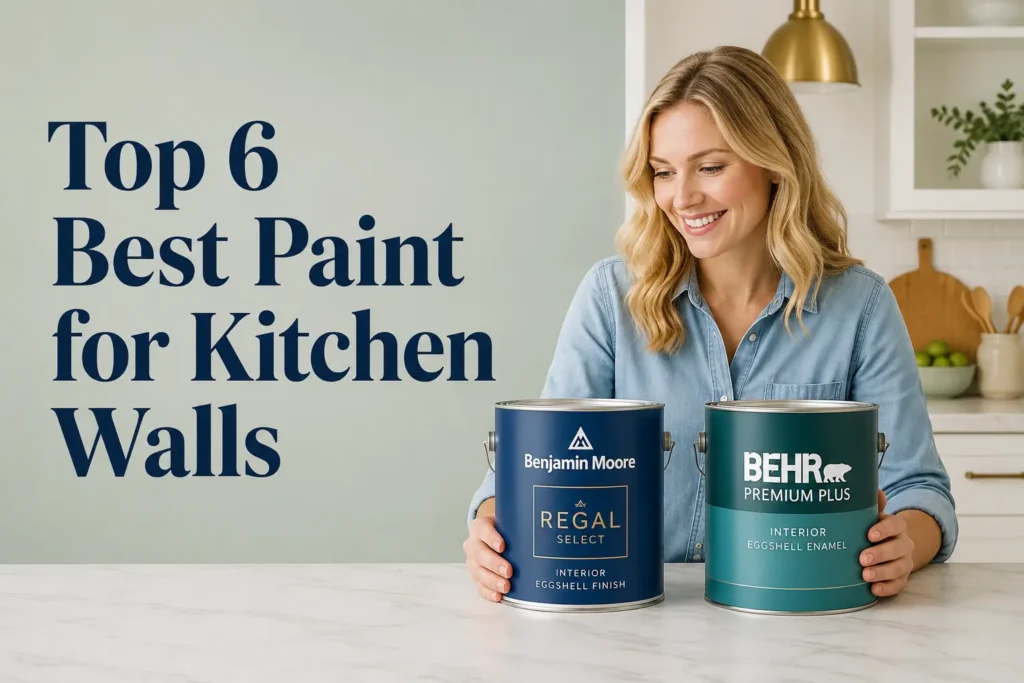
A quality acrylic interior paint in eggshell or satin is a practical choice for most kitchens. Some specialized formulas also offer mildew resistance or improved stain removal. This guide reviews six popular options, explains their strengths, and helps you choose the right paint for your kitchen’s surfaces and conditions.
Top Picks: Best Paint for Kitchen Walls
- Best Overall: Benjamin Moore Kitchen & Bath Interior Paint – A purpose-designed acrylic paint with a mildew-resistant satin finish for kitchens and bathrooms.
- Best Premium Durability: Sherwin-Williams Duration Home Interior Acrylic Latex – A premium interior option for busy rooms where washability and stain resistance matter.
- Best for Scuff Resistance: BEHR ULTRA Scuff Defense Interior Paint – A useful choice for kitchen walls that experience frequent contact and everyday marks.
- Best Premium Color Coverage: BEHR MARQUEE Interior Paint – A premium interior option known for its one-coat color coverage claim under specified conditions.
- Best Everyday Value: PPG Diamond Interior Paint – A practical interior paint option for homeowners seeking a balance of coverage, durability, and value.
- Best Budget-Friendly Choice: Glidden Premium Interior Paint – An accessible option for general kitchen repainting when paired with suitable surface preparation and a washable finish.
Quick Comparison Table
| Product Name | Best For | Check Price |
|---|---|---|
| Benjamin Moore Kitchen & Bath | Mildew-resistant kitchen finish | Check on Amazon |
| Sherwin-Williams Duration Home | Premium durability | Check on Amazon |
| BEHR ULTRA Scuff Defense | Scuff and everyday mark resistance | Check on Amazon |
| BEHR MARQUEE Interior | Premium color coverage | Check on Amazon |
| PPG Diamond Interior | Everyday value | Check on Amazon |
| Glidden Premium Interior | Budget-conscious projects | Check on Amazon |
Affiliate disclosure: As an Amazon Associate I earn from qualifying purchases.
1. Benjamin Moore Kitchen & Bath Interior Paint – Best Overall
Benjamin Moore Kitchen & Bath Interior Paint is a strong option for homeowners who want a product specifically formulated for rooms exposed to humidity and everyday household moisture. Its acrylic satin finish is designed for kitchens and bathrooms, making it especially relevant for areas where ordinary wall paint may struggle.
One of its most useful features is its mildew-resistant coating. Kitchens can experience moisture from boiling water, dishwashing, and cooking, particularly when ventilation is limited. A paint formulated for these conditions can help maintain a cleaner-looking surface when the room is properly ventilated and maintained.
The satin finish also provides a practical balance between appearance and cleaning convenience. It has a gentle sheen that is easier to wipe than many traditional flat finishes, although it can reveal wall imperfections more readily. For walls around sinks and other frequently cleaned areas, that added cleanability can be valuable.
This paint is not a replacement for fixing leaks or controlling persistent dampness. Prepare the walls properly, allow sufficient drying time, and follow the manufacturer’s application instructions for the best result.
Key Features:
- Acrylic interior paint.
- Satin finish.
- Formulated for kitchens and bathrooms.
- Mildew-resistant coating.
- Low-VOC formulation.
- Suitable for interior wall applications.
Pros:
- Specifically intended for kitchen and bathroom environments.
- Mildew-resistant finish.
- Satin sheen supports easier cleaning.
- Good option for moisture-prone rooms.
- Designed for interior durability.
Cons:
- Satin may highlight uneven wall repairs.
- Usually costs more than basic interior paint.
- Requires proper preparation.
- Does not solve underlying moisture or ventilation problems.
Best For: Homeowners who want a kitchen-and-bath-specific paint with a mildew-resistant satin finish.
2. Sherwin-Williams Duration Home Interior Acrylic Latex – Best Premium Durability
Sherwin-Williams Duration Home Interior Acrylic Latex is worth considering for kitchens that receive frequent use. A busy cooking space can accumulate fingerprints, food splashes, and marks around switches, doorways, and dining areas. Choosing a durable interior paint makes routine maintenance easier.
Duration Home is a premium interior paint line designed with washability and stain resistance in mind. Those characteristics make it a practical candidate for kitchen walls, particularly in households where the walls need occasional wiping.
Another advantage is its range of available colors and finishes. You can coordinate the wall color with cabinets, countertops, backsplash materials, and flooring without being limited to a small selection. For most kitchen walls, an appropriate eggshell or satin finish is worth considering, depending on how often the surface needs cleaning.
Keep in mind that the product’s exact performance and finish options depend on the selected version. Check the current technical information and product label before ordering. A premium paint also cannot compensate for grease left on the wall or an unsuitable primer.
Key Features:
- Premium interior acrylic latex paint.
- Designed for washability and stain resistance.
- Multiple colors and finish options.
- Suitable for high-use interior spaces.
- Intended for residential interior surfaces.
Pros:
- Suitable for busy household areas.
- Designed for easier cleaning.
- Broad color selection.
- Useful for walls exposed to everyday contact.
- Premium interior paint option.
Cons:
- Higher price than basic interior paint.
- Product performance varies by finish.
- Greasy walls still require thorough cleaning before painting.
- May require primer on certain surfaces.
Best For: Homeowners who want a premium, durable interior paint for frequently used kitchen walls.
3. BEHR ULTRA Scuff Defense Interior Paint – Best for Scuff Resistance
BEHR ULTRA Scuff Defense Interior Paint is a useful option for kitchens where walls experience regular contact. Areas around dining tables, trash bins, pantry entrances, and frequently used doorways can collect marks over time. A paint designed to resist scuffs can help keep these surfaces looking presentable.
Its main appeal is its scuff-resistant formulation. Kitchen walls do not only encounter food stains and moisture; they also get rubbed by bags, chairs, hands, and household equipment. A durable interior coating can make routine cleaning less frustrating.
BEHR ULTRA is available in different finishes, so choosing the right sheen is important. A washable eggshell or satin option can be a sensible choice for many kitchens. If you prefer a softer appearance, check whether the specific matte version meets your cleaning expectations.
Before applying it, remove cooking grease and other residue from the walls. Paint adhesion depends heavily on a clean, sound surface, and even a premium product can fail when applied over contamination.
Key Features:
- Scuff-resistant interior formulation.
- Multiple finish options.
- Designed for everyday household wear.
- Available in a range of colors.
- Suitable for interior wall projects.
Pros:
- Useful for high-contact kitchen areas.
- Helps resist everyday scuff marks.
- Several finish options.
- Suitable for busy family spaces.
- Good option for frequently used walls.
Cons:
- Not a substitute for a dedicated kitchen-and-bath coating.
- Finish choice affects cleanability.
- Proper degreasing is essential.
- Premium versions may cost more than standard wall paint.
Best For: Kitchens where walls frequently get rubbed, bumped, or marked by everyday activity.
4. BEHR MARQUEE Interior Paint – Best Premium Color Coverage
BEHR MARQUEE Interior Paint is a premium interior option for homeowners who want rich color and convenient application. It is particularly appealing when a kitchen makeover involves a noticeable color change or when you want a coordinated look across adjoining interior spaces.
One of its best-known selling points is its one-coat color coverage claim for selected colors and properly prepared surfaces. Actual coverage depends on the existing wall color, surface condition, selected shade, and application technique. Dark-to-light color changes and repaired surfaces may still require additional coats.
For kitchen walls, the finish matters as much as the color. Choose a suitable washable finish rather than selecting solely on appearance. Satin and eggshell are common practical options because they offer a balance between cleanability and a relatively soft look.
The paint is also useful when coordinating kitchen walls with cabinets and countertops. A carefully chosen warm neutral, soft green, muted blue, or creamy white can complement many kitchen designs.
Key Features:
- Premium interior paint.
- One-coat coverage claim for qualifying colors and conditions.
- Multiple color choices.
- Available in different finishes.
- Designed for interior decorating projects.
Pros:
- Convenient coverage for suitable color selections.
- Broad color range.
- Premium interior paint option.
- Useful for kitchen color transformations.
- Finish choices allow different visual effects.
Cons:
- One-coat coverage is not guaranteed for every surface.
- Premium pricing may not suit every budget.
- Correct preparation remains necessary.
- A suitable washable finish must be selected.
Best For: Homeowners who want a premium interior paint with convenient color coverage for a kitchen makeover.
5. PPG Diamond Interior Paint – Best Everyday Value
PPG Diamond Interior Paint is worth considering when you want a practical interior paint without moving into the highest-priced product category. It is designed for residential interior use and can be a reasonable choice for kitchen walls when the selected finish meets your cleaning needs.
A kitchen wall coating should be able to handle ordinary household marks and occasional wiping. PPG Diamond offers an interior paint option for homeowners who want to refresh their space with a new color while keeping the project manageable.
Its available colors and finishes make it easier to coordinate the walls with existing kitchen features. A satin or washable eggshell finish is generally more practical than traditional flat paint in areas that experience food splashes or frequent contact.
As with any paint, the exact product version matters. Check the label for washability, coverage, finish, and recommended surfaces. For walls with grease stains or discoloration, use an appropriate cleaning method and primer before applying the new coating.
Key Features:
- Interior wall paint.
- Multiple colors and finish options.
- Designed for residential use.
- Suitable for general interior repainting.
- Practical option for everyday decorating.
Pros:
- Useful for routine kitchen updates.
- Multiple color choices.
- Available in different finishes.
- Practical alternative to higher-priced paints.
- Suitable for prepared interior walls.
Cons:
- Not every finish is equally washable.
- May need more than one coat.
- Specialized moisture resistance depends on the exact product.
- Heavy grease stains require proper preparation.
Best For: Homeowners seeking an everyday interior paint option for a kitchen refresh without choosing a premium specialty product.
6. Glidden Premium Interior Paint – Best Budget-Friendly Choice
Glidden Premium Interior Paint is an option for homeowners who want to update kitchen walls while keeping paint costs under control. It offers a practical starting point for general interior repainting, particularly when the walls are already in good condition.
Budget-friendly paint can work well for a kitchen when you choose an appropriate finish and prepare the surface correctly. A washable eggshell or satin version is worth considering for walls that need regular cleaning. Check the exact product label because finish availability and performance vary across Glidden product lines.
This paint can also be useful when you want to refresh a kitchen with a lighter neutral or a simple color change. If the existing wall color is very dark or the surface has stains, a suitable primer may be needed to achieve an even result.
Although it may not offer every feature of a premium kitchen-specific formula, Glidden Premium can be a reasonable choice for homeowners who prioritize affordability and straightforward application.
Key Features:
- Interior wall paint.
- Budget-conscious product option.
- Multiple colors and finishes.
- Designed for residential interior projects.
- Suitable for properly prepared walls.
Pros:
- Accessible option for repainting projects.
- Useful for basic kitchen updates.
- Several color choices.
- Can work well on sound, prepared surfaces.
- Suitable for homeowners managing project costs.
Cons:
- Not specifically a kitchen-and-bath specialty formula.
- Finish selection affects washability.
- May require additional coats on some surfaces.
- Heavy stains may need a dedicated primer.
Best For: Homeowners looking for an affordable interior paint for a basic kitchen wall refresh.
How to Choose the Best Paint for Kitchen Walls
The right paint should suit your kitchen’s moisture level, cleaning requirements, wall condition, and design. These factors can help narrow down the options.
1. Choose a Washable Paint Formula
Kitchen walls collect more than ordinary household dust. Cooking can release grease, steam, and food particles that gradually settle on nearby surfaces.
Look for paint that specifically advertises washable or scrubbable performance. A quality acrylic interior paint is often a practical choice because it offers a durable finish and convenient water-based application.
For walls near the cooking area, washability is especially important. However, painted surfaces directly exposed to heavy grease or repeated splashing may still need more frequent cleaning.
2. Select the Right Finish
The sheen affects both the appearance and maintenance of kitchen walls.
| Finish | Appearance | Kitchen Use |
|---|---|---|
| Matte | Soft, low-reflection appearance | Good for hiding minor wall flaws when the formula is washable |
| Eggshell | Gentle, subtle sheen | Suitable for many general kitchen walls |
| Satin | Noticeable but moderate sheen | Practical for areas needing frequent cleaning |
| Semi-gloss | Shiny, reflective appearance | Often better for trim and woodwork than large wall areas |
For most kitchens, eggshell or satin is a sensible starting point. Satin is often easier to wipe, while a washable matte can help conceal minor surface imperfections.
3. Consider Moisture and Mildew Resistance
Steam from cooking and dishwashing can increase humidity, particularly in kitchens with limited ventilation. If your kitchen frequently becomes damp, consider a paint specifically formulated for moisture-prone areas.
Mildew-resistant paint can help protect the coating, but it does not eliminate the cause of recurring dampness. Use an exhaust fan, improve airflow, and repair leaks before repainting.
4. Look for Stain Resistance
Food splashes, fingerprints, and grease can leave visible marks. A stain-resistant or stain-releasing paint can make routine maintenance easier.
This feature is particularly helpful near dining areas, pantry entrances, and frequently touched walls. Remember that heavy cooking grease should be removed before painting rather than sealed beneath a new coat.
5. Choose a Suitable VOC Level
VOC stands for volatile organic compounds. These compounds can be released into indoor air during and after painting.
If indoor air quality is a concern, consider a low-VOC or zero-VOC product and follow the manufacturer’s ventilation recommendations. Keep windows open where practical and allow the paint to cure before using the kitchen normally.
6. Match the Color to Your Kitchen
Kitchen wall color should work with the cabinets, counters, backsplash, flooring, and natural lighting.
- Warm white: Creates a bright, welcoming appearance.
- Soft gray: Works well with modern cabinets and stainless-steel appliances.
- Sage green: Adds a gentle natural tone.
- Cream or beige: Complements wood cabinets and warm countertops.
- Muted blue: Creates a calm contrast with white or light-colored cabinetry.
- Greige: Combines gray and beige for a flexible neutral look.
Always test sample colors on the actual walls. Kitchen lighting can make the same shade look different in the morning, afternoon, and evening.
7. Check Coverage and Drying Time
Paint coverage depends on the surface, application method, and color change. Rough walls and porous repairs may absorb more paint than smooth, previously painted surfaces.
Check the manufacturer’s stated coverage per gallon and recommended number of coats. Also review drying and recoating times so you can plan the project without rushing.
How to Paint Kitchen Walls for a Durable Finish
Proper preparation is just as important as selecting a quality paint. Follow these steps to help achieve an even, durable result.
Step 1: Remove Kitchen Grease and Dirt
Start by cleaning the walls with a suitable degreasing cleaner. Pay particular attention to the area near the stove, backsplash edges, and places where hands frequently touch the surface.
Rinse away cleaning residue if the cleaner requires it, then allow the walls to dry completely. Paint should never be applied over a greasy or damp surface.
Step 2: Protect Cabinets, Counters, and Floors
Move furniture and removable items away from the walls. Cover countertops and floors with suitable protective materials.
Use painter’s tape around cabinet edges, trim, switches, and other areas that should not receive paint.
Step 3: Repair Wall Imperfections
Fill small holes and cracks with an appropriate interior wall filler. Once dry, sand the repaired areas until they blend smoothly with the surrounding surface.
Remove sanding dust before continuing. Larger cracks, water damage, or loose plaster may require more extensive repairs.
Step 4: Apply Primer When Needed
Primer is important on bare drywall, repaired patches, stained areas, and surfaces with significant color changes. A stain-blocking primer may be necessary where grease or discoloration has penetrated the existing coating.
Choose a primer compatible with the wall surface and the paint you plan to use.
Step 5: Paint the Edges First
Use a quality angled brush to paint around corners, cabinets, windows, outlets, and trim. Work in manageable sections so the edges do not dry unevenly before rolling.
Step 6: Roll the Main Wall Areas
Use a roller suitable for your wall texture and paint type. Apply paint in consistent sections, maintaining a wet edge to reduce visible lap marks.
Follow the recommended coverage and application instructions. Do not spread the paint too thinly to make it cover more area.
Step 7: Apply Additional Coats if Necessary
Allow the first coat to dry for the recommended time. Apply a second coat if required for full coverage and an even appearance.
Even paints advertised for one-coat coverage may need extra coats depending on the original color and surface condition.
Step 8: Allow the Paint to Cure
Dry-to-touch time is not the same as full curing time. Avoid scrubbing freshly painted walls until the manufacturer says the coating is ready for cleaning.
Maintain good ventilation while the paint dries and cures.
Common Mistakes to Avoid When Painting Kitchen Walls
Painting Over Grease
Grease can prevent proper adhesion and contribute to peeling or uneven coverage. Clean and rinse the walls before applying primer or paint.
Choosing Traditional Flat Paint Without Checking Washability
A standard flat finish may show marks and become difficult to clean. If you prefer a matte appearance, choose a product specifically designed to be washable.
Using Too Much Sheen
Semi-gloss and gloss finishes can be easy to clean, but they also highlight wall imperfections. For large kitchen walls, eggshell or satin often provides a more balanced appearance.
Ignoring Ventilation
Paint cannot solve a persistent humidity problem. Use an exhaust fan or improve ventilation to reduce steam and moisture buildup.
Skipping Primer on Stained Walls
Applying paint directly over grease marks or water stains can result in discoloration showing through the new coating. Select a suitable primer when the surface requires it.
Scrubbing Before the Paint Cures
Fresh paint may feel dry but still be vulnerable to damage. Wait for the recommended curing period before cleaning the surface.
FAQs
What is the best paint for kitchen walls?
Benjamin Moore Kitchen & Bath Interior Paint is a strong choice for kitchens because it is formulated for moisture-prone rooms and offers a mildew-resistant satin finish. Sherwin-Williams Duration Home and BEHR ULTRA Scuff Defense are also worth considering for durable everyday wall coverage.
Is satin or eggshell better for kitchen walls?
Both can work well. Satin is generally easier to wipe and is useful in areas exposed to frequent splashes or contact. Eggshell has a softer appearance and can hide minor wall imperfections more effectively.
Can I use regular interior paint in a kitchen?
Yes, provided it has suitable washability and durability. A premium acrylic interior paint in eggshell or satin can work well. In kitchens with persistent humidity, a product specifically formulated for kitchens and bathrooms may be a better option.
What paint finish is easiest to clean in a kitchen?
Semi-gloss is generally easy to wipe, but it can look too shiny on large wall areas. Satin often provides a practical balance between cleanability and appearance.
Is kitchen paint different from bathroom paint?
Some products are formulated for both rooms because they need to handle moisture and everyday cleaning. However, kitchens also experience cooking grease and food splashes, so stain resistance and washability are important considerations.
Should kitchen walls be painted with flat paint?
Traditional flat paint is not usually the most practical choice for kitchen walls because it may be harder to clean. A washable matte formula can be a good alternative if you prefer a low-sheen appearance.
How many coats of paint do kitchen walls need?
Most projects require two coats for consistent coverage, although the exact number depends on the paint, surface condition, and color change. Follow the product instructions rather than relying only on advertised one-coat claims.
Can I paint kitchen walls without primer?
Sometimes. Previously painted walls in good condition may not require a separate primer if the selected paint allows direct application. Bare drywall, repairs, stains, and significant color changes often benefit from primer.
How do I prevent kitchen wall paint from peeling?
Clean away grease, repair damaged areas, use a compatible primer when needed, and apply paint to a dry surface. Proper ventilation also helps reduce moisture-related problems.
How often should kitchen walls be repainted?
There is no fixed schedule. The timing depends on cooking habits, ventilation, paint quality, cleaning frequency, and everyday wear. Repaint when the finish becomes difficult to clean, noticeably stained, damaged, or faded.
Final Words
The best paint for kitchen walls should offer dependable washability, durability, and a finish that suits the room’s appearance. Benjamin Moore Kitchen & Bath is a strong overall choice for moisture-prone spaces, while Sherwin-Williams Duration Home and BEHR ULTRA Scuff Defense are worth considering for busy kitchens. BEHR MARQUEE, PPG Diamond, and Glidden Premium provide additional options for different budgets and decorating needs.
Before buying, compare the finish, cleaning performance, coverage, and product instructions. Most importantly, remove grease and repair wall problems before painting. A well-prepared surface combined with the right washable coating can help keep your kitchen looking fresh for years.
Helpful Resources
- Benjamin Moore Kitchen & Bath Interior Paint – Review the manufacturer’s finish, mildew-resistance, and product specifications.
- Checkatrade: Buying Guide to Kitchen Wall Paint – Learn about washable finishes, moisture resistance, and choosing paint for kitchen walls.