
Choosing the best paint for cellar walls starts with understanding the wall material and the moisture conditions in your cellar. Concrete, brick, and cinder-block walls are porous, and ordinary interior paint may peel, blister, or fail when moisture moves through the masonry. A purpose-made masonry waterproofer or damp-proof coating can be a better choice when the product is compatible with the wall and the source of moisture has been addressed.
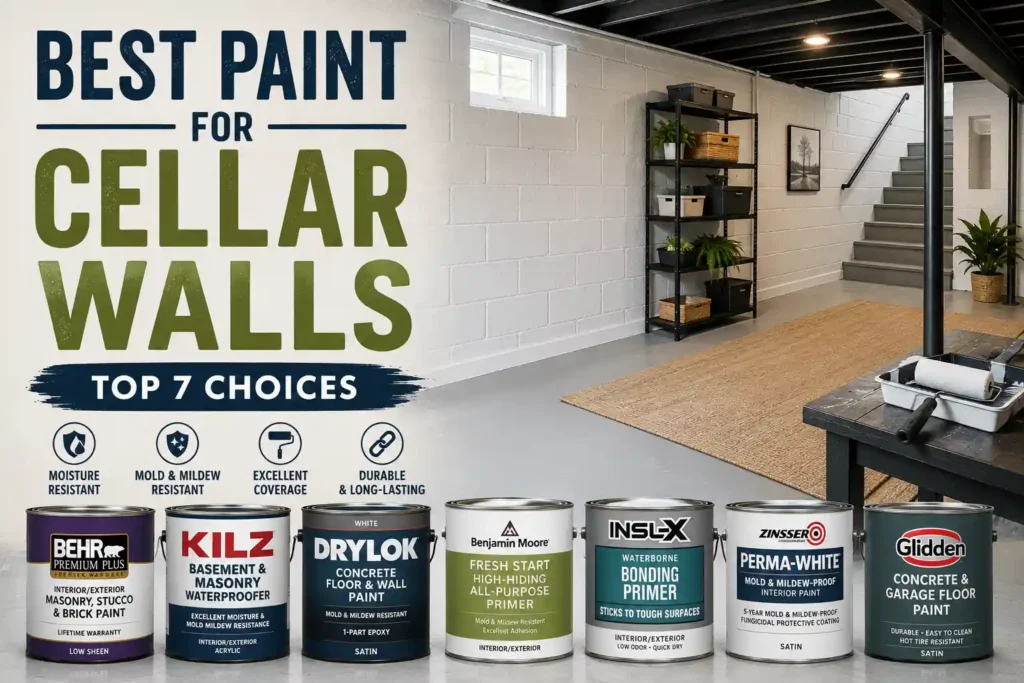
Some cellar walls need a waterproofing coating, while others simply need a durable decorative finish or help managing condensation. Below, we compare seven options for different situations, including bare masonry, damp cellars, and walls that need a clean, washable surface.
Top Picks: Best Paint for Cellar Walls
- Best Overall: DRYLOK Extreme Masonry Waterproofer – A latex-based masonry waterproofer for properly prepared concrete, brick, and block walls.
- Best Powdered Formula: DRYLOK Powdered Basement & Masonry Waterproofer – A cementitious-style option for sealing porous masonry above or below grade.
- Best for Concrete and Brick: KILZ Basement & Masonry Waterproofer – A low-odor coating formulated for basement walls, concrete blocks, brick, and other masonry.
- Best Decorative Waterproofing Finish: BEHR PREMIUM DRYPLUS Basement & Masonry Waterproofer – A flat-finish coating for properly prepared interior and exterior masonry.
- Best for Mold-Resistant Film Protection: Zinsser WaterTite Professional – An oil-based waterproofing coating designed for concrete and masonry surfaces.
- Best for Concrete Block Walls: Rust-Oleum LeakSeal Basement & Masonry Waterproofer – A coating formulated to create a water-resistant barrier on suitable concrete and masonry surfaces.
- Best for Damp Cellars: Watco Dampguard Advanced – A penetrative, microporous coating designed for damp-proofing internal walls, including cellars.
Affiliate disclosure: As an Amazon Associate I earn from qualifying purchases.
Comparison Table: Best Paint for Cellar Walls
| Product Name | Best For | Check Price |
|---|---|---|
| DRYLOK Extreme Masonry Waterproofer | Overall cellar masonry waterproofing | Check on Amazon |
| DRYLOK Powdered Basement & Masonry Waterproofer | Powdered masonry coating | Check on Amazon |
| KILZ Basement & Masonry Waterproofer | Concrete, brick, and block | Check on Amazon |
| BEHR PREMIUM DRYPLUS | Decorative masonry waterproofing | Check on Amazon |
| Zinsser WaterTite Professional | Waterproofing and mildew-resistant film | Check on Amazon |
| Rust-Oleum LeakSeal Basement & Masonry | Concrete block and poured concrete | Check on Amazon |
| Watco Dampguard Advanced | Damp internal cellar walls | Check on Amazon |
These are tagged Amazon search links rather than verified individual product listings. Check the exact product name, formulation, package size, seller, and current availability before ordering. Some products may be easier to source through their manufacturers or specialist building-supply retailers.
1. DRYLOK Extreme Masonry Waterproofer – Best Overall
DRYLOK Extreme Masonry Waterproofer is a strong option to consider when you need a dedicated coating for bare cellar masonry. It is designed for concrete, brick, stucco, and concrete or cinder blocks, making it relevant to many traditional cellar walls.
Its latex-based formula is designed to resist water pressure through masonry. The manufacturer states that the coating resists hydrostatic pressure up to 15 PSI and recommends a minimum of two coats. It also resists mildew growth on the dry paint film.
One useful feature is its relatively smooth, flat finish. You can use it to improve the appearance of a cellar while applying a purpose-made masonry waterproofer. It is available in white and other tint options, depending on the retailer and product version.
Surface preparation is especially important. Remove loose paint, dirt, grease, and powdery deposits before applying the coating. The first coat needs to fill the pores and pinholes in the masonry. If you leave gaps, water may still find a way through the wall.
DRYLOK Extreme is not a solution for active running leaks or structural water problems. If water continues entering through cracks, joints, or the floor-wall connection, repair and drainage work should come first.
Pros
- Designed for interior and exterior masonry walls
- Suitable for concrete, brick, and concrete block
- Manufacturer-stated resistance up to 15 PSI
- Latex-based formula
- Resists mildew growth on the dry paint film
- Can be applied with a brush, roller, or suitable sprayer
Cons
- Requires thorough surface preparation
- At least two coats are needed
- Not intended to repair structural cracks or active leaks
- Previously painted walls may need coating removal
Best For: Cellar owners who need a dedicated masonry waterproofer for properly prepared concrete or block walls.
2. DRYLOK Powdered Basement & Masonry Waterproofer – Best Powdered Formula
DRYLOK Powdered Basement & Masonry Waterproofer is another option for people who prefer a powdered coating instead of a ready-to-use liquid product. It is designed to fill and seal porous masonry, making it suitable for certain basement and cellar wall applications.
The powdered formulation is intended for surfaces such as concrete, cinder block, cement block, brick, and stucco. The manufacturer lists resistance to 10 PSI of hydrostatic pressure and describes the product as suitable for above- and below-grade masonry.
A powdered product can be useful when you want to prepare the coating according to the manufacturer’s mixing directions. However, correct proportions and thorough mixing matter. An inconsistent mixture can affect application and the final coating.
The texture may also be different from a conventional smooth latex paint. Think of it as a masonry waterproofing product rather than an ordinary decorative wall paint.
Before applying it, remove loose material and clean the surface. Follow the instructions for mixing, application thickness, and curing. Pay particular attention to joints, pores, and uneven areas where water could pass through.
Pros
- Designed for basement and masonry applications
- Suitable for several common masonry surfaces
- Manufacturer-stated resistance to 10 PSI
- Can be used above and below grade
- Fills and seals porous masonry
- Useful alternative to ready-mixed coatings
Cons
- Requires careful mixing before application
- Application can be more labor-intensive
- Finish may be more textured than ordinary paint
- Not suitable for every previously painted surface
Best For: Cellar owners who want a powdered masonry waterproofer for suitable bare concrete, brick, or block walls.
3. KILZ Basement & Masonry Waterproofer – Best for Concrete and Brick
KILZ Basement & Masonry Waterproofer is formulated for porous masonry surfaces, including concrete, concrete block, cinder block, brick, stucco, and retaining walls. It is designed for both above-grade and below-grade applications.
The product uses a water-based formulation with technology intended to form a barrier against water infiltration. It also has an alkali-resistant coating, which is useful when working with cement-based surfaces.
A low-odor formula can be appealing in an enclosed cellar where ventilation may be limited. Nevertheless, you should still provide suitable ventilation during application and follow all safety instructions on the label.
This coating is worth considering when your cellar walls are bare masonry and you want a product specifically made for basement waterproofing. Its intended use is different from standard interior wall paint, which may not provide the same masonry protection.
As with other waterproofing paints, it is not designed to solve active water leaks. Check the wall for cracks, loose mortar, efflorescence, and other signs of moisture before applying it. The manufacturer’s instructions also specify that it should not be used on floors or walls with active water leaks.
Pros
- Designed for basement and masonry walls
- Suitable for brick, concrete, and block
- Water-based, low-odor formulation
- Alkali-resistant coating
- Mildew-resistant finish
- Suitable for interior and exterior applications
Cons
- Not intended for active water leaks
- Requires a clean, properly prepared surface
- Not a substitute for foundation repairs
- Product availability and tint choices may vary
Best For: Homeowners who want a purpose-made coating for bare concrete, brick, or block cellar walls.
4. BEHR PREMIUM DRYPLUS Basement & Masonry Waterproofer – Best Decorative Waterproofing Finish
BEHR PREMIUM DRYPLUS Basement & Masonry Waterproofer is designed to protect porous masonry while giving walls a decorative flat finish. It is intended for applications such as basement walls, retaining walls, concrete block, cinder block, stucco, brick, and foundations.
The coating is available in white and selected tint options, depending on the product and retailer. This makes it worth considering if you want more than a basic protective coating and would like to brighten a dark cellar.
BEHR lists coverage of approximately 75–125 square feet per gallon, depending on the application method and surface porosity. The manufacturer recommends two coats for optimal durability. Rough, uneven masonry may use more product than smooth concrete.
The product can be applied to dry or slightly damp surfaces according to the manufacturer’s guidance. However, this does not mean it should be applied over active leaks or water running through the wall.
Preparation is essential. Remove loose material, dirt, and deposits, and make sure the surface is suitable for the coating. Follow the label carefully if the wall has an existing paint layer.
Pros
- Designed for porous masonry surfaces
- Suitable for basement and retaining walls
- Flat decorative finish
- Available in selected tint options
- Can be applied to dry or slightly damp surfaces as directed
- Useful for concrete block, brick, and stucco
Cons
- Two coats are recommended
- Rough masonry can reduce coverage
- Not suitable for active water leaks
- Existing coatings may require special preparation
Best For: Cellar owners who want a masonry waterproofer with a decorative finish for properly prepared walls.
5. Zinsser WaterTite Professional – Best for Mold-Resistant Film Protection
Zinsser WaterTite Professional is a waterproofing paint designed for concrete and masonry surfaces. It is intended for applications such as basement walls, foundations, retaining walls, concrete, stucco, and cinder block.
The product uses an oil-based formulation and is designed as a two-coat system. According to the manufacturer, the first coat primes and seals the surface, while the second coat completes the waterproofing system and provides protection against mildew growth on the paint film.
This makes it worth considering when you want a dedicated coating for a properly prepared masonry surface and mildew resistance is an important consideration.
However, the oil-based formulation means that application conditions and ventilation deserve particular attention. Read the safety instructions, use the recommended protective equipment, and provide adequate ventilation. It may not be the most convenient choice for every enclosed cellar.
Also consider the existing wall construction. A coating that restricts vapor movement may be unsuitable for some older masonry buildings that need to dry inward. Check the building’s moisture-management requirements before choosing a low-permeability coating.
Pros
- Designed for interior and exterior masonry
- Suitable for concrete and cinder block
- Two-coat waterproofing system
- Mold- and mildew-resistant film protection
- Useful for suitable basement and foundation applications
Cons
- Oil-based formulation requires careful handling
- Good ventilation is important during application
- Not suitable for every older masonry wall
- Does not repair structural water entry
Best For: Cellar walls where a dedicated masonry waterproofing system and mildew-resistant coating are desired, provided the wall can safely accommodate the product.
6. Rust-Oleum LeakSeal Basement & Masonry Waterproofer – Best for Concrete Block Walls
Rust-Oleum LeakSeal Basement & Masonry Waterproofer is formulated to create a water-resistant barrier on suitable concrete block and cast-in-place concrete surfaces. It is designed for interior and exterior masonry applications, including basement or cellar walls.
The coating is intended to help stop moisture from passing through the specified masonry surfaces. It can also be used on certain retaining walls and concrete subfloors, although you should check the product’s limitations before using it outside the intended application.
One important point is that this product should not be confused with ordinary Rust-Oleum LeakSeal rubberized spray coating. The basement and masonry waterproofer is a separate product with its own surface requirements and application instructions.
For a cellar project, check whether the exact product is suitable for your wall material. The manufacturer specifically identifies concrete block and cast-in-place concrete, and lightweight block is excluded in the technical information.
Prepare the surface carefully, paying attention to cracks, loose material, and existing coatings. Apply the product according to the specified coverage and drying instructions rather than relying on a generic paint schedule.
Pros
- Designed for basement and masonry waterproofing
- Suitable for specified concrete block surfaces
- Can be used on cast-in-place concrete
- Intended for interior and exterior applications
- Forms a barrier against moisture penetration
Cons
- Not intended for every type of masonry block
- Exact surface compatibility must be checked
- Not a repair product for structural cracks
- Product availability may vary
Best For: Cellar owners with suitable concrete block or poured concrete walls who want a purpose-made masonry waterproofer.
7. Watco Dampguard Advanced – Best for Damp Cellars
Watco Dampguard Advanced is a specialized damp-proofing coating designed for internal walls and floors in locations such as cellars, basements, tunnels, laundries, and other utility spaces.
Unlike conventional decorative masonry paint, this product is a penetrative, water-based epoxy resin coating. Its microporous formulation is designed to allow moisture vapor to pass through while helping resist moisture movement through the structure. The manufacturer also describes it as resistant to fungal and bacterial growth.
This makes it an interesting option for certain older cellar walls where moisture management is important. It is designed to work on suitable concrete, brick, and stone surfaces, and its low-odor formulation can be useful in enclosed areas.
One detail deserves attention: because the coating is microporous, the manufacturer warns against covering it with a nonporous finish such as vinyl, tiles, or an incompatible paint. A suitable permeable emulsion may be applied after the required preparation and waiting period.
Watco Dampguard Advanced is a specialist product, so check its technical data sheet and local availability before purchasing. It may be more expensive or harder to source than common DIY masonry waterproofers.
Pros
- Specifically lists cellars and basements as applications
- Penetrative damp-proofing formulation
- Microporous surface allows moisture vapor to pass
- Low-odor, solvent-free formulation
- Resists fungal and bacterial growth
- Suitable for specified concrete, brick, and stone surfaces
Cons
- Specialist product may be harder to find
- Requires careful attention to overcoating instructions
- More expensive than many ordinary masonry paints
- Not a substitute for drainage or structural repairs
Best For: Cellar owners who need a specialist damp-proofing coating and want a product designed to accommodate moisture vapor movement.
Buying Guide: How to Choose the Best Paint for Cellar Walls
Choosing cellar paint requires more care than selecting paint for an ordinary bedroom. Cellars are often below ground level, have limited ventilation, and may experience moisture from the surrounding soil. Consider these factors before buying.
1. Identify the Wall Material
Start by identifying what your cellar walls are made from. Different materials have different surface characteristics and coating requirements.
- Poured concrete: A purpose-made concrete and masonry waterproofer is often appropriate for bare, sound walls.
- Concrete blocks: Choose a product specifically labeled for concrete or cinder block. Rough blocks may require more coating to fill pores.
- Brick: Check that the coating is approved for brick and that the existing mortar is sound.
- Natural stone: Confirm compatibility with the specific stone and the building’s moisture behavior before applying a barrier coating.
- Plastered walls: Use a coating approved for the plaster type. Do not assume a masonry waterproofer is suitable for every plastered surface.
- Finished drywall: A masonry waterproofer is not the right product for ordinary drywall. Use an appropriate interior coating after resolving moisture problems.
The product label should identify the surfaces it can cover.
2. Understand the Type of Moisture
Not all damp cellar walls have the same cause. Identifying the problem helps you choose a suitable solution.
Condensation: Warm, humid air can meet a cold cellar wall and form water droplets. Improving ventilation, controlling humidity, and using a dehumidifier may help.
Damp masonry: Moisture may move through porous brick, stone, or concrete. A compatible damp-proofing or masonry coating may be appropriate after investigating the source.
Water seepage: Water entering through cracks, joints, or foundation defects needs a repair or drainage solution. Paint alone is not a dependable fix.
Hydrostatic pressure: Groundwater pressure can push water through foundation walls. This may require professional waterproofing and drainage work rather than an interior paint project.
3. Choose Between a Waterproofer and Decorative Paint
A regular masonry paint mainly improves the appearance of a wall. A masonry waterproofer is designed to provide a barrier against water penetration.
If your cellar walls are dry and you only want to brighten the space, a suitable breathable masonry paint may be enough. If the bare masonry has a moisture problem, a product specifically labeled for basement waterproofing may be more appropriate.
Do not assume that every paint labeled waterproof is suitable for every cellar. Compare the product’s pressure rating, wall compatibility, vapor characteristics, and application instructions.
4. Consider Breathability and Moisture Movement
Older stone and brick cellars may need to release moisture through their walls. Applying a coating that blocks vapor movement can sometimes trap moisture and contribute to deterioration.
A low-permeability waterproofer may be suitable for some concrete foundations, but it is not automatically right for an older solid-wall building.
If you have a historic cellar, stone foundation, or recurring dampness, consider getting advice from a building-moisture specialist before applying a dense coating. A microporous product may be more suitable in certain situations.
5. Check the Hydrostatic Pressure Rating
Some waterproofing coatings publish a hydrostatic pressure rating. This indicates how much water pressure the coating is designed to resist under specified test conditions.
For example, DRYLOK Extreme lists resistance up to 15 PSI, while other products have different ratings or do not publish a comparable figure.
A higher rating can be useful when comparing products, but it does not mean the coating will fix every leak. Cracks, open joints, poor preparation, and water entering behind the coating can still cause failure.
6. Look for Mold and Mildew Resistance
Cellars can have high humidity and limited air circulation. A coating with mildew-resistant properties may help protect the dried paint film from fungal growth.
However, paint does not remove existing mold or eliminate the moisture that supports it. If mold is present, address the water source and arrange appropriate cleaning or remediation before painting.
Do not simply cover visible mold with a new coat of paint.
7. Decide on the Finish and Color
Cellars often have limited natural light, so the color and finish can make a noticeable difference.
- White: Helps brighten dark rooms and utility spaces.
- Light gray: Gives concrete walls a clean, understated appearance.
- Beige: Adds warmth without making the space feel too dark.
- Pale blue: Can create a cooler, more open appearance.
- Flat finish: Helps reduce the appearance of minor surface irregularities.
- Eggshell finish: Can provide a smoother, easier-to-clean appearance when the product is designed for that use.
Choose only from the colors and finishes approved for the specific coating.
8. Check Coverage and Number of Coats
Cellar walls are often rough and porous, so actual coverage can be lower than the figure printed on the container.
Check the manufacturer’s coverage estimate and recommended number of coats. Many masonry waterproofers require two coats, and some rough surfaces need additional material to fill pores and pinholes.
Measure the wall area before buying and allow for extra product if the surface is uneven.
9. Consider Application and Cleanup
Some coatings are water-based and can be cleaned up with soap and water. Others are solvent-based and require specific cleaning products and protective equipment.
Check whether the coating can be applied by brush, roller, or sprayer. A masonry brush may be useful for rough block and mortar joints because it can work the coating into the surface.
Also check the minimum application temperature, drying time, and ventilation requirements.
10. Check Compatibility with Existing Paint
A waterproofing coating may not work as intended over ordinary latex or oil-based paint. Some products need direct contact with bare masonry to penetrate pores and create their intended bond.
If your cellar walls have already been painted, read the product instructions carefully. You may need to remove the existing coating or choose a compatible decorative masonry paint instead.
Do not apply a new product over loose, peeling, or chalky paint.
How to Paint Cellar Walls: Step-by-Step Guide
Proper preparation is essential for a lasting finish. Follow the coating manufacturer’s instructions, since application methods and drying times differ between products.
Step 1: Inspect the Cellar Walls
Look for damp patches, cracks, peeling paint, loose mortar, white powdery deposits, and visible mold.
Identify whether the moisture is coming from condensation, a leaking pipe, groundwater, or a foundation defect. Correct the underlying problem before applying paint.
Step 2: Remove Loose Paint and Dirt
Use suitable tools to remove loose or flaking paint, dust, dirt, and weak material. A stiff masonry brush can help clean rough concrete and block surfaces.
If an older coating may contain lead, do not dry-sand or aggressively scrape it without appropriate precautions. Follow local lead-safe procedures and use qualified help when necessary.
Step 3: Remove Efflorescence
Efflorescence appears as white, powdery or crystalline deposits on masonry. It develops when moisture carries dissolved salts to the surface.
Brush away the deposits using a method recommended by the coating manufacturer. If the salts keep returning, investigate the moisture source rather than repeatedly painting over them.
Step 4: Repair Suitable Cracks and Defects
Repair cracks, missing mortar, and damaged masonry using materials suitable for the wall. Allow repairs to cure as instructed.
If you find large structural cracks, moving cracks, or water actively entering the wall, seek professional assessment before continuing.
Step 5: Allow the Surface to Reach the Required Condition
Some coatings require dry masonry, while others permit slightly damp surfaces. Follow the exact product instructions.
Do not assume that a product suitable for slightly damp masonry can be applied over running water or a saturated wall.
Step 6: Protect the Cellar
Cover floors, stored items, pipes, fixtures, and other surfaces that should not receive paint.
Provide the ventilation and protective equipment required by the product label. Keep children and pets away from the work area.
Step 7: Apply the First Coat
Use a masonry brush or suitable roller to work the coating into the pores, joints, and uneven areas.
Pay particular attention to pinholes and recessed mortar joints. Incomplete coverage can leave paths for water to pass through.
Step 8: Allow the First Coat to Dry
Follow the stated drying and recoat times. Cool or humid cellar conditions may extend drying time.
Do not apply the next coat simply because the surface feels dry to the touch if the product requires a longer interval.
Step 9: Apply the Second Coat
Apply the second coat as directed, ensuring consistent coverage across the wall.
Inspect the surface for missed areas, pinholes, and thin spots. Some products may require additional coating in areas where pores remain open.
Step 10: Allow Proper Curing
Give the coating the full time specified by the manufacturer before washing the surface, installing shelves, or storing items against the wall.
Continue controlling cellar humidity and monitor the wall for signs of recurring moisture.
Common Mistakes to Avoid When Painting Cellar Walls
Painting Over Active Leaks
A coating cannot reliably solve water entering through an open crack, leaking joint, or damaged foundation. Repair the source first.
Ignoring Condensation
Condensation can make a painted wall look damp even when groundwater is not entering through the foundation. Improve ventilation and humidity control where necessary.
Applying Waterproof Paint Over Ordinary Paint
Some waterproofing coatings need direct contact with bare masonry. Existing paint may prevent the product from working as intended.
Skipping Surface Preparation
Dust, loose mortar, efflorescence, and peeling paint can prevent proper adhesion. Clean and prepare the wall before applying a coating.
Using the Wrong Product for the Wall
A coating designed for concrete block may not be suitable for every stone, plaster, or drywall surface. Check the label before purchasing.
Covering Mold Without Treating It
Paint does not remove mold or solve the moisture problem behind it. Treat the cause and clean or remediate affected areas appropriately.
Applying Too Few Coats
Many masonry waterproofers require two coats. Follow the manufacturer’s instructions and do not stretch the product beyond its recommended coverage.
Choosing a Coating Without Considering Breathability
Some older masonry walls need to dry inward. A highly impermeable coating may interfere with that process. Check the building’s moisture-management needs before selecting a product.
Frequently Asked Questions
What is the best paint for cellar walls?
DRYLOK Extreme is a strong option for suitable bare concrete, brick, and block walls because it is specifically designed as a masonry waterproofer. KILZ Basement & Masonry Waterproofer and BEHR DRYPLUS are other products worth comparing. The right choice depends on the wall material and moisture conditions.
Can I use ordinary interior paint on cellar walls?
Ordinary interior paint may be suitable for finished, dry drywall in a properly controlled cellar. It is not the best choice for bare, damp concrete or masonry. Use a product specifically approved for the wall material and intended conditions.
Should cellar walls be waterproofed before painting?
If water is entering through the walls, cracks, or foundation, address the source before painting. A suitable waterproofing coating may be part of the solution for certain masonry surfaces, but it does not replace structural repairs or exterior drainage.
Is masonry paint better than regular paint for cellar walls?
Masonry paint is designed for surfaces such as concrete, brick, and block. It generally offers better compatibility with porous masonry than ordinary interior wall paint. Choose a waterproofer if the product needs to resist water penetration, rather than assuming every masonry paint is waterproof.
Can I paint damp cellar walls?
Only use a product whose label specifically allows the measured surface condition. Some coatings permit slightly damp masonry, but active leaks and running water must be addressed first. Painting over a saturated wall can lead to coating failure.
Does waterproof paint stop water from coming through cellar walls?
A suitable masonry waterproofer can resist water penetration within its stated performance limits. However, it cannot reliably repair structural cracks, failed joints, or serious hydrostatic pressure problems. Those conditions may require professional waterproofing and drainage work.
What color is best for cellar walls?
White and pale gray are popular because they help brighten dark cellar spaces. Beige and other light neutral colors can also create a cleaner appearance. Check the coating’s available colors before purchasing.
How many coats of waterproof paint do cellar walls need?
Many masonry waterproofers require at least two coats. The exact number depends on the product, wall texture, and condition. Follow the label and apply extra material where the manufacturer specifies it.
Do I need primer before painting cellar walls?
Some masonry waterproofers act as their own primer when applied to properly prepared bare masonry. Other paints may require a compatible masonry primer. Follow the specific product instructions rather than adding an unrelated primer.
How do I prepare cellar walls before painting?
Remove loose paint, dirt, dust, efflorescence, and weak mortar. Repair suitable cracks, address leaks, and prepare the surface to the moisture condition required by the coating. Proper preparation is essential for adhesion and performance.
Can I paint over mold on cellar walls?
No. Do not simply cover mold with paint. Identify and correct the moisture source, then arrange appropriate cleaning or professional remediation based on the extent of the growth. Paint only after the surface is suitable.
Is waterproof paint suitable for old stone cellars?
Not automatically. Older stone and brick walls may need to release moisture through the masonry. Some dense waterproof coatings can interfere with this process. Consult a specialist familiar with traditional buildings before applying an impermeable coating.
How can I prevent cellar walls from becoming damp again?
Maintain gutters and downspouts, direct rainwater away from the foundation, repair leaking pipes, improve ventilation, and control condensation. If groundwater is entering the cellar, professional drainage or foundation waterproofing may be necessary.
Final Words
The best paint for cellar walls depends on the material, the source of moisture, and whether you need waterproofing or simply a decorative finish. DRYLOK Extreme is a strong all-around option for suitable bare masonry, while KILZ and BEHR DRYPLUS provide other purpose-made choices. Watco Dampguard Advanced is worth considering when a specialist damp-proofing product with moisture-vapor permeability is needed.
Before buying, inspect the walls, correct leaks and structural problems, and check the coating’s compatibility with your masonry. Careful preparation, suitable ventilation, and the correct number of coats will give your cellar project a better chance of lasting.
Helpful Resources
- DRYLOK: Extreme Masonry Waterproofer – Manufacturer specifications, surface preparation, application instructions, and product limitations.
- Watco: Guide to Damp Proofing and Waterproofing – Explains different damp-proofing approaches and coatings for basements and other moisture-prone spaces.