
Finding the best paint for motorcycle frame restoration depends on the frame material, its condition, and the type of finish you want. Motorcycle frames face moisture, road grime, stone chips, fuel and oil splashes, and occasional contact with tools or boots. Ordinary household paint may not provide the durability or corrosion protection needed for these conditions.
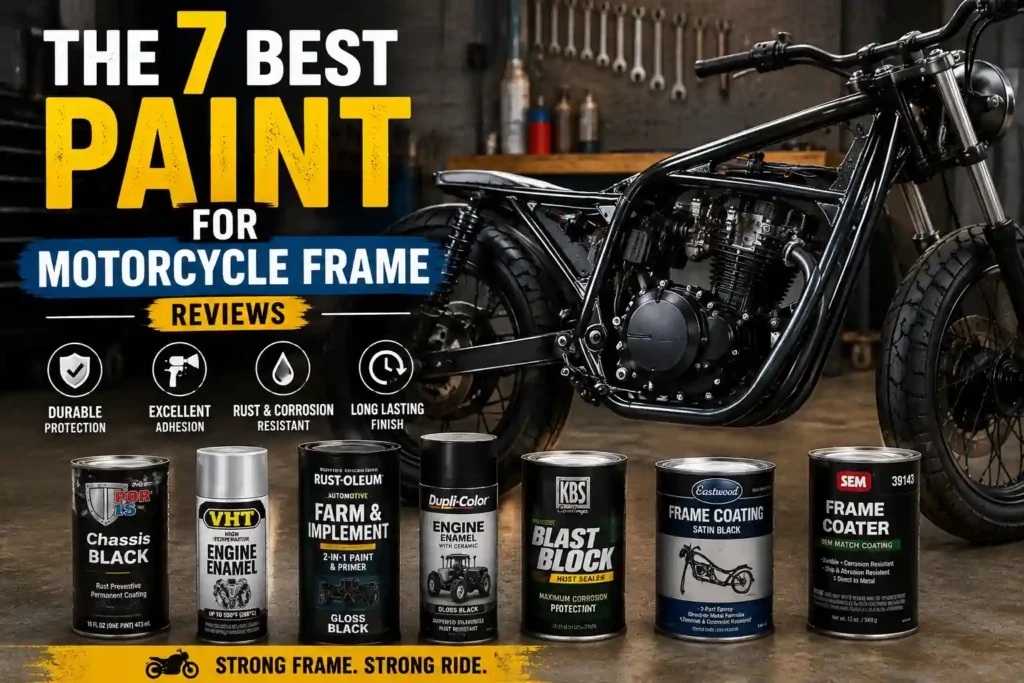
A quality motorcycle frame coating should bond properly to prepared metal, resist rust, and provide a finish that suits your bike. Below are seven options worth considering, from dedicated frame paints to rust-preventive coatings and durable chassis finishes.
Top Picks: Best Paint for Motorcycle Frame
- Best Overall for Rusty Frames: POR-15 Rust Preventive Coating – A moisture-cured coating designed for properly prepared, rusted or seasoned metal.
- Best Satin Black Finish: VHT Chassis & Roll Bar Paint – A chassis coating for metal components where a durable satin-black appearance is desired.
- Best for Motorcycle Frame Restoration: Eastwood Original Chassis Black – A chassis-specific finish for restoring the appearance of frames and suspension components.
- Best Alternative Rust-Protective Coating: KBS Coatings RustSeal – A rust-preventive coating for properly prepared metal surfaces.
- Best Professional-Style Frame Spray: Seymour Big Rig Professional Coating – A high-solids spray coating worth considering for suitable metal frame and chassis applications.
- Best for Small Frame Repairs: Rust-Oleum Automotive Acrylic Enamel – An automotive finish option for properly primed metal parts and smaller repainting jobs.
- Best for a Protective Brush-On Finish: Magnet Paint & Shellac Chassis Saver – A protective chassis coating to consider for suitable prepared metal surfaces.
Affiliate disclosure: As an Amazon Associate I earn from qualifying purchases.
Comparison Table: Best Paint for Motorcycle Frame
| Product Name | Best For | Check Price |
|---|---|---|
| POR-15 Rust Preventive Coating | Rusty and properly prepared frames | Check on Amazon |
| VHT Chassis & Roll Bar Paint | Satin-black frame finish | Check on Amazon |
| Eastwood Original Chassis Black | Frame restoration | Check on Amazon |
| KBS Coatings RustSeal | Rust prevention | Check on Amazon |
| Seymour Big Rig Professional Coating | Professional-style chassis finish | Check on Amazon |
| Rust-Oleum Automotive Acrylic Enamel | Small repairs and repainting | Check on Amazon |
| Magnet Paint Chassis Saver | Brush-on chassis protection | Check on Amazon |
These are tagged Amazon search links, not verified individual product listings. Check the exact product, formulation, package size, seller, and current availability before ordering. Confirm that the coating is suitable for your motorcycle frame material and intended exposure.
1. POR-15 Rust Preventive Coating – Best Overall for Rusty Frames
POR-15 Rust Preventive Coating is a popular option for restoring metal components that have developed surface rust. Rather than functioning like ordinary decorative enamel, it is a moisture-cured coating designed to form a hard protective film on properly prepared metal.
This makes it worth considering when restoring an older motorcycle frame with rusted or seasoned steel. Its intended application is particularly relevant to frames, brackets, and other metal components that need corrosion protection.
One important advantage is that POR-15 can adhere to properly prepared rusted metal. However, loose rust, scale, grease, and contamination must be removed first. Smooth, shiny metal also requires the surface preparation specified by the manufacturer. The POR-15 preparation system includes cleaning and metal treatment products.
The cured coating has a hard, nonporous finish. It is commonly selected for areas where rust prevention is more important than achieving a particular factory color straight from the container.
There is one limitation to remember: POR-15 is sensitive to ultraviolet exposure. If your motorcycle frame will regularly receive direct sunlight, apply a compatible UV-resistant topcoat according to the manufacturer’s instructions.
Pros
- Designed for rusted and properly prepared metal
- Forms a hard protective coating
- Useful for motorcycle frame restoration
- Suitable for various metal components
- Available in different finish options
- Can be part of a multi-step corrosion-protection system
Cons
- Requires careful surface preparation
- Not ideal for smooth, shiny metal without proper treatment
- UV exposure can affect the coating
- Difficult to remove from skin after curing
- Requires careful handling and ventilation
Best For: Motorcycle owners restoring rusty steel frames who want a dedicated rust-preventive coating and are prepared to follow the complete application process.
2. VHT Chassis & Roll Bar Paint – Best Satin Black Finish
VHT Chassis & Roll Bar Paint is a useful option when you want a dark, understated finish for a motorcycle frame or compatible metal component. It is designed for chassis and roll-bar applications, making it more relevant to frame restoration than ordinary decorative spray paint.
Its satin-black appearance can work well on motorcycles with a traditional or understated design. The finish also helps give restored brackets and other compatible metal parts a consistent appearance.
Spray application is convenient when working around frame tubes, joints, and other areas that can be difficult to reach with a brush. Several light coats are generally preferable to one heavy coat because they help reduce runs and uneven coverage.
Surface preparation still determines much of the final result. Remove loose rust and failing paint, clean away oil and grease, and use a compatible primer when the product instructions call for one.
VHT Chassis & Roll Bar Paint should not be confused with engine enamel. Motorcycle frames and engine components experience different temperature conditions, so use a coating specifically rated for the part being painted.
Pros
- Intended for chassis and roll-bar applications
- Satin-black finish suits many motorcycle frames
- Convenient spray application
- Useful for frame and compatible metal components
- Can help create a consistent restored appearance
Cons
- Limited color choices compared with general automotive paint
- Requires careful masking during spray application
- Surface preparation is essential
- Not a replacement for engine-specific high-temperature paint
Best For: Riders who want a satin-black finish for a properly prepared motorcycle frame or compatible chassis component.
3. Eastwood Original Chassis Black – Best for Motorcycle Frame Restoration
Eastwood Original Chassis Black is designed for automotive chassis and suspension restoration. Its purpose-built application makes it worth considering for motorcycle owners who want a clean, dark finish on suitable frame and metal components.
A frame restoration often involves more than simply covering old paint. You may need to remove corrosion, repair damaged areas, prepare the metal, and apply a coating that provides a consistent appearance. A chassis-specific finish can be a useful final step when the underlying surface is sound.
Eastwood offers chassis coatings in different finishes, so check the exact version before ordering. Satin and gloss options create noticeably different appearances. Satin black is often a practical choice for a traditional motorcycle frame because it has a subdued look without appearing completely flat.
This product is best considered as a chassis finish rather than an automatic solution for heavy rust. If the frame has significant corrosion, deal with that first using an appropriate preparation and rust-treatment system.
Also check whether the selected Eastwood formulation requires a separate primer. Compatibility between primer and topcoat matters, particularly when combining products from different coating systems.
Pros
- Designed for chassis and suspension applications
- Suitable for restoration-style metal finishing
- Available in different finish options
- Useful for creating a consistent dark appearance
- Spray application can reach complex frame shapes
Cons
- Heavy rust requires treatment before topcoating
- Exact formulation and finish vary by product
- May require a compatible primer
- Availability can vary by retailer
Best For: Motorcycle restoration projects where a chassis-oriented finish is wanted over properly prepared metal.
4. KBS Coatings RustSeal – Best Alternative Rust-Protective Coating
KBS Coatings RustSeal is another option for motorcycle owners who need a protective coating for metal that has experienced corrosion. It is designed as a rust-preventive coating and can be considered for suitable steel frame restoration projects.
A motorcycle frame has many areas where water and dirt can collect, including welded joints, brackets, and lower sections exposed to road spray. A coating system that protects prepared metal can help reduce the risk of recurring corrosion.
RustSeal is intended to be used as part of a preparation and application process. Follow the manufacturer’s cleaning and surface-treatment requirements rather than applying it directly over grease, loose rust, or an unknown old coating.
The finish and application characteristics differ from ordinary automotive spray enamel. It is therefore important to check whether the product is suitable as the visible final finish for your project or whether a compatible topcoat is recommended.
For exposed areas, confirm the UV resistance and topcoat requirements. Do not assume that every rust-preventive coating has the same sunlight resistance or chemical compatibility.
Pros
- Designed for corrosion protection
- Useful for suitable steel restoration projects
- Can be applied as part of a dedicated coating system
- Worth considering for older motorcycle frames
- Available in different product and finish options
Cons
- Requires careful preparation
- Application instructions must be followed closely
- May need a compatible topcoat for the desired finish or exposure
- Not intended to repair weakened or structurally damaged metal
Best For: Riders who want an alternative rust-preventive coating for a properly prepared steel motorcycle frame.
5. Seymour Big Rig Professional Coating – Best Professional-Style Frame Spray
Seymour Big Rig Professional Coating is a high-solids spray coating designed for heavy-duty metal finishing applications. Its frame and chassis-oriented use makes it worth evaluating for motorcycle projects where a durable black finish is desired.
Spray products can be particularly convenient for motorcycle frames because the structure includes narrow tubes, curved sections, welds, and hard-to-reach corners. A suitable spray coating can reach these areas more evenly than a large brush.
The Big Rig line is intended for professional-style coating applications, but you should still confirm that the exact product variant is suitable for your frame material and exposure. A product designed for heavy vehicle frames is not automatically compatible with every motorcycle coating system.
Before applying it, remove corrosion and contamination, prepare the surface as directed, and test the spray pattern on a separate piece of metal. This helps you judge the finish and avoid applying too much paint around joints and corners.
If the frame is bare steel, check the manufacturer’s primer recommendation. Do not assume that a topcoat alone provides the same corrosion protection as a complete primer-and-finish system.
Pros
- Professional-style spray coating
- Designed for heavy-duty coating applications
- Useful for suitable metal frame components
- Spray format can reach complex shapes
- Worth considering for black chassis finishes
Cons
- Exact product compatibility should be checked
- Requires good masking and ventilation
- Primer requirements depend on the formulation
- Not a substitute for rust removal and metal repair
Best For: Motorcycle owners looking for a spray-applied chassis finish for compatible, properly prepared metal.
6. Rust-Oleum Automotive Acrylic Enamel – Best for Small Frame Repairs
Rust-Oleum Automotive Acrylic Enamel is a general automotive finishing option worth considering for small motorcycle frame repairs and compatible metal parts. It is more of a conventional automotive finish than a dedicated rust-encapsulating product.
This type of paint can be useful when refreshing a small bracket, repairing a scratched section, or repainting a component that has already been properly prepared and primed.
Its main attraction is convenience. Automotive enamel products are commonly available in spray formats and can be easier for DIY users to apply than more specialized coating systems.
However, do not treat ordinary automotive enamel as a complete rust-restoration system. If the frame has active corrosion, remove the rust and use an appropriate primer or rust-preventive treatment before applying the finish.
Check the exact product label for metal compatibility, primer requirements, recoat windows, and curing instructions. If you are repainting only part of an existing frame, test compatibility with the old coating in an inconspicuous area first.
Pros
- Convenient automotive finishing option
- Useful for small repairs and compatible metal parts
- Spray application is practical for DIY projects
- Suitable for selected repainting jobs
- Can provide a refreshed appearance
Cons
- Not a dedicated rust-encapsulating coating
- Requires suitable surface preparation
- Primer may be necessary
- Not intended for engine components unless specifically rated
Best For: Small motorcycle frame touch-ups and repainting jobs where the metal is sound and properly prepared.
7. Magnet Paint Chassis Saver – Best for a Protective Brush-On Finish
Magnet Paint Chassis Saver is a chassis-oriented protective coating worth considering when you prefer brush application instead of spraying. Brush-on products can be convenient for selected restoration projects, especially when you want to coat smaller sections without creating as much airborne overspray.
For motorcycle frames, a brush can help work coating into certain corners and recessed areas. It can also make sense for hidden sections or utility-oriented restorations where a perfectly smooth factory appearance is not the main priority.
The product should be applied only to surfaces and under conditions approved by the manufacturer. Remove loose rust, grease, dirt, and failing paint before application. Follow the stated instructions for surface preparation, number of coats, drying time, and overcoating.
Brush application can leave visible marks, especially on smooth frame tubes. If appearance is important, test the coating on a small area first. You may prefer a spray-applied chassis finish for the most visible sections.
As with any protective coating, check the exact product’s UV and topcoat requirements before using it on an exposed frame.
Pros
- Brush-on application option
- Designed for chassis protection
- Useful for selected metal restoration work
- Can be practical for small or hard-to-spray areas
- Does not require a spray gun
Cons
- Brush marks may remain visible
- Finish may not look factory-smooth
- Requires proper surface preparation
- Exact exposure and topcoat requirements should be checked
Best For: DIY restorers who prefer brush application for suitable frame sections and prioritize protection over a perfectly smooth sprayed finish.
Buying Guide: How to Choose the Best Paint for Motorcycle Frame
The right coating depends on your motorcycle’s frame material, its existing condition, and the type of finish you want. Consider these factors before purchasing.
1. Identify the Frame Material
Motorcycle frames are commonly made from steel or aluminum, although construction varies by model.
Steel frames: Steel is strong and widely used, but it can rust when moisture reaches unprotected metal. Choose a coating system that provides suitable corrosion protection.
Aluminum frames: Aluminum does not rust like steel, but it can oxidize and requires appropriate surface preparation. Use a primer and finish specifically approved for aluminum.
Do not assume that a product designed for rusty steel is automatically suitable for aluminum. Check the product label and technical data.
2. Consider the Existing Condition
A frame in good condition may only need cleaning, scuffing, and a compatible repainting system. A rusty frame needs more attention.
- Sound existing paint: Clean and scuff it if the new coating is approved for application over the existing finish.
- Small rust spots: Remove corrosion and use a suitable metal preparation or rust-treatment system.
- Heavy rust: Strip loose scale and assess the condition of the metal before coating.
- Peeling paint: Remove failing layers rather than covering them.
- Cracks or deep corrosion: Have the frame inspected and repaired by a qualified professional.
Paint cannot restore the strength of weakened or cracked frame metal.
3. Choose the Right Primer
Primer helps the topcoat adhere and can provide additional corrosion protection.
For bare steel, an appropriate epoxy or self-etching primer may be suitable, depending on the coating system. For aluminum, use a primer specifically approved for that metal.
Some rust-preventive coatings have their own preparation systems and should not be combined with an unrelated primer unless the manufacturers confirm compatibility.
4. Decide Between Spray and Brush Application
Both application methods can work, but they produce different results.
Spray paint: Convenient for tubular frames, welded joints, and complex shapes. It can create a more uniform appearance, but requires careful masking and overspray control.
Brush-on paint: Useful for small repairs, hidden sections, and protective coatings where appearance is less important. It can leave visible brush marks.
Choose the method that matches your skill level, workspace, and desired finish.
5. Check Rust and Corrosion Protection
Motorcycle frames are exposed to water, road salt, mud, and dirt. A coating intended for chassis or metal protection is generally a more appropriate starting point than ordinary decorative paint.
Look for information about corrosion resistance, metal compatibility, preparation requirements, and the complete coating system. A rust-preventive product may need a separate topcoat for sunlight protection.
6. Select a Suitable Finish
The finish changes the appearance of the motorcycle and how easy the frame is to maintain.
- Gloss black: Creates a shiny, polished appearance and is common on many restored bikes.
- Satin black: Offers a subtle sheen and a restrained factory-style look.
- Matte black: Gives a low-reflection custom appearance, but can show oily marks.
- Colored finishes: Can complement the tank, bodywork, wheels, and other components.
Check whether the selected product is available in the desired sheen. Do not assume that a protective coating can be tinted with ordinary paint.
7. Check Temperature Resistance
A motorcycle frame is not the same as an engine block or exhaust pipe. Some frame areas are close to the engine and may experience elevated temperatures, but that does not mean the entire frame needs exhaust-rated paint.
Use a coating rated for the actual temperature and location. Engine enamel should be reserved for components specifically identified on its label, rather than used automatically on the frame.
8. Consider UV Resistance
A motorcycle frame may be exposed to sunlight when the bike is parked outdoors. Some rust-preventive coatings can deteriorate or change appearance under prolonged UV exposure.
Check whether the coating is UV-resistant or requires a compatible topcoat. This is especially important when selecting POR-15 or another coating with specific sunlight limitations.
9. Check Chemical and Road-Grime Resistance
Oil, chain lubricant, cleaning products, fuel splashes, and road grime can affect a frame’s finish.
Look for manufacturer information about chemical resistance and cleaning recommendations. Do not assume a coating is fuel-resistant simply because it is marketed for automotive or chassis use.
10. Review Drying and Curing Requirements
Dry-to-touch time is not the same as full cure. Some coatings need several days or specific temperature conditions before they develop their intended properties.
Check the recoat window, curing time, minimum application temperature, and humidity restrictions. Avoid reassembling the motorcycle or exposing the frame to chemicals before the coating has cured as directed.
How to Paint a Motorcycle Frame: Step-by-Step Guide
A durable result depends heavily on preparation. If you are restoring an entire frame, removing it from the motorcycle generally makes cleaning, inspection, masking, and coating easier.
Step 1: Inspect the Frame
Look for rust, cracks, dents, damaged welds, and areas where the old coating has separated.
If you find structural damage or serious corrosion, have the frame inspected before painting. Do not cover a potentially unsafe area with paint.
Step 2: Remove or Protect Components
For a full restoration, remove the frame components as appropriate and follow the motorcycle service manual. If you are painting the frame in place, carefully protect the engine, wiring, bearings, brake components, fuel lines, and other parts.
Avoid getting paint on threaded holes, bearing seats, electrical grounding points, or areas that need direct metal-to-metal contact.
Step 3: Remove Old Paint and Loose Rust
Use an appropriate stripping or abrasive method to remove failing paint and loose corrosion.
Be careful around thin sections, welds, and delicate frame components. If the frame requires blasting, use a qualified service and ensure the method is suitable for the frame material.
Step 4: Degrease the Surface
Remove oil, chain lubricant, grease, and road contamination with a cleaner approved for the selected coating system.
A clean surface is essential because even a thin film of oil can interfere with adhesion.
Step 5: Prepare the Metal
Follow the coating manufacturer’s instructions for sanding, metal treatment, or etching.
For example, POR-15 has a specific preparation process for cleaning and treating metal before applying its rust-preventive coating. Do not skip or substitute preparation steps without checking compatibility.
Step 6: Mask Critical Areas
Protect threads, bearing surfaces, mounting points, electrical grounds, and other areas that should remain free of paint.
Use suitable masking materials and confirm that they can withstand the coating and curing conditions.
Step 7: Apply the Recommended Primer
If the coating system requires a primer, apply the correct type for the frame material.
Use thin, even coats and follow the stated drying and recoat times. Avoid mixing incompatible primer and topcoat systems.
Step 8: Apply the Frame Paint
Apply the chosen coating according to the label. With spray paint, use controlled passes and avoid heavy application that can create runs. With brush-on coatings, work carefully around joints and recessed areas.
Do not apply extra coats outside the manufacturer’s instructions.
Step 9: Apply a Compatible Topcoat if Needed
Some rust-preventive coatings require a UV-resistant topcoat for exposed applications. Others are designed to serve as the final finish.
Check the coating system before adding a clear coat or another paint layer. An incompatible topcoat can cause poor adhesion or other finish problems.
Step 10: Allow Full Curing
Follow the manufacturer’s curing instructions before reassembling the motorcycle or exposing the frame to road conditions.
Once cured, inspect the finish for missed areas, damage, and paint on surfaces that need to remain bare.
Common Mistakes to Avoid When Painting a Motorcycle Frame
Painting Over Loose Rust
Loose rust and scale prevent reliable adhesion. Remove failing corrosion and prepare the metal according to the coating instructions.
Skipping Degreasing
Oil and chain lubricant can cause paint to separate or develop defects. Clean the frame thoroughly before applying primer or paint.
Using the Same Primer for Steel and Aluminum
Steel and aluminum have different surface characteristics. Choose a primer approved for the actual frame material.
Applying Heavy Coats
Thick coats can sag, run, and cure unevenly. Follow the recommended application thickness and recoat schedule.
Mixing Incompatible Products
A primer, base coat, and clear coat should work together as a compatible system. Check manufacturer recommendations before combining brands or formulations.
Painting Grounding and Mounting Points
Paint can interfere with electrical grounding and metal-to-metal connections. Keep those areas protected and restore clean contact where required.
Using Engine Paint on Every Frame Section
Engine and exhaust components experience different temperatures from most frame sections. Use a coating designed for the specific component rather than choosing solely by a high temperature rating.
Ignoring Protective Equipment
Spray coatings and solvent-based products can release harmful vapors. Follow the safety data sheet, use the required protective equipment, and provide appropriate ventilation. Some two-component coatings contain isocyanates and require specialized respiratory protection and professional spray facilities.
Frequently Asked Questions
What is the best paint for a motorcycle frame?
POR-15 Rust Preventive Coating is a strong option for properly prepared rusty steel frames. VHT Chassis & Roll Bar Paint and Eastwood Original Chassis Black are worth considering when a chassis-style black finish is the priority. The best choice depends on frame material, surface condition, and exposure.
Can I use regular spray paint on a motorcycle frame?
You can use an automotive or chassis-grade spray paint if it is approved for the frame material and application. Ordinary decorative spray paint may not provide the corrosion protection and durability needed for regular road use.
Is powder coating better than painting a motorcycle frame?
Powder coating is generally a durable professional option and can provide excellent chip and abrasion resistance. However, it requires specialist equipment and proper preparation. A compatible primer and quality paint system can also produce a good result for a home restoration.
Should I use primer before painting a motorcycle frame?
Bare steel and aluminum generally need an appropriate preparation and primer system unless the selected coating specifically provides another approved process. Follow the coating manufacturer’s instructions rather than using a generic primer automatically.
Can I paint a motorcycle frame without removing it?
It is possible to repaint accessible frame sections while the frame remains installed, but masking is more difficult. Removing the frame usually makes it easier to inspect, clean, prepare, and coat all sides properly.
Is POR-15 good for motorcycle frames?
POR-15 Rust Preventive Coating is worth considering for suitable rusty or seasoned steel frames. It requires proper surface preparation and is sensitive to prolonged UV exposure, so check whether a compatible topcoat is needed for visible sections.
What color is best for a motorcycle frame?
Black is a common choice because it suits many motorcycle styles and can create a factory-inspired appearance. Satin black is a practical middle ground between gloss and matte, while gloss black offers a shinier finish.
Can I use high-temperature engine paint on a motorcycle frame?
Only if the product label specifically approves the frame material and intended application. Most frame areas do not need the same temperature rating as engine cases or exhaust components. Choose paint based on the actual operating conditions.
How many coats of paint does a motorcycle frame need?
The correct number depends on the primer and topcoat system. Some products require multiple thin coats, while rust-preventive coatings have their own specified application process. Follow the manufacturer’s instructions rather than using a universal coat count.
How do I prevent motorcycle frame paint from chipping?
Start with a clean, properly prepared surface, use compatible primer and topcoat products, and allow the coating to cure fully. Avoid impact during reassembly and touch up chips before moisture reaches exposed steel.
Can I paint an aluminum motorcycle frame with POR-15?
Do not assume POR-15’s rust-focused steel preparation system is suitable for every aluminum frame. Check the manufacturer’s current product instructions and use a coating and preparation system specifically approved for aluminum.
How long does motorcycle frame paint take to cure?
Curing time varies by product, temperature, humidity, film thickness, and application method. Follow the label’s full-cure instructions. A surface that feels dry may not yet be ready for assembly or exposure to chemicals.
Final Words
The best paint for motorcycle frame projects depends on whether you need rust protection, a refreshed factory-style finish, or a complete restoration coating system. POR-15 is worth considering for properly prepared rusty steel, while VHT Chassis & Roll Bar Paint and Eastwood Original Chassis Black offer chassis-oriented finish options. KBS RustSeal provides another rust-protective approach.
Before choosing, identify the frame material, remove corrosion, and select compatible preparation and coating products. Take particular care with UV exposure, curing time, and safety during application. A well-prepared frame and a compatible coating system matter more than the paint brand alone.
Helpful Resources
- POR-15: FAQs and Product Application Information – Manufacturer guidance on surface preparation, rusted metal, UV exposure, and coating application.
- Motorcycle Parts Warehouse: Road to Revival – Painting the Frame – A practical frame-restoration account covering rust preparation, coating application, and handling precautions.