
Octopuses are some of the most fascinating creatures in the ocean. With their round heads, expressive eyes, and eight flowing arms, they make exciting subjects for artists of all skill levels. Whether you’re creating marine-themed artwork, illustrating a children’s book, or simply practicing your drawing skills, learning how to draw an octopus is both fun and rewarding.
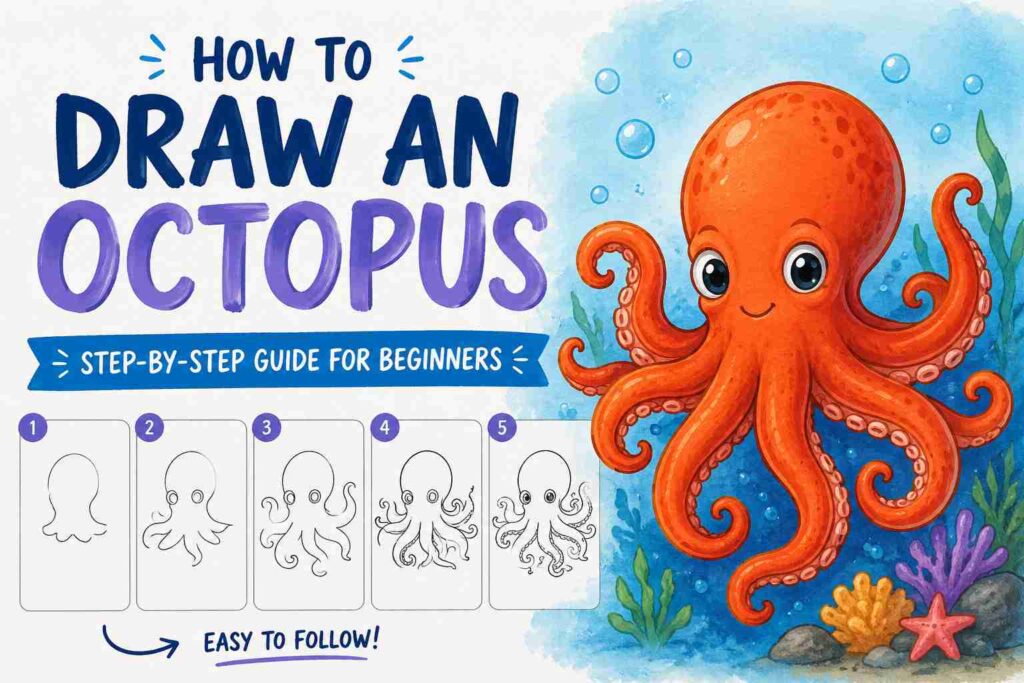
The best part is that an octopus can be drawn using simple shapes and basic techniques. Once you understand the structure of the body and tentacles, you can create anything from a cute cartoon octopus to a highly realistic underwater masterpiece.
Things You’ll Need
Before you begin, gather the following supplies.
Essential Drawing Supplies
- Pencil
- Eraser
- Drawing paper
- Sharpener
- Ruler (optional)
Optional Supplies
- Colored pencils
- Markers
- Fine-tip black pen
- Watercolor paints
- Digital drawing tablet
Different Ways to Draw an Octopus
There are many styles you can experiment with.
Simple Cartoon Octopus
Perfect for beginners and young artists.
Realistic Octopus
Focuses on anatomy, texture, and shading.
Cute Kawaii Octopus
Features oversized eyes and adorable expressions.
Underwater Octopus Scene
Includes coral reefs, fish, and ocean plants.
Fantasy Octopus
Adds imaginative colors and magical elements.
Pirate-Themed Octopus
Creates a fun storybook character.
Digital Octopus Illustration
Uses advanced coloring and lighting techniques.
Why Learn How to Draw an Octopus?
Drawing an octopus helps artists practice important skills.
Benefits include:
- Improving shape construction
- Learning curved line techniques
- Understanding movement and flow
- Developing shading skills
- Building confidence in animal drawing
- Enhancing creativity
Because octopuses have flexible bodies and unique forms, they are excellent subjects for artistic exploration.
Understanding an Octopus’s Features
Before drawing, take a moment to study an octopus.
Key characteristics include:
- Large rounded head
- Soft body structure
- Eight flexible arms
- Rows of suction cups
- Large expressive eyes
- Smooth skin texture
- Flowing underwater movement
Understanding these features will make your drawing more accurate and recognizable.
How to Draw an Octopus Step by Step
Step 1: Draw the Head Shape
Begin by drawing a large rounded oval or dome shape.
This will form the octopus’s head and mantle.
Keep the lines light so adjustments are easy.
Step 2: Add Facial Guidelines
Draw a light vertical line down the center of the head.
Add a horizontal guideline where the eyes will be placed.
These guidelines help maintain symmetry.
Step 3: Draw the Eyes
Sketch two large oval eyes on either side of the center line.
Leave enough space between them for a natural appearance.
Add small pupils inside each eye.
Step 4: Create the Mouth Area
Draw a small curved line beneath the eyes.
For a cartoon octopus, you can add a smiling expression.
Keep the mouth simple and subtle.
Step 5: Sketch the First Tentacles
From the bottom of the head, draw several long curved arms extending outward.
Allow the lines to flow naturally.
Avoid making every arm identical.
Step 6: Add the Remaining Tentacles
Continue drawing all eight arms.
Overlap some tentacles to create depth and movement.
Vary their direction and length for a realistic look.
Step 7: Refine the Tentacle Shapes
Give each arm thickness by drawing parallel lines along both sides.
Keep the tentacles wider near the body and narrower toward the tips.
Step 8: Add Suction Cups
Draw rows of small circles along the underside of the arms.
These suction cups are one of the octopus’s most recognizable features.
Make the cups smaller near the tentacle tips.
Step 9: Refine the Body Outline
Review the overall shape of the head and arms.
Smooth out any rough lines and improve proportions.
Erase unnecessary construction marks.
Step 10: Add Texture Details
Lightly sketch subtle bumps and wrinkles on the skin.
Real octopuses often have textured surfaces that add realism.
Step 11: Ink the Drawing
Trace the final lines with a fine-tip pen or darker pencil.
Allow the ink to dry completely before erasing pencil marks.
Step 12: Add Base Colors
Color your octopus using shades such as:
- Orange
- Red
- Purple
- Pink
- Brown
You can also use creative fantasy colors if desired.
Step 13: Add Shading
Darken areas beneath the head and between overlapping tentacles.
Use smooth gradients to create a three-dimensional appearance.
Step 14: Add Highlights
Leave lighter areas where light naturally hits the body.
Highlights help make the octopus appear shiny and realistic.
Step 15: Finish the Artwork
Review your drawing and strengthen important details.
Add an underwater background if desired.
Your octopus drawing is now complete.
Easy Octopus Drawing Ideas
Looking for inspiration? Try one of these fun concepts.
Cute Baby Octopus
Create a friendly character with large eyes.
Realistic Ocean Octopus
Focus on detailed texture and natural coloring.
Octopus in a Coral Reef
Add fish, coral, and underwater plants.
Pirate Octopus
Give your octopus a hat, eye patch, and treasure chest.
Fantasy Sea Creature
Use unusual colors and magical elements.
Educational Marine Poster
Include labels and ocean facts.
Common Mistakes to Avoid
Making the Tentacles Too Stiff
Octopus arms should appear flexible and flowing.
Forgetting Suction Cups
These are an essential feature of the animal.
Drawing Identical Tentacles
Vary the shape, length, and direction of each arm.
Ignoring Overlapping Shapes
Overlapping tentacles create depth and realism.
Using Flat Shading
Gradual shading helps the octopus look three-dimensional.
Tips for Drawing a Realistic Octopus
Study Reference Photos
Observing real octopuses helps improve accuracy.
Focus on Movement
Octopuses are known for graceful, flowing motion.
Use Curved Lines
Soft curves make the drawing look more natural.
Build Slowly
Start with simple shapes before adding details.
Practice Different Poses
Experiment with swimming, resting, and crawling positions.
Final Thoughts
Learning how to draw an octopus is a fantastic way to improve your drawing skills while exploring one of the ocean’s most fascinating creatures. With its unique body structure, flowing tentacles, and expressive appearance, the octopus offers endless opportunities for creativity.
By following this step-by-step guide and practicing regularly, you’ll soon be able to create realistic, cartoon-style, or imaginative octopus drawings with confidence.
Frequently Asked Questions
Is an octopus easy to draw?
Yes. Once you understand the basic body shape and tentacle structure, an octopus becomes quite easy to draw.
How many tentacles should I draw?
An octopus has eight arms, so be sure to include all eight in your drawing.
What colors can I use?
Common colors include orange, red, brown, purple, and pink, but creative colors work well too.
How do I make the tentacles look realistic?
Use flowing curves and vary the direction and position of each arm.
Can children draw an octopus?
Absolutely. A cartoon octopus is a simple and fun project for young artists.
What is the most important feature of an octopus drawing?
The eight flowing arms and rows of suction cups are the key features that make an octopus instantly recognizable.