
Raccoons are fascinating animals known for their distinctive facial masks, fluffy tails, and curious personalities. Their unique markings and expressive features make them a fun subject for artists of all skill levels. Whether you’re creating wildlife illustrations, cartoon characters, or practicing animal drawing techniques, learning how to draw a raccoon is an excellent project.
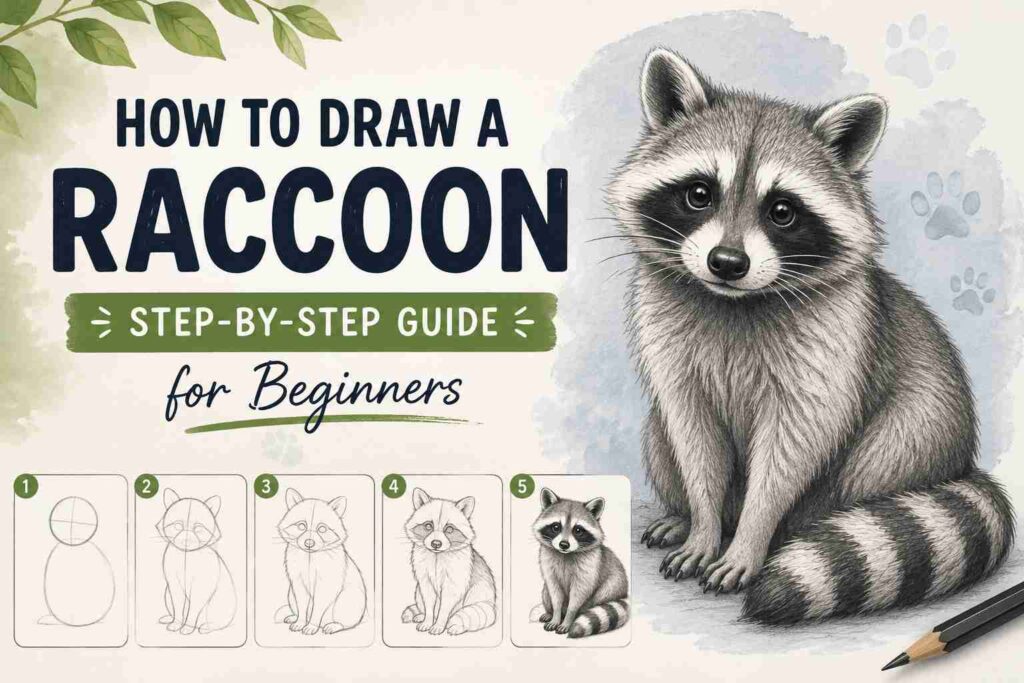
The good news is that drawing a raccoon is easier than it may seem. By breaking the animal down into simple shapes and adding details gradually, you can create an adorable and realistic raccoon in just a few steps.
Things You’ll Need
Before you start drawing, gather the following supplies.
Essential Drawing Supplies
- Pencil
- Eraser
- Drawing paper
- Sharpener
- Ruler (optional)
Optional Supplies
- Colored pencils
- Markers
- Fine-tip black pen
- Charcoal pencils
- Digital drawing tablet
Different Ways to Draw a Raccoon
There are many artistic styles you can explore.
Simple Cartoon Raccoon
Perfect for beginners and younger artists.
Realistic Raccoon
Focuses on fur texture, proportions, and shading.
Cute Kawaii Raccoon
Features oversized eyes and simplified shapes.
Sitting Raccoon
A classic pose that is easy to draw.
Climbing Raccoon
Shows the animal interacting with a tree.
Baby Raccoon
Creates an adorable and playful illustration.
Storybook Raccoon
Ideal for children’s books and educational projects.
Why Learn How to Draw a Raccoon?
Drawing raccoons helps artists improve several important skills.
Benefits include:
- Learning animal anatomy
- Practicing fur textures
- Improving shading techniques
- Understanding proportions
- Developing observation skills
- Building confidence in wildlife drawing
Because raccoons have distinctive features, they are excellent subjects for practicing character and animal illustration.
Understanding a Raccoon’s Features
Before drawing, take a moment to study a raccoon’s appearance.
Key characteristics include:
- Rounded head
- Pointed ears
- Dark facial mask
- Small nose
- Fluffy fur
- Bushy striped tail
- Compact body
- Curious expression
Recognizing these features will make your drawing more realistic and recognizable.
How to Draw a Raccoon Step by Step
Step 1: Draw the Head Shape
Begin with a large circle for the head.
Keep the lines light so adjustments can be made later.
Step 2: Sketch the Body
Below the head, draw an oval shape for the body.
The body should be slightly larger than the head.
Step 3: Add Guidelines
Draw a vertical and horizontal guideline across the face.
These lines help position the facial features correctly.
Step 4: Draw the Ears
Add two triangular ears at the top of the head.
Round the tips slightly for a natural appearance.
Step 5: Sketch the Eyes
Draw two oval eyes along the horizontal guideline.
Leave space between them for the nose.
Step 6: Create the Facial Mask
Draw dark patches around each eye.
Connect the patches across the face to form the raccoon’s famous mask.
Step 7: Add the Nose and Mouth
Draw a small rounded triangle for the nose.
Add a short line beneath it and create a simple curved mouth.
Step 8: Draw the Legs
Sketch four short legs extending from the body.
Use simple cylindrical shapes at first.
Step 9: Add the Paws
Draw small paws with tiny toes.
Keep the details simple if you’re a beginner.
Step 10: Draw the Tail
Add a large bushy tail extending from the body.
Make it thick and fluffy.
Step 11: Add Tail Stripes
Draw several curved bands across the tail.
These rings are one of the raccoon’s most recognizable features.
Step 12: Refine the Outline
Review your sketch and improve the overall shape.
Erase unnecessary construction lines.
Step 13: Add Fur Texture
Use short, light strokes around the body.
Focus on:
- Ears
- Cheeks
- Tail
- Chest
Avoid making every fur stroke identical.
Step 14: Ink the Drawing
Trace the final lines with a pen or darker pencil.
Allow the ink to dry before erasing pencil marks.
Step 15: Add Base Colors
Color the raccoon using:
- Gray fur
- Black facial mask
- Black tail rings
- Dark nose
- White highlights
Step 16: Shade and Add Depth
Darken areas beneath the body, tail, and ears.
Use shading to create a three-dimensional appearance.
Step 17: Finish the Artwork
Add final fur details, highlights, and background elements if desired.
Your raccoon drawing is now complete.
Easy Raccoon Drawing Ideas
Need inspiration? Try one of these creative concepts.
Cartoon Raccoon
Create a smiling character with oversized eyes.
Sleeping Raccoon
Draw a curled-up raccoon resting peacefully.
Tree-Climbing Raccoon
Show the animal exploring a tree trunk.
Baby Raccoon
Create a cute and playful young raccoon.
Forest Scene
Place your raccoon in a woodland environment.
Storybook Character
Design a raccoon wearing clothes or carrying accessories.
Common Mistakes to Avoid
Making the Tail Too Thin
A raccoon’s tail should appear fluffy and full.
Forgetting the Facial Mask
The mask is one of the animal’s defining features.
Using Uniform Fur Strokes
Natural fur varies in direction and length.
Ignoring Proportions
Keep the head, body, and tail balanced.
Overcomplicating the Details
Start simple and gradually add complexity.
Tips for Drawing a Realistic Raccoon
Use Reference Photos
Observing real raccoons improves accuracy.
Build With Basic Shapes
Start with circles and ovals before adding details.
Focus on Fur Direction
Fur grows differently across various parts of the body.
Layer Your Shading
Multiple layers create depth and realism.
Practice Facial Expressions
Raccoons are expressive animals with lots of character.
Final Thoughts
Learning how to draw a raccoon is a fun way to develop your animal drawing skills. With their distinctive masks, fluffy tails, and playful appearance, raccoons offer plenty of opportunities to practice texture, shading, and character design.
By following these simple steps and practicing regularly, you’ll soon be able to create realistic or cartoon raccoon drawings that capture the charm and personality of these fascinating animals.
Frequently Asked Questions
Is a raccoon difficult to draw?
No. Breaking the raccoon into simple shapes makes the drawing process much easier for beginners.
What makes a raccoon recognizable?
Its dark facial mask, bushy striped tail, and fluffy gray fur are the most recognizable features.
What colors should I use?
Most raccoons are shades of gray, black, white, and dark brown.
How do I make fur look realistic?
Use short, layered strokes that follow the natural direction of fur growth.
Can children learn to draw a raccoon?
Yes. A simple cartoon raccoon is a great drawing project for kids.
What is the most important feature to draw correctly?
The facial mask and striped tail are the key features that make a raccoon instantly recognizable.