
The best glow in the dark paints can turn ordinary walls, artwork, clothing, decorations, and DIY projects into eye-catching creations that shine after the lights go out. Whether you’re painting bedroom ceilings, decorating canvas, customizing fabric, or creating glowing outdoor accents, choosing the right formula makes a big difference. Some paints offer a bright, long-lasting afterglow, while others are better suited to quick craft projects or specific materials.
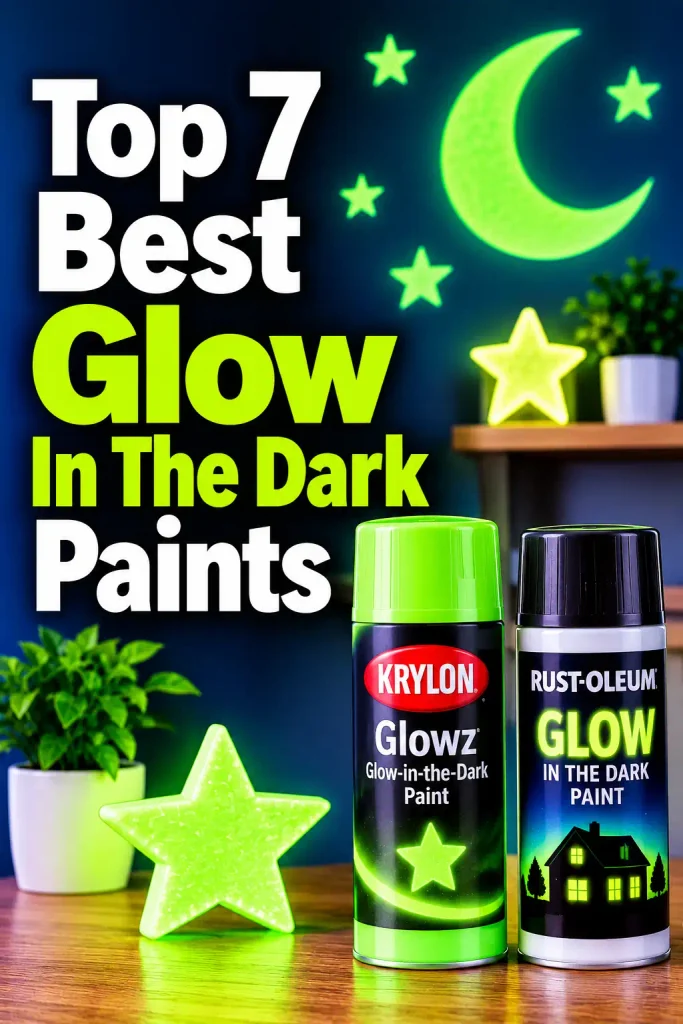
Glow-in-the-dark paint works by absorbing light and releasing stored energy gradually in darkness. Most traditional phosphorescent paints need to be charged by sunlight, room lighting, or another suitable light source before they glow. The brightness and duration depend on the pigment, paint thickness, surface color, and charging conditions.
Below are seven options for different projects, including acrylic craft paints, specialty wall coatings, fabric paint, and glow-in-the-dark spray paint.
Top 7 Best Glow In The Dark Paints: Quick Comparison
| Product Name | Best For | Check Price |
|---|---|---|
| Art ‘N Glow Premium Glow in the Dark Acrylic Paint | Best Overall for Bright Craft Projects | Check on Amazon |
| Rust-Oleum Specialty Glow in the Dark MAX Spray Paint | Best Glow-in-the-Dark Spray Paint | Check on Amazon |
| FolkArt Glow in the Dark Acrylic Paint | Best for Decorative Crafts | Check on Amazon |
| DecoArt Americana Glow | Best for Detailed Artwork | Check on Amazon |
| SpaceBeams Aurora Glow in the Dark Paint | Best for Indoor and Outdoor DIY Projects | Check on Amazon |
| Tulip Glow Fabric Paint | Best for Clothing and Fabric | Check on Amazon |
| Techno Glow Bright Green Glow Paint | Best for Long-Lasting Glow Applications | Check on Amazon |
Affiliate disclosure: As an Amazon Associate I earn from qualifying purchases.
Top Picks: 7 Best Glow In The Dark Paint Reviews
1. Art ‘N Glow Premium Glow in the Dark Acrylic Paint – Best Overall for Bright Craft Projects
Check Art ‘N Glow Premium Glow in the Dark Acrylic Paint on Amazon
Art ‘N Glow Premium Glow in the Dark Acrylic Paint is our top choice for creative projects that need a noticeable nighttime glow. It is designed for artists, hobbyists, and DIY enthusiasts who want to add luminous details to their work without mixing glow pigment into a separate paint formula.
The acrylic-based paint is suitable for many decorative applications, including canvas, wood, craft decorations, and selected other surfaces. Its phosphorescent pigment absorbs light and produces a visible glow after the surrounding area becomes dark.
One of its main advantages is convenience. A ready-to-use paint is easier to apply than loose pigment powder, particularly when you are creating stars, lettering, patterns, or small decorative designs. You can use a brush to control the application and build up coverage with additional coats.
For stronger results, consider applying the paint over a light-colored or white base. Dark backgrounds can reduce the apparent brightness because less light reaches the luminous layer. Allow each coat to dry according to the product instructions before adding another.
Pros:
- Ready-to-use acrylic paint.
- Suitable for many decorative craft projects.
- Useful for artwork, lettering, and glowing details.
- Phosphorescent finish charges under light.
- Easier to apply than loose pigment powder.
Cons:
- Multiple coats may be needed for stronger results.
- Glow performance depends on charging conditions.
- Not a replacement for specialty fabric or wall coatings.
- Surface compatibility should be checked before use.
Our Verdict: Art ‘N Glow is our best overall pick for general creative projects. It is a practical choice for artists and crafters who want a ready-made luminous paint rather than a powder that requires mixing.
2. Rust-Oleum Specialty Glow in the Dark MAX Spray Paint – Best Glow-in-the-Dark Spray Paint
Check Rust-Oleum Specialty Glow in the Dark MAX Spray Paint on Amazon
Rust-Oleum Specialty Glow in the Dark MAX Spray Paint is a convenient option when brushing paint onto a surface would take too much time. Its aerosol format makes it useful for covering suitable objects and decorative areas with a luminous coating.
Unlike traditional brush-on paint, spray application can provide more consistent coverage across textured or irregular surfaces when applied correctly. It is worth considering for craft decorations, props, and selected household projects where the product label approves the material.
The glow effect requires exposure to light before use in darkness. For better visibility, apply the product according to its instructions and consider using a suitable light-colored base if recommended. Several light passes are generally easier to control than one heavy application.
This product is particularly appealing to people who prefer spray application and want to avoid brush marks. However, aerosol paint requires more preparation and safety precautions. Protect nearby surfaces, follow the ventilation instructions, and keep the spray away from flames or ignition sources.
Check the exact label for approved materials and indoor or outdoor suitability. Do not assume that every surface or environment is appropriate for this coating.
Pros:
- Convenient aerosol application.
- Useful for suitable decorative objects and projects.
- Helps avoid visible brush strokes.
- Designed to create a glow-in-the-dark finish.
- Practical for larger or irregular surfaces.
Cons:
- Requires careful masking to control overspray.
- Aerosol application needs good ventilation.
- Coverage depends on the surface and application technique.
- Not ideal for small, intricate brush-painted details.
Our Verdict: Rust-Oleum Glow in the Dark MAX is our top spray-paint choice. Consider it when you want an aerosol application for suitable DIY objects, decorations, or props.
3. FolkArt Glow in the Dark Acrylic Paint – Best for Decorative Crafts
Check FolkArt Glow in the Dark Acrylic Paint on Amazon
FolkArt Glow in the Dark Acrylic Paint is a convenient choice for people who enjoy decorating household accessories, handmade gifts, and creative art projects. The acrylic formula is designed to add a luminous effect to suitable craft surfaces.
One appealing feature is its usefulness for decorative projects that need a glow without a complicated application process. You can use a brush to paint stars, shapes, outlines, lettering, and other designs on compatible surfaces.
The neutral glow formulation is particularly interesting when you do not want a strong daytime color to dominate the appearance of your project. Some versions are designed to appear relatively subtle before charging and become more noticeable in darkness.
For the strongest result, prepare the surface properly and apply enough product to build a suitable luminous layer. A white or light-colored background can help the glow appear brighter. Make sure the paint has dried before charging it under a light source.
FolkArt is a craft-oriented option rather than a dedicated industrial safety coating. Check the product label for surface compatibility and avoid assuming that it is suitable for skin, food-contact objects, or outdoor exposure.
Pros:
- Convenient acrylic craft-paint format.
- Suitable for many decorative projects.
- Useful for stars, patterns, and lettering.
- Offers a relatively subtle daytime appearance in neutral versions.
- Easy to apply with ordinary craft brushes.
Cons:
- Several coats may be necessary.
- Glow strength depends on the amount of light absorbed.
- Not intended for every material or application.
- Not a substitute for specialty exterior coatings.
Our Verdict: FolkArt is a good choice for everyday craft projects and decorative artwork. It is particularly useful when you want to add glowing details without using an aerosol product.
4. DecoArt Americana Glow – Best for Detailed Artwork
Check DecoArt Americana Glow on Amazon
DecoArt Americana Glow is designed for artists and hobbyists who want to incorporate luminous effects into decorative painting. Its craft-paint format makes it useful for smaller designs, detailed patterns, and creative projects that require more control than a spray can provides.
You can use a brush to add glowing accents to artwork, craft decorations, and other compatible surfaces. It is especially useful for details such as stars, moons, outlines, lettering, and decorative shapes.
The paint can also be incorporated into mixed-media projects when the other materials are compatible. However, the finished appearance depends on the surface color, paint thickness, and amount of light absorbed before the lights go out.
A light-colored background generally helps phosphorescent paint appear brighter. If you apply it over a dark surface, consider preparing the area with a suitable white base coat where appropriate.
DecoArt Americana Glow is best treated as a decorative product. Check the exact formulation and label before using it on surfaces that experience frequent handling, moisture, or outdoor weather.
Pros:
- Suitable for detailed decorative artwork.
- Brush application offers good control.
- Useful for small glowing patterns and accents.
- Works well in creative craft projects.
- Available in specialty glow formulations.
Cons:
- May need multiple layers for better visibility.
- Not designed for large-area spray application.
- Results depend on surface preparation.
- Outdoor durability should not be assumed.
Our Verdict: DecoArt Americana Glow is a useful option for detailed craft work. Choose it when precision and brush control matter more than covering a large surface quickly.
5. SpaceBeams Aurora Glow in the Dark Paint – Best for Indoor and Outdoor DIY Projects
Check SpaceBeams Aurora Glow in the Dark Paint on Amazon
SpaceBeams Aurora Glow in the Dark Paint is a versatile option for DIY enthusiasts who want a luminous finish on different types of projects. It is marketed for use on multiple surfaces, making it worth considering for decorative objects, signs, crafts, and selected outdoor applications.
The ready-to-use liquid format is convenient for people who prefer applying paint with a brush instead of mixing pigment powder into another medium. Depending on the surface and product instructions, it can be used to create glowing accents, decorative patterns, or larger painted areas.
A major consideration with any glow paint is how much light the coating absorbs. Charging it under strong natural or artificial light before darkness can help improve the visible effect. Applying it over a light base can also make a difference.
For outdoor use, preparation and protection are especially important. Weather, moisture, sunlight, and abrasion can affect the coating over time. Confirm the current product instructions for the intended surface and whether a compatible protective finish is recommended.
Pros:
- Designed for a variety of DIY applications.
- Ready-to-use paint format.
- Useful for decorative objects and signs.
- Can be considered for selected outdoor projects.
- Offers a practical alternative to loose glow pigment.
Cons:
- Outdoor performance depends on surface preparation and exposure.
- Multiple coats may be needed.
- The exact finish depends on the selected version.
- Not intended for every high-wear surface.
Our Verdict: SpaceBeams Aurora is worth considering when you want one glow-paint option for several types of decorative projects. Check its current surface and exterior-use instructions before applying it outdoors.
6. Tulip Glow Fabric Paint – Best for Clothing and Fabric
Check Tulip Glow Fabric Paint on Amazon
Tulip Glow Fabric Paint is designed for decorating textiles with luminous designs. It is a better choice than ordinary acrylic glow paint when your project involves clothing, bags, fabric accessories, or other compatible textiles.
Fabric paint needs to work with the movement and texture of the material. A coating that becomes too stiff or cracks easily can make a wearable project uncomfortable. A product formulated for fabric is therefore worth considering when decorating garments.
You can use it to create glowing patterns, outlines, lettering, and decorative accents on suitable fabric. It is particularly useful for costumes, themed clothing, festival accessories, and creative textile projects.
Before applying it to an entire garment, test a small hidden area to see how the paint behaves on that fabric. Follow the product’s drying, curing, and washing instructions carefully. Some fabric paints require an extended drying period before the first wash.
Do not assume that every Tulip glow product has identical care instructions. Check the exact version, fabric compatibility, and recommended washing method before use.
Pros:
- Designed specifically for fabric projects.
- Useful for clothing and textile decorations.
- Suitable for glowing patterns and lettering.
- More appropriate for fabric than ordinary craft acrylic.
- Convenient for costume and accessory customization.
Cons:
- Not intended for walls or general household surfaces.
- Fabric may need a specific curing period.
- Washing instructions vary by formulation.
- Application can affect the original fabric texture.
Our Verdict: Tulip Glow Fabric Paint is our preferred choice for textile projects. Choose it when decorating clothing or accessories and follow the manufacturer’s curing and washing directions.
7. Techno Glow Bright Green Glow Paint – Best for Long-Lasting Glow Applications
Check Techno Glow Bright Green Glow Paint on Amazon
Techno Glow Bright Green Glow Paint is an option for projects where afterglow performance is a major consideration. The brand specializes in luminous materials, including phosphorescent pigments and glow-in-the-dark coatings.
Bright green is a popular choice because green phosphorescent pigments can produce a noticeable glow in darkness. Depending on the specific formulation, this type of paint may be suitable for decorative markings, signs, art projects, and selected specialty applications.
Techno Glow products are available in different formulations and strengths, so it is important to choose the correct product rather than assuming every version has the same application method. Some products may be ready-to-use paints, while others may involve pigment or coating systems.
For the best performance, check the manufacturer’s information about the pigment, recommended number of coats, charging conditions, surface preparation, and protective finish. A white or light base can help improve the apparent brightness.
This is a more specialized option than ordinary craft acrylic. It may be particularly appealing to users who want to explore stronger luminous effects and are willing to compare technical product specifications.
Pros:
- Specialized brand focused on luminous materials.
- Bright green is a popular glow color.
- Useful for selected decorative and specialty projects.
- Offers options beyond basic craft paint.
- Worth considering when afterglow is a priority.
Cons:
- Product formulations and application methods vary.
- May cost more than basic craft paint.
- Requires careful selection for the intended surface.
- Some versions may require additional preparation or mixing.
Our Verdict: Techno Glow is a worthwhile option for buyers who prioritize luminous performance. Compare the exact formulation and technical specifications before choosing it for a particular project.
Buying Guide: How to Choose the Best Glow In The Dark Paint
Not all glow-in-the-dark paints perform in the same way. Some are made for artwork, others are designed for fabric, and specialty coatings may be more suitable for walls or outdoor decorations. Consider the following factors before purchasing.
1. Understand the Type of Glow Paint
Glow products generally fall into a few categories.
- Acrylic glow paint: Suitable for many decorative craft projects, canvas, wood, and other compatible surfaces.
- Spray glow paint: Convenient for larger objects and surfaces where aerosol application is appropriate.
- Fabric glow paint: Formulated for textiles and wearable decorations.
- Wall and ceiling glow paint: Designed for interior decorative applications such as stars, patterns, and nighttime room accents.
- Specialty luminous paint: May be formulated for signs, markings, or applications that require specific performance characteristics.
- Glow pigment powder: Mixed into a compatible medium when you want to customize the luminous coating.
Choose the category according to the surface you plan to paint. A product that works well on canvas may not be suitable for clothing or a frequently handled outdoor object.
2. Check the Glow Duration
Glow duration is one of the most important factors. Some paints produce a noticeable glow shortly after the lights go out, while others are designed to remain visible for longer periods.
However, advertised glow duration does not always mean the paint will remain equally bright throughout that time. Most phosphorescent paints become dimmer gradually after charging.
Look for manufacturer information about:
- Initial brightness.
- Recommended charging time.
- Light source requirements.
- Afterglow duration.
- Pigment type.
- Recommended coating thickness.
If the manufacturer does not provide a clear measurement method, avoid comparing duration claims as though they were tested under identical conditions.
3. Consider the Pigment Technology
Many modern glow-in-the-dark paints use strontium aluminate pigments. These are commonly selected for their stronger and longer-lasting afterglow compared with older zinc sulfide-based luminous materials.
The pigment concentration also matters. A higher concentration can improve the luminous effect, although it may affect texture, opacity, and ease of application.
Check the product specifications instead of relying only on words such as “super bright” or “extra long-lasting.”
4. Choose the Right Color
The daytime color and nighttime glow may look different.
Common glow colors include:
- Green: A popular choice for visible luminous effects.
- Blue: Useful for cool-toned decorative designs.
- Aqua: Creates a blue-green glow.
- Yellow-green: Offers a bright, energetic appearance.
- Orange: Useful for distinctive decorative accents.
- Purple: Can add a more unusual color effect.
Some paints look relatively neutral in daylight and become more noticeable after charging. Others have a visible daytime color.
5. Match the Paint to the Surface
Surface compatibility is essential.
| Surface | Suitable Product Type |
|---|---|
| Canvas and paper | Acrylic glow paint |
| Wood | Compatible acrylic or specialty glow coating |
| Walls and ceilings | Interior wall or ceiling glow paint |
| Fabric and clothing | Fabric-specific glow paint |
| Metal | Product specifically approved for metal |
| Plastic | Paint labeled for the particular plastic surface |
| Outdoor decorations | Exterior-rated glow coating |
Always check the exact product label. A general-purpose craft paint should not automatically be considered suitable for every material.
6. Consider Indoor or Outdoor Use
Indoor projects usually have fewer environmental challenges. Outdoor coatings may face rain, humidity, sunlight, temperature changes, and physical wear.
If you are painting garden decorations, exterior signs, or other outdoor objects, choose a product specifically approved for exterior use. Check whether the manufacturer recommends a compatible clear protective coating.
A topcoat can sometimes reduce the amount of light reaching the luminous pigment or change the finished appearance. Test the complete coating system before applying it to a large area.
7. Look at the Daytime Appearance
Some glow paints dry relatively clear or neutral, while others leave a visible white, cream, or colored layer.
This matters if you want a design that is subtle during the day but noticeable at night. For example, a neutral glow paint may work well for stars on a ceiling, while colored acrylic glow paint can be better for daytime artwork.
Check product photographs and descriptions carefully. The color shown under bright lighting may not represent the nighttime glow.
8. Consider Application Method
The right application method depends on your project.
- Brush-on paint: Better for small patterns, lettering, and detailed artwork.
- Aerosol spray: Convenient for suitable larger surfaces and irregular objects.
- Fabric squeeze bottle: Useful for raised lines and textile designs.
- Pigment powder: Provides flexibility when mixing a compatible luminous coating.
If you are new to glow paint, a ready-to-use acrylic formula is generally easier to manage than a pigment powder that requires mixing.
9. Check Coverage and Number of Coats
Glow paint often requires more than one coat to produce a noticeable effect. A thin application may look attractive during the day but provide a weak glow at night.
Check the product’s stated coverage and recommended coating thickness. If you are painting a large wall or ceiling, calculate how much material you need before ordering.
A white or light-colored base coat can help improve the visible result, particularly when the original surface is dark.
10. Consider Safety and Handling
Read the manufacturer’s safety information before using any paint. Do not assume that a product is safe for skin or children’s toys simply because it is water-based or marketed for crafts.
Use aerosol products with suitable ventilation and follow the label’s protective precautions. Keep paint away from food-contact surfaces unless the manufacturer explicitly approves that use.
For children’s projects, choose a product specifically labeled for the intended age group and application, and supervise its use as appropriate.
How to Apply Glow In The Dark Paint for the Best Results
Correct preparation and application can make a noticeable difference in the finished glow. Follow these general steps, adjusting them to the manufacturer’s directions.
Step 1: Prepare the Surface
Remove dust, dirt, grease, and loose material. The surface should be clean and dry before painting.
For walls or wood, repair imperfections and prepare the surface as needed. If you are working with fabric, make sure it is clean and suitable for the selected paint.
Step 2: Apply a Suitable Base Coat
A white or light-colored base can help luminous paint appear brighter. This is especially useful when painting over a dark wall, canvas, or wooden object.
Allow the base coat to dry fully before applying the glow paint. Confirm that the primer and glow coating are compatible.
Step 3: Stir or Shake the Paint
Follow the product instructions for mixing. Some paints require stirring because luminous pigments can settle in the container.
For aerosol products, shake the can for the recommended time. Test the spray pattern on cardboard before applying it to the project.
Step 4: Apply the First Coat
Use a brush, roller, or spray can according to the product type. Apply an even layer without allowing the paint to collect in thick puddles.
For detailed artwork, use a smaller brush to control the shape and edges.
Step 5: Allow the Paint to Dry
Wait for the recommended drying time before adding another layer. Applying a second coat too early can affect the finish.
Check the label for recoat instructions because drying times differ between formulations and environmental conditions.
Step 6: Add Additional Coats
Apply further coats if needed to build up the luminous layer. Multiple thin coats are often easier to control than one thick application.
Pay attention to the manufacturer’s recommended coverage and thickness. Excessive buildup may create an uneven surface.
Step 7: Allow Full Curing
Drying and curing are different stages. A coating may feel dry before it has reached its intended durability.
Follow the complete curing instructions before handling the object, washing fabric, or exposing an outdoor project to weather.
Step 8: Charge the Paint With Light
Expose the finished paint to a suitable light source before testing it in darkness. Sunlight, ordinary lighting, or UV light may be used depending on the product.
A stronger or longer charging period can improve the initial glow, but follow the manufacturer’s guidance rather than assuming every paint responds identically.
Step 9: Test the Glow in a Dark Room
Turn off the lights and observe the finished project. Give your eyes time to adjust to the darkness.
If the glow is weaker than expected, check whether the coating needs more layers, a better base color, or additional charging time.
Common Mistakes to Avoid When Using Glow In The Dark Paint
- Applying it over a dark surface without preparation: A dark base can reduce the visible glow.
- Using too little paint: A thin layer may not provide the luminous effect you expect.
- Skipping the charging step: Phosphorescent paint needs to absorb light before it can glow.
- Confusing fluorescent paint with phosphorescent paint: Fluorescent paint generally needs an active light source such as UV light, while phosphorescent paint can continue glowing after the light is removed.
- Choosing the wrong formulation: Fabric paint, wall paint, and acrylic craft paint are not interchangeable.
- Applying a heavy coat at once: Thick layers can create an uneven finish.
- Ignoring drying instructions: Additional coats applied too early may affect the result.
- Using an indoor product outside: Weather exposure can damage an unsuitable coating.
- Skipping a compatibility test: Some surfaces need special preparation or a compatible primer.
- Assuming every glow claim is identical: Brightness and afterglow depend on pigment, coating thickness, and charging conditions.
Frequently Asked Questions
1. What is the best glow in the dark paint?
Art ‘N Glow Premium Glow in the Dark Acrylic Paint is our best overall choice for general craft projects. Rust-Oleum Specialty Glow in the Dark MAX is a strong option when you prefer spray application, while Tulip Glow Fabric Paint is better suited to textile projects.
2. How does glow-in-the-dark paint work?
Glow-in-the-dark paint absorbs energy from light and releases it gradually in darkness. This process is called phosphorescence. The paint needs to be charged before it can produce its afterglow.
3. How long does glow-in-the-dark paint last?
The visible glow can last from minutes to several hours, depending on the pigment, concentration, coating thickness, and charging conditions. The brightness usually decreases over time. The paint coating itself may last much longer, depending on the surface and environmental exposure.
4. Does glow-in-the-dark paint need sunlight?
No. Many phosphorescent paints can be charged using sunlight or suitable artificial light. Some products also respond well to UV light. Check the manufacturer’s recommendations for the specific formulation.
5. Is glow-in-the-dark paint the same as UV paint?
No. Traditional glow-in-the-dark paint is phosphorescent and can continue glowing after the charging light is removed. Fluorescent or UV-reactive paint generally appears especially bright under ultraviolet lighting but does not necessarily produce a lasting afterglow in darkness.
6. What color glow-in-the-dark paint is the brightest?
Green is a popular luminous color and is commonly associated with strong glow performance. However, actual brightness depends on the pigment formulation, concentration, coating thickness, and charging conditions.
7. Can you use glow-in-the-dark paint on walls?
Yes. Some glow-in-the-dark paints are designed for interior walls and ceilings. Check the label to confirm wall compatibility and follow the recommended preparation and application instructions.
8. Can glow-in-the-dark paint be used outdoors?
Some products are designed for selected outdoor applications, but not all glow paints are weather-resistant. Choose an exterior-rated formula and follow the manufacturer’s instructions about surface preparation and protective coatings.
9. Does glow-in-the-dark paint work on fabric?
Yes, but choose a fabric-specific product such as Tulip Glow Fabric Paint. Ordinary acrylic glow paint may not provide the flexibility or wash performance needed for wearable textiles.
10. How can I make glow-in-the-dark paint brighter?
Start with a clean surface and use a suitable white or light-colored base. Apply the recommended number of coats, allow them to dry properly, and charge the finished surface with an appropriate light source. These steps can improve the visible glow.
Final Words
Choosing the best glow in the dark paints depends on the surface, application method, and nighttime effect you want. Art ‘N Glow is our top pick for general craft projects, while Rust-Oleum Specialty Glow in the Dark MAX is a convenient option for spray applications. FolkArt and DecoArt are worth considering for decorative artwork, and Tulip is the better choice for fabric projects.
Before purchasing, check the product’s surface compatibility, charging requirements, and expected afterglow. Apply the paint over a suitable light base when appropriate, use the recommended number of coats, and allow it to cure properly. With the right formulation and preparation, you can create glowing artwork and decorations that stand out after dark.
Helpful Resources
- DecoArt – Americana Glow – Explore manufacturer information about decorative glow paint and its craft applications.
- Techno Glow – Glow in the Dark Paint – Review specialty luminous paint and pigment options, including information about glow performance and applications.