
The best spray paint for glass should provide reliable adhesion, an attractive finish, and the right appearance for your project. Whether you’re updating glass vases, decorating jars, refreshing mirrors, creating privacy on windows, or adding color to glass décor, choosing a spray paint made for smooth surfaces can make a noticeable difference.
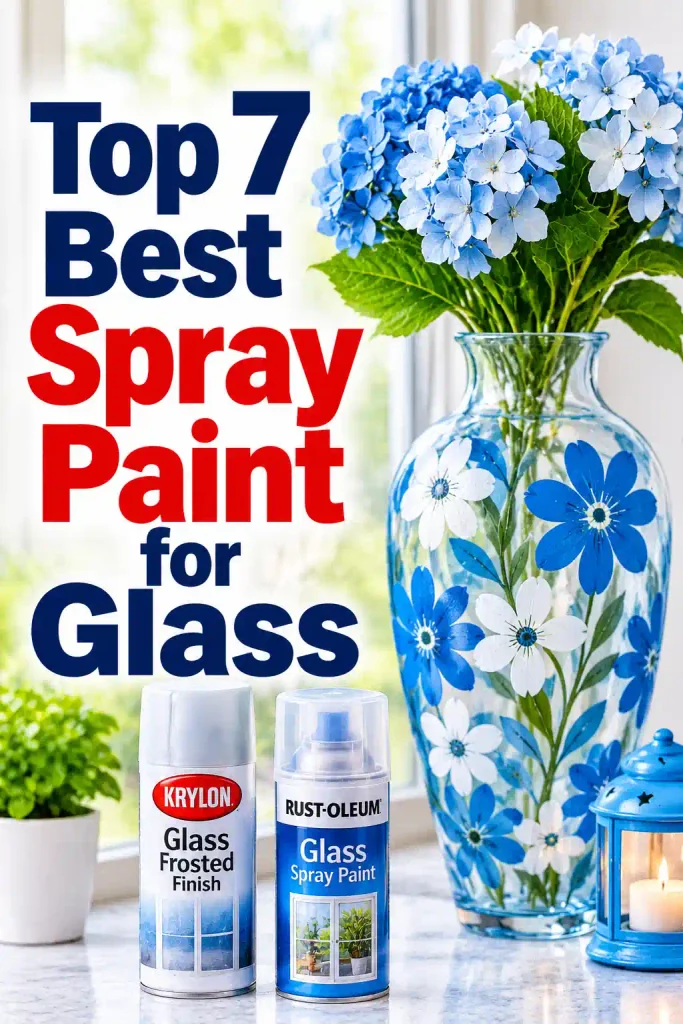
Glass is nonporous, so ordinary spray paint may not adhere as reliably as a formula designed for glass or other difficult surfaces. Some products create a frosted or translucent finish, while others provide an opaque color, a reflective mirror effect, or a stained-glass appearance. Below are seven options for different decorating and DIY needs.
Top 7 Spray Paints for Glass: Quick Comparison
| Product Name | Best For | Check Price |
|---|---|---|
| Rust-Oleum Specialty Frosted Glass Spray | Best Overall for Frosted Glass | Check on Amazon |
| Krylon Fusion All-In-One | Best for General Glass Projects | Check on Amazon |
| Krylon Sea Glass Finish | Best for Decorative Translucent Color | Check on Amazon |
| Rust-Oleum Specialty Mirror Effect | Best Mirror-Like Finish | Check on Amazon |
| Krylon Looking Glass Paint | Best for Reflective Glass Crafts | Check on Amazon |
| Krylon Stained Glass Finish | Best for Colored Glass Effects | Check on Amazon |
| Krylon COLORmaxx Spray Paint | Best for Opaque Color | Check on Amazon |
Affiliate disclosure: As an Amazon Associate I earn from qualifying purchases.
Top Picks: 7 Best Spray Paint for Glass Reviews
Each product below serves a different purpose. Before buying, consider whether you want to preserve some transparency, create a privacy effect, add a reflective finish, or completely change the glass surface’s color.
1. Rust-Oleum Specialty Frosted Glass Spray – Best Overall for Frosted Glass
Check Rust-Oleum Specialty Frosted Glass Spray on Amazon
Rust-Oleum Specialty Frosted Glass Spray is our top choice for projects that need a translucent, etched-glass appearance. It is designed to obscure visibility while still allowing light to pass through, making it particularly useful for decorative windows, glass doors, mirrors, and other interior glass surfaces.
The frosted appearance can provide additional privacy without making a window look completely opaque. It is also suitable for creative projects involving stencils. You can use a stencil to create decorative patterns that resemble etched glass without paying for custom glasswork.
Another advantage is its specialized purpose. Rather than trying to make an ordinary colored coating behave like frosted glass, this product is designed specifically for that visual effect.
However, it is intended for interior use. Rust-Oleum also advises against applying it to surfaces exposed to repeated water contact, such as the inside of a shower door. Follow the label’s application and drying instructions for the best result.
Pros:
- Creates an attractive frosted-glass appearance.
- Allows light to pass through while obscuring visibility.
- Suitable for decorative windows and glass doors.
- Works well with stencils and patterned designs.
- Designed specifically for glass projects.
Cons:
- Intended for interior applications.
- Not suitable for surfaces with repeated direct water exposure.
- Does not create a fully opaque color.
- Requires careful masking to avoid unwanted overspray.
Our Verdict: Rust-Oleum Specialty Frosted Glass Spray is our best overall choice when you want a decorative privacy effect. It is especially useful for interior windows, glass doors, and mirrors where maintaining some light transmission matters.
2. Krylon Fusion All-In-One – Best for General Glass Projects
Check Krylon Fusion All-In-One on Amazon
Krylon Fusion All-In-One is a versatile spray paint designed for multiple challenging surfaces, including glass. It is worth considering when you want to apply an opaque color to suitable glass decorations rather than create a frosted or reflective appearance.
The product is marketed for indoor and outdoor projects and is available in different colors and finishes. This gives you flexibility when updating glass décor, decorative containers, and other compatible objects around your home.
One of its main attractions is its adhesion-focused formulation. Krylon describes Fusion All-In-One as a product designed to bond to difficult surfaces without the usual sanding or priming steps required by many general-purpose coatings. Always follow the current label, especially when working with smooth glass.
This paint is a better choice for changing the color of a glass object than for creating an etched or transparent finish. The final appearance depends on the selected color, sheen, number of coats, and application technique.
Avoid using painted surfaces for food or drink contact. If you are decorating jars or bottles, keep the coating away from rims, openings, and interior surfaces that may touch food or beverages.
Pros:
- Designed for glass and several other surfaces.
- Available in multiple colors and finishes.
- Suitable for various decorative projects.
- Indoor and outdoor product positioning.
- Convenient aerosol application.
Cons:
- Creates a colored coating rather than a frosted finish.
- Can hide the glass’s transparency.
- Requires careful application to prevent drips.
- Not intended to make painted glassware food-safe.
Our Verdict: Krylon Fusion All-In-One is a versatile option for adding solid color to compatible glass projects. Choose it when you want a general-purpose coating rather than a specialty frosted or mirror effect.
3. Krylon Sea Glass Finish – Best for Decorative Translucent Color
Check Krylon Sea Glass Finish on Amazon
Krylon Sea Glass Finish is designed to give clear glass a soft, coastal-inspired appearance. It is a particularly appealing choice for decorative projects where you want color without completely hiding the underlying glass.
The product creates a semi-translucent, frosted finish that resembles glass naturally smoothed by waves. Its powdery appearance works well with vases, jars, decorative bottles, and other interior accessories.
One of the main reasons to consider this product is its distinctive appearance. Standard opaque spray paint can make glass look like plastic or metal, while Sea Glass Finish preserves a degree of visual depth.
It is intended for indoor decorating, so it is best suited to decorative objects rather than glass installations exposed to outdoor weather. The available shades can also help you create a coordinated coastal-inspired color scheme.
For a consistent result, clean the glass thoroughly and apply light, even coats. Avoid spraying too heavily in one area, as excessive paint can reduce the translucent effect.
Pros:
- Creates a semi-translucent finish.
- Provides a beach-inspired decorative appearance.
- Designed for clear glass surfaces.
- Suitable for vases, jars, and decorative accessories.
- Offers a distinctive alternative to opaque paint.
Cons:
- Intended for indoor decorating.
- Not suitable when you need a completely opaque finish.
- Heavy application can affect transparency.
- Color choices may be more limited than general-purpose spray paint.
Our Verdict: Krylon Sea Glass Finish is an excellent choice for decorative glass projects where you want a soft, colored, translucent appearance. It is particularly attractive for coastal, farmhouse, and relaxed contemporary interiors.
4. Rust-Oleum Specialty Mirror Effect – Best Mirror-Like Finish
Check Rust-Oleum Specialty Mirror Effect on Amazon
Rust-Oleum Specialty Mirror Effect is designed to transform glass into a reflective decorative surface. It is an interesting option for glass vases, candleholders, framed glass, and other interior craft projects.
Unlike ordinary metallic spray paint, which generally creates a colored metallic coating, this specialty product is intended to produce a mirror-like appearance. It is applied to the reverse or opposite side of the glass so the reflective effect can be viewed through the glass itself.
That application method makes surface preparation particularly important. Water spots, fingerprints, dust, and other imperfections may remain noticeable in the finished result. Clean the glass thoroughly and allow it to dry completely before spraying.
This product is intended for interior use. It is not a replacement for professionally manufactured mirrors where optical clarity, safety backing, or structural performance is required.
Pros:
- Designed to create a mirror-like appearance.
- Suitable for decorative glass accessories.
- Works on the reverse side of glass.
- Useful for craft and home décor projects.
- Different from ordinary metallic spray paint.
Cons:
- Intended for interior use.
- Requires careful glass preparation.
- Imperfections may remain visible.
- Not a substitute for a professionally manufactured mirror.
Our Verdict: Rust-Oleum Specialty Mirror Effect is a strong option for decorative projects that need a reflective appearance. Consider it for glass accessories and craft pieces rather than functional replacement mirrors.
5. Krylon Looking Glass Paint – Best for Reflective Glass Crafts
Check Krylon Looking Glass Paint on Amazon
Krylon Looking Glass Paint is another specialty product for creating a reflective appearance on glass. It is particularly interesting for DIY decorators who want to transform ordinary glass objects into mirror-like accessories.
The product is designed for glass craft applications, including decorative containers, candleholders, and similar home décor pieces. Its reflective effect is different from the appearance of standard silver or chrome spray paint.
For the intended look, application technique matters. Glass should be clean and completely dry, and the product should be applied according to the manufacturer’s instructions. The reverse-side application method is important for achieving the reflective effect.
This type of paint is best viewed as a decorative coating rather than a way to manufacture a functional mirror. The finished surface may not offer the same clarity or durability as a traditional mirror.
Because specialty mirror-effect products can be confused with ordinary metallic paints, check the product name and instructions before purchasing. Availability and packaging may vary between sellers.
Pros:
- Designed for reflective glass crafts.
- Suitable for decorative glass objects.
- Offers a mirror-inspired finish.
- Useful for creative home décor projects.
- Provides an alternative to ordinary silver spray paint.
Cons:
- Not intended for every type of glass surface.
- Requires careful preparation and application.
- Decorative reflection may differ from a real mirror.
- Availability may vary.
Our Verdict: Krylon Looking Glass Paint is worth considering for DIY projects where a reflective finish is the main goal. Compare it with Rust-Oleum Mirror Effect and choose the product whose application directions and availability best match your project.
6. Krylon Stained Glass Finish – Best for Colored Glass Effects
Check Krylon Stained Glass Finish on Amazon
Krylon Stained Glass Finish is designed for projects where you want a colored, light-transmitting appearance rather than a completely opaque coating. It can be useful for decorative glass accessories, craft pieces, and selected interior design projects.
The appeal of a stained-glass-style finish is its ability to add color while retaining some of the original glass character. This makes it a different choice from ordinary spray paint, which typically covers the surface with a solid layer.
It can be considered for decorative bottles, vases, and glass panels where a colored-glass effect is desired. The exact appearance depends on the glass, color selected, lighting conditions, and application thickness.
This product is intended for decorative use, not for creating certified stained-glass windows or replacing professionally manufactured architectural glass. Check current product instructions and availability before ordering, as specialty finishes may not be stocked as widely as general-purpose spray paints.
Pros:
- Designed for a stained-glass-style appearance.
- Adds color while retaining some transparency.
- Suitable for decorative glass projects.
- Offers a different look from opaque coatings.
- Useful for creative craft applications.
Cons:
- Not a replacement for real stained glass.
- Finish depends on the underlying glass and application.
- May be harder to find than general-purpose paint.
- Not suitable for every functional glass surface.
Our Verdict: Krylon Stained Glass Finish is a good specialty option when you want a colorful, light-transmitting decorative effect. It is worth considering for artistic projects where ordinary opaque paint would hide too much of the glass.
7. Krylon COLORmaxx Spray Paint – Best for Opaque Color
Check Krylon COLORmaxx Spray Paint on Amazon
Krylon COLORmaxx is a general-purpose spray paint line worth considering when you want a conventional solid-color finish on a suitable glass project. It is available in a range of colors and finishes, giving you more flexibility than a specialty product limited to frosted or reflective effects.
This type of spray paint can be useful for decorative glass objects where transparency is not important. For example, you might want to give an old glass accessory a bold new color or coordinate a decorative piece with your room.
Krylon’s product information identifies glass among the surfaces compatible with certain COLORmaxx formulations. However, always check the exact can and current label rather than assuming every product in a paint family has identical surface compatibility.
For best results, prepare the glass as directed by the manufacturer and apply several light coats instead of one heavy coat. This helps reduce runs and uneven coverage.
COLORmaxx is not a specialty frosted, mirror, or stained-glass product. Choose one of the dedicated finishes above if you want to preserve transparency or create a particular decorative effect.
Pros:
- Available in a wide range of colors.
- Offers conventional opaque finishes.
- Useful for decorative glass projects when compatible.
- Convenient aerosol application.
- Provides an alternative to specialty glass-effect paints.
Cons:
- Not designed specifically for frosted or mirror effects.
- Exact glass compatibility depends on the product label.
- Opaque colors hide the original transparency.
- Surface preparation remains important.
Our Verdict: Krylon COLORmaxx is worth considering when you want a straightforward solid-color finish on compatible glass. Check the specific product label to confirm glass use before purchasing.
Buying Guide: How to Choose the Best Glass Spray Paint
Selecting the right product involves more than choosing a color. Glass has a smooth, nonporous surface, so the paint must be suitable for the material and the intended use. These factors can help you make a better decision.
1. Choose the Right Finish
Start by deciding how you want the finished glass to look.
- Frosted: Creates a translucent, etched appearance that can help obscure visibility while allowing light through.
- Opaque: Covers the glass with a solid color and hides the original transparency.
- Sea-glass effect: Adds a soft, semi-translucent color with a decorative frosted appearance.
- Mirror effect: Creates a reflective decorative surface when applied according to the product instructions.
- Stained-glass effect: Adds color while retaining some light transmission.
The finish should match the project’s purpose. A frosted product is more appropriate for a privacy effect, while an opaque coating is better when you want a complete color change.
2. Check Glass Compatibility
Not every spray paint is designed for glass. Some general-purpose products can be used on glass, but their performance depends on the formulation and preparation.
Look for wording on the label that specifically lists glass as an approved surface. Also check whether the product is intended for interior or exterior use.
If the glass item has an unusual coating, tint, film, or previously painted surface, test a small inconspicuous area first.
3. Consider Indoor and Outdoor Use
The environment can affect which product is suitable.
Indoor projects: Many decorative glass sprays are designed for interior objects, mirrors, windows, and accessories. Specialty frosted and mirror-effect products commonly fall into this category.
Outdoor projects: Choose a product whose label specifically permits exterior use on glass. Consider exposure to sunlight, rain, temperature changes, and physical contact.
Do not assume that an indoor decorative finish will withstand outdoor conditions simply because it feels dry after application.
4. Evaluate Adhesion and Durability
Glass does not absorb paint like unfinished wood. A coating must adhere to the surface rather than relying on absorption.
Consider these points:
- Whether glass is listed on the product label.
- Whether a primer is required or recommended.
- Whether the product is designed for frequent handling.
- Whether the surface will experience moisture or abrasion.
- Whether the manufacturer specifies a curing period.
A decorative vase that sits on a shelf has different durability needs from a glass panel that people regularly touch.
5. Select a Suitable Color
Color can change the entire appearance of a glass object.
- White: Creates a clean, bright appearance.
- Black: Provides a dramatic and modern look.
- Gold: Adds a warm decorative accent.
- Silver: Creates a metallic appearance, although it is not necessarily reflective like a mirror.
- Aqua: Works well for coastal and sea-glass-inspired décor.
- Blue: Adds a cool decorative tone.
- Green: Can create a natural, vintage-inspired appearance.
- Frosted clear: Preserves light transmission while reducing visibility.
Remember that translucent finishes look different depending on the thickness of the coating and the color of the background behind the glass.
6. Check the Spray Pattern
A controlled spray pattern helps create an even coating.
Look for an aerosol can with a nozzle that provides consistent coverage and is comfortable to operate. A wide spray pattern may be helpful for larger flat surfaces, while a more controlled application can be useful for smaller decorative objects.
Practice on cardboard before spraying the glass. This helps you understand the spray distance and how quickly the paint comes out.
7. Consider Drying and Curing Time
Drying time and full curing time are not the same. A surface may feel dry before it is ready for regular handling.
Check the product label for:
- Time to become dry to the touch.
- Recoat interval.
- Handling time.
- Full curing instructions.
- Temperature and humidity recommendations.
Avoid placing freshly painted glass objects against other surfaces until the coating has reached the recommended stage.
8. Consider the Size of Your Project
A small vase or jar may require only a modest amount of paint, while a large glass panel may need several cans depending on the product’s coverage.
Check the stated coverage per can and consider the number of coats recommended by the manufacturer. Specialty finishes may have different coverage rates from ordinary colored spray paints.
Mask areas that should remain clear to avoid wasting paint.
9. Avoid Food-Contact and High-Heat Applications
Decorative spray paint should not automatically be considered safe for food contact. Do not paint the inside of drinking glasses, food jars, or containers where the coating may touch food or beverages unless the manufacturer specifically approves that use.
Similarly, ordinary decorative spray paint should not be used on oven glass, cookware, or surfaces exposed to high temperatures unless the product is specifically rated for those conditions.
10. Read the Product Label Before Buying
Product names and packaging can change, and different versions within the same brand may have different uses.
Before ordering, confirm:
- The exact product name.
- Approved surfaces.
- Indoor or outdoor suitability.
- Recommended preparation.
- Drying and curing instructions.
- Safety and ventilation requirements.
This final check helps prevent buying a paint that creates the wrong finish or is unsuitable for your project.
How to Spray Paint Glass: Step-by-Step Guide
Good preparation is essential for a smooth finish. Follow these steps to reduce imperfections and improve the appearance of your project.
Step 1: Choose a Suitable Workspace
Work outdoors or in a well-ventilated area that meets the product’s safety instructions. Protect nearby furniture, flooring, walls, and other objects from spray mist.
Avoid spraying near flames, sparks, heaters, or other ignition sources. Aerosol products can contain flammable ingredients.
Step 2: Clean the Glass Thoroughly
Remove dust, fingerprints, grease, water spots, and other contaminants. Use a suitable glass cleaner or soap and water, depending on the product instructions.
Rinse if necessary and allow the glass to dry completely. Even small marks can affect the final appearance, especially with reflective coatings.
Step 3: Protect Areas That Should Remain Clear
Use painter’s tape and masking material to cover edges, handles, openings, and other areas that should not receive paint.
For decorative patterns, position stencils carefully and press their edges down to reduce unwanted spray underneath.
Step 4: Prepare the Surface According to the Label
Some general-purpose glass coatings may require light sanding or a compatible primer, while certain specialty products have different preparation requirements.
Do not automatically sand every glass project. Follow the specific manufacturer’s directions, especially for specialty mirror-effect and frosted products.
If a primer is required, remember that it may make the glass opaque. This matters when you want a transparent or translucent finish.
Step 5: Shake the Can Properly
Shake the aerosol can for the period specified on the label. This helps distribute the ingredients evenly.
If the instructions recommend testing the spray pattern, do so on a piece of cardboard before moving to the glass.
Step 6: Apply the First Light Coat
Hold the can at the recommended distance and keep it moving while spraying. Start slightly before the edge of the object and continue past the opposite edge.
Avoid concentrating paint in one place. A light first coat is usually easier to control than a heavy application.
Step 7: Apply Additional Coats
Allow the recommended time between coats. Apply additional light layers until the desired appearance is achieved.
For translucent finishes, use extra care because heavy application can reduce transparency. With frosted or opaque finishes, follow the manufacturer’s recommended number of coats.
Step 8: Allow the Paint to Dry and Cure
Place the item in a protected area where dust and debris are unlikely to settle on the surface.
Follow the label’s drying and curing instructions before handling, moving, or using the object. Avoid touching the finish prematurely.
Step 9: Remove Masking Carefully
When the coating has reached the stage recommended for removing masking material, peel the tape away slowly.
Pulling tape too aggressively can damage the edges of a fresh coating.
Step 10: Inspect the Finished Project
Check for missed spots, uneven coverage, runs, and unwanted overspray. If another coat is needed, follow the manufacturer’s recoat instructions rather than spraying again at an arbitrary time.
Common Mistakes to Avoid When Spray Painting Glass
- Choosing ordinary paint without checking compatibility: Glass requires a coating suitable for smooth, nonporous surfaces.
- Skipping cleaning: Fingerprints, grease, and dust can affect the final appearance.
- Applying heavy coats: Excessive paint can create runs, drips, and uneven coverage.
- Using the wrong finish: Opaque paint will not create the same look as frosted or stained-glass products.
- Ignoring masking: Unprotected areas may receive unwanted overspray.
- Painting in unsuitable conditions: Temperature, humidity, wind, and dust can affect application.
- Using an indoor product outside: A decorative interior coating may not withstand outdoor exposure.
- Handling the glass too soon: A dry-to-touch coating may still need more time to cure.
- Painting food-contact surfaces: Decorative coatings should not be assumed safe for food or drink contact.
- Ignoring ventilation: Aerosol paint should be used with appropriate ventilation and protective precautions.
Frequently Asked Questions
1. What is the best spray paint for glass?
Rust-Oleum Specialty Frosted Glass Spray is our best overall choice for creating a frosted, etched appearance. Krylon Fusion All-In-One is worth considering for solid-color projects, while Krylon Sea Glass Finish is a good option for decorative translucent color.
2. Can you spray paint glass?
Yes. Many spray paints are suitable for glass, including specialty products and selected general-purpose formulations. Check the product label for glass compatibility and follow the manufacturer’s surface-preparation instructions.
3. Do I need to prime glass before spray painting?
Not always. Some products are designed to adhere to glass without a separate primer, while other coatings recommend or require one. Follow the instructions for the exact product you choose. Remember that primer can make transparent glass opaque.
4. How do you make spray paint stick to glass?
Start with a clean, completely dry surface and choose a product approved for glass. Apply it using the recommended spray distance and light coats. If the manufacturer recommends sanding or priming, follow those instructions.
5. Can I use regular spray paint on glass?
Some general-purpose spray paints list glass as a suitable surface, but not every formula does. Check the label rather than assuming all aerosol paints will adhere properly.
6. What spray paint gives glass a frosted look?
Rust-Oleum Specialty Frosted Glass Spray is specifically designed to create a frosted appearance. Krylon Sea Glass Finish offers a different semi-translucent decorative effect with a soft, coastal-inspired look.
7. Can I spray paint glass windows for privacy?
Yes. A frosted-glass spray can obscure visibility while allowing light to pass through. Rust-Oleum Specialty Frosted Glass is one option for interior glass windows and doors. Follow its limitations and avoid applying it to surfaces exposed to repeated water contact.
8. Can spray-painted glass be washed?
Cleaning suitability depends on the product, curing time, and amount of contact with water. Do not assume a decorative coating is dishwasher-safe or suitable for soaking. Follow the manufacturer’s cleaning and use instructions.
9. Can I spray paint the inside of a glass jar?
You can decorate the inside of some jars for display purposes if the product and application method are suitable. However, do not use the jar for food or beverages if the coating may contact its contents unless the manufacturer specifically approves that use.
10. How many coats of spray paint should I apply to glass?
The number of coats depends on the product and desired finish. Several light coats are generally easier to control than one heavy coat. Follow the label’s recoat schedule and coverage instructions.
Final Words
Choosing the best spray paint for glass depends on the finish you want and how the object will be used. Rust-Oleum Specialty Frosted Glass Spray is our top pick for privacy and etched-glass effects, while Krylon Fusion All-In-One is a versatile option for suitable solid-color projects. Krylon Sea Glass Finish is appealing for translucent decorative color, and the Rust-Oleum and Krylon mirror-effect products are worth considering for reflective crafts.
Before starting, check glass compatibility, clean the surface thoroughly, and follow the product’s preparation and curing instructions. Apply light, even coats in a well-ventilated workspace, and keep decorative coatings away from food-contact surfaces. With the right product and careful application, you can give ordinary glass objects a fresh and creative appearance.
Helpful Resources
- Krylon – Spray Paint FAQs – Find manufacturer guidance on spraying glass, choosing suitable products, and preparing surfaces.
- Rust-Oleum – Specialty Frosted Glass Spray – Review product-specific information about uses, surface preparation, application conditions, and limitations.