
Learning how to draw sweatpants is a great way to practice clothing shapes, fabric folds, seams, and relaxed proportions. Sweatpants may look simple, but their loose fit and soft material create interesting folds around the waistband, knees, ankles, and pockets. Once you understand the basic structure, you can easily draw different styles of joggers, lounge pants, and casual sweatpants.
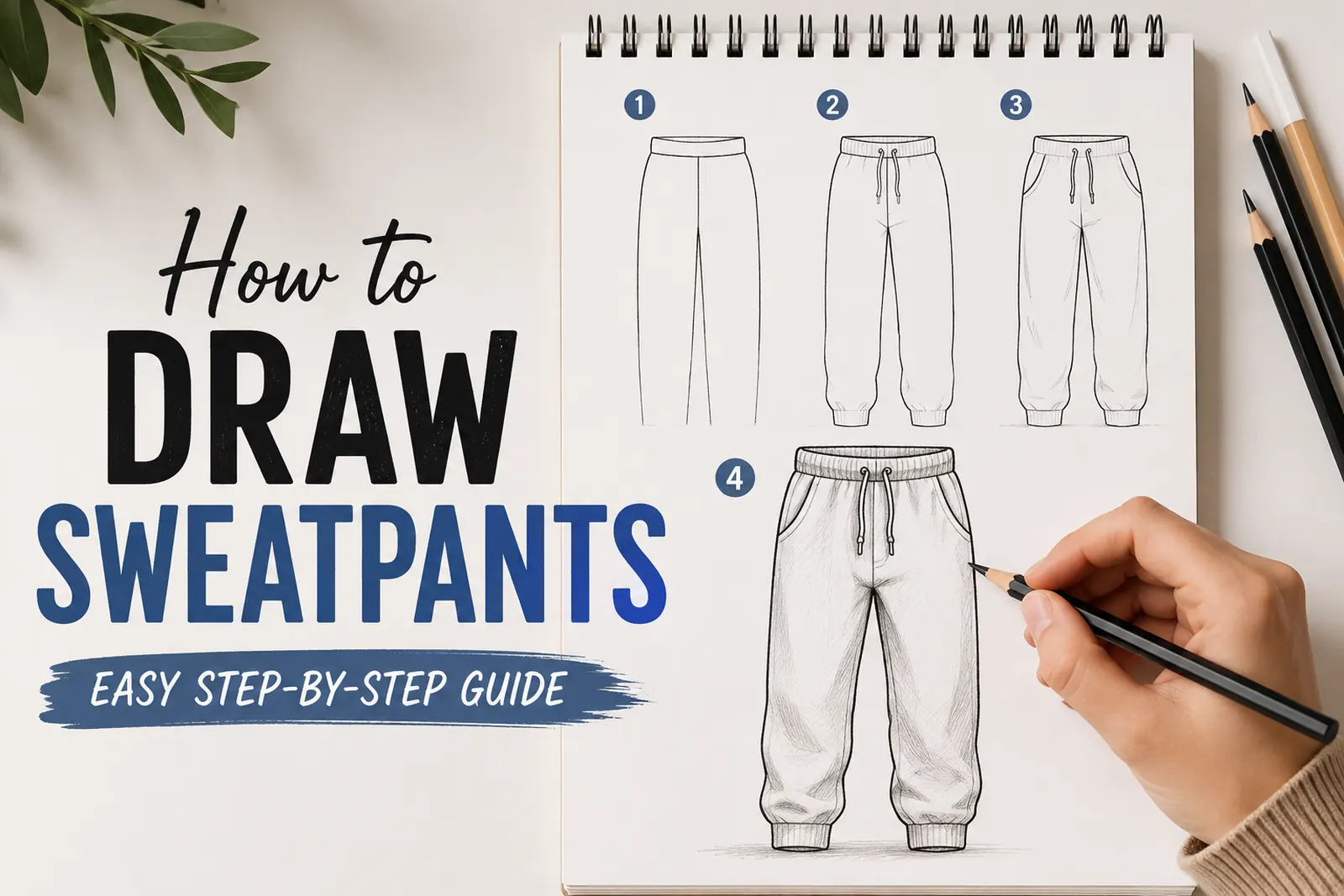
The easiest method is to begin with the waistband and work downward, using loose curved lines to establish the legs. Then add pockets, cuffs, seams, drawstrings, and fabric wrinkles. With a little shading, you can make the material look soft and comfortable. Follow these beginner-friendly steps to create a clean sweatpants illustration.
Items to Buy
- Drawing paper
- HB pencil
- 2B pencil
- Eraser
- Kneaded eraser
- Sharpener
- Fine-tip black pen
- Ruler
- Gray colored pencil
- Black colored pencil
- Blue colored pencil
- White colored pencil
- Colored pencils of your choice
Why Draw Sweatpants?
Sweatpants are a useful subject for learning how clothing behaves on the body or when displayed by itself.
Drawing them helps you practice:
- Clothing proportions
- Fabric folds
- Waistbands
- Seams
- Pockets
- Cuffs
- Drawstrings
- Shading
- Texture
- Loose-fitting clothing
You can create classic sweatpants, tapered joggers, oversized styles, or fashion illustrations.
How to Draw Sweatpants Step by Step
Step 1: Sketch the Waistband
Start with a wide horizontal shape for the waistband.
Use slightly curved lines rather than making it completely straight. The waistband should be wider than the narrowest parts of the legs.
If you’re drawing sweatpants on a person, lightly sketch the hips underneath so you know where the waistband sits.
Step 2: Create the Upper Pants Shape
From both sides of the waistband, draw curved lines downward to establish the hips and upper thighs.
Keep the shape loose.
Sweatpants are generally relaxed around the hips and thighs, so avoid drawing the sides as tight, straight lines.
Step 3: Divide the Two Legs
Create a center seam that separates the left and right legs.
Let the seam curve naturally from the crotch toward the lower part of the pants.
Then extend each outer leg downward.
Keep both legs similar in length unless you’re drawing a particular pose.
Step 4: Shape the Legs
Continue the outer lines downward.
Classic sweatpants can remain fairly loose through the legs, while joggers gradually become narrower toward the ankles.
Decide on the style before finalizing the shape.
Use long, gentle curves instead of perfectly straight lines.
Step 5: Add the Ankle Cuffs
At the bottom of each leg, draw a ribbed cuff.
Make the cuff slightly narrower than the leg opening.
Add several short vertical or curved lines to suggest stretchy ribbed fabric.
For wide-leg sweatpants, you can leave the bottom open instead of adding cuffs.
Step 6: Add Pockets and Drawstrings
Draw the pockets on the front or sides.
Simple curved or angled shapes work well.
Then add a drawstring coming from the waistband.
You can let the strings hang loosely down the center for a casual appearance.
Step 7: Add Fabric Folds
Now add wrinkles and folds.
Focus on areas where fabric naturally bunches:
- Under the waistband
- Around the hips
- Near the crotch
- Behind the knees
- Around the ankles
- Near the pockets
Use curved lines rather than random marks.
Step 8: Add Seams and Details
Refine the clothing construction.
Add:
- Side seams
- Inner leg seams
- Waistband stitching
- Pocket stitching
- Cuff seams
- Small logo area
Keep these lines subtle so they don’t overpower the main shape.
Step 9: Add Shading and Fabric Texture
Choose a light source and shade one side of the pants.
Use darker values inside deeper folds and beneath overlapping fabric.
Leave raised areas lighter.
For a soft fleece appearance, use gentle layered shading rather than sharp lines.
Step 10: Finish and Color Your Sweatpants
Clean up the sketch and strengthen the important outlines.
Then add your preferred color.
Try:
- Gray
- Black
- Navy
- Cream
- Brown
- Green
- Burgundy
- Pastel shades
Add subtle highlights to make the fabric appear soft and dimensional.
How to Draw Baggy Sweatpants
Start with a wider waistband and make the hips and thighs noticeably loose.
Allow the legs to hang with soft, irregular folds.
Don’t make the outer edges perfectly symmetrical because oversized fabric naturally creates more wrinkles.
For an especially relaxed look, make the ankle openings wide instead of tapered.
How to Draw Jogger Sweatpants
Joggers have a more fitted silhouette than traditional sweatpants.
Start with a relaxed upper portion.
Gradually taper the legs toward the ankles.
Finish with narrow elastic cuffs.
Add a drawstring and side pockets to make the style instantly recognizable.
How to Draw Sweatpants on a Person
Begin by lightly drawing the person’s legs and hips.
Then build the sweatpants around the body.
Remember that fabric follows the underlying anatomy.
Add more folds around bent knees and areas where the fabric is compressed.
Keep the clothing outline slightly outside the body rather than drawing directly against the skin.
How to Draw Sweatpants From the Side
Start with the waistband and hip area.
Draw one visible leg extending downward.
The back of the pants should curve naturally from the waist toward the seat and thigh.
Add a side pocket, seam, ankle cuff, and a few folds around the knee.
A side view is particularly useful for practicing how loose fabric hangs.
How to Draw Sweatpants From the Back
Begin with the waistband.
Create the back of the hips and seat using broad curved lines.
Add two legs underneath.
You can include back pockets and horizontal or curved fabric folds around the hips and knees.
Keep the center seam visible but subtle.
How to Draw Sweatpants With Colored Pencils
Start with a light base color.
Build darker tones around the seams, folds, cuffs, and areas facing away from the light.
Use short, soft strokes to suggest fleece or cotton texture.
For dark sweatpants, leave small lighter areas along the folds so the material doesn’t appear completely flat.
How to Make Sweatpants Look Realistic
The most important element is fabric behavior.
Don’t add wrinkles randomly.
Think about where the fabric is being:
- Pulled
- Compressed
- Folded
- Stretched
- Hanging freely
Loose fabric usually creates larger, softer folds than tight clothing.
Use gradual shading around these folds to create depth.
Common Mistakes to Avoid
Making the Legs Too Straight
Sweatpants usually have a relaxed silhouette with gentle curves.
Adding Too Many Wrinkles
Too many lines can make the pants look messy. Choose the most important folds.
Forgetting the Waistband
A visible elastic waistband helps establish the structure of the garment.
Making Joggers Too Wide
Joggers gradually taper toward the ankles.
Making the Cuffs Too Large
Keep elastic cuffs narrower than the lower leg.
Ignoring Fabric Direction
Folds should follow how the material hangs and moves.
Easy Sweatpants Drawing Ideas
Classic Gray Sweatpants
Use a relaxed fit, elastic waistband, and simple ankle cuffs.
Oversized Sweatpants
Create extra-wide legs with soft, dramatic folds.
Black Joggers
Use a tapered silhouette with darker shading and ribbed cuffs.
Cargo Sweatpants
Add large side pockets and utility details.
Cute Cartoon Sweatpants
Simplify the shape and use bright colors.
Fashion Illustration Sweatpants
Create a polished silhouette with exaggerated folds and stylish details.
FAQs
Are sweatpants easy to draw?
Yes. Their basic structure is relatively simple, although realistic fabric folds take practice.
What should I draw first?
Start with the waistband, then establish the hips, center seam, legs, and cuffs.
How do I draw sweatpants folds?
Add curved lines where the fabric naturally bunches, especially around the hips, knees, crotch, and ankles.
How do I draw baggy sweatpants?
Make the hips and legs wider and use larger, softer folds throughout the fabric.
How do I draw joggers?
Create a relaxed upper section and gradually taper the legs toward narrow elastic ankle cuffs.
What colors work best?
Gray, black, navy, beige, brown, green, and pastel colors all work well.
How do I make sweatpants look soft?
Use smooth shading and subtle texture. Avoid excessive sharp lines.
Can beginners draw sweatpants on a person?
Yes. Lightly sketch the body underneath first, then build the loose clothing around the legs and hips.
Final Words
Learning how to draw sweatpants becomes much easier when you focus on the garment’s basic structure before adding fabric details. Start with the waistband, build the relaxed hips and legs, then add the center seam, cuffs, pockets, and drawstring. Once the silhouette is correct, carefully placed folds and soft shading can make the sweatpants look comfortable and realistic.
After mastering the basic design, experiment with baggy sweatpants, tapered joggers, cargo styles, and different poses. Practice drawing the garment from the front, side, and back to understand how fabric changes with movement. With regular practice, you’ll become more confident drawing clothing proportions, seams, folds, texture, and realistic fabric.