
Whether you’re mixing colors for a painting project or creating your own homemade art supplies, learning how to make crimson paint can help you achieve one of the most beautiful and versatile shades in an artist’s palette. Crimson is a rich, deep red with subtle blue undertones, making it ideal for portraits, florals, landscapes, and decorative artwork.
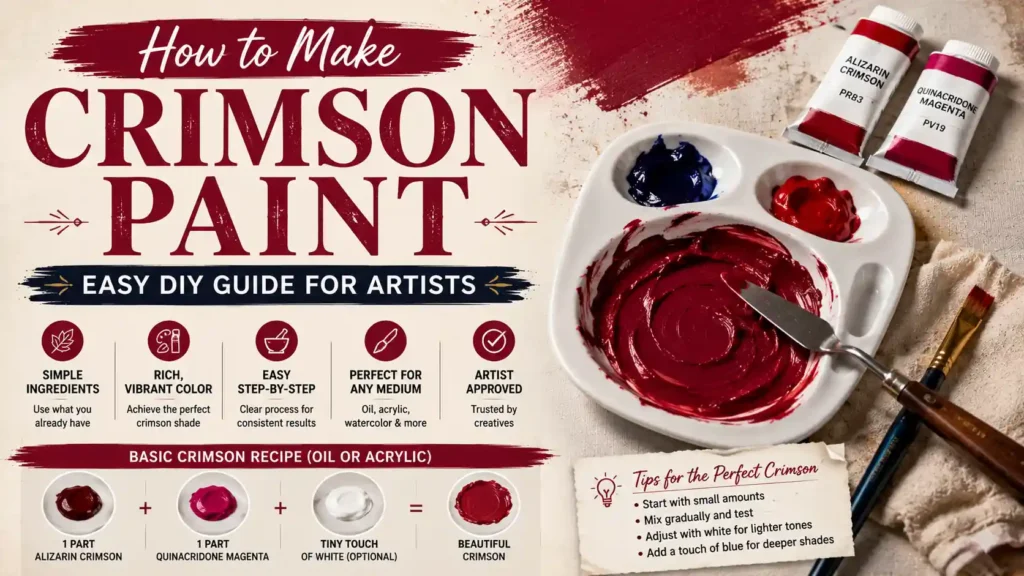
While ready-made crimson paint is widely available, mixing your own allows greater control over color temperature, intensity, and transparency. This guide explains several methods for creating crimson paint, along with tips for adjusting the shade to suit different artistic styles and projects.
Items to Buy
- Red paint
- Primary red paint
- Alizarin crimson paint
- Magenta paint
- Blue paint
- Ultramarine blue paint
- Acrylic paint set
- Oil paint set
- Watercolor paints
- Mixing palette
- Palette knife
- Paint brushes
- Color wheel
- Mixing cups
- Water container
- Paper towels
- Canvas paper
- Sketchbook
- Paint storage containers
- Apron
What Is Crimson Paint?
Crimson is a deep, slightly cool-toned red color.
Unlike bright scarlet or warm orange-red shades, crimson contains subtle blue undertones that create a richer and more sophisticated appearance. It is commonly used in fine art, decorative painting, illustration, and design.
Artists often value crimson because it mixes beautifully with other colors and can create a wide range of shadows, highlights, and secondary hues.
Its versatility makes it a staple in many paint collections.
Understanding Crimson Color Theory
Before mixing crimson paint, it helps to understand its color characteristics.
Crimson generally falls between red and magenta on the color spectrum. The slight blue influence separates it from warmer reds and gives it greater depth.
Because crimson leans toward the cool side of red, adding small amounts of blue or magenta often helps achieve the desired result.
Understanding these relationships makes color mixing easier and more predictable.
Different Ways to Make Crimson Paint
There are several methods for creating crimson paint.
The best approach depends on the materials available and the exact shade you want to achieve.
Common methods include:
- Mixing red and blue
- Mixing red and magenta
- Adjusting primary red
- Modifying existing crimson paints
- Creating homemade pigments
Each method produces slightly different results.
Method 1: Mix Red and a Small Amount of Blue
This is one of the simplest ways to create crimson.
Start with a vibrant red paint and gradually add a very small amount of blue paint. Mix thoroughly and evaluate the color.
The blue should only influence the red slightly.
Too much blue may push the mixture toward purple rather than crimson.
Basic Formula
- 95% red paint
- 5% blue paint
Adjust gradually until the desired shade appears.
Method 2: Mix Red and Magenta
Many artists prefer combining red and magenta.
Magenta naturally contains cool undertones that help create a vivid crimson color.
This method often produces brighter and cleaner results than using blue.
Basic Formula
- 70% red paint
- 30% magenta paint
Experiment with proportions to achieve different crimson variations.
Method 3: Modify Primary Red Paint
If you already have a strong primary red, you may only need minor adjustments.
Add tiny amounts of:
- Magenta
- Violet
- Cool blue
Mix carefully and evaluate after each addition.
Small changes can significantly affect the final color.
Method 4: Create Crimson Using Acrylic Paint
Acrylic paints are among the easiest mediums for color mixing.
Steps
- Place red paint on a palette.
- Add a small amount of magenta or blue.
- Mix thoroughly using a palette knife.
- Test the color on paper.
- Adjust as needed.
Acrylic paint dries slightly darker, so allow test samples to dry before making final adjustments.
Method 5: Create Crimson Using Oil Paint
Oil paints blend smoothly and provide rich color depth.
Steps
- Place red oil paint on a palette.
- Add a tiny amount of ultramarine blue or magenta.
- Mix thoroughly.
- Test on a scrap canvas.
- Continue adjusting until satisfied.
Oil paints often reveal subtle color nuances that make crimson particularly attractive.
Method 6: Create Crimson Using Watercolors
Watercolor mixing requires a slightly different approach.
Steps
- Activate the red watercolor with clean water.
- Add a small amount of magenta or blue.
- Mix in a palette well.
- Test on watercolor paper.
- Adjust the intensity as needed.
Because watercolors dry lighter, testing is especially important.
How to Make Homemade Crimson Paint
Artists interested in DIY paint making can create crimson paint from pigments.
Materials
- Red pigment
- Blue pigment
- Binder
- Water
Mix the pigments carefully before combining them with the chosen binder.
Homemade paint allows complete control over consistency and finish.
How to Make Dark Crimson Paint
For deeper, richer crimson shades, start with a standard crimson mixture and add small amounts of:
- Ultramarine blue
- Dioxazine violet
- Burnt umber
Add these colors gradually.
A little goes a long way when darkening crimson.
How to Make Bright Crimson Paint
If your crimson appears too dark or dull, brighten it by adding:
- Magenta
- Bright red
- Quinacridone red
These colors enhance vibrancy without significantly altering the crimson character.
Bright crimson works especially well in floral and decorative artwork.
How to Make Light Crimson Paint
To create lighter crimson tones, add:
- White paint
- Titanium white
- Zinc white
This produces soft crimson tints suitable for highlights and pastel effects.
Add white gradually to maintain color richness.
Best Uses for Crimson Paint
Crimson is one of the most versatile colors in art.
Popular uses include:
- Floral paintings
- Portraits
- Landscapes
- Decorative crafts
- Holiday artwork
- Fabric painting
- Abstract art
- Calligraphy accents
Its depth and richness make it suitable for both realistic and expressive styles.
Common Color Mixing Mistakes
One common mistake is adding too much blue.
This can quickly transform crimson into purple. Another issue is using muddy or low-quality paints that reduce color intensity.
Many beginners also skip testing their mixtures before applying them to a project.
Working gradually helps avoid these problems.
Tips for Consistent Crimson Paint
Achieving repeatable results requires careful measurement.
Helpful tips include:
- Record color ratios
- Mix larger batches when possible
- Test colors before use
- Use the same paint brands
- Work under consistent lighting
These practices help maintain color consistency across projects.
Storing Mixed Crimson Paint
If you’ve mixed more paint than needed, proper storage can reduce waste.
Store paint in:
- Airtight containers
- Small paint jars
- Palette cups with lids
Label the mixture with the color formula for future reference.
Proper storage helps preserve paint quality and consistency.
FAQs
What colors make crimson paint?
Crimson is commonly created by mixing red with a small amount of blue or magenta.
Is crimson the same as red?
No. Crimson is a cooler, deeper red with subtle blue undertones.
Can I make crimson with primary colors?
Yes. Red combined with a small amount of blue can create crimson.
What blue should I use?
Ultramarine blue is often a good choice because of its rich undertones.
How do I make bright crimson?
Add magenta or a vivid red to increase brightness.
How do I make dark crimson?
Add tiny amounts of ultramarine blue, violet, or burnt umber.
Can I make crimson with acrylic paint?
Yes. Acrylic paint mixes easily and is ideal for creating crimson.
Why does my crimson look purple?
Too much blue was likely added to the mixture.
Final Words
Learning how to make crimson paint gives artists greater control over one of the most elegant and useful colors in the spectrum. Whether you’re working with acrylics, oils, watercolors, or homemade pigments, creating your own crimson allows you to adjust depth, brightness, and temperature to perfectly match your artistic vision.
By understanding color relationships and making gradual adjustments, you can mix beautiful crimson shades for portraits, landscapes, decorative projects, and more. With a little experimentation and practice, you’ll be able to create custom crimson tones that enhance every artwork you produce.