
Artists love gouache for its rich color, smooth application, and velvety matte finish. If you’re curious about how to make gouache paint, you’ll be happy to know that creating your own paint can be a fun and educational project. Homemade gouache allows you to experiment with pigments, customize colors, and gain a deeper understanding of how artist paints are made.
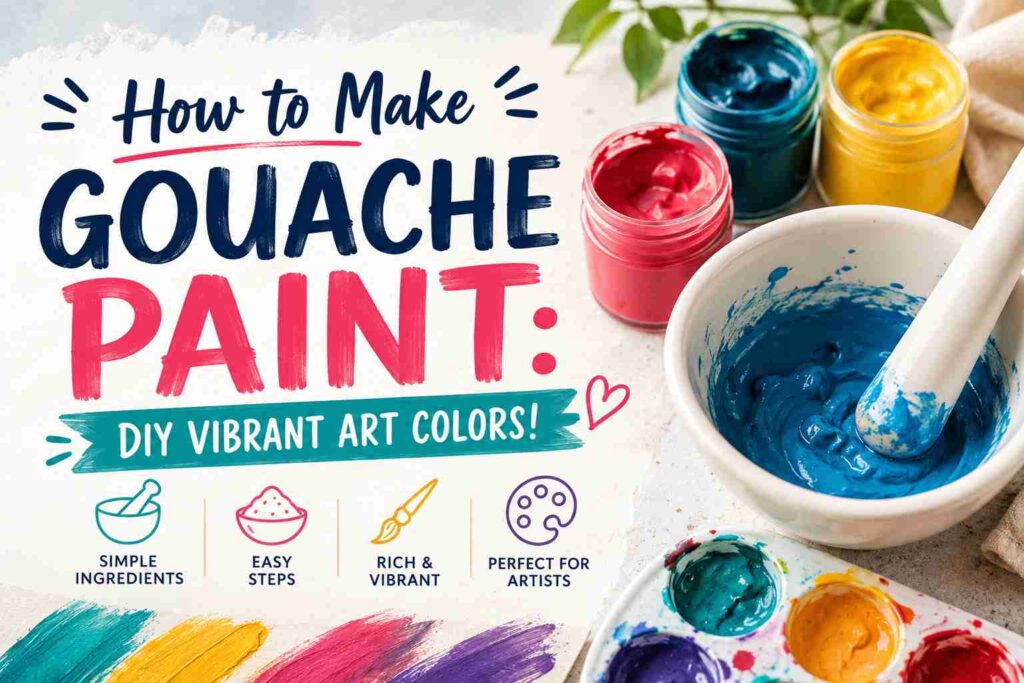
Unlike watercolor, gouache is designed to be more opaque while still remaining water-soluble. This unique combination makes it ideal for illustrations, fine art, design work, and craft projects. In this guide, you’ll learn what gouache paint is, the materials required, and the step-by-step process for making your own vibrant gouache colors at home.
Items to Buy
- Dry pigment powder
- Gum arabic solution
- Distilled water
- Chalk powder
- Calcium carbonate
- Mixing palette
- Glass slab
- Palette knife
- Muller grinder
- Measuring spoons
- Mixing cups
- Small jars
- Airtight containers
- Protective gloves
- Dust mask
- Safety glasses
- Fine mesh strainer
- Dropper bottles
- Labels
- Paper towels
What Is Gouache Paint?
Gouache is a water-based paint known for its opacity and matte appearance. It shares some similarities with watercolor but contains additional pigment and often includes chalk or other fillers that increase coverage.
Artists appreciate gouache because it produces bold colors that can cover underlying layers more effectively than traditional watercolor. It can be diluted with water for transparent effects or used straight from the palette for strong, opaque applications.
Because of its versatility, gouache remains a favorite among illustrators, designers, hobbyists, and professional painters.
Why Make Your Own Gouache Paint?
Creating your own gouache paint offers several advantages.
First, it allows complete control over color intensity and consistency. You can experiment with unique pigments and create shades that may not be available commercially.
Second, making gouache helps artists understand how paint behaves and how different ingredients affect performance. This knowledge can improve overall painting skills.
Finally, homemade gouache can be cost-effective for artists who frequently use large amounts of paint or enjoy experimenting with custom color palettes.
Understanding the Main Ingredients
To make gouache successfully, it helps to understand the purpose of each ingredient.
Pigment provides color. The quality and type of pigment largely determine the vibrancy and permanence of the paint.
Gum arabic acts as the binder. It holds the pigment particles together and helps the paint adhere to paper.
Water adjusts consistency and makes the paint workable.
Chalk or calcium carbonate contributes opacity and helps create the characteristic matte finish associated with gouache.
Balancing these ingredients properly is essential for achieving good results.
Choosing the Right Pigments
Pigments are the heart of any paint formulation.
Natural and synthetic pigments are available in a wide range of colors. Some pigments produce intense, vibrant colors, while others create softer, earthier tones.
When selecting pigments, consider lightfastness, opacity, and safety. Artist-grade pigments generally provide the best results because they offer strong color and good durability.
Always wear protective equipment when handling dry pigments, as fine particles should not be inhaled.
Safety Tips Before You Begin
Although making gouache is relatively straightforward, safety should always come first.
Work in a well-ventilated area and wear a dust mask when handling powdered pigments. Gloves help prevent staining and minimize skin contact with materials.
Keep pigments away from food preparation areas and store all ingredients in clearly labeled containers.
Taking a few simple precautions ensures a safer and more enjoyable paint-making experience.
How to Make Gouache Paint Step by Step Guide
Step 1: Prepare Your Workspace
Choose a clean, flat work surface with good lighting.
Gather all materials before beginning and cover the workspace if necessary to protect it from spills and pigment dust. Arrange tools within easy reach to make the process more efficient.
An organized setup helps prevent contamination and makes mixing easier.
Step 2: Put on Protective Equipment
Wear gloves, safety glasses, and a dust mask before opening pigment containers.
Dry pigments are extremely fine and can become airborne easily. Taking precautions during handling helps reduce unnecessary exposure.
Safety should remain a priority throughout the mixing process.
Step 3: Measure the Pigment
Place a small amount of dry pigment onto a glass slab or mixing surface.
The amount used depends on how much paint you wish to create. Beginners should start with small batches to become familiar with the process.
Creating smaller quantities also makes adjustments easier.
Step 4: Add Chalk or Calcium Carbonate
Mix a small amount of chalk powder or calcium carbonate into the pigment.
This ingredient increases opacity and contributes to the matte finish that distinguishes gouache from watercolor.
Blend the powders thoroughly before adding liquid ingredients.
Step 5: Prepare the Binder
In a separate container, combine gum arabic solution with a small amount of distilled water.
The mixture should be fluid enough to blend easily but not overly diluted. Adjustments can be made later if necessary.
The binder serves as the foundation that holds the paint together.
Step 6: Combine Pigment and Binder
Gradually add the gum arabic mixture to the pigment blend.
Use a palette knife to mix thoroughly until a thick paste begins to form. Add liquid slowly to avoid making the mixture too thin.
At this stage, the paint should resemble a dense, creamy consistency.
Step 7: Grind the Paint
Use a glass muller or palette knife to grind the mixture.
Grinding breaks up pigment particles and ensures they are evenly distributed throughout the binder. This step contributes significantly to smoothness and color consistency.
Continue grinding until the mixture appears uniform.
Step 8: Adjust the Consistency
Evaluate the texture of the paint.
If it feels too thick, add a few drops of water. If it appears too runny, incorporate a little more pigment or chalk.
The ideal gouache consistency is smooth, creamy, and easy to spread with a brush.
Step 9: Test the Paint
Apply a small amount of paint to watercolor paper.
Allow it to dry and examine the color, opacity, and texture. Testing helps identify any adjustments needed before storing the paint.
Make note of the results for future reference.
Step 10: Fine-Tune the Formula
Based on your test sample, make any necessary modifications.
Additional pigment may increase color intensity, while more chalk can enhance opacity. Small adjustments often produce significant improvements.
Continue testing until you’re satisfied with the performance.
Step 11: Transfer to Containers
Once the paint is ready, transfer it into small airtight jars or containers.
Label each container with the color name and date. Proper labeling helps maintain organization and makes future use easier.
Seal the containers tightly to prevent drying.
Step 12: Store Properly
Store your homemade gouache in a cool, dry location.
Check the paint periodically and add a small amount of water if it begins to dry out. Proper storage helps extend the life of the paint and maintain usability.
Well-maintained gouache can remain useful for an extended period.
Tips for Making Better Gouache Paint
Start with high-quality pigments whenever possible. Better pigments generally produce stronger color and improved durability.
Work slowly and make adjustments gradually rather than changing multiple variables at once. Keeping notes on ingredient ratios can help you recreate successful batches.
Testing every color before storage allows you to identify issues early and refine your process.
Practice and experimentation are often the best ways to improve homemade paint formulations.
Common Mistakes to Avoid
One common mistake is adding too much water too quickly. Excessive liquid can make the paint difficult to control and reduce opacity.
Another issue is insufficient grinding. Poorly dispersed pigments may create grainy or uneven paint.
Many beginners also skip testing, which can result in disappointing performance after storage.
Using low-quality pigments may lead to dull colors and reduced lightfastness.
Careful attention to each step helps prevent these problems.
How to Create Different Gouache Colors
Once you understand the basic process, you can create an endless variety of colors.
Primary pigments allow you to mix custom secondary and tertiary colors. White pigment can lighten shades, while darker pigments create deeper tones.
Keeping a color journal is helpful for recording successful mixtures and reproducing favorite shades later.
Experimenting with color combinations is one of the most enjoyable aspects of making your own gouache.
Best Uses for Homemade Gouache
Homemade gouache works well for many artistic applications.
Artists commonly use it for illustrations, sketchbook work, graphic design projects, greeting cards, posters, and fine art paintings. Its matte finish photographs well and reproduces beautifully in print.
Because gouache can be reactivated with water, it also offers flexibility during the painting process.
Whether you’re creating detailed illustrations or expressive artworks, gouache provides excellent versatility.
How to Store and Maintain Gouache Paint
Proper storage is essential for maintaining paint quality.
Keep containers tightly sealed when not in use and avoid exposing them to excessive heat or direct sunlight. If the paint thickens over time, a small amount of water can often restore its consistency.
Regularly inspecting stored paint helps identify any issues before they affect performance.
Good storage practices can significantly extend the lifespan of homemade gouache.
FAQs
What is gouache paint made of?
Gouache is typically made from pigment, gum arabic binder, water, and an opacity-enhancing filler such as chalk or calcium carbonate.
Is gouache the same as watercolor?
No. Gouache is generally more opaque and has a matte finish, while watercolor is usually more transparent.
Can I make gouache without gum arabic?
Gum arabic is the most common binder, though alternative binders exist. However, traditional gouache typically uses gum arabic.
Why is chalk added to gouache?
Chalk helps increase opacity and contributes to the paint’s matte appearance.
How long does homemade gouache last?
When stored properly in airtight containers, homemade gouache can remain usable for many months.
Do I need a glass muller?
A glass muller is helpful for achieving smooth paint, but small batches can sometimes be mixed adequately using a palette knife.
Can homemade gouache be reactivated with water?
Yes. Like commercial gouache, homemade versions can usually be reactivated after drying.
Is making gouache paint safe?
Yes, provided you follow proper safety precautions when handling dry pigments and other materials.
Final Words
Learning how to make gouache paint is a rewarding experience that deepens your understanding of color, materials, and artistic techniques. By combining pigment, gum arabic, water, and opacity-enhancing ingredients, you can create custom paints tailored to your specific artistic needs.
While it may take some experimentation to perfect your formula, the ability to craft unique colors and understand the paint-making process can greatly enhance your creative journey. With patience, practice, and quality materials, you’ll be able to produce vibrant homemade gouache paints that are perfect for illustrations, fine art, and countless other projects.